3 Days in Osaka: The Perfect Itinerary
Three days is enough time to cover Osaka's essential neighbourhoods, eat your way through its famous food scene, and still avoid the rookie mistakes that waste half a day. This itinerary is built around the city's subway network, logical geographic clusters, and the real trade-offs between tourist staples and worthwhile alternatives.
Plan and book this trip
Tools from our partner Travelpayouts help you compare flights and hotels. If you book through them, we may earn a commission at no extra cost to you.
Flights
Hotels map
TL;DR
- Structure your three days by geography: north/central Osaka (Day 1), south/cultural Osaka (Day 2), and the Bay Area or a day trip (Day 3).
- The Osaka Metro 1‑day pass (Enjoy Eco Card or digital equivalent) costs ¥820 on weekdays and ¥620 on weekends — only worth it if you take four or more rides in a day.
- Spring (late March to early April) and autumn (mid-October to late November) offer the best weather — see the best time to visit Osaka for a full seasonal breakdown.
- Tipping is not customary anywhere in Japan — do not leave cash on the table.
- The Osaka Amazing Pass (¥3,500 for 1 day, ¥5,000 for 2 days) bundles unlimited subway rides with free attraction entry — run the numbers before buying.
Before You Arrive: Transport Basics and Practical Setup
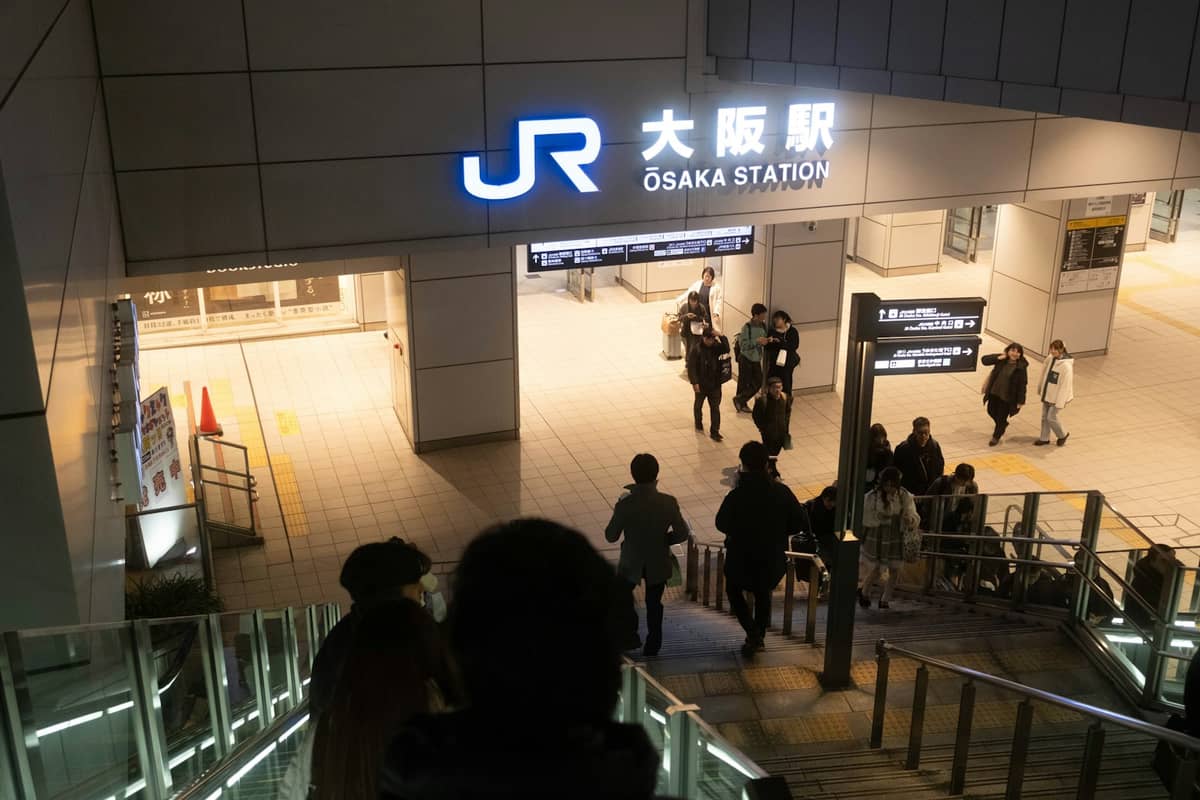
Most international visitors land at Kansai International Airport (KIX), which sits on an artificial island in Osaka Bay roughly 35–50 km from central Osaka depending on your destination district. The fastest and most cost-effective option for most travellers heading to Namba is the Nankai Railway: the standard Airport Express takes around 44–50 minutes for approximately ¥920–¥970, while the Rapi:t limited express cuts that to about 35–40 minutes for around ¥1,430. JR's Haruka Express is better if you're staying near Tennoji or Shin-Osaka, with fares around ¥1,740–¥2,280 depending on seat type. Airport limousine buses serve Osaka Station (Umeda) and Namba for roughly ¥1,100–¥1,400 but take 50–70 minutes and are vulnerable to traffic. Taxis cost ¥15,000–¥24,000 and are hard to justify unless you're travelling with heavy luggage and splitting the cost across four people.
⚠️ What to skip
All transport fares are subject to change. Confirm current prices on the Nankai Railway, JR West, or Osaka Metro official websites before your trip. Rapi:t seats sell out on busy weekends and holiday periods — book in advance.
Once in the city, the Osaka Metro is your primary tool. It runs nine lines, starts at ¥190 per adult ride, and covers virtually every neighbourhood on a standard three-day itinerary. The one-day pass costs ¥820 on weekdays and ¥620 on weekends and public holidays — but it only pays off if you take four or more separate journeys in a day. On lighter sightseeing days, pay per ride. Note that some routes require JR trains or private railways (Nankai, Keihan, Hanshin), which are not covered by the Metro pass.
Day 1: North and Central Osaka — Umeda, Nakanoshima, and Osaka Castle
Start in Umeda, Osaka's main commercial and transport hub in the northern Kita district. It's not particularly photogenic first thing in the morning, but it's logistically smart: major JR and private rail lines converge here, and it gives you a clean route east toward Osaka Castle before swinging south.
Before heading east, consider a short detour to the Umeda Sky Building, one of Osaka's more architecturally distinctive structures. The rooftop Floating Garden Observatory sits 173 metres above street level and offers unobstructed views across the city grid. It opens at 9:30 AM, making it a practical first stop. From there, cross into Nakanoshima, the island district between the Dojima and Tosabori rivers. The Nakanoshima Park rose garden is worth a slow walk in spring, and the Osaka City Central Public Hall — a 1918 Neo-Renaissance building — is one of the city's best pieces of Meiji-era architecture.
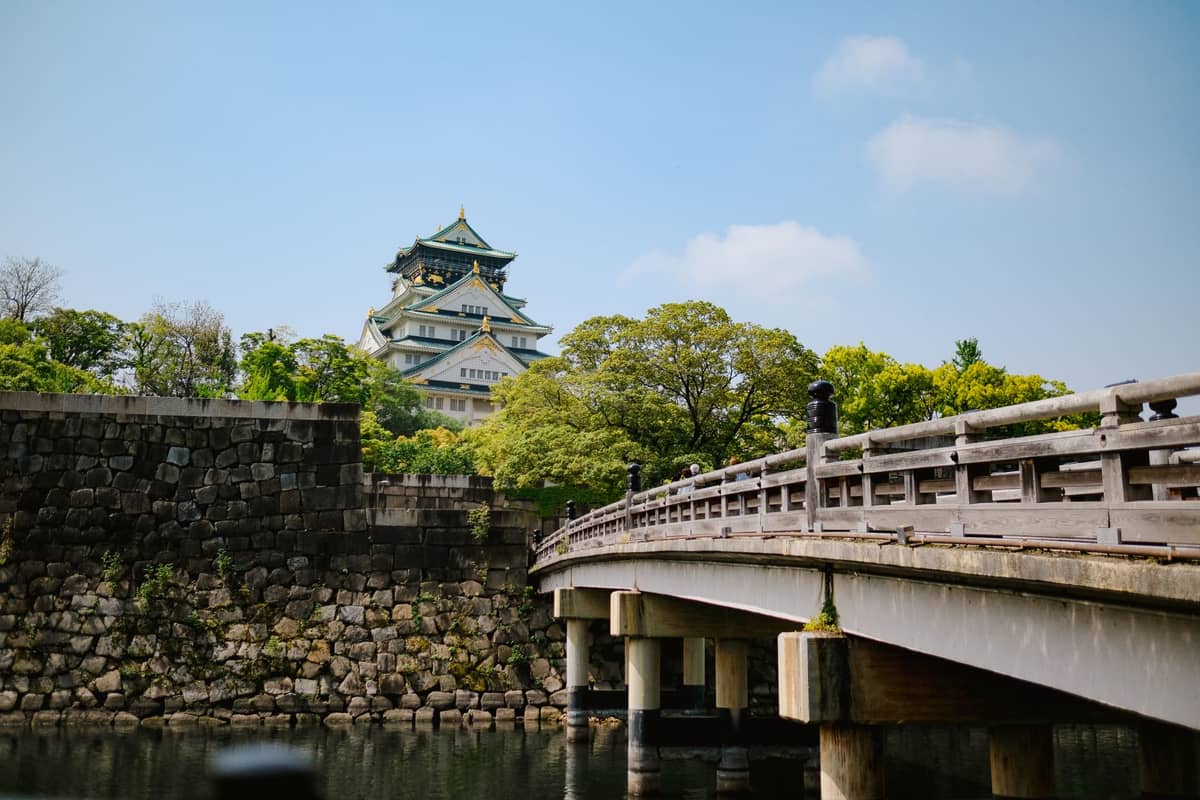
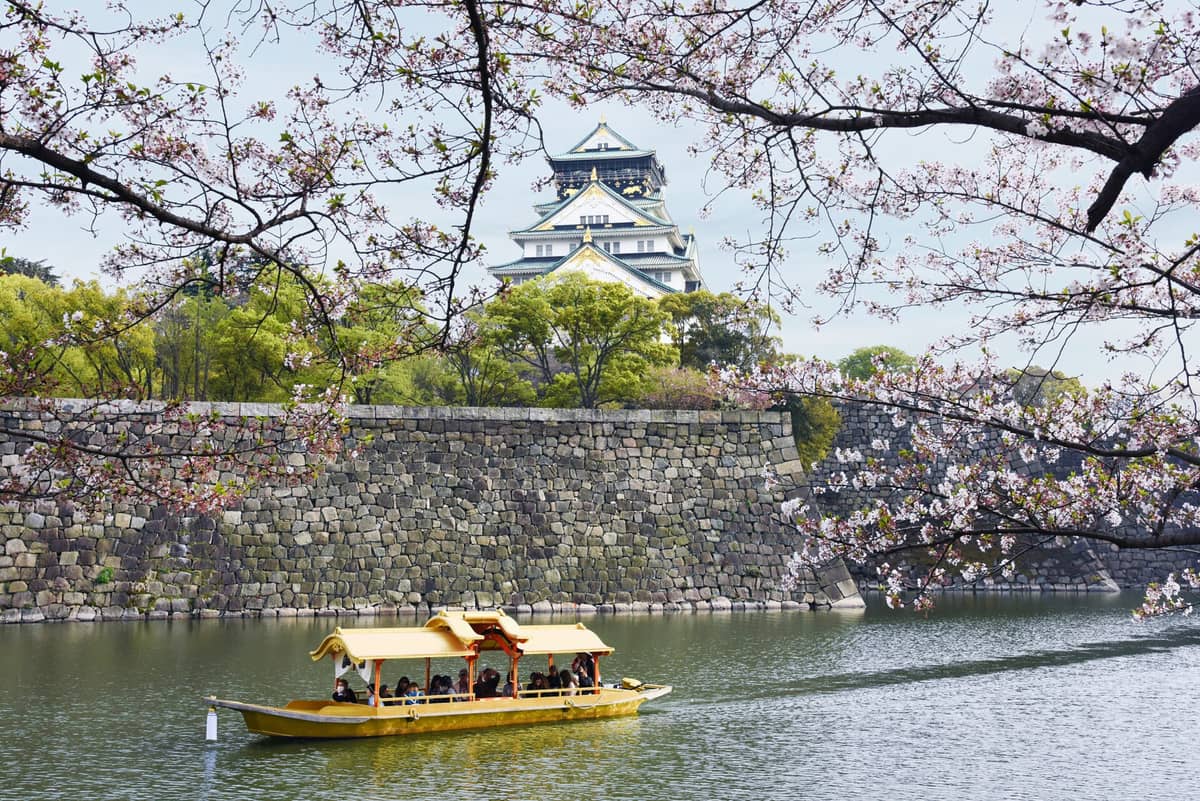
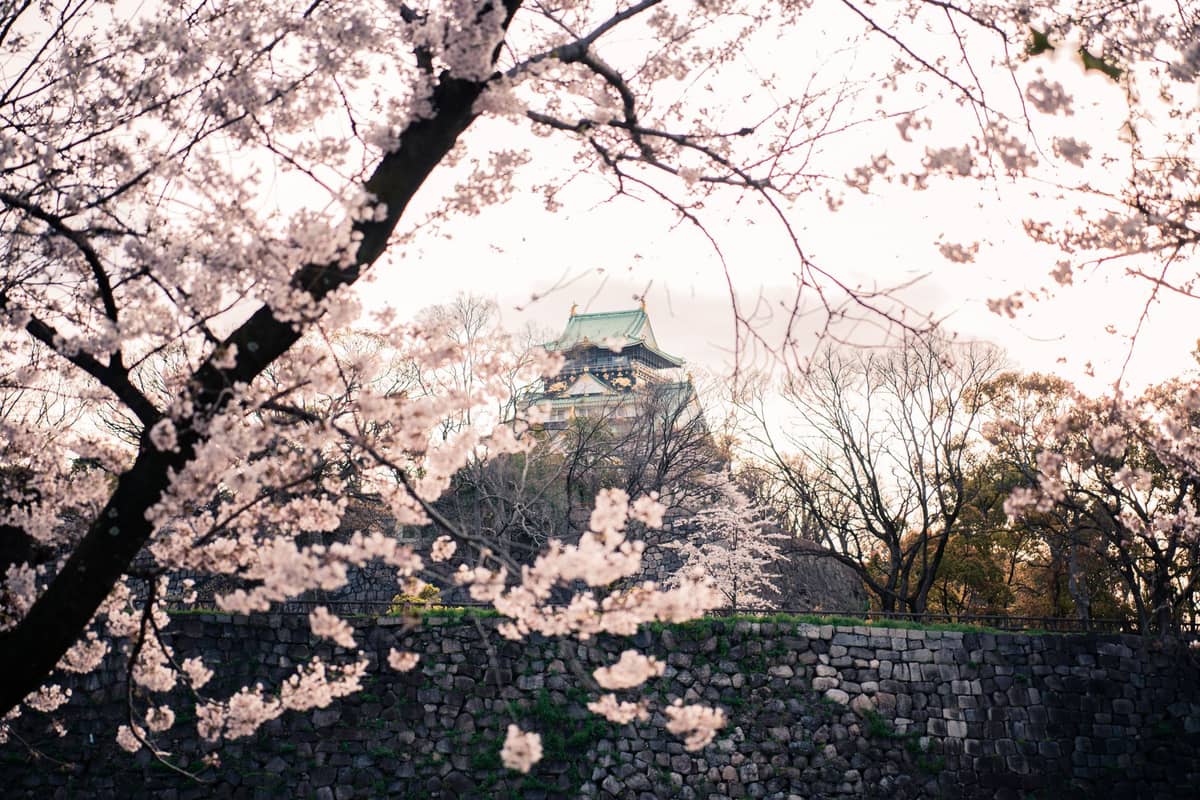
By mid-morning, take the Metro east to Osaka Castle. The castle tower itself is a 1931 reinforced-concrete reconstruction — historically significant but not authentic feudal architecture — and the interior museum, while informative, is not essential if you're pressed for time. What is worth the time is the surrounding Osaka Castle Park, particularly the stone walls and the moat walk. In late March to early April the park becomes one of the city's best cherry blossom spots, with several hundred trees lining the inner grounds.
💡 Local tip
If you visit Osaka Castle Park during cherry blossom season (peak typically April 1–7, though this varies by year), arrive before 9 AM to walk the grounds without crowds. By 10:30 AM on a clear spring weekend, the main paths become congested.
End Day 1 in Namba and Dotonbori. The canal district is at its most photogenic after dark when the neon signs reflect off the water. Eat here: takoyaki (octopus balls), kushikatsu (deep-fried skewers), and okonomiyaki are all available within a few hundred metres of the Ebisu-bashi bridge. For a more detailed breakdown of what to order and where, the Osaka street food guide covers the key stalls and restaurant types without sending you to tourist traps.
Day 2: South Osaka — Shinsekai, Tennoji, Shinsaibashi, and Amerikamura
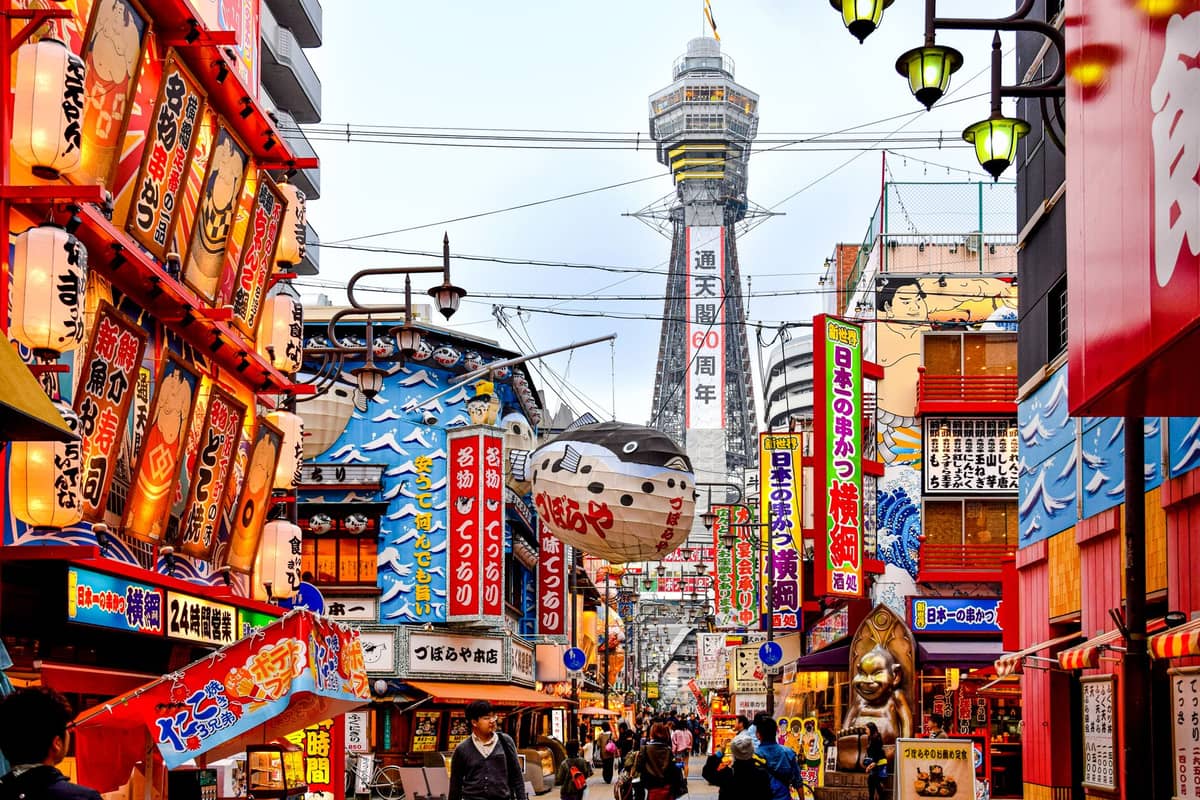
The southern arc of central Osaka contains the city's most culturally layered districts. Start in Shinsekai, built in 1912 as a deliberate copy of Paris and New York (the northern half modelled on the Champs-Élysées, the southern on Coney Island). That ambition faded, and what's here now is a retro working-class neighbourhood with cheap kushikatsu restaurants and the Tsutenkaku Tower as its centrepiece. It's worth 30–45 minutes of your morning but doesn't need more.
Walk or take the Metro one stop north to Tennoji. The district anchors two worthwhile sites: Shitennoji Temple, reputedly one of Japan's oldest Buddhist temples (founded 593 CE, though the current buildings are modern reconstructions), and the Abeno Harukas observatory on the 58th–60th floors of Osaka's tallest skyscraper. If you've already done the Umeda Sky Building on Day 1, you don't need both — pick one view.
By early afternoon, shift to Shinsaibashi for shopping and the youth culture district of Amerikamura (America Village). This compact grid of streets around Triangle Park is where Osaka's vintage clothing, streetwear, and independent music scenes concentrate. It's not for everyone, but it's a more honest slice of the city than Dotonbori's tourist corridor one block east. The adjacent Shinsaibashi-suji shopping street is a covered arcade running nearly 600 metres — useful for rainy-day browsing and home to both luxury brands and 100-yen accessories.
- Hozenji Yokocho A narrow stone-paved alley behind Dotonbori with small traditional restaurants and the moss-covered Fudo-Myo statue at Hozenji Temple. Go in the evening for atmosphere.
- Kuromon Ichiba Market Osaka's main covered food market, best visited before noon when vendors are fully stocked. Expect fresh seafood, grilled scallops, and wagyu skewers. Busy at weekends but worth it.
- Den Den Town Osaka's equivalent of Tokyo's Akihabara — electronics, retro games, anime merchandise, and maid cafes. One street is enough for most visitors; serious collectors will want a full afternoon.
Day 3: Osaka Bay Area or a Day Trip
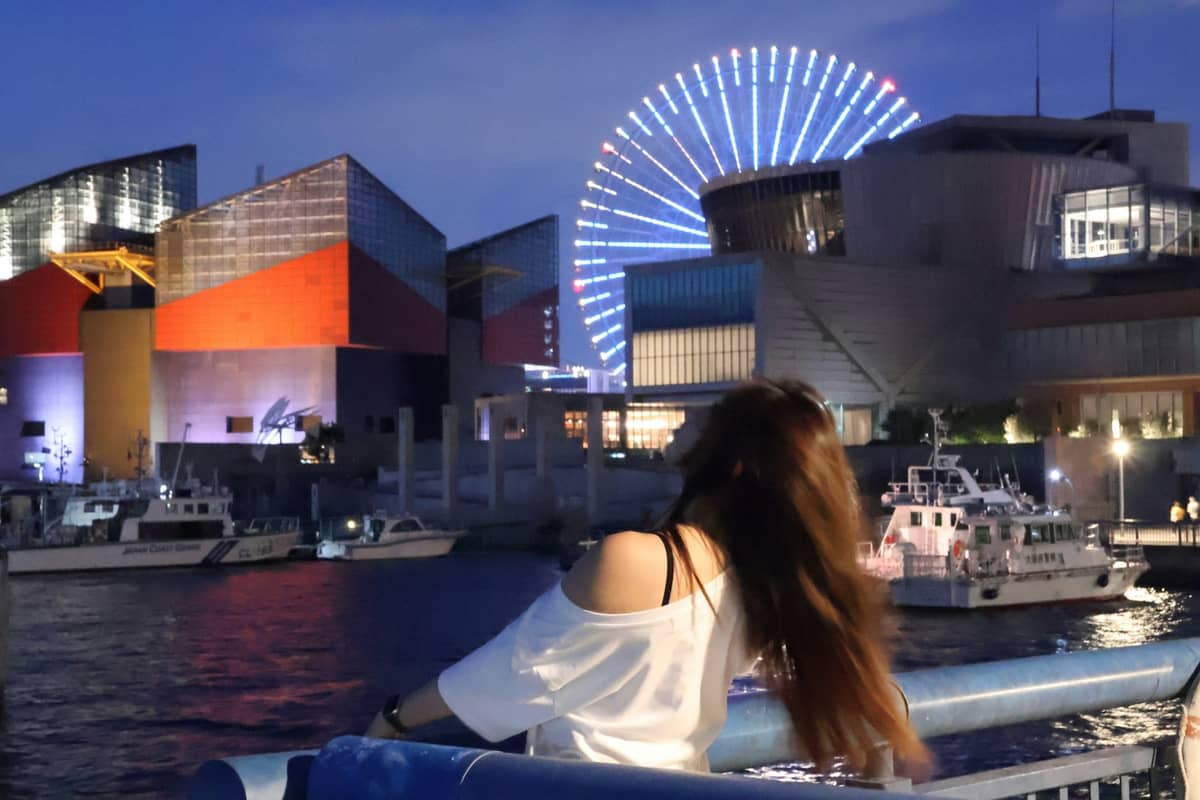
Day 3 depends entirely on your priorities. The Osaka Bay Area is the logical choice for families or aquarium enthusiasts: the Osaka Aquarium Kaiyukan is genuinely one of the world's better aquariums, built around a central Pacific Ocean tank that whale sharks have inhabited since its 1990 opening. It's a half-day commitment. Universal Studios Japan fills a full day and is best pre-booked — the USJ guide covers the Express Pass system and which rides justify the premium.
If you'd rather leave the city entirely, Osaka's rail connections make this very practical. Nara is 45 minutes away and half a day is enough. Kyoto is 15 minutes by shinkansen or around 75 minutes by the Hankyu or Keihan commuter lines (much cheaper). For those who want a bigger journey, the guide to day trips from Osaka lists the realistic options with transport times and honest assessments of what each destination actually offers.
✨ Pro tip
If you're considering the Osaka Amazing Pass for Day 3, check the inclusions carefully. The pass covers free entry to specific attractions (including Tsutenkaku and the Umeda Sky Building) plus unlimited Metro rides, but Universal Studios Japan and Kaiyukan are not included and require separate tickets. The 2-day pass (¥5,000) is worth the price if you're hitting three or more covered attractions across two days.
Seasonal Adjustments: When You Visit Changes Everything
Osaka's climate follows a humid subtropical pattern with genuinely hot, humid summers and mild winters. July and August regularly exceed 30°C with high humidity — this is not comfortable sightseeing weather, and outdoor itineraries suffer. If you're visiting in summer, front-load outdoor sites (castle parks, shrines) to the morning and plan indoor activities for the afternoon heat.
Spring (March–May) is the most popular season and for good reason. Cherry blossom timing typically falls in late March to early April — the 2026 forecast puts first bloom around March 24 and full bloom around March 31, with peak viewing April 1–7, though these dates shift by a week or more depending on the year. The Osaka cherry blossom guide tracks the best parks and the practical logistics of hanami picnic spots. Autumn (October–November) rivals spring for pleasant temperatures and adds the colour of koyo (autumn foliage) at temple gardens and parks. The Osaka in autumn guide has the specific timing by district.
- Spring (Mar–May): Best overall weather, cherry blossoms in late March to early April, crowds peak during Golden Week (late April to early May)
- Early summer (June): Start of rainy season (tsuyu) — around 150mm of rain over roughly 10–13 rainy days. Brings lush greenery but plan indoor alternatives
- Summer (Jul–Aug): Extreme heat and humidity above 30°C. Avoid prolonged outdoor exposure midday; Tenjin Matsuri festival (late July) is spectacular but very crowded
- Autumn (Oct–Nov): Second-best season — comfortable temperatures, foliage colour, fewer crowds than spring
- Winter (Dec–Feb): Cool (lows around 2–5°C), dry, and significantly less crowded. Good for budget travellers comfortable with layering
Practical Details: Money, Etiquette, and Common Mistakes
Japan uses the Japanese yen (JPY). Card acceptance has improved significantly in recent years, but cash remains essential for smaller restaurants, temple admission counters, vending machines, and markets like Kuromon Ichiba. Withdraw yen from 7-Eleven ATMs (accept most international cards) rather than currency exchange desks at airports, where rates are less favourable.
Tipping is not practised in Japan. In restaurants, ryokans, or taxis, leaving a tip can cause confusion or embarrassment. Service is built into pricing. Similarly, eating or drinking while walking is generally frowned upon outside of festival settings and designated food market areas. In Dotonbori and Kuromon, vendors are accustomed to tourists eating at the stall, which is the accepted approach.
Osaka's tap water is safe to drink. Electricity runs at 100V/60Hz with Type A plugs (two flat parallel pins). Most modern electronics from North America run fine; European devices require an adapter and potentially a voltage converter for older equipment. Plug adapters are cheap and widely sold at convenience stores and electronics shops in Den Den Town.
ℹ️ Good to know
Emergency numbers in Japan: 110 for police, 119 for fire and ambulance. Japan's country code is +81. English-language assistance is available through the Japan Tourism Agency's multilingual call centre (0570-031-911), which connects callers with interpretation services.
For travellers on a tight budget, many of Osaka's best experiences cost nothing or very little. The castle park, Nakanoshima riverside walks, Shinsekai street browsing, and neighbourhood exploration in Nakazakicho are all free. The free things to do in Osaka guide lists over a dozen worthwhile no-cost options that aren't simply 'walk around a market.'
FAQ
Is 3 days in Osaka enough?
Three days covers the essential districts comfortably without feeling rushed, provided you organise the itinerary by geography. You can see Osaka Castle, Dotonbori, Shinsekai, Shinsaibashi, and either the Bay Area or a day trip to Nara or Kyoto. Three days won't exhaust Osaka's deeper neighbourhoods — Tsuruhashi Korea Town, Kitahama, Sumiyoshi Taisha — but those reward return visits rather than cramming.
What is the best area to stay in Osaka for 3 days?
Namba and Shinsaibashi put you within walking distance of Dotonbori, Kuromon Market, and the southern district attractions, with Metro access to everywhere else. Umeda suits travellers who prioritise JR and shinkansen connections or plan day trips. For a full neighbourhood breakdown with hotel pricing context, see the where to stay in Osaka guide.
Should I get an Osaka Amazing Pass or a Metro day pass?
The Osaka Amazing Pass (¥3,500 for 1 day, ¥5,000 for 2 days) bundles unlimited Metro rides with free entry to specific attractions including Tsutenkaku and the Umeda Sky Building. Kaiyukan is not included. If you plan to visit three or more of those attractions in a day, the pass saves money. If you're mainly eating, shopping, and wandering, the basic Metro day pass (¥820 weekdays, ¥620 weekends) is sufficient — or simply pay per ride.
How do I get from Kansai Airport to central Osaka?
The Nankai Railway Airport Express to Namba takes around 44–50 minutes for approximately ¥930–¥980 and is the best default option for most visitors. The faster Rapi:t limited express (¥1,130–¥1,520) saves about 10 minutes but sells out on busy days — book in advance. JR's Haruka Express is better if you're heading to Tennoji or Shin-Osaka. Airport limousine buses are comfortable but slower due to traffic.
Can I do a day trip from Osaka in 3 days?
Yes, and Day 3 is the natural slot for it. Nara is 45 minutes away by express train and half a day is sufficient for Nara Park and Todai-ji Temple. Kyoto is 15 minutes by shinkansen or around 75 minutes by the cheaper Hankyu commuter line. Hiroshima is a full-day commitment via shinkansen (around 80–90 minutes each way) but manageable. If you want to stay in Osaka across all three days, the Bay Area with Kaiyukan and/or USJ fills Day 3 well.