Shinsaibashi-suji Shopping Street: Osaka's Grand Covered Arcade
Stretching roughly 580 metres through the heart of Osaka's Shinsaibashi district, this covered shopping arcade traces its commercial roots to the Edo period. Free to enter and walkable at any hour, it draws everyone from brand-conscious shoppers to curious strollers sampling street food under its distinctive glass-and-steel roof.
Quick Facts
- Location
- Shinsaibashisuji, Chuo-ku, Osaka 542-0085
- Getting There
- Shinsaibashi Station (Osaka Metro Midosuji / Nagahori Tsurumi-ryokuchi Lines) — Exit 5 or 6, 1–2 min walk
- Time Needed
- 45 minutes to 2 hours depending on how much you shop
- Cost
- Free to enter the arcade; shop prices vary
- Best for
- Shoppers, street-food browsers, rainy-day wanderers, first-time Osaka visitors
- Official website
- global.shinsaibashi.or.jp/en
What Shinsaibashi-suji Actually Is
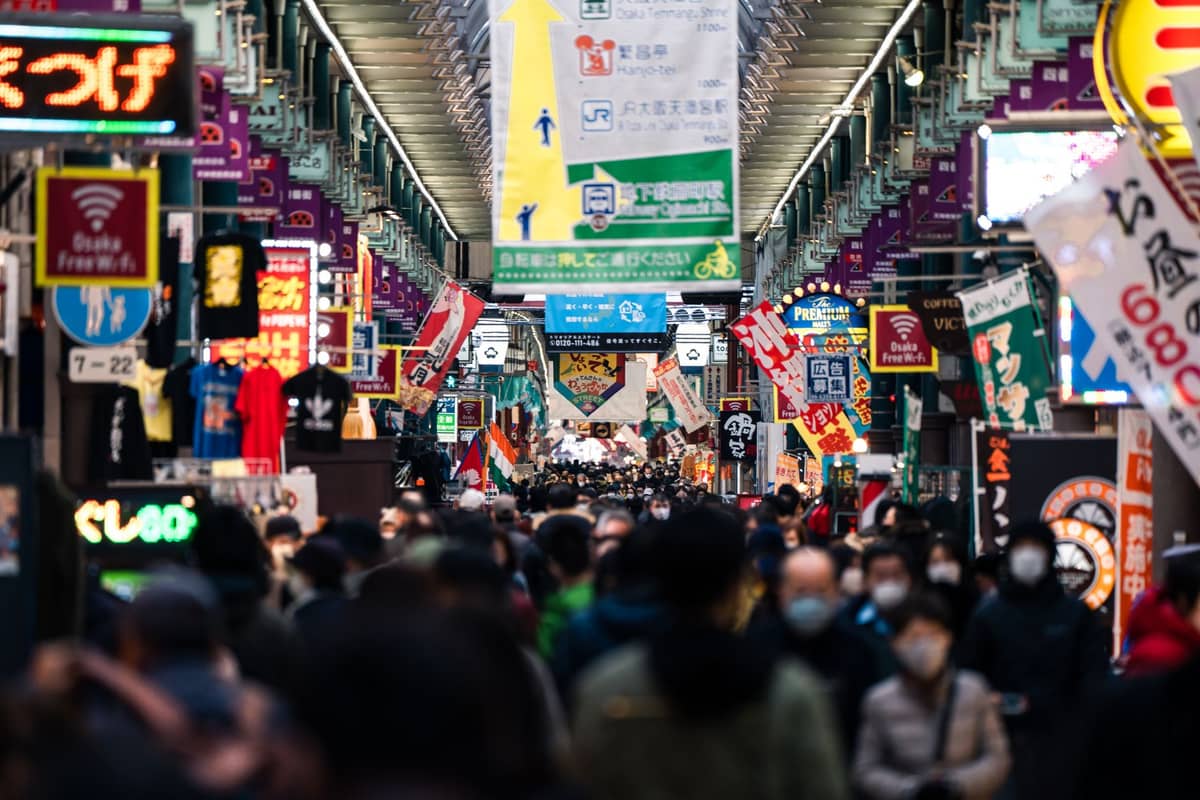
Shinsaibashi-suji Shopping Street (心斎橋筋商店街) is a roughly 580–600-metre covered pedestrian arcade running north to south through Chuo-ku, roughly parallel to Midosuji boulevard. It is one of Japan's longest and most visited covered shopping streets, but calling it merely a shopping street undersells how much it anchors daily life in central Osaka. The arcade is a public thoroughfare first and a retail destination second: you can walk its full length at 2am without entering a single shop.
The roof overhead is a sweeping structure of glass panels and steel arches that lets in diffused daylight during the day and glows warmly under artificial light in the evening. On warm afternoons the arcade feels cooler than the streets outside; on rainy days it becomes a genuinely useful refuge. Underfoot, the paving is smooth and flat for the entire length of the arcade, making it one of the more wheelchair- and stroller-friendly stretches in central Osaka.
ℹ️ Good to know
The arcade itself has no opening or closing time — it is a public covered street. Many individual shops typically open around 10:00–11:00 and close around 20:00–21:00, though some restaurants and cafes run later. Verify hours with specific shops before planning around them.
A Commercial Street Since the Edo Period
The district takes its name from a bridge, Shinsaibashi, which once crossed a canal running through this part of Osaka. During the Edo period, the area south of Osaka Castle Town developed as a commercial centre built around textile and kimono merchants — the kind of trade that required canal access for goods transport. The bridge and the street that grew up around it became inseparable from how residents thought about commerce in the city.
After significant damage in World War II, the street was rebuilt as a modern roofed arcade during the postwar Showa era. The covered format was a practical response to Osaka's climate — the rainy season runs roughly from early June through mid-July, and summer temperatures frequently push past 30°C — and it helped the street recover its popularity rapidly. What visitors walk through today is essentially a postwar structure built on top of centuries of commercial tradition.
For context on how Shinsaibashi fits into Osaka's broader retail and cultural geography, the Osaka shopping guide covers the full range of districts and what each one specialises in.
Tickets & tours
Hand-picked options from our booking partner. Prices are indicative; availability and final rates are confirmed when you complete your booking.
Kyoto Walking Tour and Shopping at Nishiki Market
From 76 €Instant confirmationFree cancellationKobe: Mt. Rokko Night View, Kitano Ijinkan, Arima Onsen Full Day Tour
From 47 €Instant confirmationFree cancellationOsaka local food tour in Dotonbori and Shinsekai
From 51 €Instant confirmationFree cancellationGuided day tour from Osaka to Nara Park, Arashiyama and Fushimi Inari
From 59 €Instant confirmationFree cancellation
How the Street Changes Through the Day
At 10:30 on a weekday morning, Shinsaibashi-suji is calm enough to actually look at the architecture. Shop staff are rolling up shutters, arranging window displays, and sweeping the entrance tiles. The smell at this hour is a mix of fresh-baked pastry from the bakery near the southern end and cleaning products from the larger stores. This is the most comfortable time to walk the street without fighting foot traffic.
By early afternoon on weekends, the density of foot traffic is significant. School-age visitors in small groups move slowly and cluster around the newer fast-fashion retailers and the cosmetics shops, where testers are freely available and staff are patient with browsers. The noise level rises noticeably: recorded announcements from individual shops overlap with each other, and the acoustic effect under the curved roof can feel overwhelming if you are not expecting it. This is peak shopping hour — good for atmosphere, less good for anyone in a hurry.
By 19:00, most of the clothing shops have closed, but the street takes on a different character. Lighting shifts from the practical fluorescence of retail to something warmer as restaurants and cafes dominate the open storefronts. The crowd thins and slows. Couples and small groups linger outside takoyaki stands. This evening version of Shinsaibashi-suji, quieter and less commercial in feel, is often the more enjoyable one.
💡 Local tip
If you want to photograph the arcade roof and architectural details without people filling every frame, arrive before 10:30 on a weekday. The light through the glass panels is best in the late morning before it flattens out.
What You Will Find Along the 600 Metres
The arcade is not uniform in character from end to end. The northern section, closest to Shinsaibashi Station, skews toward international luxury brands, established Japanese department stores, and the flagship Daimaru department store building, which anchors the northern approach. As you move south, the retail mix shifts toward fast fashion, cosmetics chains, and souvenir shops, with prices falling gradually and the pace of commerce becoming more informal.
Cosmetics and skincare are disproportionately represented throughout the street. Several Japanese drugstore chains operate large-format stores here, selling domestic brands at prices that are often lower than in other countries and without the crowds that sometimes make similar stores in airport terminals stressful. Visitors specifically seeking Japanese skincare or pharmaceutical products will find this section of the arcade efficient.
Food options inside the arcade tend toward snacks and quick bites rather than sit-down meals: crepes, soft-serve ice cream in seasonal flavours, and small confectionery shops with red-bean-based sweets visible through glass cases. For a proper meal, the cross-streets and adjacent lanes off the main arcade — particularly heading east toward Hozenji Yokocho — offer more substantial options.
The arcade connects naturally at its southern end to the broader Namba district, where the density of food options, entertainment venues, and the Dotonbori canal area begins. Many visitors walk the full length of Shinsaibashi-suji and continue south without noticing precisely where one district ends and the other begins.
Getting There and Getting Around
The most direct access is via Shinsaibashi Station on the Osaka Metro Midosuji Line or the Nagahori Tsurumi-ryokuchi Line. Exit 5 or 6 places you at the arcade entrance within about two minutes on foot, partially underground, so there is no weather exposure on that final stretch. The station itself has elevators and escalators throughout the main concourse, and the arcade's flat paving continues from street level without steps.
If you are coming from Namba Station — which is the terminus for the Nankai Railway from Kansai International Airport — you can walk north along Midosuji or through the underground shopping passages and reach the southern end of the arcade in about ten minutes. The guide to getting around Osaka covers the Osaka Metro network in detail, including day pass options that make sense if you plan to use the subway four or more times.
💡 Local tip
The Osaka Metro Midosuji Line (red line) is the fastest axis through central Osaka, connecting Umeda in the north to Namba and Shinsaibashi in one direction. A single fare from Umeda to Shinsaibashi Station takes about 5 minutes.
Practical Notes for Visitors
Cash is accepted everywhere in the arcade, and most larger chain stores accept major credit cards and IC cards (Suica, ICOCA). Smaller independent shops may be cash-only, so carrying some yen is sensible. Japan does not have a tipping culture — there is no expectation of gratuity in shops or food stalls.
The arcade is fully covered, so rain does not affect the experience at all once you are inside. In summer, the covered environment provides shade and some relief from heat, though air conditioning is only present inside the individual shops rather than in the main walkway itself. On hot July or August afternoons, temperatures in the walkway can still feel warm. In winter, the arcade provides wind protection without being heated, so a light jacket remains necessary.
Tax-free shopping is available at many stores for foreign visitors spending above the minimum threshold (verify current thresholds with individual retailers, as the system and minimums are subject to change). Larger stores typically have dedicated tax-free counters and English-speaking staff at those desks.
Visitors on a tight budget should note that the arcade itself costs nothing to explore. For a broader perspective on enjoying Osaka without significant spending, the guide to free things in Osaka is worth reading before you arrive.
Who Should Temper Their Expectations
If you are looking for independent boutiques, artisan crafts, or unusual finds, Shinsaibashi-suji will mostly disappoint. The majority of its retail is chain-driven: international brands, Japanese fast-fashion labels, and pharmacy groups that appear elsewhere across Japan. Travelers seeking a more eclectic or locally distinctive shopping experience are better served by the backstreets of nearby areas.
For something with more local character, Nakazakicho offers a genuinely different atmosphere, with small independent shops, vintage clothing, and cafes in low-rise prewar buildings. It is a short metro ride from Shinsaibashi and rarely appears on the same itinerary despite being worth the detour.
Visitors who are sensitive to noise and crowds should approach weekend afternoons with caution. The arcade is one of the most visited stretches in the entire city, and on Saturday afternoons in good weather, moving through it at your own pace requires patience. If you have limited time and primarily want to see what Osaka feels like at street level, the arcade is a reasonable starting point but not the most distinctive option.
Insider Tips
- The Daimaru department store at the northern end has a basement food hall (depachika) that is one of the better ones in central Osaka — worth exploring even if you are not buying, particularly for the prepared food and confectionery sections.
- Pharmacies along the arcade often have the best prices on Japanese skincare and over-the-counter products, and staff at the tax-free counters are accustomed to helping non-Japanese speakers navigate purchases.
- The cross-streets running east off the arcade lead quickly to Hozenji Yokocho, a narrow laneway of small traditional restaurants. It takes about four minutes to walk there from the middle of the arcade and feels like a completely different Osaka.
- During the tsuyu rainy season (roughly early June to mid-July), the arcade becomes a genuinely useful rain shelter connecting Shinsaibashi Station southward toward Namba. Factor this in when planning rainy-day itineraries.
- The arcade looks best photographed from ground level using a wide-angle lens pointed down its length in the morning light, when the glass roof illuminates the centre of the walkway and the side shops are still relatively dark.
Who Is Shinsaibashi-suji Shopping Street For?
- First-time visitors to Osaka wanting an orientation to the city's shopping culture
- Travelers specifically seeking Japanese cosmetics, skincare, and pharmacy products
- Rainy-day itineraries requiring a covered, walkable stretch of significant length
- Shoppers splitting time between mainstream retail and the nearby Dotonbori food strip
- Visitors who want a convenient, flat, wheelchair-accessible route through the heart of Minami
Nearby Attractions
Other things to see while in Shinsaibashi:
- Amerikamura (American Village)
Amerikamura, known locally as Ame-mura, is Osaka's answer to Tokyo's Harajuku: a dense grid of streets in Nishi-Shinsaibashi packed with vintage clothing stores, independent cafés, record shops, live music venues, and street-level art. Admission is free and the area never fully closes, but it comes alive in the afternoon and stays loud well past midnight.