Universal Studios Japan: The Complete Osaka Visitor Guide
Universal Studios Japan (USJ) is Osaka's most-visited theme park, drawing millions of visitors each year to its film-themed worlds, seasonal events, and blockbuster rides. From the Wizarding World of Harry Potter to Nintendo World, here is everything you need to know before you go.
Quick Facts
- Location
- 2 Chome-1-33 Sakurajima, Konohana Ward, Osaka 554-0031 (Osaka Bay Area)
- Getting There
- Universal City Station (JR Yumesaki / Sakurajima Line) — 5-minute walk to the main gate
- Time Needed
- Full day (8–10 hours recommended); plan a second day if crowds are heavy or you want to cover all zones
- Cost
- 1-Day Studio Pass from approx. ¥8,900 (adult); price varies by date — check the official price calendar before booking
- Best for
- Families, film fans, thrill-seekers, first-time Japan visitors
- Official website
- www.usj.co.jp/web/en/us
What Universal Studios Japan Actually Is
Universal Studios Japan (USJ) opened on March 31, 2001, becoming the first Universal Studios theme park in Asia. Built on the Sakurajima waterfront in Osaka's Konohana Ward, it sits at the edge of Osaka Bay, a location that gives the park a flat, open layout very different from the hillside parks of Tokyo Disneyland. More than two decades after opening, USJ has grown into one of Japan's most-attended theme parks, attracting visitors from across East Asia, Southeast Asia, and the world.
The park is organized around themed zones that each recreate a specific film universe or entertainment brand. The Wizarding World of Harry Potter remains the centerpiece for most international visitors, but Nintendo World, which opened in 2021, has become a serious competitor for crowd attention. Other zones cover Jurassic Park, Minion Park, Hollywood, New York, and more. The overall footprint is large but walkable, and the atmosphere shifts zone by zone in a way that keeps the experience from feeling monotonous.
ℹ️ Good to know
USJ uses a date-based pricing system. Ticket prices change depending on demand for each specific date. Always check the official Studio Pass Price Calendar on usj.co.jp before purchasing, as third-party prices may not reflect current rates.
How the Park Feels at Different Times of Day
The experience at USJ changes significantly by hour. Arrival at opening time typically means shorter queues and cooler air, and the park entrance — a wide, Hollywood-style boulevard flanked by studio facades — feels genuinely cinematic in the early morning light before the crowds compress the sightlines. The smell of fresh popcorn (sold in themed buckets in flavors including soy sauce, cheese, and seasonal varieties) hits you almost immediately at the first carts near the entrance.
By late morning, the most popular attractions begin building hour-long or longer queues. The Wizarding World fills quickly, and the overall noise level rises substantially as school groups and tour parties move through. Midday is the least pleasant time to queue: the bay-adjacent location means little shade in summer, and temperatures between June and August can push well above 30°C with high humidity. The concrete plazas reflect heat, and a full midday queue at a major ride can be physically taxing.
Late afternoon often brings a second wind. Crowds thin slightly as families with young children leave, the sun angle softens, and the park transitions into its evening identity. After dark — particularly during seasonal events like the Halloween horror program (which typically runs from mid-September into early November) or Christmas programming — the park takes on a different character entirely. Lighting rigs transform the facades, live performances appear, and the sensory atmosphere is noticeably denser and more theatrical. If your goal is the rides themselves, the 90 minutes before closing often brings the shortest queue times of the day.
Tickets & tours
Hand-picked options from our booking partner. Prices are indicative; availability and final rates are confirmed when you complete your booking.
Authentic Japanese cooking and sake experience in Osaka
From 75 €Instant confirmationFree cancellationOsaka popular Japanese foods origins city game and tour
From 10 €Instant confirmationFree cancellationJapanese Cooking Experience Courses
From 70 €Instant confirmationFree cancellationHands-On Traditional Japanese Bookbinding and Printing in Osaka
From 24 €Instant confirmationFree cancellation
Key Zones and What to Prioritize
The Wizarding World of Harry Potter is architecturally the most impressive zone in the park. Hogsmeade village is rendered in careful detail: the cobblestoned streets, the snow-capped rooftops, and the scale model of Hogwarts castle above the skyline create a coherent sense of place. The castle itself houses Harry Potter and the Forbidden Journey, a ride that uses a mix of physical sets and screen projection to create a genuine sense of motion and scale. Butterbeer is available in hot, cold, and frozen forms; the frozen version is the most popular in summer.
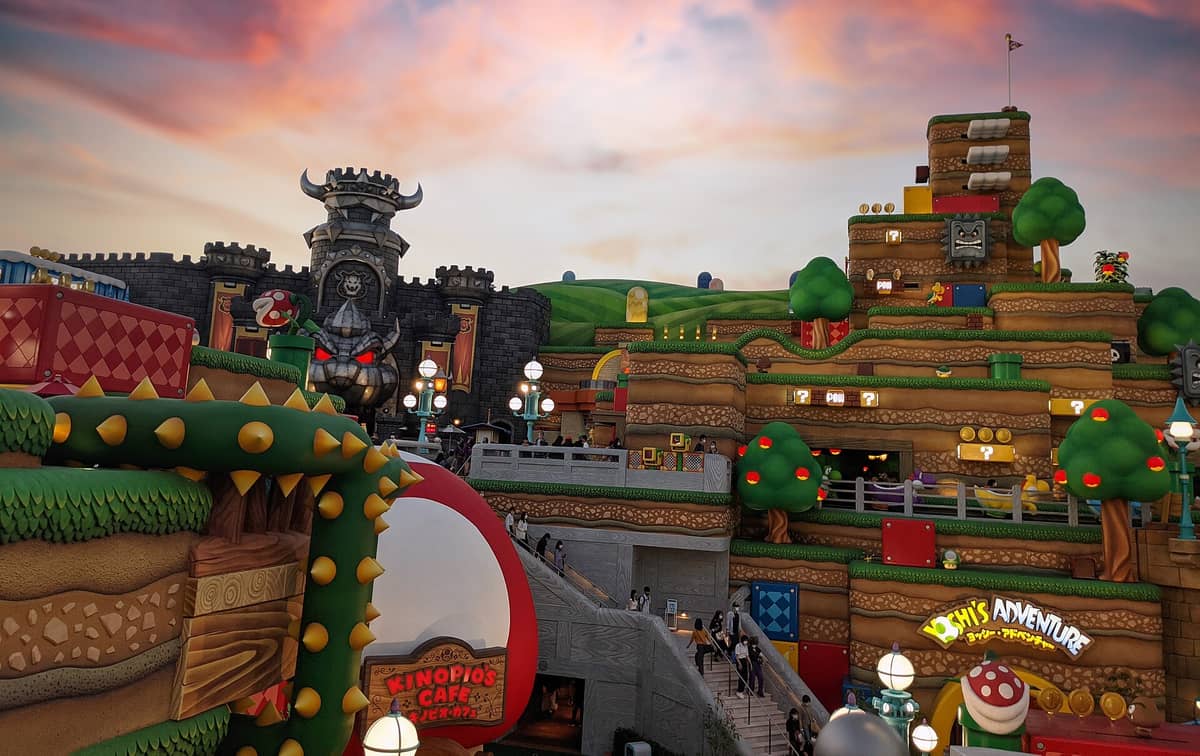
Nintendo World sits adjacent to the Wizarding World and operates on a reservation system for the main Super Nintendo World area during peak periods. Visitors are assigned a timed entry window via the USJ app, and it is worth securing this as early as possible on the day of visit. The zone is colorful, physically interactive (wristbands let you collect coins and compete in mini-games), and designed with a density of detail that rewards slow exploration rather than rushing to the main ride, Mario Kart: Koopa's Challenge.
Minion Park and Jurassic World skew toward younger children and families, and tend to have shorter queues than the headliner zones. The Hollywood Dream roller coaster, a more traditional steel coaster near the park entrance, often has some of the longest queues of the day and is worth targeting at opening or in the final hour.
💡 Local tip
Download the USJ app before your visit. It shows live wait times for every attraction, lets you book Express Pass add-ons, and — crucially — allows you to secure timed entry for Super Nintendo World. The app works in English.
Getting There from Osaka City
The most direct route from central Osaka is the JR Yumesaki Line (also called the JR Sakurajima Line), which terminates at Universal City Station. From JR Osaka Station, the ride takes roughly 15 minutes on a direct train, and from there the main park gate is a 5-minute walk through a short outdoor mall. Trains run frequently and the route is well-signed in English. This is by far the simplest approach.
If you are based in the Namba area, you can take the Osaka Metro Yotsubashi Line to Taisho Station and transfer to the JR Osaka Loop Line toward Osaka Station, then switch to the Yumesaki Line. It adds a transfer but remains straightforward. A direct bus service also connects several major hotels to the park, which is useful if you are carrying bags or traveling with young children. For practical guidance on moving around the city, getting around Osaka covers all major transit options in detail.
Tickets, Pricing, and Express Passes
USJ operates a dynamic pricing model: the base 1-Day Studio Pass price changes depending on the date. High-demand dates (school holidays, public holidays, weekends during peak season) carry higher prices. As of the most recent available data, adult prices start from approximately ¥8,900 on the lowest-demand dates and rise significantly for peak dates. Prices must be checked on the official USJ website before purchasing, as they change seasonally.
Express Passes, sold separately, allow you to skip the standby queue at a set of named attractions. These passes are tiered — higher tiers cover more rides and cost considerably more — but during peak periods, they can reduce your wait for a flagship ride from 90 minutes to under 10. They are worth calculating against how much of your day you want to spend in queues. Express Passes sell out in advance, especially for weekend and holiday dates.
If you are trying to stretch your Osaka budget, note that USJ is one of the more expensive single-day activities in the city. For context on how it fits within a broader trip, see our guide to visiting Osaka on a budget or the comprehensive USJ planning guide for full ticket and pass breakdowns.
Seasonal Considerations and Weather
Osaka's climate directly affects how comfortable a full day at USJ will be. The park is largely outdoors with limited covered queue areas. Summer (June through August) brings heat, humidity, and Japan's rainy season in June and early July, when daily rainfall averages are high. The August crowds are dense; Japanese school summer holidays overlap with international travel peaks, creating some of the busiest park conditions of the year. If you visit in summer, lightweight, moisture-wicking clothing and a portable fan are not optional extras — they are practical necessities.
Spring (late March through May) and autumn (October through November) are the most comfortable periods. Spring also brings cherry blossom season, which affects not just the park experience but the ease of getting accommodation around Osaka. Halloween Horror Nights runs through October and into early November, transforming large sections of the park after dark with horror-themed mazes, scare zones, and live entertainment; the general event is included with regular Studio Pass admission, though some specific mazes or premium experiences may require separate tickets.
Winter visits (December through February) bring Christmas theming, lower crowds on weekdays, and cooler but generally manageable temperatures. For a broader view of when to plan your Osaka trip, the best time to visit Osaka guide covers seasonal tradeoffs across the whole city.
Accessibility and Practical Logistics
USJ has stated a commitment to barrier-free access throughout the park. Wheelchair rentals are available near the main entrance for a fee. All restrooms include wheelchair-accessible facilities, some with adjustable nursing beds. Assistance dogs (including guide dogs and mobility service dogs) are permitted in all restaurants and shops. Subtitle-viewing glasses for hearing-impaired guests, tactile maps, and support stickers are available at guest services near the entrance. Some attractions, including Yoshi's Adventure, can be experienced while remaining seated in a wheelchair.
Food and drink inside the park is priced at theme park rates, which is to say significantly above Osaka street level. Budget roughly ¥1,500–¥2,500 per person for a meal inside the park. Lockers are available near the entrance for bags and coats, which matters in summer when carrying a jacket through a 35°C park becomes impractical. Coin lockers are also available at Universal City Station if you want to store luggage before entering.
⚠️ What to skip
Height restrictions apply to several major attractions. Check the official USJ website for current height requirements before visiting with young children, so expectations are set in advance.
Who Should Manage Expectations
USJ is a large, well-run commercial theme park, and it delivers exactly what it promises. But it is worth being clear: if you are not a fan of any of the franchises represented in the park (Harry Potter, Nintendo, Minions, Jurassic World, and others), the experience reduces to rides and queues without the thematic layer that makes the destination engaging. Visitors looking for Japanese cultural depth will not find it here. The park is also genuinely tiring on high-crowd days, and anyone with limited mobility or sensitivity to crowds and noise should factor in the physical demands of a full day.
Travelers seeking Osaka's cultural texture would do better spending a full day in areas like the Osaka Castle area or exploring traditional neighborhoods. USJ is a strong choice for families with children, franchise fans, and first-time visitors to Japan who want a high-production-value entertainment experience. It is less suited to the traveler on a tight budget or anyone prioritizing depth of local experience over spectacle.
Insider Tips
- Arrive at least 20 minutes before the official park opening time. The gates often open slightly early, and being in the first wave through gives you a critical head start on Wizarding World and Nintendo World before queues compound.
- The Nintendo World timed-entry reservation opens in the USJ app at park opening. Do not walk anywhere else first — open the app and secure your slot immediately after scanning your ticket at the gate.
- Themed popcorn buckets (sold throughout the park) can be reused for discounted refills throughout the day for an additional fee. They are also a practical way to carry a snack hands-free without stopping at a restaurant and losing significant queue time.
- If you are visiting during Halloween Horror Nights, be aware that the event is included with regular Studio Pass admission and runs during standard operating hours, though certain premium mazes or experiences may require separate tickets.
- The JR Yumesaki Line back to Osaka Station gets extremely crowded at park closing time. If you can stay 30–45 minutes after the bulk of the crowd exits, or grab dinner at Universal City Walk (the outdoor shopping street outside the gates), the platform congestion drops noticeably.
Who Is Universal Studios Japan (USJ) For?
- Families with children aged 5 and up who want a full day of structured entertainment
- Harry Potter and Nintendo franchise fans who want to experience the themed zones at their most immersive
- First-time visitors to Japan looking for a high-energy, English-friendly attraction alongside cultural sightseeing
- Groups with mixed interests who need a single destination that keeps everyone engaged
- Visitors during seasonal events (Halloween Horror Nights, Christmas) seeking a specifically theatrical atmosphere
Nearby Attractions
Other things to see while in Osaka Bay Area:
- Osaka Aquarium Kaiyukan
Osaka Aquarium Kaiyukan sits at the edge of Tempozan Harbor and draws visitors with its massive Pacific Rim tank, whale sharks, and layered underwater walk. Here's everything you need to decide if it deserves a spot on your itinerary.