Kema Sakuranomiya Park: Osaka's Great Cherry Blossom Riverside Walk
Kema Sakuranomiya Park stretches for several kilometers along the Okawa River in central Osaka, lined with roughly 4,800 cherry trees that draw enormous crowds each spring. It is free to enter, open around the clock, and easily reached from multiple train lines. Outside of cherry blossom season, the park is a quiet, flat riverside corridor used primarily by joggers and cyclists.
Quick Facts
- Location
- Miyakojima Ward & Kita Ward, Osaka City (along the Okawa River, Kema to Tenmabashi)
- Getting There
- JR Osaka Loop Line: Sakuranomiya Station (west exit). Also Temmabashi Station (Osaka Metro Tanimachi Line / Keihan Main Line)
- Time Needed
- 45 minutes for a quick stroll; 2–3 hours to walk the full length and linger
- Cost
- Free (public park, open 24 hours year-round)
- Best for
- Cherry blossom viewing (late March to early April), joggers, photographers, picnickers
What Kema Sakuranomiya Park Actually Is
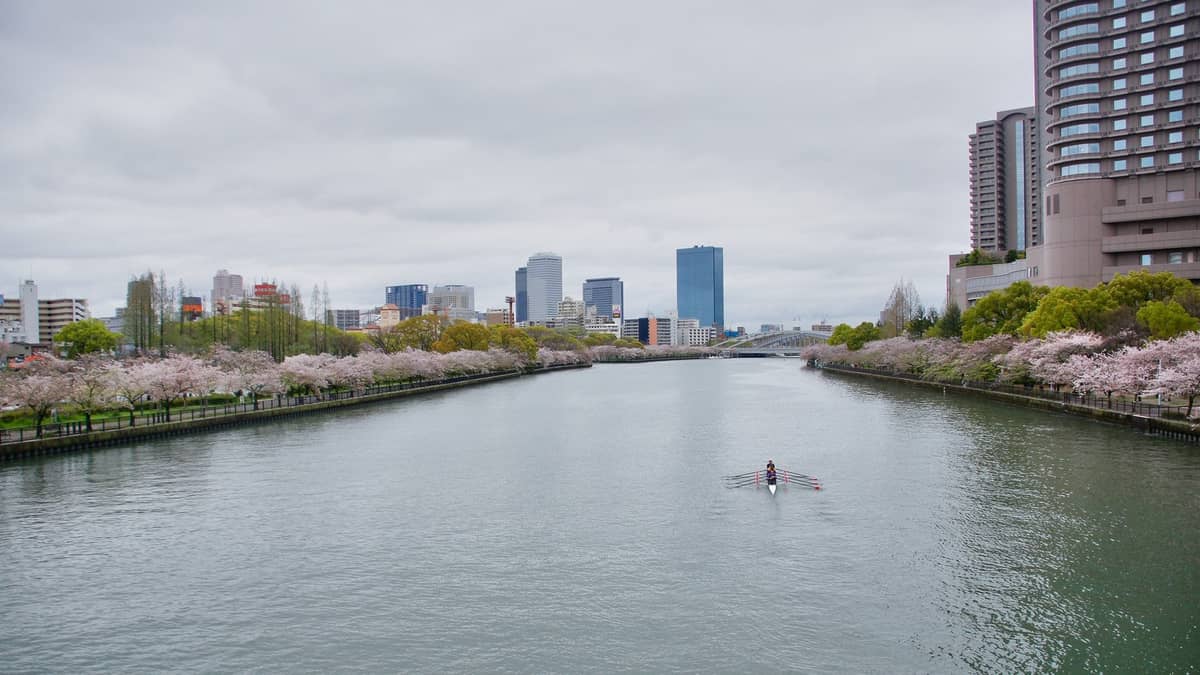
Kema Sakuranomiya Park (毛馬桜之宮公園) is a long, narrow public park running along both banks of the Okawa River in central Osaka. It extends roughly 4.2 kilometers between the Kema area in the north and Tenmabashi in the south, passing through Miyakojima Ward and Kita Ward. For most of the year it functions as a pleasant but unremarkable green corridor used by commuters, joggers, and dog walkers. Then, for two to three weeks in late March and early April, around 4,800 cherry trees transform the riverbanks into one of the most visually concentrated sakura displays in the entire Kansai region.
The trees are primarily Somei Yoshino, the pale pink variety that defines the Japanese cherry blossom aesthetic, interspersed with other cultivars that extend the bloom window slightly. When they are all open at once, the canopy over the riverside path forms an almost unbroken tunnel of petals. On calm days, fallen blossoms drift across the water's surface and collect in slow-moving drifts along the riverbank, a phenomenon the Japanese call hanaikada (flower raft).
ℹ️ Good to know
The park is free and open 24 hours, every day of the year. No ticket booth, no reservation required. During cherry blossom season, temporary food and drink stalls set up along parts of the path.
How the Park Changes by Time of Day
Timing your visit matters more here than at almost any other Osaka park. The riverside path is fully exposed, with no tall buildings blocking the light on the east bank. Early morning, roughly 6:00 to 8:00 AM, is the clearest time: the light is soft and low, the water catches color, and the crowd is limited to a few joggers and the occasional serious photographer with a tripod already set up the night before. The air at this hour carries the faint sweetness of cherry blossoms, which is real but subtle, more noticeable in the absence of food stall smoke and cooking smells that arrive by late morning.
By 10:00 AM on a weekend in peak bloom, the main path near Sakuranomiya Station becomes genuinely crowded. Blue tarps appear on the grass as groups stake out picnic spots, sometimes from the night before. The density of people is high enough that walking freely becomes difficult near the center of the park. If your priority is atmosphere over photographs, this is actually when the park is most interesting: bento boxes, cans of beer, families, couples, elderly groups with portable karaoke speakers. Hanami (flower viewing) in Japan has always been as much about the social gathering as the trees.
Evenings during blossom season bring a third version of the park entirely. Paper lanterns and temporary lighting illuminate sections of the path, and the water reflects the illuminated trees in a way that daylight cannot replicate. This is yozakura, nighttime cherry blossom viewing, and it draws a different crowd: couples, small groups of friends, people who avoided the afternoon rush. The light is artificial but the effect is genuinely striking. Note that specific lighting arrangements and hours vary by year, so check local announcements for the current season.
Tickets & tours
Hand-picked options from our booking partner. Prices are indicative; availability and final rates are confirmed when you complete your booking.
Kobe: Mt. Rokko Night View, Kitano Ijinkan, Arima Onsen Full Day Tour
From 47 €Instant confirmationFree cancellationOsaka local food tour in Dotonbori and Shinsekai
From 51 €Instant confirmationFree cancellationGuided day tour from Osaka to Nara Park, Arashiyama and Fushimi Inari
From 59 €Instant confirmationFree cancellationShiga Day Trip with Miho Museum, Lake Biwa and Waterbird Shrine
From 70 €Instant confirmationFree cancellation
The Park Outside Cherry Blossom Season
This is important context that most seasonal guides omit: the vast majority of visitors come only for the sakura, which means the rest of the year the park is quiet and genuinely pleasant. The riverside path is flat, wide, and paved, making it a practical jogging route that locals use daily. In summer, the trees provide solid shade, though the humidity makes midday walks uncomfortable. Autumn brings some leaf color, though Kema Sakuranomiya is not a koyo (autumn foliage) destination in the way that dedicated maple gardens are.
The park connects logically to a broader riverside walk that takes you toward Temmabashi and the Nakanoshima Park area to the south, making it a useful segment of a longer on-foot exploration of central Osaka along the waterway network. The Okawa River itself is interesting for boat traffic, and on weekends you may see pleasure cruises passing by.
Visitors who arrive outside of late March to early April and expect the drama of the blossom season should adjust expectations. The park is a pleasant urban green space, but without the sakura it does not offer compelling sightseeing in its own right. Plan it as part of a walk rather than a destination.
Getting There and Getting Around the Park
The most direct access point is JR Osaka Loop Line's Sakuranomiya Station. Leave from the west exit and you are at the riverbank within a two-minute walk. The station name is not a coincidence: it was effectively named for the park. From Temmabashi Station on the Osaka Metro Tanimachi Line or the Keihan Main Line, you enter the park from the south end, which tends to be slightly less crowded during peak blossom season. A third option is Osakajo-Kitazume Station on the JR Tozai Line, useful if you are combining the visit with nearby areas.
The main path along the east bank (the Sakuranomiya side) is the most trafficked route and has the densest concentration of trees. The west bank path is quieter and offers good views across the water to the main tree line, which is useful for photography. Both paths are flat and paved. The riverside surface is suitable for wheelchairs and strollers, though the small access slopes from street level to the riverside path may vary; the main routes have gentle grades.
💡 Local tip
During cherry blossom season, weekend crowds near Sakuranomiya Station peak between 11:00 AM and 3:00 PM. Arriving before 8:30 AM or after 6:00 PM gives you meaningfully more space on the path.
Photography and Practical Considerations
The east bank path photographs well in the morning when the light comes from behind you if you are walking north. For shots looking south with the city in the background, late afternoon light works better. The Temmabashi bridge area at the south end of the park provides one of the more composed wide-angle views: the arched bridge, the tree line, and the water all align cleanly. This is also the spot most often used for professional sakura photography in Osaka.
Fallen petals on the water are most visible on calm, dry days, typically in the final few days of peak bloom. Wind can strip the trees quickly, and rain accelerates petal fall significantly. If you are planning a visit specifically for photography, monitor the weather forecast and the sakura forecast issued by Japan's meteorological organizations in early March each year.
Osaka's cherry blossom timing is closely tied to the city's spring weather patterns. For a broader picture of seasonal timing across the city, the Osaka cherry blossom guide covers bloom forecasts, best viewing spots, and hanami etiquette in detail.
⚠️ What to skip
Blue tarp picnic spots fill up very early on weekends during peak bloom. Groups sometimes arrive before dawn to claim the best spots near Sakuranomiya Station. If you want a specific patch of grass, arrive by 7:00 AM or choose a weekday.
Combining Kema Sakuranomiya with Other Areas Nearby
The park sits close enough to several other worthwhile destinations that combining visits makes sense. Osaka Castle Park is about a 20-minute walk southeast, and its own cherry trees bloom at roughly the same time each year, making a single morning walk that connects both parks along the river path a popular route during sakura season.
Heading south from Temmabashi, the Nakanoshima district spans a narrow island in the river and has a distinct character: classical European-influenced civic buildings, quiet riverside walkways, and the Osaka City Central Public Hall, a 1918 Baroque-influenced structure that is designated as an Important Cultural Property. It makes for a natural extension of a riverside afternoon.
If you are building a longer itinerary, Osaka walking routes that cover the Okawa River corridor can help you sequence the park with surrounding neighborhoods efficiently.
Insider Tips
- The west bank path is consistently less crowded than the east bank and gives you a better unobstructed view of the main tree line across the water. Cross at any of the small bridges and walk back along the opposite side.
- Sakuranomiya Station has limited space on its platforms and at the gates during peak blossom weekends. Temmabashi Station, reached via the Keihan Line or Osaka Metro Tanimachi Line, is a calmer entry point with multiple exits and nearby convenience stores.
- The final two to three days of peak bloom, when petals are actively falling, often produce the most atmospheric conditions for photography, even though the trees look less full. The combination of drifting petals, petal mats on the water, and slightly thinned canopy creates more dynamic images than a uniform canopy at full peak.
- Temporary food stalls during hanami season are concentrated near the Sakuranomiya Station end of the park. They typically sell beer, yakitori, takoyaki, and other street food from late morning. Prices are slightly higher than convenience store alternatives, but the atmosphere is part of the experience.
- On weekday mornings outside of cherry blossom season, the park has a genuine local character: older residents doing calisthenics, school-age cyclists, and boat crews on the river. It is one of the few large green spaces in central Osaka where you can walk for 30 minutes without feeling like you are in a tourist zone.
Who Is Kema Sakuranomiya Park For?
- Cherry blossom viewers and hanami enthusiasts visiting Osaka in late March to early April
- Photographers looking for the Okawa River petal-on-water shots or illuminated yozakura scenes
- Joggers and cyclists wanting a flat, multi-kilometer riverside route through the city
- Travelers combining a riverside walk with nearby Osaka Castle Park or Nakanoshima in a single half-day itinerary
- Budget travelers: the park is free, open all day, and requires no planning beyond checking the sakura forecast
Nearby Attractions
Combine your visit with:
- Expo '70 Commemorative Park
Built on the grounds of the 1970 Japan World Exposition, Expo '70 Commemorative Park (万博記念公園) in Suita City is one of greater Osaka's largest open spaces. It combines parkland, a traditional Japanese garden, a museum dedicated to the original expo, and the striking Tower of the Sun — an icon of 20th-century Japanese design that still stops visitors in their tracks.
- Minoh Falls
Minoh Falls (箕面大滝) sits inside Meiji-no-Mori Minoh Quasi-National Park, north of Osaka city. The trail from Hankyu Minoh Station follows a wooded river gorge for roughly 40 to 45 minutes before delivering you to the falls. Admission is free, and the park and falls area are open 24 hours with no staffed gate.
- Mint Museum Osaka (Japan Mint)
Tucked inside the grounds of Japan Mint's Osaka headquarters in Kita-ku, the Mint Museum offers a free, unhurried look at the full sweep of Japanese coinage history, from ancient cast coins to contemporary commemorative medals. It is one of Osaka's more quietly rewarding museums, and one of the few major attractions in the city that costs nothing to enter.
- Nagai Botanical Garden
Tucked inside Nagai Park in Higashisumiyoshi Ward, the Osaka Municipal Nagai Botanical Garden is a serious green space where locals outnumber tourists and seasonal plant displays are taken seriously. At 300 yen entry, it offers one of the best value-to-experience ratios of any attraction in the city.