Mint Museum Osaka (Japan Mint): A Free, Underrated Window Into Japanese Coinage History
Tucked inside the grounds of Japan Mint's Osaka headquarters in Kita-ku, the Mint Museum offers a free, unhurried look at the full sweep of Japanese coinage history, from ancient cast coins to contemporary commemorative medals. It is one of Osaka's more quietly rewarding museums, and one of the few major attractions in the city that costs nothing to enter.
Quick Facts
- Location
- 1-79 Tenma 1-chome, Kita-ku, Osaka 530-0043 (inside Japan Mint Head Office grounds)
- Getting There
- Osaka Tenmangu Station (JR Tozai Line, ~10 min walk); Minamimorimachi Station (Osaka Metro Tanimachi/Sakaisuji Lines, ~15 min); Sakuranomiya or Kyobashi (JR Loop Line, ~15 min)
- Time Needed
- 45–90 minutes
- Cost
- Free (no admission fee)
- Best for
- History enthusiasts, numismatists, budget travelers, curious visitors wanting a crowd-free experience
- Official website
- www.mint.go.jp/enjoy-eng/tour-eng/eng_plant_museum.html
What Is the Mint Museum Osaka?
The Mint Museum Osaka sits within the compound of the Japan Mint's Head Office in Tenma, Kita-ku, one of the oldest and most significant government facilities in the city. The museum is operated by the Japan Mint, the government agency responsible for producing all of Japan's circulation coins, commemorative coins, and official medals. Admission is free, which makes it one of the more accessible museum experiences in Osaka for travelers watching their budget.
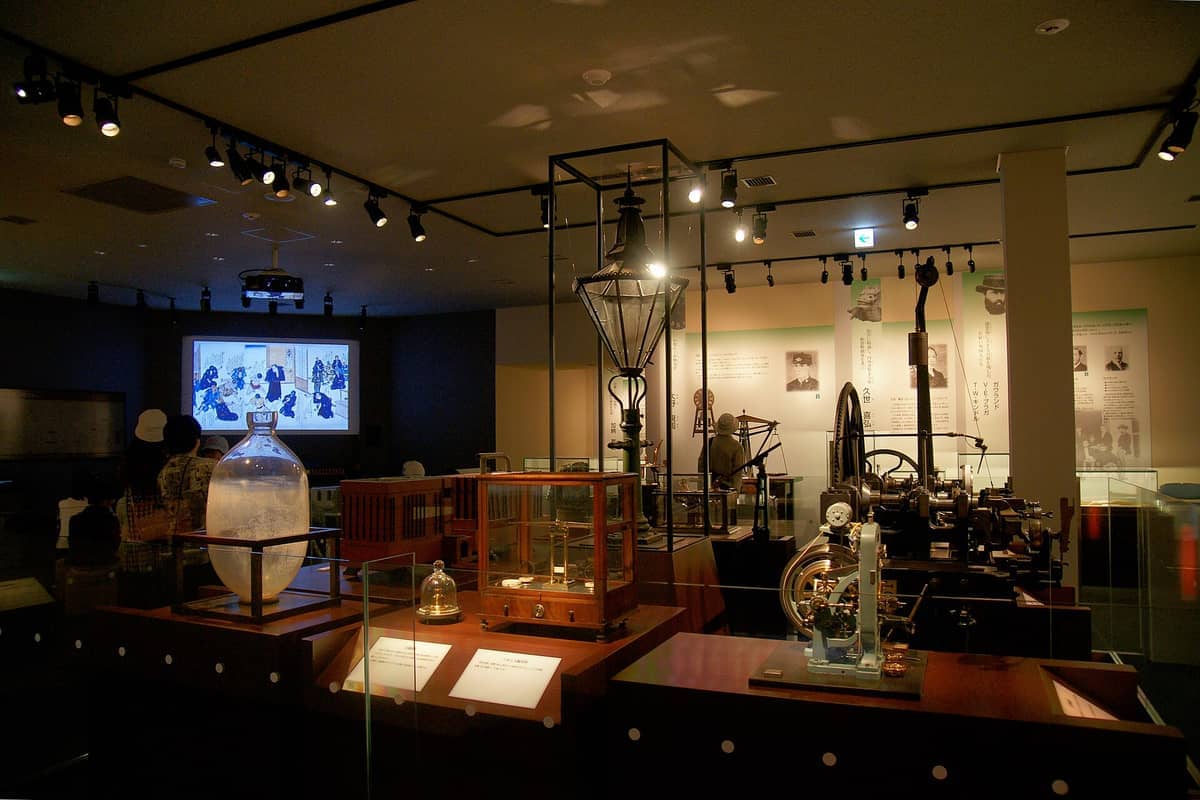
The museum's focus is tight and deliberate: the history of Japanese coinage from its earliest forms through to the modern era, plus the story of how Japan Mint itself has shaped that history since the Meiji period. It is not a sprawling general history museum. If you come expecting interactive digital galleries or a broad cultural panorama, you will be slightly out of step with what is on offer. What you get instead is a focused, well-maintained collection of coins, medals, coin-making equipment, and related historical artifacts, presented with calm institutional seriousness.
ℹ️ Good to know
Entrance to the Mint Museum is through the front (main) gate of the Japan Mint compound, not through a separate public entrance. Allow a moment to orient yourself when you arrive, especially if visiting for the first time.
What You Will Actually See Inside
The collection traces Japanese monetary history chronologically, beginning with early cast coins modeled on Chinese currency and moving through the Edo-period gold and silver coinage that financed feudal Japan, the Meiji-era transition to a Western-style monetary system, and the modern coin series familiar to anyone who has handled yen. Display cases are organized clearly, and many coins are shown in close detail alongside explanatory panels.
A significant portion of the museum is dedicated to commemorative coins and medals produced by Japan Mint for special occasions: Olympic Games, imperial ceremonies, and national anniversaries. Some of these pieces are genuinely striking in terms of their craftsmanship, with fine bas-relief work that rewards close inspection. The museum also displays coin-minting machinery and tools that give a sense of the industrial process behind what most people handle without a second thought.
For travelers with even a passing interest in numismatics, the density of rare and historically significant pieces on display makes this a worthwhile stop. For those with no particular interest in coins, the visit still functions as a compact window into Japanese economic and political history, since coinage tells you a great deal about who held power and what a society valued at any given moment.
Tickets & tours
Hand-picked options from our booking partner. Prices are indicative; availability and final rates are confirmed when you complete your booking.
Osaka local food tour in Dotonbori and Shinsekai
From 51 €Instant confirmationFree cancellationGuided day tour from Osaka to Nara Park, Arashiyama and Fushimi Inari
From 59 €Instant confirmationFree cancellationHimeji, Nara and Kobe full-day tour from Osaka
From 76 €Instant confirmationFree cancellationDay trip to Hiroshima and Miyajima by bullet train from Osaka
From 287 €Instant confirmationFree cancellation
The Japan Mint Grounds: Context and Setting
The Japan Mint's Osaka facility was established in the early Meiji period as Japan modernized its monetary system, and the compound retains a sense of institutional solidity. The grounds are not a public park in the conventional sense, but they are known across Japan for one annual event: the cherry blossom viewing period, when a famous row of late-blooming cherry trees along the inner path is opened to the public. The museum itself closes during this Cherry Blossom Viewing period, so if you visit during sakura season specifically to see the museum, check the official schedule carefully before you go.
The area around the mint sits near the Okawa River, which places it within comfortable walking distance of Osaka Tenmangu Shrine and the broader Tenma neighborhood. After the museum, a short walk toward the riverbank gives you a different quality of experience: open sky, the sound of water, and a much lighter pedestrian presence than you will find in central Namba or Shinsaibashi.
Visiting by Time of Day: When to Go
The museum opens at 09:00 and closes at 16:45, with last entry at 16:00. Weekday mornings tend to be the quietest, with visitor numbers low enough that you can take your time at individual display cases without feeling rushed. Weekends draw slightly more visitors, particularly families and school groups, though the museum rarely reaches the congestion levels you encounter at Osaka Castle or Dotonbori.
The museum is closed every Wednesday, as well as during the year-end and New Year holiday period, during the Cherry Blossom Viewing period in the Mint, and on certain maintenance and exhibition update days. Always confirm the schedule on the official Japan Mint website before making a special trip, particularly if you are visiting around public holidays.
⚠️ What to skip
The museum closes during the annual Cherry Blossom Viewing period in the Mint, when the Mint grounds are opened separately for sakura viewing. These are two distinct events: check the official Japan Mint schedule to avoid arriving when the museum is shut. Verify current hours at mint.go.jp before visiting.
How to Get There
The most direct transit approach is via the JR Tozai Line to Osaka Tenmangu Station, from which the museum entrance is about a 10-minute walk. Alternatively, Minamimorimachi Station on the Osaka Metro Tanimachi and Sakaisuji Lines puts you about 15 minutes away on foot. From the JR Osaka Loop Line, both Sakuranomiya and Kyobashi Stations are roughly 15 minutes by foot.
If you are already exploring the Nakanoshima and Tenma area, the museum fits naturally into a longer on-foot itinerary. The walk from Nakanoshima Park takes around 20 minutes through a part of the city that feels notably calmer than the main tourist corridors. The streets between Nakanoshima and Tenma have a grounded, residential-commercial character, with small eateries and neighborhood shops that are worth a browse.
Practical Considerations
Entry is free and requires no advance booking for individual visitors. Groups of ten or more people are required to make an advance telephone reservation (conducted in Japanese). If you are organizing a group visit and do not speak Japanese, you may need to arrange for a Japanese-speaking contact to handle the booking, or inquire by email through the official Japan Mint contact channels.
Specific wheelchair and barrier-free access details are not comprehensively described on the official English-language museum pages. Visitors with mobility requirements are advised to contact the Mint directly in advance to confirm what access arrangements are available.
Photography policies within the museum should be confirmed on-site or through the official website, as rules for museum collections vary. For those interested in the broader Osaka museum landscape, the Osaka Museum of History and the National Museum of Art Osaka offer complementary perspectives on the city's past and cultural production, at different price points and scales.
Honest Assessment: Is It Worth Your Time?
The Mint Museum Osaka is not a blockbuster attraction, and it does not position itself as one. If your primary interest is Osaka's food culture, nightlife, or architecture, this is unlikely to rank high on your list. But for travelers who value specificity over spectacle, it delivers a genuinely interesting 60 to 90 minutes at zero cost, in a setting that feels removed from the commercial intensity of much of central Osaka.
Visitors who enjoy the kind of detail-oriented, quiet museum experience that Japan does particularly well will find this rewarding. It pairs well with a morning that starts at Osaka Tenmangu Shrine and continues along the Tenjinbashisuji shopping street, which is one of the longest covered shopping arcades in Japan. For a broader look at free and low-cost options across the city, the guide to free things to do in Osaka offers a useful overview.
Travelers who should probably skip it: those with only one or two days in Osaka and a long list of higher-priority landmarks, anyone looking for hands-on or interactive exhibits, and visitors who find coin and currency history genuinely unengaging. There is no shame in recognizing that a free attraction is not the right fit for your interests on a given trip.
Insider Tips
- The museum entrance is inside the Japan Mint compound gate, not on the street itself. Follow the signs from the main gate rather than looking for a separate public entrance on the outer perimeter wall.
- Weekday mornings between 09:00 and 11:00 offer the most undisturbed viewing, with minimal foot traffic and full access to display cases without crowding.
- The cherry blossom viewing period and the museum visit are mutually exclusive events: the mint opens its grounds for sakura but closes the museum during that window. Plan accordingly if either experience is a priority.
- Groups of ten or more need advance reservation by telephone, in Japanese. Solo and small-group visitors can arrive without booking, but confirming the day's schedule on the official website before traveling is strongly recommended.
- Combine the visit with a walk along the Okawa River to Sakuranomiya area, which offers some of Osaka's better riverside scenery without the crowds of the main tourist zones.
Who Is Mint Museum Osaka (Japan Mint) For?
- Numismatists and anyone interested in the history of Japanese money and coinage
- Budget travelers seeking free, substantive museum experiences in Osaka
- History enthusiasts who want context on Japan's Meiji-era modernization
- Visitors who prefer calm, unhurried museum environments over high-traffic attractions
- Travelers already exploring the Tenma and Nakanoshima neighborhoods who have time for a focused detour
Nearby Attractions
Combine your visit with:
- Expo '70 Commemorative Park
Built on the grounds of the 1970 Japan World Exposition, Expo '70 Commemorative Park (万博記念公園) in Suita City is one of greater Osaka's largest open spaces. It combines parkland, a traditional Japanese garden, a museum dedicated to the original expo, and the striking Tower of the Sun — an icon of 20th-century Japanese design that still stops visitors in their tracks.
- Kema Sakuranomiya Park
Kema Sakuranomiya Park stretches for several kilometers along the Okawa River in central Osaka, lined with roughly 4,800 cherry trees that draw enormous crowds each spring. It is free to enter, open around the clock, and easily reached from multiple train lines. Outside of cherry blossom season, the park is a quiet, flat riverside corridor used primarily by joggers and cyclists.
- Minoh Falls
Minoh Falls (箕面大滝) sits inside Meiji-no-Mori Minoh Quasi-National Park, north of Osaka city. The trail from Hankyu Minoh Station follows a wooded river gorge for roughly 40 to 45 minutes before delivering you to the falls. Admission is free, and the park and falls area are open 24 hours with no staffed gate.
- Nagai Botanical Garden
Tucked inside Nagai Park in Higashisumiyoshi Ward, the Osaka Municipal Nagai Botanical Garden is a serious green space where locals outnumber tourists and seasonal plant displays are taken seriously. At 300 yen entry, it offers one of the best value-to-experience ratios of any attraction in the city.