National Museum of Art, Osaka: The Underground Gallery Worth Seeking Out
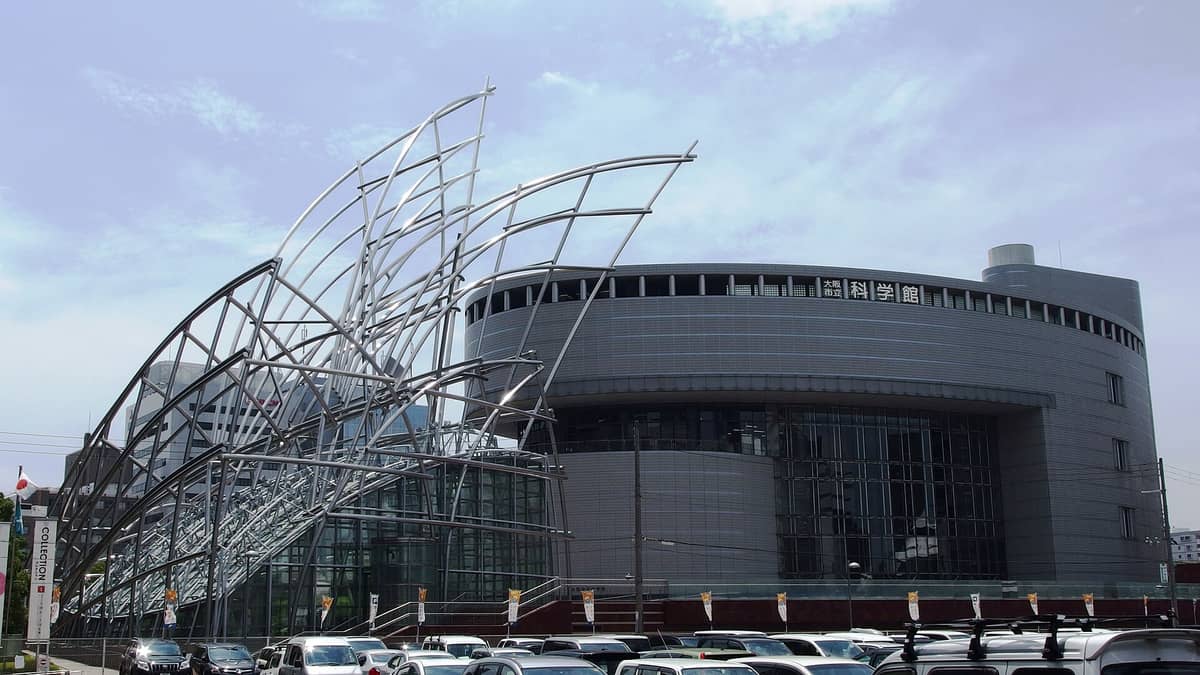
Built entirely below ground on Nakanoshima island, the National Museum of Art, Osaka is one of Japan's leading contemporary art institutions. Its sculptural steel entrance rises from the riverbank like a modern landmark, while the real experience unfolds in the quiet, gallery-lit floors beneath.
Quick Facts
- Location
- 4-2-55 Nakanoshima, Kita-ku, Osaka 530-0005
- Getting There
- Watanabebashi Station (Keihan Nakanoshima Line, Exit 2) — 5-7 min walk; Higobashi Station (Osaka Metro Yotsubashi Line, Exit 3) — 7-10 min walk
- Time Needed
- 1.5 to 3 hours depending on exhibition
- Cost
- Collection exhibition: adults ¥430, university students ¥130; free for under-18s and seniors 65+. Special exhibitions priced separately. Friday/Saturday evening discount after 17:00.
- Best for
- Contemporary art lovers, architecture enthusiasts, rainy-day culture seekers
- Official website
- www.nmao.go.jp/en
What Makes This Museum Different
The National Museum of Art, Osaka (国立国際美術館) has an identity unlike any other museum in Kansai. Its entire exhibition space sits underground, beneath Nakanoshima island, and what greets you at street level is not a grand façade but a cluster of bent steel rods and curved tubes that reach upward like an abstract sculpture. The structure, designed by Cesar Pelli and Associates and opened in its current location in 2004, was intended to evoke a growing bamboo grove. Whether it succeeds is a matter of taste, but it earns a second look.
The original museum had a different life entirely. It opened in 1977 at Expo '70 Commemorative Park in Suita, on the same grounds where Taro Okamoto's Tower of the Sun still stands. The move to Nakanoshima brought the collection into the cultural and civic heart of Osaka, placing it alongside the Osaka Science Museum and within easy reach of the city's central office and gallery districts.
ℹ️ Good to know
The museum is closed on Mondays. If Monday falls on a national holiday, it opens that day and closes the following Tuesday instead. It also closes during exhibition changeover periods and New Year holidays, so check the official website before visiting if your schedule is tight.
Arriving at Nakanoshima: The Approach Matters
Nakanoshima is a long, narrow island sitting between the Dojima and Tosabori rivers in central Osaka. Walking to the museum from Watanabebashi Station takes about five to seven minutes along the island's western edge, past the grassy riverside paths that local office workers use for lunchtime walks. In the morning, the light off the Tosabori River is clean and flat. In autumn, the ginkgo trees along Nakanoshima's central promenade turn a sharp yellow that frames the approach unusually well.
The island itself rewards a slower pace. If you have time before or after the museum, the rose garden at Nakanoshima Park is a short walk east, and the historic Osaka City Central Public Hall — a red-brick Taisho-era building from 1918 — is one of the more photogenic structures in the city. The walk between them along the riverside takes under ten minutes.
From Higobashi Station on the Yotsubashi Line, the walk takes seven to ten minutes via the Tosabori riverside path. Both routes are flat and accessible, with no steps on the main path. JR users coming from Fukushima or Shin-Fukushima stations face a roughly ten-minute walk across the river, which is straightforward but less scenic.
Tickets & tours
Hand-picked options from our booking partner. Prices are indicative; availability and final rates are confirmed when you complete your booking.
Night at Dining Darts Bar Bee Bee Namba in Osaka
From 8 €Instant confirmationFree cancellationBeeRUSH Minami Branch Multiple Darts Throwing Plans in Osaka
From 8 €Instant confirmationFree cancellationOsaka local food tour in Dotonbori and Shinsekai
From 51 €Instant confirmationFree cancellationGuided day tour from Osaka to Nara Park, Arashiyama and Fushimi Inari
From 59 €Instant confirmationFree cancellation
Going Underground: The Gallery Experience
Stepping inside, the first thing you notice is the descent. Escalators carry you two floors below street level to the reception area, and the transition from outdoor light to the museum's controlled, neutral illumination takes a moment to adjust to. The ceilings are low in the corridors but open up considerably inside each gallery. The effect feels deliberate: the space forces concentration on what's on the walls rather than on architectural spectacle.
The permanent collection covers Japanese and international contemporary art from the postwar period onward, with particular strengths in works acquired from the late 1960s through the 1990s. There are paintings, sculptures, prints, photographs, and video works. The collection runs to several thousand items, though only a portion is displayed at any time. The rotating selection means repeat visitors often see a meaningfully different show.
Special exhibitions, which run throughout the year and have separate admission prices from the collection galleries, tend to be well-curated and occasionally draw significant international loans. These are the main reason most visitors come on a given day. Check what is showing before you arrive, as the caliber of special exhibitions varies and some are considerably more compelling than others.
💡 Local tip
Friday and Saturday evenings offer extended hours until 20:00 and a reduced admission rate: adults pay ¥250 instead of ¥430 and university students ¥70 instead of ¥130 for the collection exhibition after 17:00. Crowds thin out noticeably by early evening, making it one of the better times to visit if you want the galleries to yourself.
Practical Walkthrough: What to Expect Room by Room
The layout is linear and easy to navigate. After descending to B2 and collecting your ticket, the main gallery spaces spread across the lower floors. Signage is available in Japanese and English throughout. Audio guides may be available for special exhibitions at additional cost — check at the counter on arrival.
The museum shop on the lower floor is genuinely worth a few minutes. It stocks art books, design objects, and exhibition catalogues at reasonable prices, with a better selection of contemporary Japanese art publications than you tend to find in tourist-facing shops elsewhere in the city. There is also a café on the premises, useful for a break between floors.
Coat and bag lockers are available and free to use, which matters on rainy days when you arrive with an umbrella and a wet jacket. Photography policies vary by exhibition and are typically posted at each gallery entrance. In general, personal photography without flash is permitted in the collection galleries, but prohibited in special exhibitions unless noted otherwise.
Who Will Get the Most From a Visit
Visitors with a genuine interest in postwar and contemporary art will find the collection rewarding, particularly the Japanese modern works that receive less international exposure than their Western counterparts. Architects and design-minded travelers often make the trip specifically for the Pelli building, which is worth seeing even if you only spend thirty minutes inside.
It is also an excellent rainy-day option. Being entirely underground means weather is irrelevant once you are inside, and the calm atmosphere contrasts well with the sensory intensity of other Osaka attractions. For visitors following a multi-day Osaka itinerary who want a cultural anchor beyond temples and street food, this is a natural choice.
Travelers primarily interested in traditional Japanese art — classical painting, ceramics, or Buddhist sculpture — will find the collection less relevant to their interests. For that, the Osaka Museum of History or a day trip to Kyoto's national collections may be a better use of time. Families with young children will find the space calm but not especially child-oriented; the Kids Plaza Osaka nearby provides a more interactive experience for that audience.
Hours, Admission, and Accessibility
Standard opening hours are 10:00 to 17:00, with extended hours until 20:00 on Fridays and Saturdays. Last admission is 30 minutes before closing. The museum is closed on Mondays (see the holiday exception above) and during New Year holidays.
- Adults: ¥430 (collection exhibition)
- University students (with ID): ¥130
- High school students, under-18s, and visitors 65 and over: free (ID required for seniors)
- Friday/Saturday evenings from 17:00: adults ¥250, university students ¥70
- Visitors with disabilities and one accompanying person: free admission (proof required)
- Special exhibitions: separate pricing, check the official site before visiting
Accessibility is well considered. Around ten wheelchairs are available for free loan at the first floor reception. Accessible restrooms with ostomy facilities are on the basement level. Guide dogs, hearing dogs, and service dogs are permitted throughout the building. Visitors arriving by car should use nearby paid parking, as the museum has no dedicated lot.
⚠️ What to skip
The museum occasionally closes during exhibition changeover periods that do not always appear on standard holiday calendars. If you are visiting specifically to see the collection or a particular exhibition, confirm current opening status on the official website (nmao.go.jp/en) a day or two before you go.
Fitting the Museum Into a Nakanoshima Day
Nakanoshima makes for a coherent half-day or full-day cultural itinerary. Combine the museum with a walk through the Museum of Art Osaka, which opened in 2022 on the eastern end of the island and focuses on modern Western and Japanese art from the late 19th century onward. The two museums have distinct collections and complement each other well without feeling repetitive.
If you are planning a broader museum-heavy day in Osaka, the best museums in Osaka guide gives a useful overview of how the National Museum of Art fits alongside the city's other cultural institutions, from the housing museum in Tenjinbashisuji to the science museum just across the road on Nakanoshima.
Insider Tips
- The Friday/Saturday evening discount after 17:00 is legitimate and the galleries are noticeably quieter by 18:00. If you are staying in central Osaka, this is the most comfortable time to visit.
- The museum's steel entrance structure photographs best in late afternoon when the light catches the curved rods at an angle. From the riverside path along the Tosabori, you can get the structure framed against the water with minimal foot traffic in the early morning.
- University students from overseas qualify for the discounted rate with a valid student ID card — you do not need a Japanese institution card. Carry yours and ask at the ticket counter.
- If you are visiting during a major special exhibition, arrive within the first hour of opening or after 16:00 to avoid the midday concentration of visitors. Weekday mornings are consistently the least crowded.
- The museum shop carries art catalogues for past exhibitions at reduced prices. If you missed a show you read about, it is worth checking the catalogue shelves before you leave.
Who Is National Museum of Art, Osaka For?
- Contemporary art enthusiasts looking for serious curatorial work outside Tokyo
- Architecture and design travelers interested in the Cesar Pelli underground building
- Rainy-day visitors wanting a calm, weather-proof cultural experience
- Visitors on a multi-day Osaka trip who want a cultural counterpoint to the city's food and street-life reputation
- Budget-conscious museum-goers: the collection admission is one of the lowest of any national museum in Japan
Nearby Attractions
Other things to see while in Nakanoshima:
- Kitahama Retro District
The Kitahama Retro Building is a beautifully preserved early 20th-century Western-style structure on the banks of the Dojima River, housing a British tearoom and cake shop. It stands as one of Osaka's most photogenic historical buildings, offering afternoon tea in a setting that feels entirely removed from the modern city just outside.
- Nakanoshima Museum of Art Osaka
The Nakanoshima Museum of Art Osaka (NAKKA) opened in February 2022 as the city's most significant new cultural institution in decades. Housed in a bold matte-black cube on Nakanoshima island, it focuses on modern and contemporary art and sits a short walk from some of Osaka's most elegant civic architecture. Here is everything you need to plan a visit.
- Nakanoshima Park
Nakanoshima Park occupies a narrow sandbank between the Dojima and Tosabori rivers in central Osaka, offering a free, unhurried escape from the city's commercial energy. The park is anchored by a rose garden and framed by some of Osaka's most significant Meiji and Taisho-era civic buildings, making it as much an architectural walk as a garden visit.
- Osaka City Central Public Hall
Standing on the slender island of Nakanoshima between two rivers, Osaka City Central Public Hall is one of the finest Neo-Renaissance buildings in Japan. Entry to the ground floor is free, and the building rewards a slower look than most visitors give it.