Kitahama Retro Building: Osaka's Riverside Tearoom in a Meiji-Era Gem
The Kitahama Retro Building is a beautifully preserved early 20th-century Western-style structure on the banks of the Dojima River, housing a British tearoom and cake shop. It stands as one of Osaka's most photogenic historical buildings, offering afternoon tea in a setting that feels entirely removed from the modern city just outside.
Quick Facts
- Location
- 1-1-26 Kitahama, Chuo Ward, Osaka (Nakanoshima riverside)
- Getting There
- Kitahama Station (Osaka Metro Sakaisuji Line / Keihan Main Line) – approx. 1-minute walk from Exit 26
- Time Needed
- 45 minutes to 1.5 hours (longer if you stay for afternoon tea)
- Cost
- Free to enter; afternoon tea sets from approx. ¥2,000–¥3,000 (verify current prices)
- Best for
- Architecture lovers, café culture, couples, slow-travel mornings
- Official website
- www.kitahama-retro.com
What Is the Kitahama Retro Building?
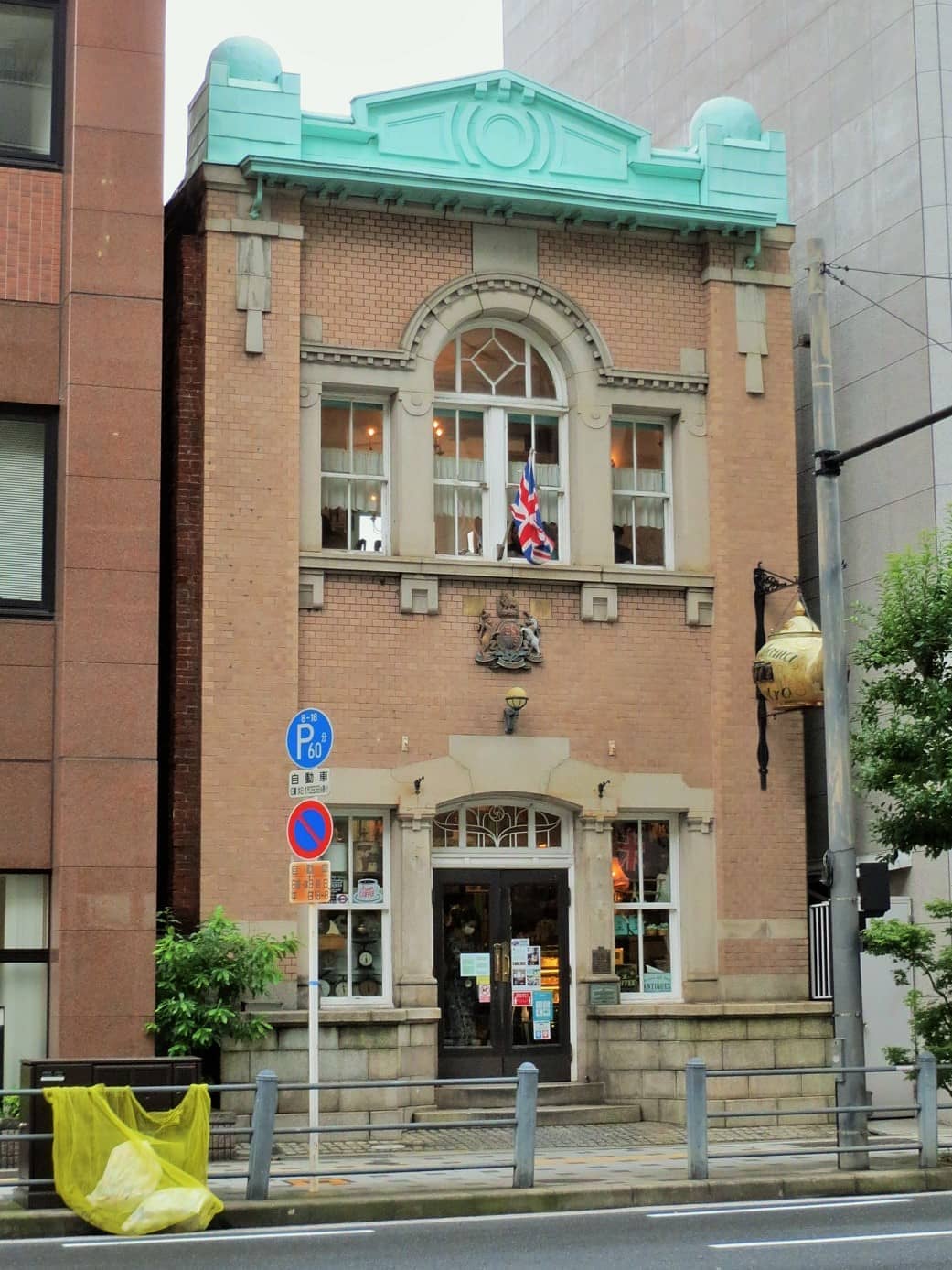
The Kitahama Retro Building (北浜レトロビルヂング) sits in Osaka's Kitahama district, a stretch of the city that was once the heart of Japan's financial and trading elite. The building is a compact, ornately detailed Western-style structure from 1912, restored in 1997, its pale facade standing in sharp contrast to the glass towers and concrete that now define the surrounding blocks. Inside, it operates as a British-style tearoom on the second floor and a cake-and-confectionery shop on the ground floor.
This is not a large attraction. It does not take hours to experience. What it offers instead is something harder to find in Osaka: a genuinely preserved architectural character and a calm, unhurried atmosphere, particularly on weekday mornings when the financial district around it is full of suited office workers and the café feels like a private discovery.
💡 Local tip
Arrive on a weekday before noon to avoid queues and get a window seat on the second-floor tearoom, which looks directly out onto the river. Weekend afternoons can draw waiting lines that stretch onto the pavement. Weekend afternoons can draw waiting lines that stretch onto the pavement.
The Building: Architecture and Historical Context
The Kitahama area developed as Osaka's financial corridor during the Meiji and Taisho eras, when Japanese businesses adopted Western architectural styles as a signal of modernity and international credibility. Banks, trading houses, and financial institutions competed to build imposing Western-style facades along the riverfront. The result was a streetscape that felt more like a European port city than anything typically associated with Japan, and fragments of that streetscape survive today.
The Kitahama Retro Building is among the most photogenic of these survivals. Its multi-story facade is dressed with ornamental details, arched windows, and decorative ironwork that recalls the architecture of Meiji-era merchant prosperity. The interior continues the mood: wooden staircases, period-appropriate furniture, and shelves lined with antique ceramics and British tea paraphernalia. The building's official tourism listings emphasize its nostalgic Western-style character rather than a specific construction year, and The building's official tourism listings emphasize its nostalgic Western-style character and note that it is a registered tangible cultural property, with the current form restored in 1997 rather than a specific construction year in the tourist blurb.[16][17], but its presence in the cityscape carries obvious historical weight.
For context on how Kitahama fits into Osaka's broader architectural and cultural history, the nearby Nakanoshima Park and the Osaka City Central Public Hall are both worth visiting on the same walk. The Central Public Hall, completed in 1918, is the area's most ambitious surviving example of Taisho-era civic architecture and sits only minutes away along the river.
Tickets & tours
Hand-picked options from our booking partner. Prices are indicative; availability and final rates are confirmed when you complete your booking.
Evening food tour in Kyoto's geisha district Gion
From 163 €Instant confirmationFree cancellationKobe: Mt. Rokko Night View, Kitano Ijinkan, Arima Onsen Full Day Tour
From 47 €Instant confirmationFree cancellationOsaka local food tour in Dotonbori and Shinsekai
From 51 €Instant confirmationFree cancellationGuided day tour from Osaka to Nara Park, Arashiyama and Fushimi Inari
From 59 €Instant confirmationFree cancellation
The Tearoom Experience: What to Expect Inside
The ground floor shop sells British-style baked goods, packaged teas, and confectionery, much of it suitable as gifts or souvenirs. The real draw for most visitors is the second-floor tearoom, reached by a narrow wooden staircase. The room is small, The ground floor shop sells British-style baked goods, packaged teas, and confectionery, much of it suitable as gifts or souvenirs. The real draw for most visitors is the second-floor tearoom, reached by a narrow wooden staircase. The room is small, with lace curtains and a view over the river through tall sash-style windows. On a clear morning, the light coming off the water gives the room a quality that feels out of place in a modern Japanese city, in the best possible way. lace curtains, and a view over the river through tall sash-style windows. On a clear morning, the light coming off the water gives the room a quality that feels out of place in a modern Japanese city, in the best possible way.
Afternoon tea sets run approximately ¥3,000 to ¥3,600 and typically include finger sandwiches, scones with clotted cream, and a pot of loose-leaf tea. The portions are modest and the presentation careful. This is not a meal replacement. It works best as a mid-morning or mid-afternoon stop, not as a substitute for lunch. Prices are subject to change, so confirm the current menu at the time of your visit.
Service is attentive and unhurried. Staff are used to international visitors, though English menus may be limited, so pointing at what neighboring tables have ordered is a reliable fallback. The tea selection leans toward classic English varieties, with Earl Grey, Darjeeling, and Assam typically available.
ℹ️ Good to know
Opening hours: Mon–Fri 11:00–19:00, Sat/Sun/Holidays 10:30–19:00. Hours may vary on public holidays, so verify before visiting, particularly during Golden Week or year-end periods.
How the Experience Changes by Time of Day
Weekday mornings are the quietest window. The Kitahama financial district has its own early rhythm: suited professionals moving quickly through the streets, coffee in hand, and the riverside unusually still. Arriving around 11:00 when the café opens on a Tuesday or Wednesday typically means no wait and a free choice of tables.
By early afternoon, particularly on weekends, the dynamic shifts considerably. The tearoom fills with couples, groups of friends, and visitors who have walked over from the nearby Nakanoshima area. Queues at peak weekend times can extend out the front door. If your visit falls on a Saturday, arriving at opening time (10:30) is the most reliable way to secure a seat without waiting.
Late afternoon light, roughly 15:00 to 17:00 on sunny days, is arguably the best time to photograph the building's exterior. The western-facing facade catches warm light and the river reflects it back, making the whole block look particularly atmospheric. This is also when the surrounding streets are quieter than midday, which helps with cleaner exterior shots.
Getting There and the Surrounding Walk
Kitahama Station is the obvious arrival point. Kitahama Station is the obvious arrival point. Exit 26 of Kitahama Station places you almost directly in front of the building, roughly 1 minute away according to official listings. The station is served by both the Osaka Metro Sakaisuji Line and the Keihan Main Line, making it straightforward to reach from central Osaka, Shinsaibashi, or from the Kyoto direction via the Keihan Line. The station is served by both the Osaka Metro Sakaisuji Line and the Keihan Main Line, making it straightforward to reach from central Osaka, Shinsaibashi, or from the Kyoto direction via the Keihan Line.
The Kitahama Retro Building works best as part of a riverside walk rather than a standalone trip. From here, you can walk west along the river to Nakanoshima Park, or continue further to the National Museum of Art Osaka and the Osaka Science Museum. The riverside path is flat, clean, and genuinely pleasant to walk in spring and autumn.
For a broader sense of how Kitahama and Nakanoshima fit into an Osaka itinerary, the best time to visit Osaka guide covers seasonal conditions that affect how enjoyable the riverside walk will be.
Photography, Accessibility, and Practical Notes
The building's exterior is one of the most photographed in Osaka's financial district. For the best angle, stand on the riverside pavement and shoot toward the building with the river in the lower foreground. The ornate facade reads well in both overcast and direct light, though midday summer sun creates harsh shadows on the decorative ironwork.
Inside the café, photography is generally permitted for personal use, though it is worth checking with staff if you plan to use a tripod or professional equipment. The interior is intimate enough that flash photography would be intrusive and is best avoided.
⚠️ What to skip
The tearoom is on the second floor, accessible via a narrow wooden staircase. The tearoom is on the second floor, accessible via a narrow wooden staircase. Visitors with mobility limitations should contact the café directly before visiting to confirm access arrangements. Visitors with mobility limitations should contact the café directly before visiting to confirm access arrangements.
The area around Kitahama Station is primarily a business district. Outside of the café, the immediate surroundings offer relatively few tourist facilities, though the riverside park space is open and accessible. There are convenience stores nearby and several other cafés and restaurants within a short walk if this one is full.
Is the Kitahama Retro Building Worth Your Time?
Honestly, it depends on what you are after. If you are specifically interested in Osaka's architectural history, or you enjoy the quieter, slower experience of a well-made pot of tea in an evocative setting, this building delivers something genuinely special. It is compact, it is free to enter, and the price of an afternoon tea set is reasonable for what you get.
If, on the other hand, you have limited days in Osaka and your priorities are food markets, night culture, or major landmarks, this is a pleasant detour rather than a priority. It fits naturally into a half-day exploring Nakanoshima, but probably does not justify a dedicated trip from the other side of the city on its own.
Travelers who prefer Osaka's louder, more energetic side should note that the Kitahama area is a deliberate contrast to neighborhoods like Namba or Dotonbori. The charm here is specifically in what it is not.
Insider Tips
- Order the scone set rather than the full afternoon tea if you want to keep costs down; it is typically the best value item and arrives promptly without a long wait.
- The ground-floor shop sells individually packaged shortbread and tea blends, which make compact, non-fragile souvenirs if you are traveling with limited luggage space.
- On rainy days, the second-floor window seats overlooking the rain-slicked river surface are arguably more atmospheric than on sunny days; do not let overcast weather put you off.
- Keihan Line trains from Kyoto (Sanjo or Gion-Shijo station) arrive directly at Kitahama Station, making this a plausible first stop after a day trip from Kyoto before continuing into central Osaka.
- The stretch of riverbank directly in front of the building has benches where you can sit and view the building's facade from the water side, which is the angle most travel photographers use.
Who Is Kitahama Retro District For?
- Architecture enthusiasts interested in Meiji and Taisho-era Western-influenced buildings
- Couples looking for a quiet, atmospheric café stop away from the main tourist crowds
- Slow travelers who want to spend a morning exploring Nakanoshima's cultural and historical layer
- Visitors combining a Kitahama visit with a broader Nakanoshima riverside walk
- Anyone who wants to buy a thoughtful, packaged food souvenir without navigating a large market
Nearby Attractions
Other things to see while in Nakanoshima:
- Nakanoshima Museum of Art Osaka
The Nakanoshima Museum of Art Osaka (NAKKA) opened in February 2022 as the city's most significant new cultural institution in decades. Housed in a bold matte-black cube on Nakanoshima island, it focuses on modern and contemporary art and sits a short walk from some of Osaka's most elegant civic architecture. Here is everything you need to plan a visit.
- Nakanoshima Park
Nakanoshima Park occupies a narrow sandbank between the Dojima and Tosabori rivers in central Osaka, offering a free, unhurried escape from the city's commercial energy. The park is anchored by a rose garden and framed by some of Osaka's most significant Meiji and Taisho-era civic buildings, making it as much an architectural walk as a garden visit.
- National Museum of Art, Osaka
Built entirely below ground on Nakanoshima island, the National Museum of Art, Osaka is one of Japan's leading contemporary art institutions. Its sculptural steel entrance rises from the riverbank like a modern landmark, while the real experience unfolds in the quiet, gallery-lit floors beneath.
- Osaka City Central Public Hall
Standing on the slender island of Nakanoshima between two rivers, Osaka City Central Public Hall is one of the finest Neo-Renaissance buildings in Japan. Entry to the ground floor is free, and the building rewards a slower look than most visitors give it.