Osaka Science Museum: Planetarium, Exhibits, and What to Know Before You Go
Sitting on the western edge of Nakanoshima island, Osaka Science Museum (大阪市立科学館) combines interactive science galleries with one of the city's best planetarium experiences. Admission is affordable, crowds are manageable on weekday mornings, and the full-dome program alone makes the visit worthwhile.
Quick Facts
- Location
- 4-2-1 Nakanoshima, Kita-ku, Osaka 530-0005
- Getting There
- Osaka Metro Higobashi Station or Keihan Watanabebashi Station (both a short walk; about 7 minutes and 5 minutes, respectively)
- Time Needed
- 2–3 hours; add 1 hour for the planetarium
- Cost
- Exhibitions: ¥400 adults, ¥300 high school/university students, free for junior high and younger. Planetarium: ¥600 adults, ¥450 students, ¥300 ages 3 to junior high
- Best for
- Families, science enthusiasts, rainy-day visitors, travelers wanting a quiet Nakanoshima morning
- Official website
- www.sci-museum.jp
What Is Osaka Science Museum?
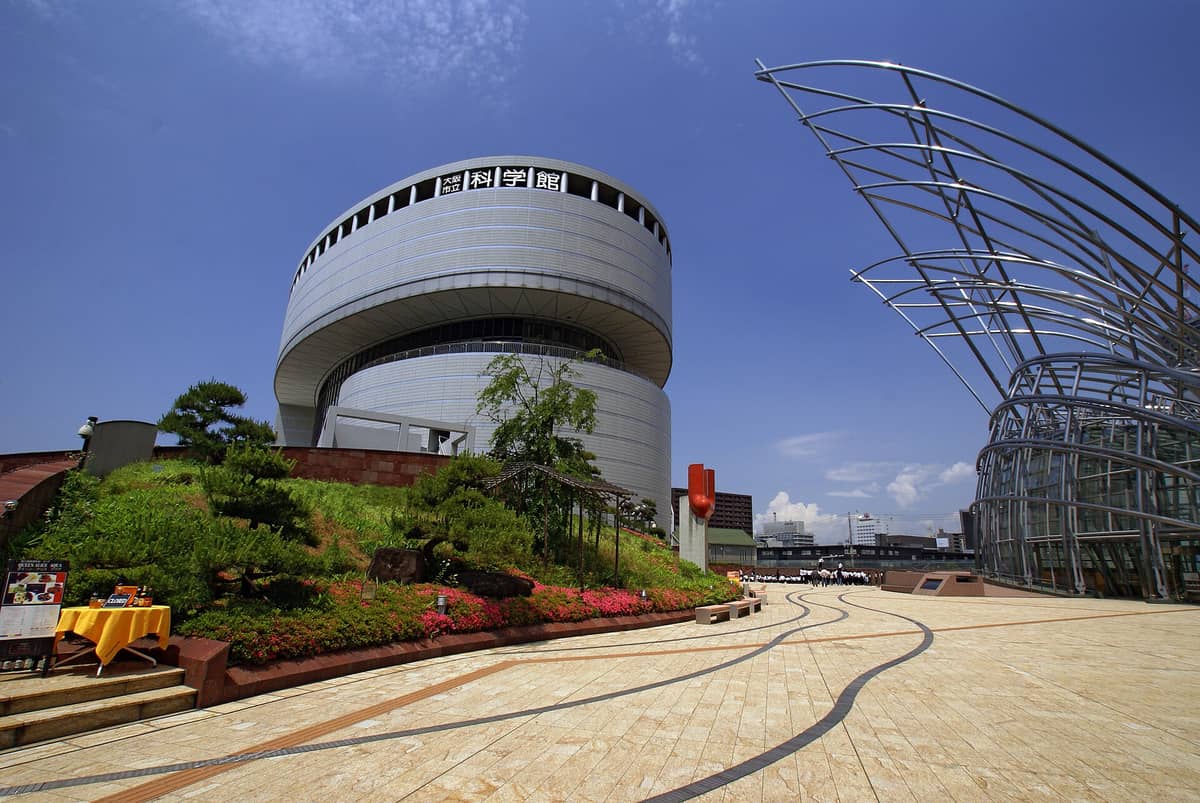
Osaka Science Museum (大阪市立科学館) occupies a compact but well-organized building on the western tip of Nakanoshima, the narrow island sandwiched between the Dojima and Tosabori rivers in central Osaka. The address is 4-2-1 Nakanoshima, Kita-ku, and the building faces a small plaza that gives it a surprisingly open feel for a dense city block.
The museum focuses on natural science and energy, with exhibits spread across multiple floors that move from cosmology and the universe on the upper levels down to the chemistry and physics of everyday life. The building also houses one of the city's best planetariums, with a full-dome projection system capable of rendering the night sky in high resolution.
Nakanoshima is one of Osaka's quieter cultural corridors, home to museums, the old city hall, and riverside parks. The science museum sits near the National Museum of Art Osaka, which occupies an underground building just a few minutes' walk away. If you're planning a full day on the island, the two complement each other well.
💡 Local tip
Planetarium slots fill up, especially on weekends. Arrive when the museum opens at 9:30 to secure a ticket for the full-dome program before browsing the exhibition floors.
The Exhibitions: What You'll Actually See
The exhibition floors are organized thematically rather than chronologically. Upper galleries focus on the cosmos: the scale of the universe, stellar evolution, and how astronomers observe the sky. Lower floors shift to energy, electricity, and the physical forces that govern everyday objects. Throughout, the emphasis is on tactile engagement rather than passive reading.
Many of the exhibits invite direct interaction. You'll find demonstrations involving static electricity, mirrors and light refraction, and mechanical models showing how energy is transferred through different systems. The explanatory text is primarily in Japanese, but the hands-on nature of most exhibits means that even visitors without Japanese literacy can follow the logic of each station through trial and observation.
The museum is compact enough that you won't feel exhausted trying to see everything. A focused visitor can cover the main exhibition floors in around 90 minutes. Families with children who want to revisit favorite stations will naturally take longer.
ℹ️ Good to know
Exhibition entry closes at 16:30, and the museum closes at 17:00. On Saturdays, Sundays, and public holidays, an additional 'science curator special' planetarium screening may be held at 17:00, with the museum remaining open until after that session ends.
Tickets & tours
Hand-picked options from our booking partner. Prices are indicative; availability and final rates are confirmed when you complete your booking.
Osaka local food tour in Dotonbori and Shinsekai
From 51 €Instant confirmationFree cancellationGuided day tour from Osaka to Nara Park, Arashiyama and Fushimi Inari
From 59 €Instant confirmationFree cancellationHimeji, Nara and Kobe full-day tour from Osaka
From 76 €Instant confirmationFree cancellationDay trip to Hiroshima and Miyajima by bullet train from Osaka
From 287 €Instant confirmationFree cancellation
The Planetarium: The Museum's Centerpiece
The full-dome planetarium is the main reason many visitors come specifically to Osaka Science Museum rather than simply passing through. The dome projects a high-resolution image of the night sky, and programs rotate on a schedule that shifts seasonally. The standard program runs roughly 45 minutes to an hour and covers astronomical themes in a format accessible to non-specialists.
Seating inside the dome is reclining, which makes it comfortable even for older visitors or those with back sensitivities. The theater fills quickly, particularly on weekends. Seating inside the dome is reclining, which makes it comfortable even for older visitors or those with back sensitivities. The theater fills quickly, particularly on weekends. The last standard planetarium showing begins at 16:00; on weekends and public holidays, a special curator-led session may follow.
Tickets for the planetarium are purchased separately from the exhibition admission. Adults pay ¥600, high school and university students ¥450, and children aged 3 through junior high school ¥300. The total cost for an adult attending both the exhibitions and the planetarium comes to ¥1,000, which compares favorably with most comparable institutions in Japan's major cities.
⚠️ What to skip
Planetarium programs are typically narrated in Japanese. Check the official website before your visit to confirm whether any English-language or multilingual sessions are scheduled during your trip.
How the Experience Changes by Time of Day
Weekday mornings, particularly from opening at 9:30 until around 11:00, are the most relaxed time to visit. The exhibition floors are quiet, and securing a planetarium ticket for the morning session is straightforward. The building has a calm, focused atmosphere at this hour, with school groups occasionally present but not overwhelming.
After 11:00 on weekdays, and throughout weekend mornings, the interactive stations attract more visitors and waiting times at popular exhibits increase. By early afternoon on weekends, the planetarium is often fully booked for remaining daytime showings. If you're visiting on a Saturday or Sunday, arriving at opening and buying your planetarium ticket immediately is the clearest way to avoid disappointment.
The museum's proximity to the Tosabori River means that the short walk from Higobashi Station, particularly in autumn or spring, passes through a pleasant stretch of riverside. In summer, the midday heat in Osaka can be significant, so the museum's air-conditioned interior is genuinely welcome context for the visit rather than just a backdrop.
For a broader picture of Osaka's seasonal conditions and how they affect outdoor and indoor attractions alike, the best time to visit Osaka guide covers the trade-offs between spring, autumn, and the humid summer months.
Getting There and Practical Logistics
The most straightforward approach is via Osaka Metro's Yotsubashi Line to Higobashi Station (Exit 3), from which the museum is about a 7-minute walk west. Keihan Railway's Watanabebashi Station on the Keihan Nakanoshima Line also places you within easy walking distance if you're approaching from the east.
Opening hours are 9:30 to 17:00 daily, with exhibition entry stopping at 16:30. The museum is closed on Mondays (or the following weekday if Monday is a public holiday) and during certain maintenance periods. Confirming current closure dates on the official website before your visit is advisable, particularly around New Year and summer.
If you're combining the science museum with other Nakanoshima attractions, Nakanoshima Park sits just to the east and is worth a short detour, particularly in spring when the rose garden is at its best. The Osaka City Central Public Hall, one of the city's finest examples of early 20th-century Western-influenced architecture, is also nearby.
For visitors using public transport across multiple attractions in a single day, it's worth checking whether the Osaka Amazing Pass offers useful cost savings given your itinerary.
Photography and Accessibility Notes
Photography of the exhibition floors is generally permitted in Japanese science museums of this type, though individual exhibits may carry restrictions. Flash photography near sensitive optical displays is worth avoiding regardless of posted rules. The planetarium interior does not permit photography during screenings.
The building is serviced by elevators, and the layout across floors is step-free between elevator access points. Visitors with mobility considerations should confirm specific accessibility details directly with the museum before their visit, as detailed specifications for wheelchair facilities and accessible restrooms were not available in official published materials at the time of writing.
Who Should Reconsider
Visitors primarily interested in Japanese cultural history, traditional arts, or temple architecture will find little of that here. The museum is a science and natural history institution and does not engage with Japanese cultural heritage in any direct way. Travelers with only one or two days in Osaka may find their time better spent at the city's landmark historical sites first.
Solo travelers who prefer art over science may find the Nakanoshima Museum of Art Osaka a better use of an afternoon in the same neighborhood. And travelers looking to survey what the city offers across its many institutions might start with the broader guide to Osaka's best museums before committing to a visit.
The museum is also not ideal for visitors who want a passive, reading-heavy cultural experience. The exhibits are designed for engagement, and a visitor who moves through them without interacting will cover the floors quickly and may feel underserved by the experience.
Insider Tips
- Buy your planetarium ticket the moment you arrive. Walk straight to the ticket counter before exploring the exhibitions, especially on weekends. Slots for later showings sell out well before midday.
- The museum's top floors, which focus on the universe and cosmology, tend to attract older visitors and school groups. The lower floors dealing with electricity and chemistry attract younger children and can get noisy. Plan your route accordingly if you want a quieter experience.
- Weekday mornings in autumn and spring are when the Nakanoshima riverside walk from Higobashi Station is at its most pleasant. Build in 10 extra minutes each way to enjoy it rather than rushing.
- The museum café and any food facilities are worth confirming on the official website before your visit. Nakanoshima has several good coffee options nearby, including cafés along the south bank of the Tosabori River, which make a natural rest stop before or after.
- If you're visiting with children who are old enough to handle a dark enclosed space, the planetarium tends to be the highlight they remember most. Under-threes may find the darkness and duration uncomfortable.
Who Is Osaka Science Museum For?
- Families with school-age children looking for a hands-on, interactive afternoon
- Science and astronomy enthusiasts who want a quality planetarium experience in central Osaka
- Visitors caught in Osaka's summer heat or rainy-season downpours who need a full indoor itinerary
- Travelers building a Nakanoshima cultural day combining the museum with nearby parks and architecture
- Budget-conscious visitors: the combined exhibition and planetarium ticket for adults is just ¥1,000
Nearby Attractions
Other things to see while in Nakanoshima:
- Kitahama Retro District
The Kitahama Retro Building is a beautifully preserved early 20th-century Western-style structure on the banks of the Dojima River, housing a British tearoom and cake shop. It stands as one of Osaka's most photogenic historical buildings, offering afternoon tea in a setting that feels entirely removed from the modern city just outside.
- Nakanoshima Museum of Art Osaka
The Nakanoshima Museum of Art Osaka (NAKKA) opened in February 2022 as the city's most significant new cultural institution in decades. Housed in a bold matte-black cube on Nakanoshima island, it focuses on modern and contemporary art and sits a short walk from some of Osaka's most elegant civic architecture. Here is everything you need to plan a visit.
- Nakanoshima Park
Nakanoshima Park occupies a narrow sandbank between the Dojima and Tosabori rivers in central Osaka, offering a free, unhurried escape from the city's commercial energy. The park is anchored by a rose garden and framed by some of Osaka's most significant Meiji and Taisho-era civic buildings, making it as much an architectural walk as a garden visit.
- National Museum of Art, Osaka
Built entirely below ground on Nakanoshima island, the National Museum of Art, Osaka is one of Japan's leading contemporary art institutions. Its sculptural steel entrance rises from the riverbank like a modern landmark, while the real experience unfolds in the quiet, gallery-lit floors beneath.