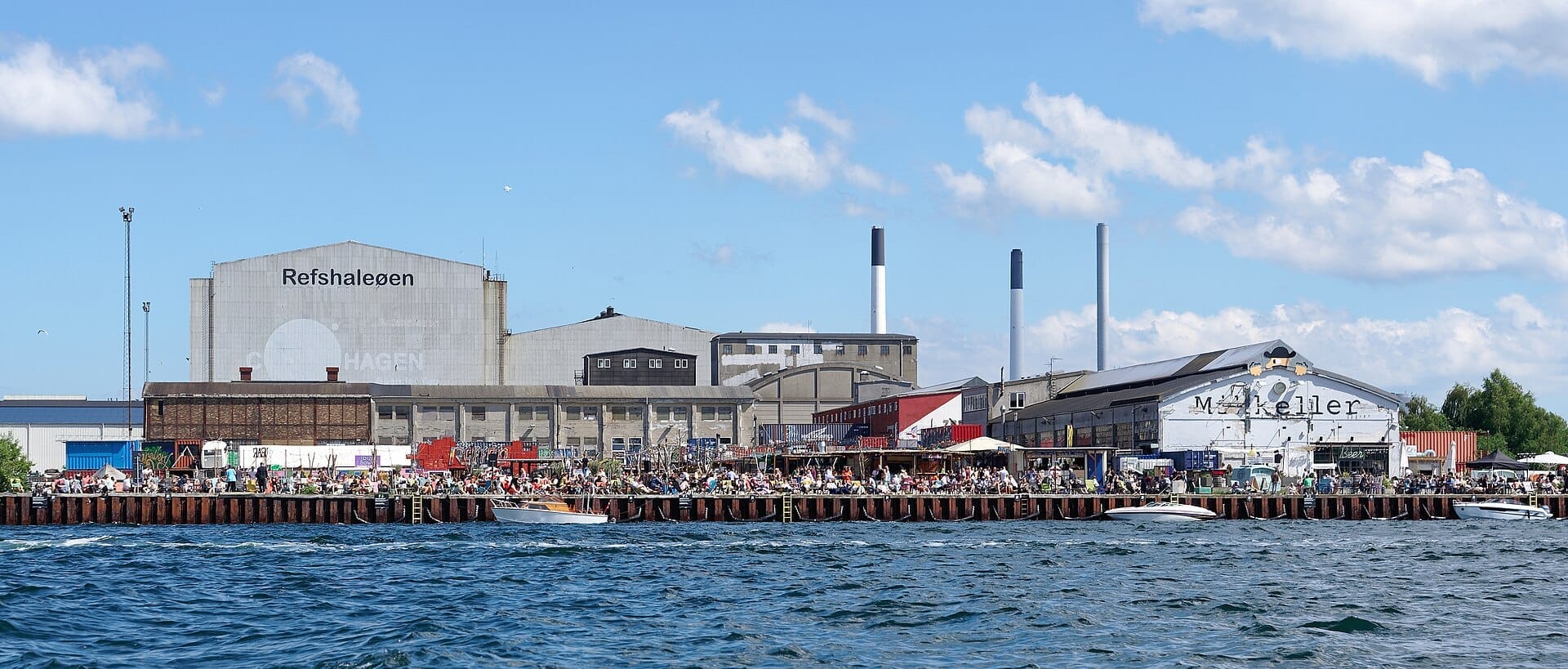
Refshaleøen is Copenhagen's most ambitious urban transformation: a former industrial shipyard island that has become the city's most creatively charged quarter, mixing world-renowned restaurants, street food markets, contemporary art, and raw harbor scenery. It sits at the outer edge of the inner harbor, far enough from the tourist trail to feel genuinely different, but accessible enough to deserve a place on any serious Copenhagen itinerary.
Refshaleøen occupies a stretch of Copenhagen's harbor that most visitors never reach, and that distance is exactly what makes it worth the effort. A former shipyard island that closed its last dry dock in 1996, it has reinvented itself not through glossy redevelopment but through a slow, creative layering of food markets, art centers, experimental restaurants, and industrial repurposing that keeps the raw harbor atmosphere intact.
Orientation: Where Refshaleøen Sits
Refshaleøen is a peninsula of reclaimed and historic harbor land that extends northeast into Copenhagen's inner harbor, physically connected to the island of Amager but reaching toward the open sea. Its position places it directly across the water from Kastellet and the northern waterfront, and southeast of Nyhavn. It is not a neighborhood in the conventional sense: there are no residential apartment blocks lining quiet streets, no corner shops. It is an industrial site in transition, covering roughly 500,000 square meters, and nearly all of that space is dedicated to creative industry, food, culture, and recreation.
The single main artery is Refshalevej, which runs the length of the island from south to north. Nearly every venue you will visit has a Refshalevej address. The street is wide, fringed by massive former warehouse and shipyard buildings, and it feels nothing like the compact canal-side streets of Christianshavn, which sits just across the water to the southwest. Walking north along Refshalevej, the harbor opens up progressively on both sides and the city skyline recedes behind you.
The closest established neighborhood is Christianshavn, reachable in about 15 minutes on foot along the harbor path. Freetown Christiania borders Christianshavn's eastern edge, and together these two areas form a loose southern anchor to the harbor zone that Refshaleøen crowns. To the north across the water sits the Nordhavn district, Copenhagen's other major post-industrial transformation project, though its character skews residential and commercial rather than cultural.
Character and Atmosphere
The first thing you notice on Refshaleøen is the scale. The Burmeister and Wain shipyard halls are enormous, their corrugated metal facades and brick chimneys giving the whole area a texture that no amount of artful café signage can fully domesticate. This is intentional. Unlike the Meatpacking District in Vesterbro, which has been comprehensively colonized by bars and restaurants, Refshaleøen retains significant stretches of working industrial space alongside its cultural occupants. Cranes still stand at the waterfront. Some buildings are mid-renovation. Others have been repurposed but left structurally unchanged.
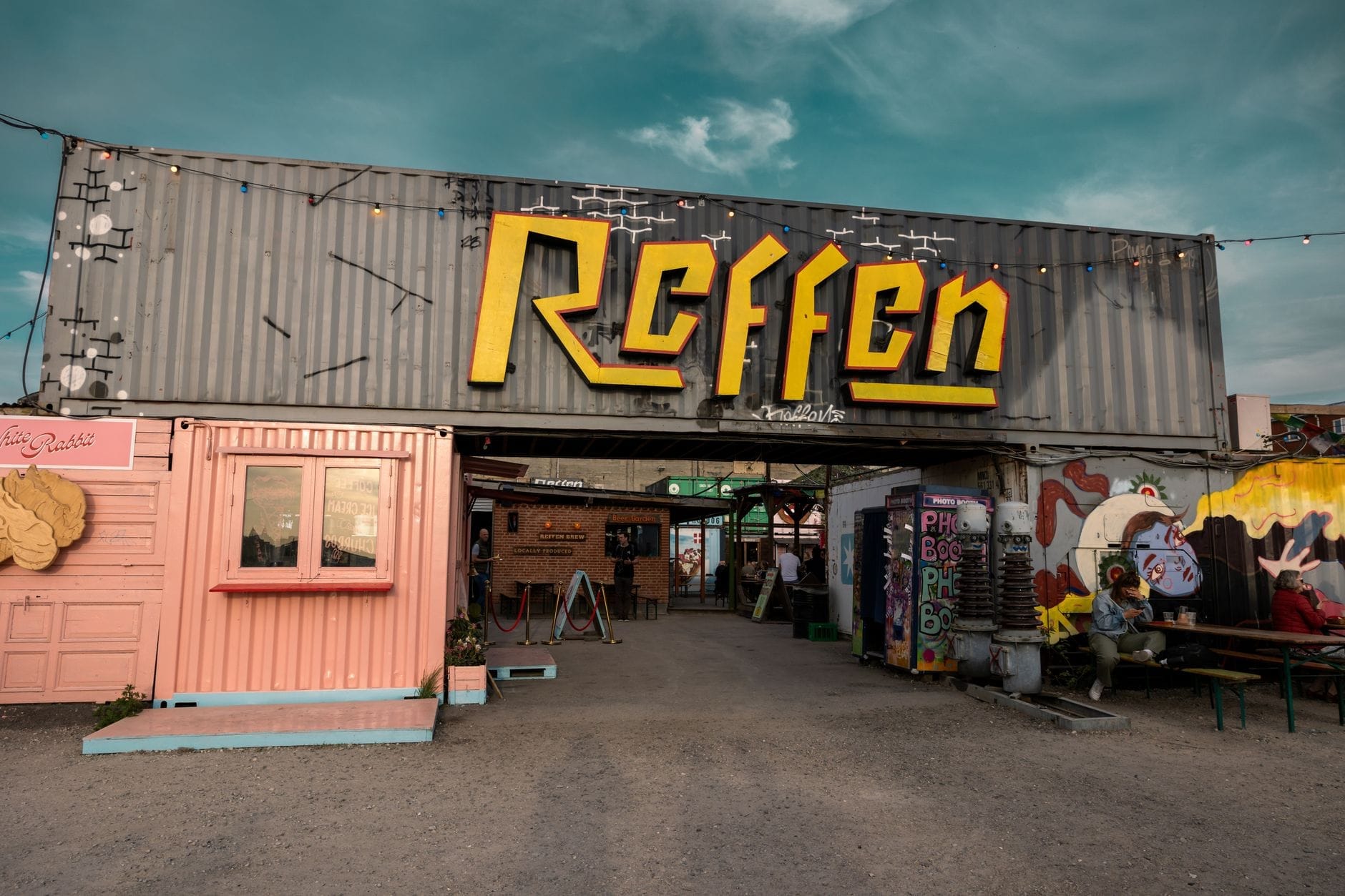
On a weekday morning, the island is quiet to the point of feeling closed. A few cyclists make their way up Refshalevej. Deliveries happen at side entrances. The light in early summer is extraordinary out here: the harbor reflects it at low angles across the water and back onto the pale brick walls, and the absence of tall buildings means the sky is genuinely present in a way it rarely is in the city center. By midday, especially on weekends between May and September, the area transforms. The Reffen market opens and the smell of grilled food drifts across the waterfront. Queues form at the most popular stalls. Groups of Copenhageners sit on the gravel with paper trays and cans of natural wine, legs stretched toward the water.
After dark, Refshaleøen becomes a different proposition. It is not a nightlife strip in the conventional sense: there are no rows of bars with neon signs. But the area hosts some of the city's most serious food and drink destinations, and during summer evenings La Banchina's pier fills with swimmers and sauna-goers who show no interest in leaving. On event nights at Copenhagen Contemporary or during large festivals, the industrial spaces fill with people in a way that feels genuinely theatrical. Outside of those events, it is relatively quiet after 10pm, which suits some visitors and will disappoint others.
ℹ️ Good to know
Refshaleøen is strongly seasonal. Many of its outdoor venues, including the Reffen market, operate primarily from spring through early autumn. If you are visiting between November and March, check individual venues before making the trip out.
What to See and Do
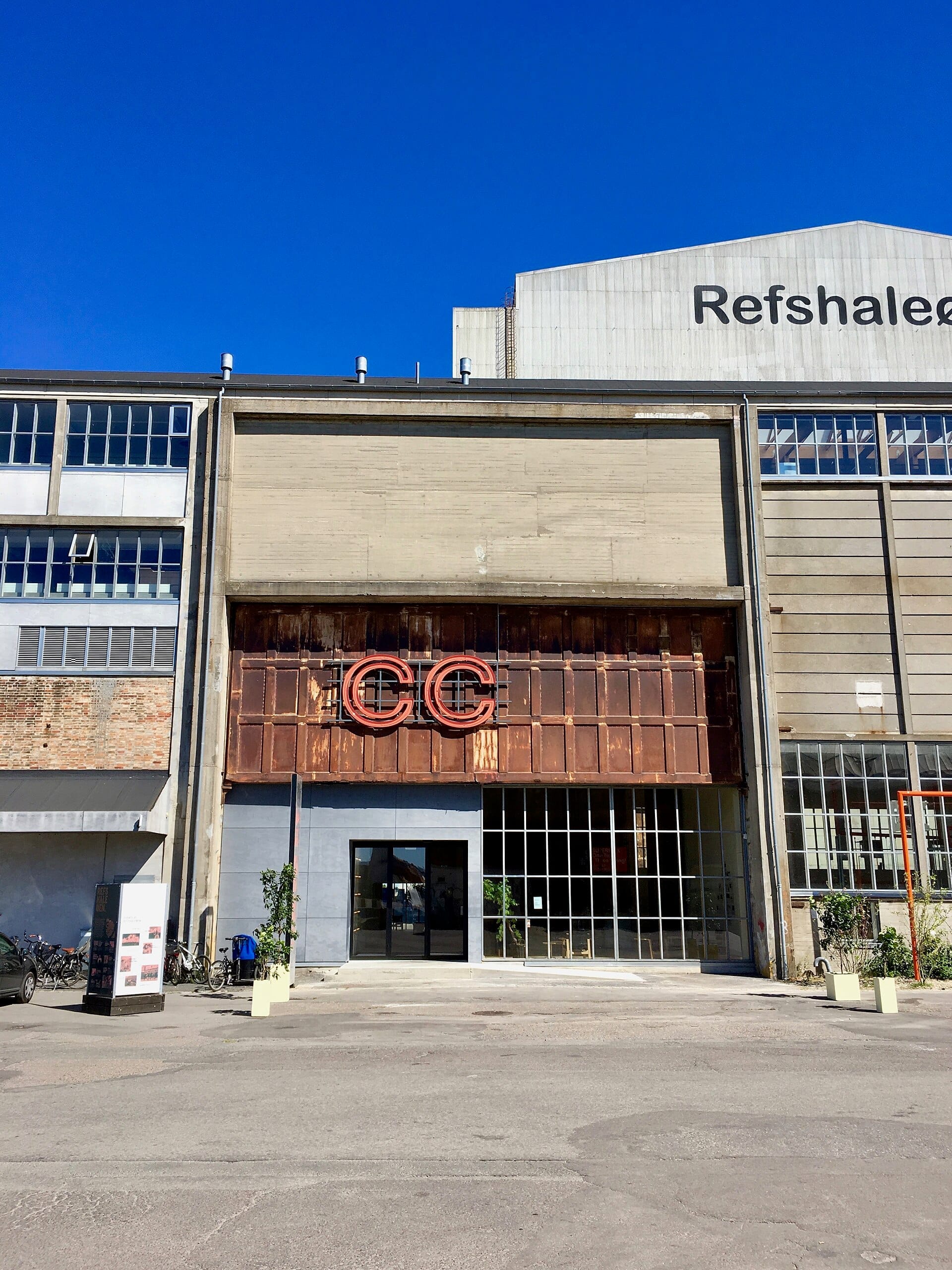
Copenhagen ContemporaryCopenhagen Contemporary is the most significant cultural institution on the island. Housed in a former shipyard hall at Refshalevej 173, the space runs large-scale international contemporary art exhibitions that require the kind of square footage and ceiling height that no conventional gallery in the city center could offer. The programming tends toward installation and sculpture, and the industrial setting is not incidental to the experience: artists regularly respond to the architecture itself. It is worth checking what is on before your visit, as the quality and scale of exhibitions varies significantly. Housed in a former shipyard hall at Refshalevej 173, the space runs large-scale international contemporary art exhibitions that require the kind of square footage and ceiling height that no conventional gallery in the city center could offer. The programming tends toward installation and sculpture, and the industrial setting is not incidental to the experience: artists regularly respond to the architecture itself. It is worth checking what is on before your visit, as the quality and scale of exhibitions varies significantly.
The Reffen street food market is the other anchor of any visit to Refshaleøen. Spread across an open waterfront site, it brings together a rotating roster of food vendors cooking cuisines from across the world, alongside a strong contingent of Danish producers. The market also functions as an incubator space for food entrepreneurs, which means the quality skews higher than a typical street food market and the concepts tend to be more considered. It is genuinely one of the better outdoor food experiences in Copenhagen, though on peak summer weekends it draws large crowds and finding a seat requires patience or early arrival.
Beyond those two anchors, the island rewards wandering. The Mikkeller Baghaven brewery operates a taproom from one of the former shipyard buildings, pouring experimental fermented and sour beers that have a devoted following among serious beer drinkers. The harbor itself offers swimming directly off the island at several points, and the water quality in Copenhagen's inner harbor is well regarded. Kayak rentals are available seasonally. For those interested in the area's industrial history, simply walking the perimeter path and looking at the surviving B&W infrastructure tells its own story, even without formal interpretation.
Copenhagen Contemporary: large-scale international art in former shipyard halls
Reffen: waterfront street food market with 50-plus vendors, open spring to autumn
Mikkeller Baghaven: experimental brewery taproom in an industrial building
La Banchina: harbor swimming pier, sauna, and café, popular in summer
Perimeter harbor walk: views back to the city skyline and across to Kastellet
Alchemist: one of the world's most talked-about fine dining experiences, requiring advance reservation
💡 Local tip
If you are visiting Alchemist, book months in advance. It is among the hardest restaurant reservations in Europe to secure and operates on a reservation system rather than a traditional booking system.
Eating and Drinking
Few neighborhoods in Copenhagen offer such a spread across the price spectrum while maintaining consistent quality at every level. At the very top end, Refshaleøen hosts two restaurants that have driven significant international attention. Noma, which completed its final service in its current form in late 2024, defined a generation of cooking and put this corner of Copenhagen on the global culinary map. Alchemist, operating from a purpose-built theater-kitchen in one of the island's largest former industrial halls, continues to draw diners who treat the 50-course experience as a cultural event rather than simply a meal. These are not everyday dining propositions, but they represent what the island has come to stand for in food terms: ambition, space, and a willingness to do things at a scale that the city center cannot accommodate.
At a more accessible level, Lille Bakery on Refshalevej produces bread and pastries that have acquired a serious reputation among Copenhagen's food-aware population. It opens early and tends to sell out by mid-morning on weekends, so arriving before 9am is advisable. La Banchina operates as a café and natural wine bar through the day before transitioning into its evening sauna-and-swim role, with a short menu that focuses on simple, well-sourced food at moderate prices.
The Reffen market covers the middle and lower end of the price range effectively. Expect to spend 80 to 180 DKK per dish depending on vendor. Beer and wine are available at the market as well as at surrounding spots. For context on where Refshaleøen's food scene sits within Copenhagen's broader culinary picture, the Copenhagen food guide provides useful framing, and the city's New Nordic cuisine scene traces the movement that made this island famous.
Alchemist: theatrical fine dining, advance booking essential, high price point
Lille Bakery: sourdough, pastries, and coffee, early opening hours
La Banchina: café, natural wine, harbour swimming, moderate prices
Mikkeller Baghaven: sour and fermented beers on tap in a brewery taproom
Reffen market: 50-plus street food vendors, 80-180 DKK per dish
Getting There and Around
Refshaleøen is not on the Metro network, and this is the most significant practical consideration for visitors. The nearest Metro stations are on the M1 and M2 lines, but the more practical onward connection is by bus from central Copenhagen rather than from Marmorkirken. Bus routes 2A and 37 serve the island, stopping at Refshaleøen (Refshalevej), though the walk from the bus stop to specific venues on the northern end of the island can add another 10 minutes. The total journey from the city center by public transport typically runs 25 to 35 minutes depending on where you start.
The most practical option for most visitors, and the most common among Copenhageners themselves, is cycling. Refshaleøen is approximately 15 minutes by bike from the inner city, following the harbor path southeast from Nyhavn and then north along the Amager waterfront. The route is largely flat and well-signed. Bike share services operate in the central city and Christianshavn, though you may need to walk or use a rental to cover the final section of Refshalevej.
Harbor buses (ferry routes 991, 992, and 993) serve the wider harbor zone and can provide a more scenic approach to the area, though schedules and exact stop locations should be confirmed before travel. Taxis and ride-hailing apps including Bolt operate in Copenhagen, and Harbor buses (ferry routes 991, 992, and 993) serve the wider harbor zone and can provide a more scenic approach to the area, though schedules and exact stop locations should be confirmed before travel. Taxis and ride-hailing apps including Bolt operate in Copenhagen, and a taxi from the city center to Refshalevej is usually a short ride depending on traffic. For a fuller overview of how Copenhagen's transport network connects, the covers ticketing, zones, and cycling infrastructure in detail. For a fuller overview of how Copenhagen's transport network connects, the getting around Copenhagen guide covers ticketing, zones, and cycling infrastructure in detail.
⚠️ What to skip
Refshaleøen has very limited taxi and ride-hailing pick-up points late at night during events. If you are attending an evening event at Copenhagen Contemporary or Alchemist, book your return journey in advance or allow extra time at the end of the night.
Where to Stay
There are no hotels on Refshaleøen itself. The island has no residential population and is unlikely to develop traditional accommodation in the near term given its ongoing transformation. For visitors who want to make Refshaleøen the focus of a stay, the most practical base is Christianshavn, which sits directly across the water and offers a small number of boutique hotels and holiday apartments within an easy cycling or walking distance.
Staying in Indre By or Nyhavn keeps you within 20 to 30 minutes of the island by bike or bus and gives you significantly more options for accommodation, restaurants, and the wider city. Most people visiting Refshaleøen do so as a half-day or evening excursion from a base elsewhere in Copenhagen. For guidance on where different types of travelers tend to stay, the where to stay in Copenhagen guide breaks down the options across neighborhoods and price ranges.
Honest Assessment: Who This Neighborhood Is For
Refshaleøen is not a place to wander without a plan and stumble into something interesting on every corner. The distances between venues are significant, some areas feel like active construction or storage sites, and outside of summer the outdoor offer shrinks considerably. It rewards visitors who know what they are going there for: a specific meal, the art at Copenhagen Contemporary, an afternoon at Reffen, or a swim at La Banchina. Those who arrive without a destination in mind may find the scale of the space disorienting and the gaps between highlights longer than expected.
For food-focused travelers, design and architecture enthusiasts, and anyone interested in how cities repurpose industrial heritage without sanitizing it, Refshaleøen is genuinely one of the most interesting places in Copenhagen. It is not trying to be charming. It is trying to be useful, creative, and ambitious, and it largely succeeds on those terms. The fact that it sits outside the tourist circuit is not a drawback for most people who go there: it is the point.
If you are planning a short trip and wondering whether to add it, consider combining the visit with Christianshavn and the Church of Our Saviour on the same afternoon, then heading north to Refshaleøen for the evening. That combination gives you the city's canal character and its industrial frontier in a single route, and it is one of the most satisfying half-days the city offers.
TL;DR
Refshaleøen is Copenhagen's former Burmeister and Wain shipyard, now home to the Reffen street food market, Copenhagen Contemporary art center, and some of the world's most ambitious restaurants including Alchemist.
The island is strongly seasonal: outdoor venues are at their best from May to September, and the area feels sparse in winter.
Getting there without a bike takes effort: no Metro station serves the island directly, and bus routes from nearby Marmorkirken require a transfer.
There are no hotels on Refshaleøen. Stay in Christianshavn or Indre By and treat this as a destination excursion rather than a base.
Best suited to food-focused travelers, contemporary art visitors, and anyone who wants to see how Copenhagen handles industrial heritage, but less rewarding for casual exploration without a specific destination in mind.
Two days in København is genuinely enough to cover the city's royal palaces, canal district, world-class food markets, and Freetown Christiania without feeling rushed. This itinerary sequences the sights logically, cuts the walking time, and flags what is actually worth your limited hours.
Copenhagen has an unusually strong museum scene for a city its size, with world-class collections spanning ancient history, modern art, design, and Nordic heritage. This guide covers the best museums in Copenhagen, from the grand institutions in Indre By to extraordinary day-trip destinations just outside the city.
Copenhagen rewards visitors year-round, but the right month depends entirely on what you want from the trip. This guide breaks down weather, crowds, pricing, and seasonal events so you can match your travel style to the right window.
Copenhagen Airport (CPH) sits just 8 km from the city centre, and your airport transfer takes as little as 13 minutes by metro or train. This guide breaks down every option — public transport, taxi, and private transfer — with real fares, journey times, and honest advice on what to skip.
The Copenhagen Card promises free entry to 80+ attractions and unlimited public transport across the Danish capital. But is it actually worth the price? This guide breaks down the numbers, the fine print, and who genuinely benefits.
Copenhagen transforms in winter. From the ticketed spectacle of Tivoli Gardens to free canal-side markets and steaming mugs of gløgg, this guide covers everything you need to plan a Christmas visit to København with confidence.
Copenhagen is one of the world's most architecturally ambitious cities, named UNESCO/UIA World Capital of Architecture in 2023. This guide covers the essential museums, landmark buildings, contemporary projects, and practical routes for anyone serious about design and architecture in København.
Copenhagen food culture runs deeper than Noma's legacy. This guide covers the essential dishes, best markets, smartest restaurant picks, and seasonal foods that define eating in the Danish capital — across every budget.
October in Copenhagen (København) is one of the most underrated times to visit. Tivoli transforms into a Halloween wonderland with over 20,000 pumpkins, the crowds thin out compared to summer, and the city's museums and food scene hit their stride. This guide covers the weather, the best events, what to prioritize, and what to skip.
Summer is Copenhagen's peak season, with up to 17 hours of daylight, open-air festivals, free harbour swimming, and parks packed with locals. This guide covers the weather, major events, best activities, and practical tips for visiting in June, July, and August.
The Copenhagen Jazz Festival runs for 10 days every July, filling the Danish capital with around 1,200 concerts across 120 venues. This guide covers dates, tickets, free events, the best neighborhoods to explore, and everything you need to plan your visit.
Copenhagen's after-dark scene is disproportionately strong for a city its size. From precision cocktail bars in the Latin Quarter to techno clubs in the Meatpacking District, this guide cuts through the noise and tells you exactly where to go, when to arrive, and what to expect — including what costs more than it should.
Copenhagen (København) has a reputation as one of Europe's priciest capitals, and that reputation is not entirely unfair. But with the right passes, free attractions, and a few local habits, you can experience the city fully without a sky-high bill. This guide breaks down exactly where your money goes and where you can save it.
Copenhagen rewards shoppers at every level, from international flagships on Strøget to vintage finds on Jægersborggade. This guide breaks down where to shop by neighborhood, what to buy, how much to spend, and which spots to skip.
Smørrebrød is Denmark's defining lunch tradition, and Copenhagen is the best place in the world to eat it. This guide covers the top restaurants, what to order, how much to pay, and the customs first-timers always get wrong.
Copenhagen (København) is one of Europe's most walkable capitals. This guide covers the classic self-guided walking tour route from Tivoli Gardens to Nyhavn and beyond, with practical details on distances, free stops, seasonal timing, and digital tools to make your day on foot count.
Copenhagen is one of Europe's most genuinely child-friendly capitals, with discounted museum entry, excellent playgrounds, and a compact city center that makes logistics manageable. This guide covers the best family activities in Copenhagen, from Tivoli Gardens to canal cruises, plus honest advice on passes, costs, and seasonal planning.
Copenhagen has roughly 350 km of segregated cycle tracks, and Copenhagen has roughly 350 km of segregated cycle tracks, and nearly half of all people who work or study in the city bike to work or school every day. This guide covers everything a visitor needs to cycle the city confidently: where to rent, which routes to ride, what the unwritten rules are, and when to go.
Copenhagen sits at the centre of an extraordinary region. Within two hours, you can reach UNESCO-listed castles, world-class art museums on clifftops, a remarkably preserved fishing village, and an entirely different country. These are the best day trips from Copenhagen, whether you have a full day or just an afternoon.
Copenhagen is one of Europe's most rewarding cities to explore on a tight budget. From free museum days and royal palaces to harbour swims and world-class parks, here are 20 genuinely free experiences that capture the best of the Danish capital.
Copenhagen's integrated transport network is one of Europe's most efficient. This guide covers the metro, S-trains, buses, cycling, taxis, and airport connections — with 2026 fares, zone logic, and practical advice on what's worth the money.
Copenhagen holds the key to understanding Hans Christian Andersen's life and work. From his former apartments along Nyhavn canal to his grave in Nørrebro, this guide maps every significant stop on the city's literary trail, with practical logistics for each.
Copenhagen rewards curious travellers who look beyond Nyhavn and Tivoli. This guide uncovers the city's overlooked neighbourhoods, underrated museums, and unexpected green spaces that locals actually love.
Copenhagen didn't accidentally become one of Europe's great food cities. The New Nordic movement, formalized in 2004, rewired how chefs here think about ingredients, technique, and season. This guide covers the key restaurants, price realities, seasonal logic, and how to experience the movement beyond fine dining.
Copenhagen rewards visitors with a rare combination of world-class history, cutting-edge design, and outdoor culture. This guide covers the best things to do in Copenhagen across every interest and budget, with honest assessments and practical logistics to help you plan confidently.
Choosing where to stay in Copenhagen shapes your entire trip. This guide breaks down every major neighborhood by budget, transport links, atmosphere, and traveler type — so you can book with confidence, not guesswork.