Copenhagen Contemporary: Industrial Halls, Monumental Art
Copenhagen Contemporary is a large-scale contemporary art institution housed in former B&W welding halls on Refshaleøen, Copenhagen's post-industrial harbor island. It hosts ambitious international installations and performance works in a raw, warehouse setting that few art spaces in Scandinavia can match for sheer scale.
Quick Facts
- Location
- Refshalevej 173A, Refshaleøen, Copenhagen
- Getting There
- City bus to Refshalevej or harbor bus to Refshaleøen; also accessible by bicycle from the city centre
- Time Needed
- 1.5 to 3 hours depending on current exhibition
- Cost
- Around 140 DKK adult; around 25 DKK reduced (children 3–17); children under 3 often free. Verify current prices before visiting.
- Best for
- Contemporary art enthusiasts, architecture lovers, and visitors who want to explore Refshaleøen beyond the food stalls
- Official website
- copenhagencontemporary.org/en/visit
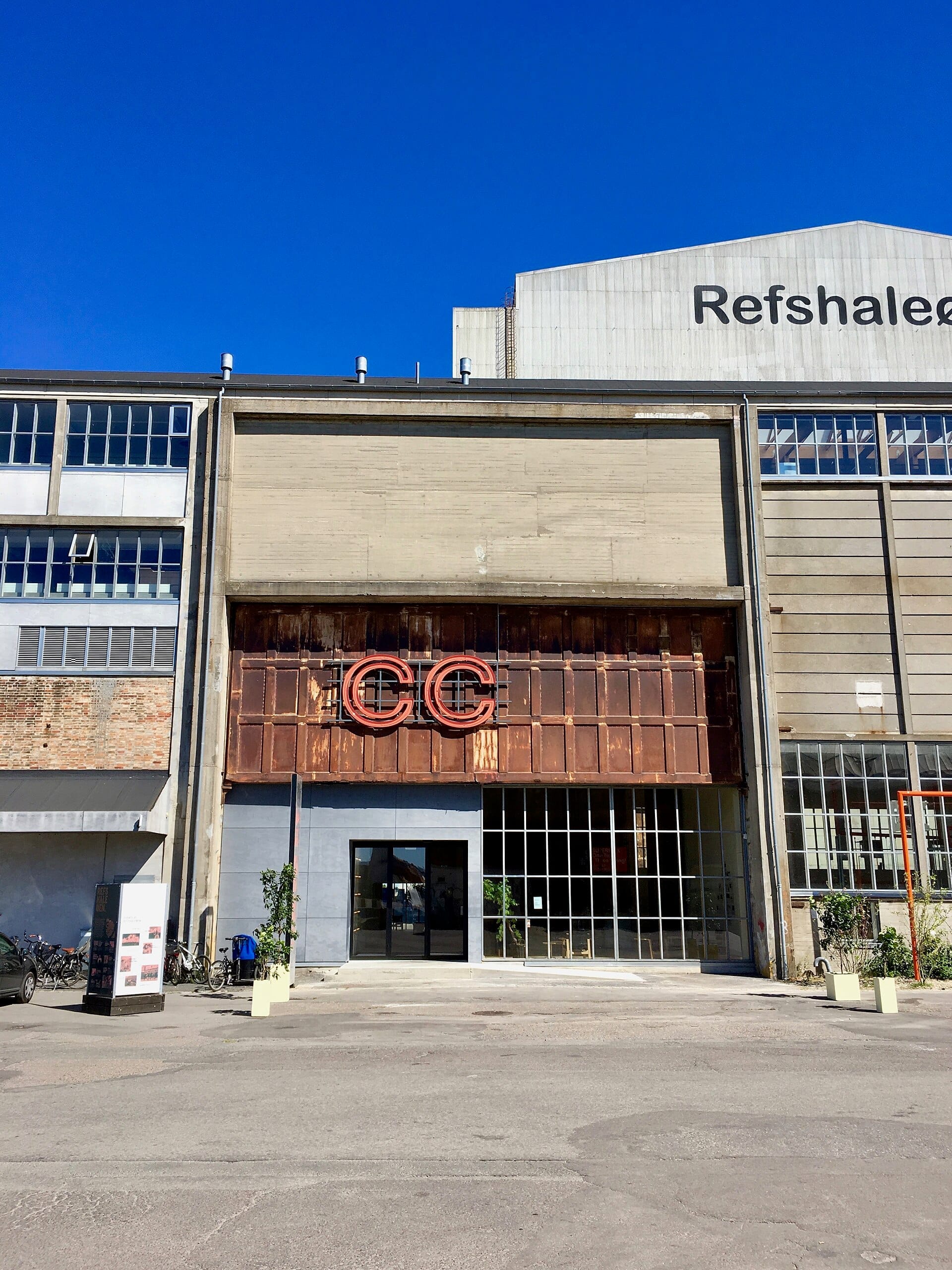
What Copenhagen Contemporary Actually Is
Copenhagen Contemporary (CC) is Denmark's largest institution dedicated to international contemporary art, and it has earned that status not through marketing but through the kind of raw space that makes truly ambitious art possible. The museum occupies former Burmeister and Wain welding halls on Refshaleøen, a harbor island that spent most of the twentieth century as a working shipyard. The scale of those halls is the defining fact of a visit: ceilings that once sheltered ship components now give artists room to build works that would be physically impossible elsewhere in the Danish capital.
This is not a traditional white-cube museum with framed paintings at eye level. Exhibitions here tend toward the immersive, the structural, and the sensory. Sound installations fill the industrial volume in ways that physically alter how you move through a room. Sculptural works often require you to walk around, under, or through them. If that kind of engagement appeals to you, Copenhagen Contemporary is likely the most rewarding art space in Copenhagen. If you prefer conventional gallery formats, it may feel disorienting.
💡 Local tip
Check the current exhibition on the official website before visiting. Copenhagen Contemporary runs a small number of large, time-limited shows rather than a permanent collection. The experience depends almost entirely on what is showing during your visit.
The Building: What the Space Tells You
The former B&W (Burmeister and Wain) welding halls carry their industrial history visibly. Steel structures, raw concrete floors, and high clerestory windows are not decorative choices; they are what remained when the shipyard closed. The institution made a deliberate decision to preserve that rawness rather than smoothing it into a conventional museum interior, and that decision shapes every exhibition held here.
Concrete floors mean sound travels differently than in carpeted galleries. The texture underfoot is uneven in places. Natural light shifts across the space throughout the day, and the quality of that light in the morning, when it enters low through industrial glazing, is genuinely different from the flattened afternoon light. If you have any flexibility, arriving in the first hour after opening on a weekday gives you both better light and significantly fewer people.
The building sits within the broader context of Refshaleøen, which has transformed in the past decade from dormant industrial land into one of Copenhagen's most interesting neighborhoods. The street-food market Reffen, independent workshops, and the Opera House seen across the water from the harbourfront all form part of the texture of a visit to this part of the city.
Tickets & tours
Hand-picked options from our booking partner. Prices are indicative; availability and final rates are confirmed when you complete your booking.
1-hour boat harbour tour in Copenhagen
From 26 €Instant confirmationFree cancellationSmall group 3-hour walking tour in Copenhagen
From 45 €Instant confirmationFree cancellationCopenhagen to Malmo one-day tour
From 56 €Instant confirmationFree cancellationFull-day tour to Forest Tower and Forgotten Giants from Copenhagen
From 110 €Instant confirmationFree cancellation
How the Experience Changes by Time of Day
Morning visits on weekdays are consistently quieter. The harbor light is at its most interesting before noon, and the space's acoustics, which can feel overwhelming when crowded, become something else entirely when you are nearly alone in a large hall with a sound installation. If the exhibition has an audio component, arriving at opening (11:00) on a Tuesday or Wednesday gives you the best chance of experiencing it without noise competition from other visitors.
Thursday evenings, when the museum stays open until 21:00, attract a different crowd: younger Copenhageners, people stopping by after work, and students. The atmosphere is more social and less contemplative. The extended hours are useful if your daytime schedule is full, but the experience is different in character from a quiet morning visit.
Weekends bring families and a higher overall footfall. Some exhibitions are well-suited to this, particularly those with physical or participatory elements. Others, especially quieter sound or light works, can feel compromised by crowd noise. The museum's own programming often includes weekend events tied to current exhibitions, so checking the schedule in advance can add value to a weekend visit rather than working against it.
ℹ️ Good to know
Opening hours: Tuesday to Sunday, 11:00 to 18:00. Thursday extended to 21:00. Closed Monday. Hours may vary around public holidays and special events. Check the official site before visiting.
Getting There: The Journey is Part of It
Refshaleøen is not on the Metro network. Getting to Copenhagen Contemporary requires a bus, a harbor bus, or a bicycle, and that slight friction is worth knowing about in advance. City buses serve Refshalevej, with a short walk to the museum from the stop. Harbor buses connect to Refshaleøen from the inner harbor and are a genuinely pleasant way to arrive in summer, with the approach by water giving you a sense of the island's position in the harbor before you step off.
Cycling is arguably the most Copenhagen-appropriate option. The harborfront cycle route from central Copenhagen to Refshaleøen is flat, well-signed, and takes roughly fifteen to twenty minutes from Nyhavn. If you are already comfortable navigating the city by bicycle, it is the most direct and enjoyable approach. For more on cycling in the city, the cycling in Copenhagen guide covers routes and rental options in detail.
The relative inaccessibility of the island by Metro is, paradoxically, one reason the area retains its character. Visitors who make the trip tend to be more intentional about it, and the crowd at Copenhagen Contemporary reflects that: it skews toward people who actually want to be there.
⚠️ What to skip
Do not rely on ride-hailing apps for a quick exit from Refshaleøen, particularly in the evening. Bolt operates in Copenhagen but availability in this specific area can be limited. Plan your return journey in advance, especially on Thursday evenings after the late closing.
What to Expect Inside
There is no permanent collection. Copenhagen Contemporary operates as a Kunsthalle model, meaning it commissions and presents temporary exhibitions rather than accumulating owned works. This is important for planning: if you visited a year ago, you will encounter an entirely different experience now. The exhibitions typically run for several months and are large in ambition, often involving artists who create site-specific work in response to the halls themselves.
Works here have included monumental sculptures occupying the full floor area of a hall, durational performance pieces running across weeks, and immersive video and sound environments that require visitors to spend time rather than simply pass through. The institution has a clear curatorial commitment to work that could not exist at smaller scale, which means the experience, when it works, is genuinely different from anything you will find in Copenhagen's more conventional museum spaces.
If you are building a broader art itinerary for Copenhagen, Copenhagen Contemporary pairs well with the National Gallery of Denmark for historical depth, or with Louisiana Museum of Modern Art north of the city for an equally ambitious but differently scaled contemporary program.
The museum shop is small but well-curated, typically stocking publications related to the current exhibition alongside design objects and art books. It is worth a few minutes even if you are not a habitual art book buyer. A cafe operates within the building, and the quality varies, but the setting inside the industrial halls is a reasonable place to decompress after a substantial exhibition.
Photography, Accessibility, and Practical Details
Photography policy varies by exhibition. Some works are shown without restriction; others, particularly those involving licensed video content, prohibit photography entirely. Signs at the entrance to each gallery section indicate the rules. The industrial scale of the space makes it tempting to photograph, but a phone camera will rarely capture the spatial experience accurately. The best images tend to come from stepping back and including human figures for scale.
The ground-level industrial floor and open spaces make the venue broadly accessible for wheelchair users, and the circulation routes within exhibitions are generally spacious enough to navigate comfortably. Visitors with specific accessibility requirements should contact the museum directly before visiting, as conditions vary by exhibition setup.
Wear comfortable shoes. Concrete floors over an extended visit are hard underfoot, and some exhibitions involve significant walking distances within the halls. In winter, the industrial building can be cool despite heating, so a layer is advisable. In summer, the large volume of air means the interior stays comfortable even on warm days, making it a reasonable destination during Copenhagen's warmer months.
If you are visiting Refshaleøen specifically for Copenhagen Contemporary, plan time to explore the surrounding area. The street-food market Reffen is a short walk away and offers a genuinely good outdoor food experience when the weather cooperates. The harbourfront views toward the inner city, with the Copenhagen Opera House visible across the water, are worth the walk down to the water's edge before or after your museum visit.
Insider Tips
- Check the exhibition end date against your travel dates carefully. If a show closes in two weeks and you are visiting in three, you may arrive to find the halls being reset for the next exhibition, which sometimes means limited access or partial closure.
- The Thursday late opening (until 21:00) is popular with locals and worth considering if you want to see the space in a more social atmosphere, but arrive by 20:00 to give yourself adequate time before closing.
- The harbor bus from Nyhavn to Refshaleøen in summer runs frequently and takes about ten minutes. It is one of the more enjoyable ways to approach the museum, and the ticket is a standard transit fare rather than a tourist boat surcharge.
- If the current exhibition has a sound component, the acoustic experience differs significantly at different points in the hall. Walk the full perimeter before settling in one area; the intended listening position is not always obvious from the entrance.
- Copenhagen Contemporary is covered by the Copenhagen Card, which bundles transit and museum entry. If you are visiting multiple museums, the card can represent meaningful savings. Check the card's current museum list against your itinerary.
Who Is Copenhagen Contemporary For?
- Contemporary art enthusiasts looking for work at a scale not available in conventional gallery settings
- Architecture and design-focused visitors interested in industrial adaptive reuse
- Travelers who want to explore Refshaleøen beyond its food market reputation
- Those with at least half a day who can combine the museum with the surrounding harbor island
- Visitors interested in performance and interdisciplinary art forms alongside object-based exhibitions
Nearby Attractions
Other things to see while in Refshaleøen:
- Reffen Street Food Market
Reffen is Copenhagen's largest street food market, spread across 10,000 square metres of former shipyard ground on Refshaleøen. With dozens of independent food stalls, harbor-facing picnic tables, and a genuine mix of locals and visitors, it offers something the city centre cannot: space, sea air, and a sense that the food is the whole point.