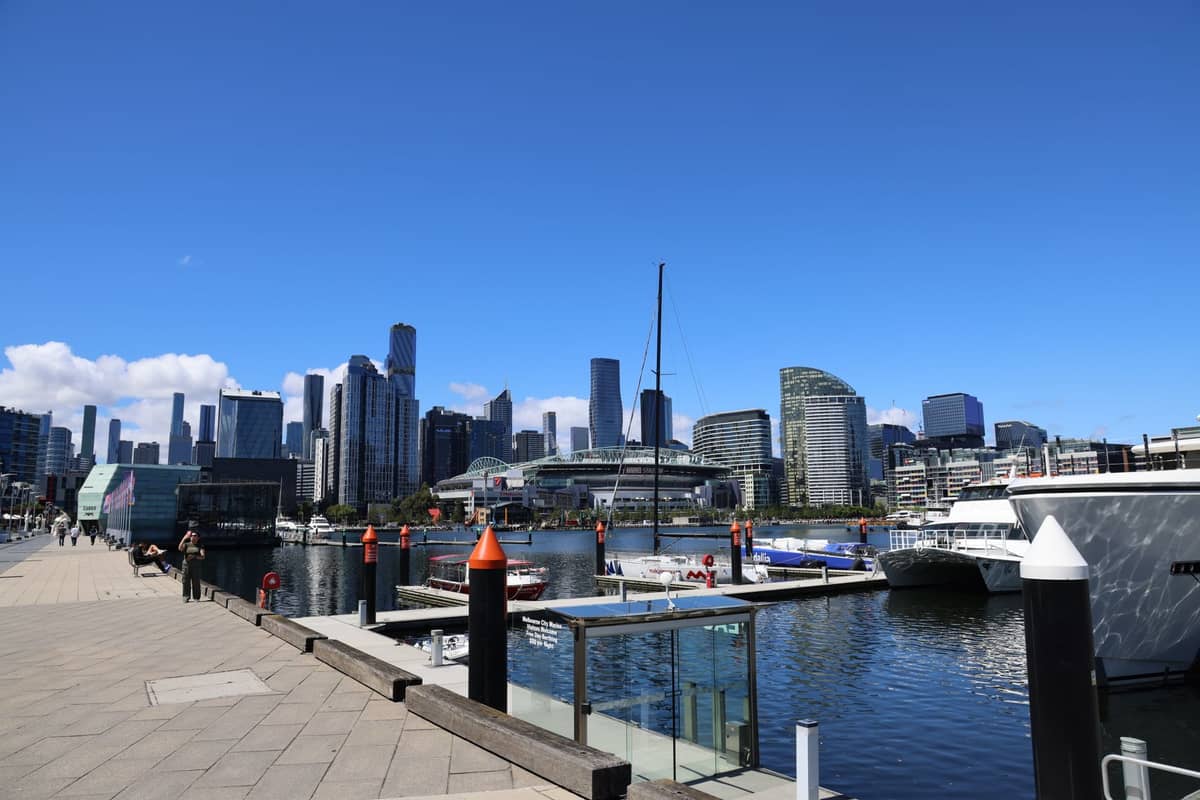
Docklands is Melbourne's planned waterfront precinct immediately west of the CBD, built on former industrial port land around a series of inner-city basins. It offers wide promenades, a major sports stadium, contemporary dining, and direct train and tram access, though its character is quieter and more residential than the city grid it adjoins.
Docklands occupies the reclaimed port land west of Melbourne's central grid, where wide waterfront promenades, high-rise apartments, and Marvel Stadium have replaced working docks. It is one of the youngest urban precincts in Australia, still finding its identity, and it rewards visitors who know what they are coming for rather than those looking for spontaneous street life.
Orientation
Docklands sits immediately west of the Melbourne CBD, separated from the central grid by Spencer Street and Southern Cross Station. Its boundaries run roughly from Spencer Street and Charles Grimes Bridge to the east, Bolte Bridge to the west, Footscray Road to the north, and Lorimer Street to the south. The precinct covers a substantial area but most visitor activity concentrates along the waterfront between NewQuay in the north and the Yarra's edge near Etihad Drive to the south.
The district is built around a series of linked basins, and the internal layout can disorient first-time visitors because the waterfront curves and the street grid does not follow the same logic as the CBD. The main public zones are NewQuay (the northern basin with restaurants and apartments), Harbour Esplanade (the central promenade), Waterfront City (retail and dining), and the Marvel Stadium precinct at the southeastern edge near Southern Cross Station.
For context within the wider city, Docklands shares its eastern boundary with the Melbourne CBD and is connected to Southbank by the Yarra River and the footbridge network. The two precincts feel very different: Southbank has the arts institutions and a more continuous street life, while Docklands is airier, quieter, and more spread out.
Character & Atmosphere
Docklands is the result of large-scale urban renewal that began in earnest in the late 1990s. Where shipping containers and industrial infrastructure once filled the waterfront, there are now apartment towers, corporate headquarters, and broad pedestrian promenades. The precinct has drawn criticism over the years for feeling underanimated compared to the organic inner-city neighbourhoods that grew over a century, and some of that criticism is fair. Wide paths without the density of foot traffic can feel oddly quiet on a weekday afternoon.
That said, the waterfront itself has a genuine appeal in the right conditions. On a clear autumn morning, the light falls low across the basins and the city towers to the east catch gold. Joggers and cyclists loop the promenade before the offices fill. The water is still and the air carries a faint marine quality that you do not get two blocks into the CBD. It is a Melbourne neighbourhood that rewards early risers and those who come specifically for the water views rather than expecting the laneway culture that defines other parts of the city.
On event days, the character shifts completely. When Marvel Stadium hosts an AFL match or a major concert, the western end of Collins Street and the area around Harbour Esplanade fills with tens of thousands of people moving in waves. The restaurants around Waterfront City and NewQuay fill quickly. The promenade becomes a procession. Then, within an hour of the final siren, most of the crowd disperses back toward Southern Cross Station and the streets revert to their usual calm.
ℹ️ Good to know
Docklands has historically been one of Melbourne's quieter precincts outside of event days. Weekend afternoons during warmer months see the most consistent foot traffic, especially along Harbour Esplanade and the NewQuay waterfront.
Heritage is present in unexpected pockets. Several former dock sheds have been repurposed rather than demolished. Central Pier on Victoria Harbour was removed in 2025 after structural failure, so do not plan a walk out onto the old pier. These buildings provide some texture and scale that the newer apartment blocks surrounding them lack, and they are worth seeking out as you walk the precinct.
What to See & Do
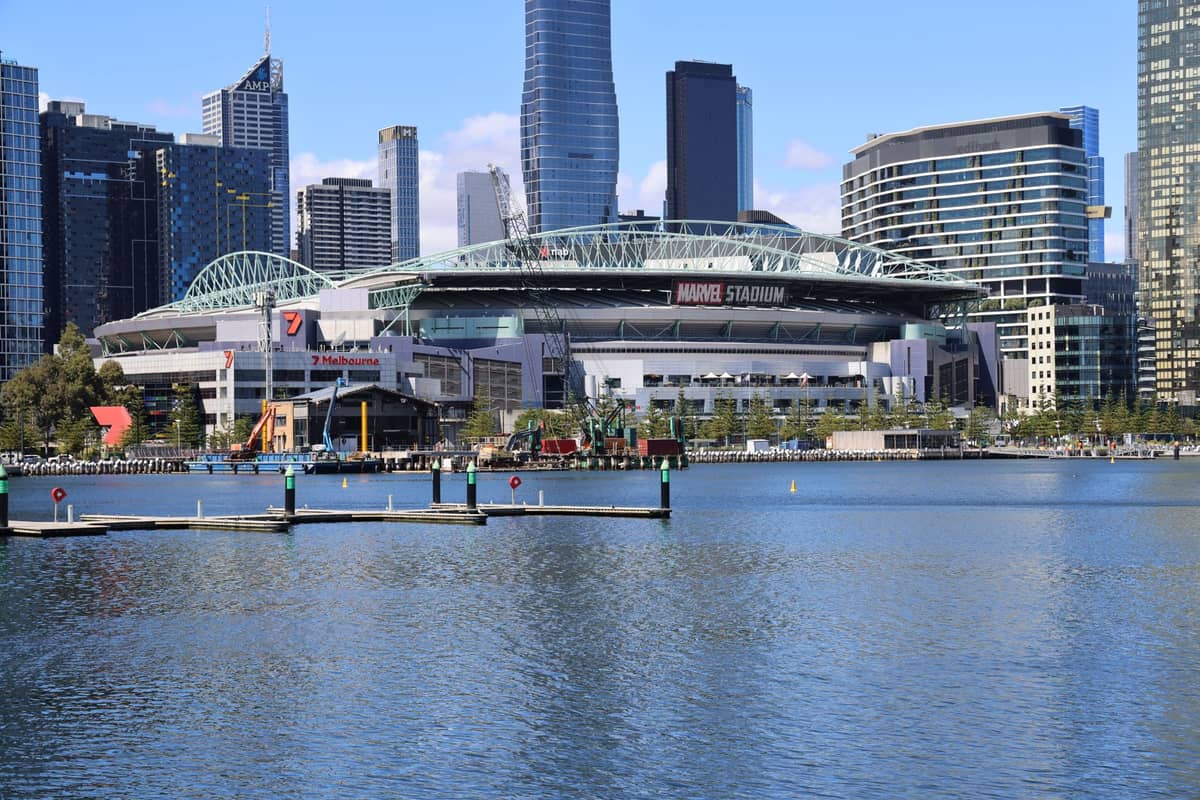
The most obvious anchor point is Marvel Stadium at the southeastern edge of the precinct near Southern Cross Station. With a capacity of around 56,000, it hosts AFL football, rugby, soccer, concerts, and major events throughout the year. Even if you are not attending an event, the stadium's curved facade and retractable roof are architecturally striking. On match days, the atmosphere around the surrounding streets is genuinely electric.
The waterfront walk along Harbour Esplanade is the spine of the precinct. It stretches along Victoria Harbour toward NewQuay, offering continuous views across the basins. The walk connects to the broader Yarra River trail network, making it practical to continue on foot toward the CBD or southward toward Southbank and beyond. The distance from NewQuay to Flinders Street Station is approximately two kilometres of flat, paved path.
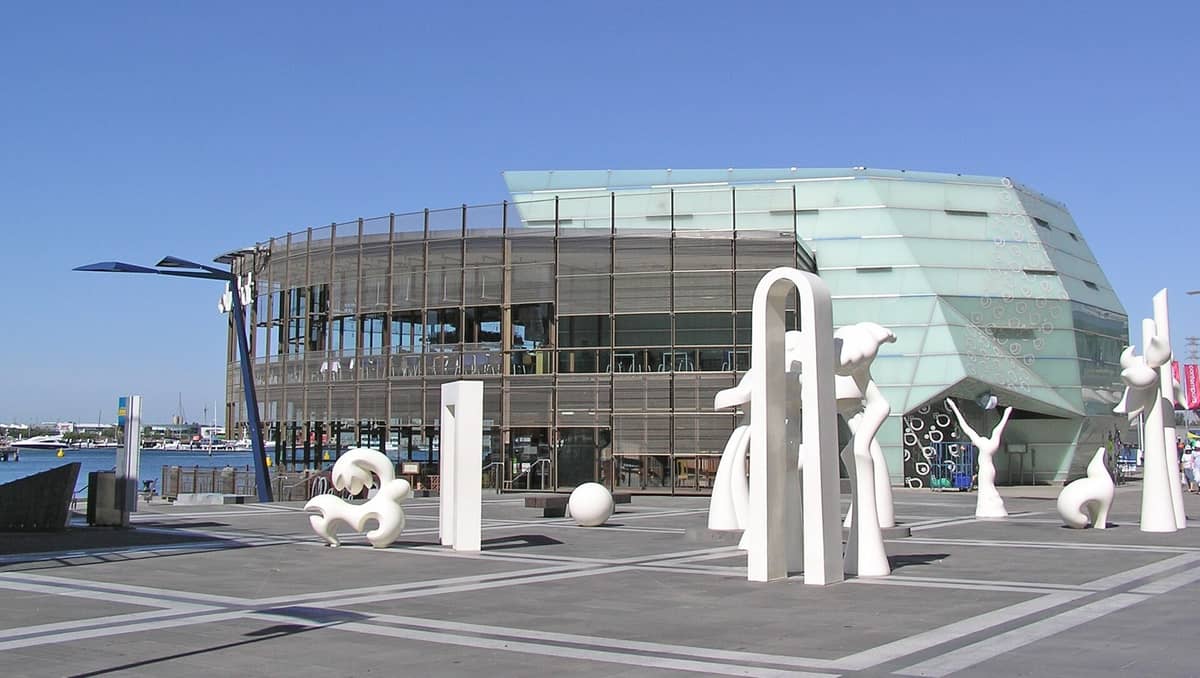
Public art is distributed across the precinct, from large-scale sculptures at the water's edge to murals on residential buildings. The quality is uneven, but several pieces are genuinely interesting, particularly the works installed along Harbour Esplanade. Checking the City of Melbourne's public art trail map before visiting gives you an organised route through the highlights.
Harbour Esplanade promenade walk from the Yarra to NewQuay basin
Marvel Stadium tours (available on non-event days, check current schedules)
Converted dock sheds along the waterfront
NewQuay waterfront and the northern basin views
Public art installations along Harbour Esplanade
Yarra River cycling and walking trail connections east and west
💡 Local tip
If you want to understand how Docklands fits into Melbourne's broader waterfront, walk from NewQuay south along Harbour Esplanade, cross the footbridge over the Yarra, and continue east along the Southbank promenade to Federation Square. The entire walk is about 3 kilometres and gives you an uninterrupted river-level view of the city.
Eating & Drinking
Docklands has more dining options than most visitors expect, though the scene is weighted toward casual waterfront dining rather than destination restaurants. The NewQuay area in particular has a concentration of cafes, casual restaurants, and bars that face the basin, and on a warm evening the outdoor seating fills with office workers and residents. The Waterfront City zone around the Ferris Wheel site has a similar cluster of mid-range options.
Cuisine ranges from modern Australian to Italian, Chinese, Japanese, and various casual international formats. Price points are generally mid-range, with most main courses sitting in the A$20 to A$40 bracket. On event days, waits increase significantly and some venues implement minimum spend requirements at outdoor tables. Booking ahead is advisable if you are eating before or after a game at Marvel Stadium.
Coffee quality in Docklands has improved considerably as the residential population has grown. Several independent cafes operate within the apartment precincts and along the ground floors of the commercial towers on Collins Street West. These tend to cater to office workers from Monday to Friday, so some close on weekends or operate reduced hours. The waterfront venues are more reliably open across seven days.
For a broader overview of Melbourne's food culture and where to find its best dining, the Melbourne multicultural food guide covers the city's most interesting eating precincts, including neighbourhoods where the dining scene is denser and more varied than Docklands.
⚠️ What to skip
On AFL match days or major concert nights at Marvel Stadium, restaurants across Docklands can be overwhelmed. Avoid walking in without a reservation on those evenings, and check the stadium events calendar before planning a meal in the precinct.
Getting There & Around
Southern Cross Station at the eastern edge of Docklands is one of Melbourne's main train hubs, serving regional V/Line services and metropolitan lines. It is also a major tram interchange. Flinders Street Station, the other main city hub, is about a 10-minute walk east. From Southern Cross, you are already inside Docklands and can walk the promenade directly to NewQuay in around 15 to 20 minutes.
Trams are the most practical way to move through the precinct. Route 35, the free City Circle tram, does not extend into Docklands, but several other routes serve the area. Tram stops at Southern Cross Station and along Collins Street West put you within a short walk of most destinations. The Free Tram Zone includes Docklands, so travel on trams within the zone is free; check the current PTV map for the zone boundaries and stops. Always check the current PTV map and zone boundaries, as these are subject to change.
The waterfront itself is entirely flat and well-suited to walking and cycling. Shared paths run along Harbour Esplanade and around the basins. Check current local transport information for bike-share availability and ferry services.
For a full breakdown of how to navigate Melbourne's public transport network, including tram zones and Myki cards, see the getting around Melbourne guide.
Safety & Practical Notes
Docklands is generally safe during the day and on event evenings when large crowds move through well-lit routes. The precinct is, however, unusually quiet after dark in areas away from the waterfront dining strips and the stadium. Stretches of Harbour Esplanade and some of the outer residential areas can feel isolated at night due to low pedestrian density, particularly on weeknights outside of event periods.
The practical advice is straightforward: stick to the well-lit promenade and dining areas if you are out after dark, and use Southern Cross Station rather than walking through undeveloped sections of the precinct to reach the CBD. On event nights, the concentration of large crowds around Marvel Stadium means you should keep your belongings secure and be patient with the surge in transit demand after events end.
Melbourne is on the traditional lands of the Wurundjeri Woi-wurrung and Bunurong peoples of the Kulin Nation. Docklands sits on country with deep significance, and many of the waterfront interpretive installations acknowledge this history. The City of Melbourne has information on Traditional Owners and places of cultural significance for visitors who want to engage with this context more deeply.
Where to Stay
Docklands has a range of apartment hotels and serviced apartments, catering primarily to business travellers and those attending events at Marvel Stadium. If you are visiting Melbourne for a short break focused on the city's cultural offerings, the CBD or Southbank will put you closer to more of what makes Melbourne worth visiting, including the major museums, galleries, and the laneway restaurant scene.
Staying in Docklands makes particular sense if you have specific reasons to be in the western part of the city, such as events at Marvel Stadium, meetings at the corporate offices along Collins Street West, or if you prefer waterfront views and quieter streets over the denser energy of the CBD grid. Accommodation in Docklands is sometimes competitively priced compared to equivalent rooms in the CBD, though this varies by season and availability. For a full overview of where to stay across Melbourne's neighbourhoods, see the where to stay in Melbourne guide.
💡 Local tip
Docklands accommodation books out quickly on AFL finals weekends and major concert dates at Marvel Stadium. If your visit coincides with a major event, check the stadium calendar and book well in advance or consider staying in the CBD, which is only a 10 to 15 minute walk away.
Is Docklands Worth Your Time?
For first-time visitors to Melbourne with limited days, Docklands is best experienced as part of a broader waterfront walk rather than as a standalone destination. The combination of the Yarra promenade, Southbank's arts precinct, and Docklands' basins makes a coherent half-day route that connects several of the city's most significant landmarks. Pair it with a visit to Federation Square and the Southbank arts strip and you have a full morning or afternoon without needing public transport.
If you are specifically looking for the neighbourhoods that define Melbourne's cultural identity, the energy is elsewhere. Fitzroy to the north has the bars, galleries, and street art. Carlton has the gardens and the Italian precinct around Lygon Street. Docklands is what it is: a large, contemporary waterfront development that is still maturing, with genuine appeal for certain visitors and limited spontaneous discovery for others.
TL;DR
Docklands is a planned waterfront precinct immediately west of the Melbourne CBD, built on former port land around a series of inner-city basins.
Best for: event-goers attending Marvel Stadium, travellers who want waterfront walks and quieter streets, and business visitors staying near Collins Street West.
The Harbour Esplanade promenade connects Docklands to the Yarra River trail network, making it easy to walk to Southbank and the CBD without transit.
Outside of event days, the precinct is noticeably quiet, especially after dark in areas away from the waterfront dining strips.
Southern Cross Station on the eastern boundary gives Docklands excellent train and tram connections, making it practical as a base even if you spend most of your time in surrounding neighbourhoods.
Three days in Melbourne is enough to move past the obvious tourist circuit and get a real sense of the city. This itinerary covers the CBD laneways, inner-north neighbourhoods, bayside suburbs, and cultural institutions, with practical transport advice, realistic crowd warnings, and enough flexibility to make it your own.
The Australian Open is one of the four Grand Slam tennis tournaments and the biggest annual sporting event in Melbourne. This guide covers tickets, getting to Melbourne Park, navigating the grounds, and how to make the most of your visit whether you're going for a single session or the full fortnight.
Melbourne sits on Port Phillip Bay, giving the city access to calm bay beaches within 30 minutes of the CBD, and wilder ocean surf beaches a 90-minute drive south. This guide covers the best beaches near Melbourne by type, with frank notes on safety, crowds, and what each beach actually delivers.
Melbourne is a stronger museum city than many visitors expect. Whether you're drawn to world-class art collections, colonial history, hands-on science, or Australia's sporting obsession, these are the museums worth your time.
Melbourne's weather is notoriously unpredictable, but the city rewards visitors year-round. This guide breaks down every season by weather, events, crowds, and value so you can pick the right time for your trip.
Melbourne rewards those who look up, look out, and look across. Whether you want 360-degree city panoramas from 285 metres up, golden-hour shots of the skyline from the bay, or dramatic coastal cliffs an hour from the CBD, this guide covers every angle worth seeking out.
Melbourne is one of Australia's great base cities, with extraordinary landscapes, wildlife, history, and wine country within a two-hour drive. This guide covers the best day trips from Melbourne, from dramatic ocean coastlines to misty mountain ranges, with realistic travel times and what to prioritise.
Melbourne rewards curious visitors with an impressive range of genuinely free experiences. From world-class art galleries and heritage reading rooms to wild penguin encounters and the city's famous laneway culture, these are the best free things to do in Melbourne.
From the Free Tram Zone to airport transfers, myki cards to rideshare, this guide covers every practical detail you need to navigate Melbourne's transport network confidently. No fluff, just the information that actually matters.
A Great Ocean Road day trip from Melbourne is one of the most iconic outings in Australia, but it requires serious planning. This guide covers the full route, realistic timelines, tour options with price ranges, the best stops beyond the Twelve Apostles, and clear warnings about what most visitors get wrong.
Melbourne Airport (MEL) sits 23 km northwest of the city centre at Tullamarine. This guide covers every transfer option — SkyBus, taxi, rideshare, and public bus — with current pricing, journey times, and the insider details that save you time and money on arrival.
Melbourne's built environment tells the story of a city that went from a colonial outpost to a gold rush boomtown to a modern metropolis in under two centuries. This guide covers the key buildings, neighbourhoods, and walking routes to understand how it all fits together.
Melbourne's coffee culture is serious business. This guide breaks down the best café neighbourhoods, what drinks to order, what to pay, and how to navigate the city's specialty scene like a local. Whether you're landing at Tullamarine or already in the CBD, here's what you need to know.
The Melbourne Cup is Australia's most famous horse race, held annually at Flemington Racecourse each November. This guide covers everything from buying tickets and getting to the track to dress codes, the full Carnival schedule, and a clear picture of what to expect on race day.
Melbourne runs one of the most packed event calendars in the Southern Hemisphere, with major festivals, sporting events, and cultural programs spread across every season. This guide breaks down what's on, when to go, and how to plan around it without getting caught out by full hotels or sold-out tickets.
Melbourne rewards couples who slow down and look beyond the obvious. This guide covers the city's most genuinely romantic experiences, from sunrise walks through the Royal Botanic Gardens to candlelit laneway dinners and scenic day trips, with candid notes on what's worth it and what to skip.
Melbourne takes its parks seriously. From UNESCO-listed formal gardens to wild river corridors just minutes from the CBD, the city's green spaces range from manicured and historic to untamed and surprising. This guide covers the best of them, with practical advice on what to expect at each.
Melbourne rewards those who look beyond the obvious. This guide uncovers the city's overlooked art museums, geological surprises, historic estates, and quiet urban escapes that most visitors walk straight past.
Melbourne's laneways are the city's most distinctive feature: a network of narrow alleys, covered arcades, and public art corridors threading through the CBD grid. This guide covers the essential stops, practical logistics, and what most visitors get wrong about the street art scene.
Melbourne's live music scene spans everything from intimate 80-person rooms above pubs to ornate theatres holding thousands. This guide breaks down the best venues by style and suburb, explains how to find and book gigs, and covers the practical details that most listings skip.
Melbourne's market scene goes well beyond tourist postcards. This guide covers the city's best permanent and weekly markets, with verified opening hours, what each one does best, candid assessments of which are worth your time, and practical tips for getting the most out of each visit.
Melbourne, Australia is home to one of the world's most diverse urban food cultures, shaped by over 200 years of immigration waves. This guide breaks down the city's key multicultural food neighbourhoods, what to eat in each, when to go, and how to navigate them like a local.
Melbourne's nightlife scene runs deep, from laneway cocktail bars to legendary live music rooms that shaped Australian rock. This guide breaks down the best neighbourhoods, venues, and practical logistics so you can navigate it like a local.
Melbourne, Australia rewards budget travellers more than most major cities. From free tram rides and world-class free museums to cheap market food and no-cost beaches, this guide covers every practical angle for spending less without missing out.
Seven days is enough time to get well beyond Melbourne's postcard highlights. This itinerary balances the CBD's iconic landmarks, inner-suburb character, a coastal day trip, and the regional Victorian countryside — with practical logistics for every step.
Melbourne rewards shoppers who look beyond the chain stores. This guide covers the city's best shopping precincts, heritage arcades, weekend markets, and neighbourhood strips — with practical notes on what's worth your time and what to skip.
Melbourne's street art scene is one of the most concentrated and celebrated in the world. This guide covers the essential laneways, the City of Melbourne's official self-guided walk, neighbourhood murals beyond the CBD, and practical advice for getting the most out of every visit.
Melbourne rewards walkers like few other cities. From the iconic laneways of the CBD to the bayside foreshore of St Kilda, this guide covers the best guided tours, official self-guided routes, and neighbourhood walks, with straightforward notes on what's worth your time and what to skip.
Melbourne is one of Australia's most family-friendly cities, with a range of attractions spread across the inner city and beyond. This guide covers the best things to do with kids in Melbourne, from free rainy-day museums to weekend wildlife encounters, with practical notes on costs, transport, and what's actually worth your time.
Melbourne rewards visitors who look beyond the obvious. This guide covers the city's best experiences across culture, food, sport, nature, and neighbourhoods — with practical details on getting around, what to skip, and how to make the most of every day in Melbourne, Australia.
Melbourne is one of the world's great sporting cities, hosting world-class events across football, cricket, tennis, and more. This guide covers every major venue, how to get tickets, the best seasons to visit, and the practical details that actually matter.
Melbourne's food scene is one of the most diverse and serious in the Southern Hemisphere. This guide covers the dishes, neighbourhoods, markets, and cultural context you need to eat well in Melbourne — whether you have three days or three weeks.
Choosing where to stay in Melbourne shapes your entire trip. This guide breaks down every major neighbourhood by location, transport access, price range, atmosphere, and who it suits best, so you can book with confidence.
The Yarra Valley is one of Australia's most accessible cool-climate wine regions, sitting about 65 km from central Melbourne. This guide covers how to get there, which cellar doors are worth your time, tour vs. self-drive decisions, and how to plan around the seasons.