Docklands Waterfront & Public Art: Melbourne's Reinvented Harbour Precinct
Once Melbourne's busiest commercial port, Docklands is now a sprawling waterfront precinct where public sculptures, landscaped parks, and wide promenades line Victoria Dock. Entry is free, the walk is self-guided, and the area rewards those who explore beyond the main esplanade.
Quick Facts
- Location
- Docklands, west of Melbourne CBD
- Getting There
- Trams 11 & 48 (Collins St); Trams 35 (City Circle), 70 & 75 (Harbour Esplanade).
- Time Needed
- 1–2 hours for the full public art walk; longer if you stop for food or explore the marina
- Cost
- Free (public waterfront and art walk)
- Best for
- Leisurely walkers, architecture enthusiasts, families, and photographers
- Official website
- www.melbourne.vic.gov.au/docklands-park
What Is the Docklands Waterfront?
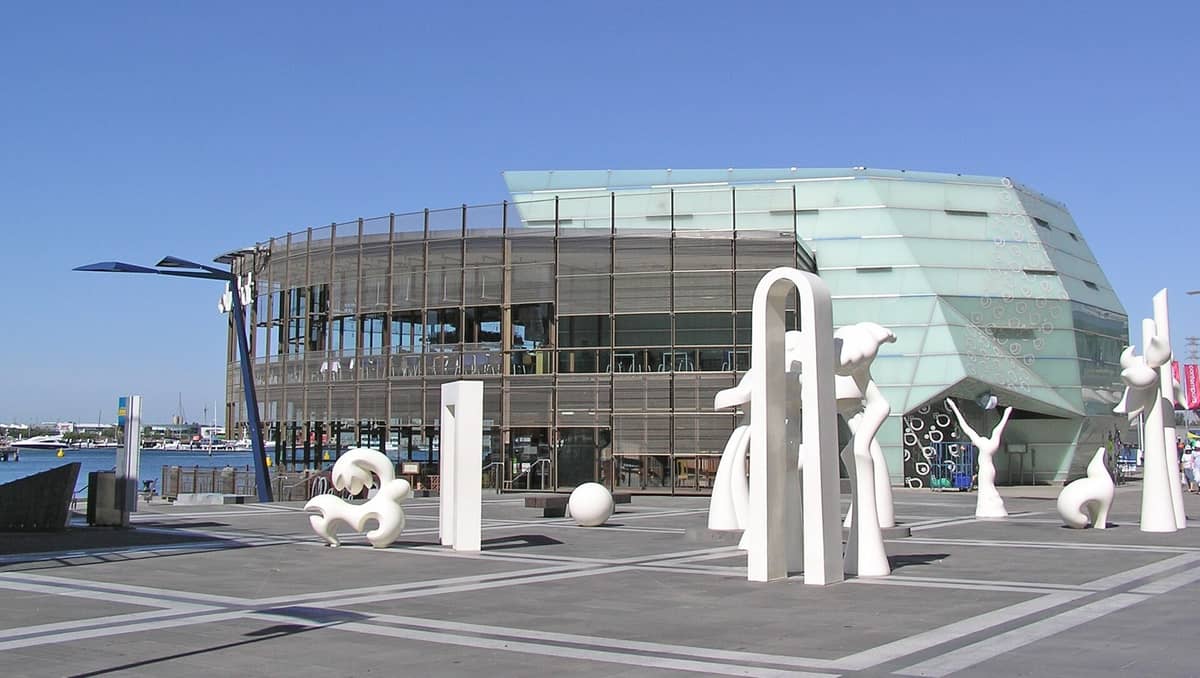
The Docklands waterfront is a broad, paved promenade and park system wrapped around Victoria Dock, sitting directly west of Melbourne's CBD grid. The precinct is best understood as a large-scale urban renewal project built on the bones of a working industrial port: Victoria Dock construction began in the late 1880s, and the area served as Melbourne's busiest dock from the early 1900s through the late 1950s. Today, the cranes and cargo ships are gone, replaced by residential towers, waterside restaurants, public sculptures, and Docklands Park, whose landscaped gardens were created in 2005.
The Docklands Public Art Walk, the precinct's signature free attraction, threads through this transformation. Artworks are installed at ground level, along walkways, and within the park itself, making the whole area feel more like an open-air gallery than a designated tourist sight. There are no fences, no timed entry windows, and no ticket booths. You simply walk.
ℹ️ Good to know
The waterfront and public art walk are free and accessible at all times. No booking is required. Check the City of Melbourne's Docklands Park page for the most current information on specific artworks and park facilities.
The Atmosphere at Different Times of Day
Early mornings at Docklands are notably calm. The wide concrete and timber boardwalks along Harbour Esplanade catch the low light off the water, and the relative quiet makes it easier to read the plaques beside each artwork without crowds pressing around you. This is also when the smell of salt air comes through clearly, before the midday foot traffic and food vendors add their own layers.
By late morning on weekends, families with prams and cyclists begin to populate the main esplanade. The area around the Children's Pier and Docklands Park fills up steadily. At this hour the large-scale sculptures read differently, some are kinetic and respond to wind, so a breezy Melbourne morning can make the walk genuinely theatrical.
Evenings extend the experience. The dock water reflects the lit towers and the illuminated public artworks, giving the esplanade a very different character from its daytime version. Restaurants along New Quay fill up from around 6:30 p.m. and the precinct stays lively well into the night. That said, parts of the waterfront that sit away from the dining strips can feel isolated after dark, so stick to the well-lit main esplanade if you're walking alone.
💡 Local tip
For photography, come at dusk. The water, the reflections, and the warm light from the CBD towers to the east combine for roughly 20–30 minutes of genuinely strong light before full dark.
Tickets & tours
Live prices and dates from our booking partner. If you book, we may earn a commission at no extra cost to you.
Great Ocean Road reverse itinerary tour from Melbourne
From 77 €Instant confirmationFree cancellationGreat Ocean Road bus tour with a forest walk
From 90 €Instant confirmationFree cancellationYarra Valley Bus Wine Tour including lunch with a glass of wine and chocolate
From 107 €Instant confirmationFree cancellationHidden bars of Melbourne guided tour
From 115 €Instant confirmationFree cancellation
The Public Art Walk: What to Expect
The Docklands Public Art Walk is a self-guided route through a rotating and permanent collection of sculptures, installations, and site-specific works. The artworks vary considerably in scale and medium: some are monumental steel structures, others are more intimate ceramic or mosaic pieces at eye level. The quality is uneven by design, reflecting different commissioning eras and community consultations over more than two decades of development.
Unlike a gallery, nothing is labelled with consistent signage throughout the route, so downloading the City of Melbourne's precinct map before you arrive will save time. Some artworks are on private land adjacent to the public path, visible from the esplanade but not accessible up close. Factor this into your expectations: the walk is a conversation between public space and private development, not a curated white-wall experience.
The waterfront connects naturally to other parts of the inner city. Walking east along the Yarra eventually brings you toward Birrarung Marr and the broader cultural precinct, while the free City Circle Tram along Harbour Esplanade provides an easy return to the CBD without backtracking on foot.
Docklands Park: The Calmer Corner
Docklands Park, whose gardens were established in 2005, sits within the precinct and offers a noticeably quieter experience than the main esplanade. The lawns slope gently toward the water, and the plantings are chosen for low maintenance in a coastal urban environment rather than for botanical drama. It's a functional green space, useful for a rest break, a picnic, or watching the working boats that still move through the dock.
Accessible facilities including toilets, accessible parking bays, and level path access are mapped in the Docklands Mobility Map, which is available online through the City of Melbourne. Routes 11 and 48 on Collins Street are partly serviced by low-floor trams; routes 35, 70 and 75 on Harbour Esplanade are not. Check Yarra Trams’ live information before your visit if this matters for your access needs.
Getting There and Getting Around
Docklands sits immediately west of Melbourne's CBD grid. On foot, it's reachable from the city via the Collins Street, Bourke Street, or La Trobe Street pedestrian bridges, each a short walk from Melbourne Central or Flagstaff train stations. The walk from Flinders Street Station along the Yarra and into Docklands takes roughly 15–20 minutes at a relaxed pace.
By tram, routes 11 and 48 run along Collins Street into Docklands; routes 35 (the City Circle), 70 and 75 run along Harbour Esplanade. All of these operate within or adjacent to Melbourne's Free Tram Zone, which covers central Melbourne and stretches into parts of Docklands, so check the zone boundaries on the PTV official map before boarding. Outside the Free Tram Zone, you'll need a Myki card.
💡 Local tip
If you're visiting Docklands as part of a broader CBD day, the City Circle Tram (Route 35) is the most convenient link. It runs a loop along Harbour Esplanade and back through the CBD, so you can jump on or off without planning a return journey.
Is Docklands Worth Your Time? An Honest Assessment
Docklands is not Melbourne's most celebrated precinct, and it shouldn't pretend to be. Compared to the density of interest in the CBD laneways or the coastal texture of St Kilda, the waterfront can feel underpopulated and architecturally generic in parts. The residential towers that define the skyline here were developed quickly, and not all of them contribute to a coherent streetscape at ground level.
What Docklands does offer is space, water, free public art, and a relatively calm environment that contrasts well with the compression of the CBD. For travellers who have already covered Federation Square, the Royal Botanic Gardens, and the central laneways, a half-afternoon at Docklands adds a different texture to a Melbourne itinerary without adding cost.
Travellers with very limited time in Melbourne, say two days or fewer, may find Docklands a lower priority than the city's denser cultural precincts. It rewards a slow pace and a degree of curiosity about urban planning and public art; visitors expecting a tight programme of Instagram landmarks may find it underwhelming.
Weather and Seasonal Considerations
Melbourne's famously changeable weather affects Docklands more than most inner-city locations because the waterfront is exposed. The dock creates a wind corridor, and on cold or overcast days, the wide esplanade amplifies that effect. Bring a layer even in summer. Rain makes the timber boardwalk sections slippery, so flat-soled shoes with grip are better than sandals or dress shoes.
The most comfortable months for a long waterfront walk are March through May and September through October, when temperatures are moderate and the wind is less persistent. Melbourne summers (December through February) can bring hot, dry northerlies followed by rapid cool changes, so check the Bureau of Meteorology forecast on the morning of your visit rather than relying on a general seasonal expectation.
Insider Tips
- Download the City of Melbourne's Docklands precinct map before arriving. On-site signage for the public art walk is inconsistent, and having the map on your phone saves significant backtracking.
- The Harbour Esplanade side of the waterfront, along Route 35, tends to be less crowded than the New Quay restaurant strip. If you want the sculptures and water views without the weekend crowds, start from the esplanade end and work east.
- Docklands is one of the better places in central Melbourne to watch a sunset over water. Position yourself on the western end of the waterfront, facing the open dock, for the best angle without buildings blocking the view.
- If you have children, the Children's Pier and nearby open-air play areas near Docklands Park are a practical stop that most adult-focused guidebooks overlook entirely.
- Cycling through Docklands on the Capital City Trail is a genuinely good way to see the precinct without stopping too long. The trail connects Docklands into the broader Melbourne bike network, making it easy to combine with a ride along the Yarra.
Who Is Docklands Waterfront & Public Art For?
- Walkers and cyclists who want waterfront space without a long commute from the CBD
- Architecture and urban planning enthusiasts interested in large-scale city renewal projects
- Families looking for a free, accessible outdoor space close to the city centre
- Photographers interested in industrial heritage, reflective water, and dusk light
- Travellers who want to extend a CBD day with something quieter and free
Nearby Attractions
Other things to see while in Docklands:
- Marvel Stadium
Marvel Stadium is Melbourne's retractable-roof arena in the Docklands precinct, hosting AFL football, international concerts, and major sporting events year-round. Whether you're catching a game or taking the behind-the-scenes 365 tour, this guide covers everything you need to plan a confident visit.
Planning a trip? Discover personalized activities with the Nomado app.