Royal Botanic Gardens Victoria: Melbourne's 38-Hectare Living Collection
Established in 1846 on the traditional lands of the Kulin Nation, Melbourne Gardens is one of Australia's most significant botanic collections. Entry is free, the grounds are open daily, and the experience shifts dramatically depending on when you arrive.
Quick Facts
- Location
- Birdwood Avenue, Melbourne (approx. 2 km south of the CBD)
- Getting There
- Trams 3, 5, 6, 16, 64, 67, 72 to Stop 19 (Shrine of Remembrance/St Kilda Rd), then ~650 m walk to Observatory Gate. Anzac Station and buses 605 and 246 also serve the area.
- Time Needed
- 1.5–3 hours for a relaxed walk; half a day if you linger or attend a tour
- Cost
- Free general entry. Some special events are ticketed — check the official site.
- Best for
- Morning walkers, picnickers, families, garden enthusiasts, anyone needing a break from the CBD
- Official website
- www.rbg.vic.gov.au
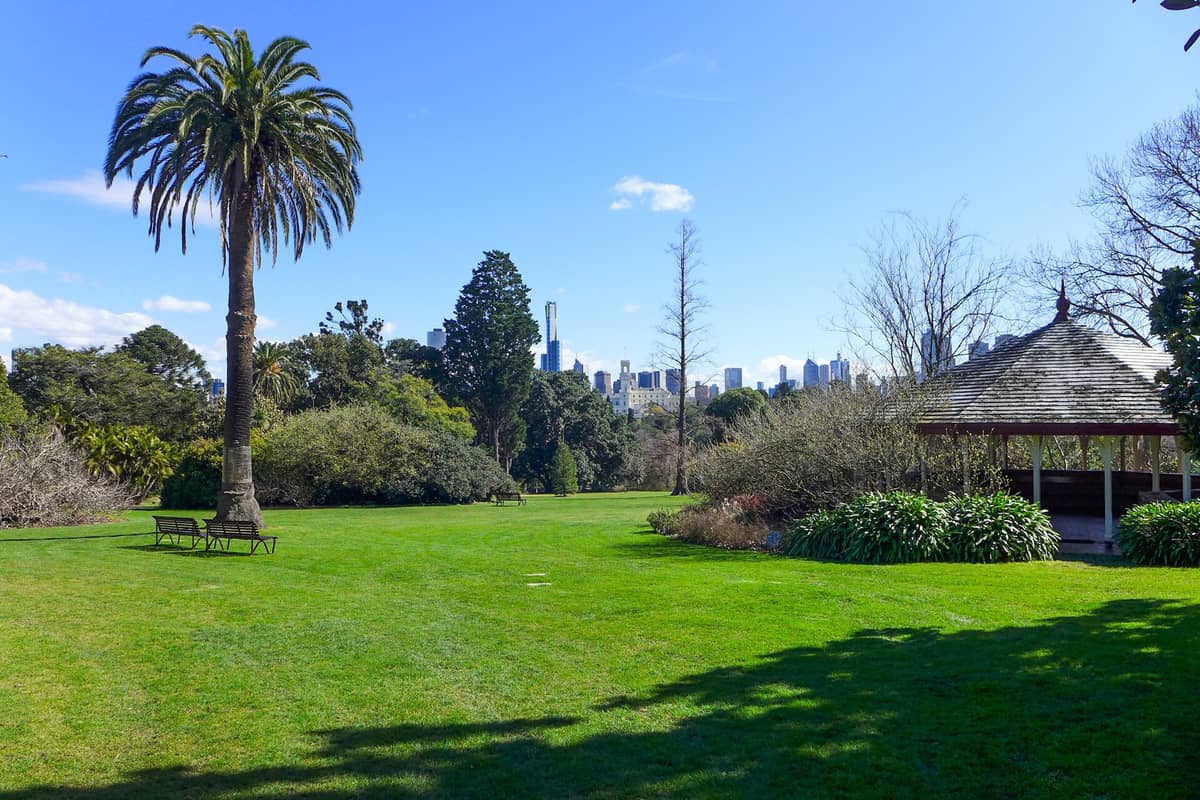
What Melbourne Gardens Actually Is
The official name of this site is Royal Botanic Gardens Victoria, and the Melbourne location is specifically called Melbourne Gardens. That distinction matters because Royal Botanic Gardens Victoria also operates a separate Cranbourne Gardens, about an hour southeast of the city. When locals say 'the Botanic Gardens', they almost always mean this one.
Covering 38 hectares in the Southbank-adjacent precinct between the Yarra River and Domain Road, Melbourne Gardens holds a living collection of around 8,500 plant species. This is not a manicured theme park or a weekend pop-up market transplanted into a lawn. It is a working scientific institution with a library, herbarium, and ongoing research programs, wrapped inside one of the most well-maintained green spaces in the country.
The gardens sit within easy reach of several of Melbourne's most significant cultural landmarks. Federation Square is about a 20-minute walk north, and the Arts Centre Melbourne is a short distance away along St Kilda Road, making this a natural pairing for a half-day cultural itinerary.
ℹ️ Good to know
Opening hours change seasonally. The gardens are open daily from 7:30 a.m. to 7:30 p.m. From 1 April to 30 September they close at 5:30 p.m. Always check the official site before planning a late-afternoon visit in winter — the gates close promptly.
The Experience at Different Times of Day
Arriving just after the 7:30 a.m. opening is the quietest the gardens will be all day. Joggers use the perimeter paths as a circuit, and the lake surface is often glassy and undisturbed. Bird calls are loud enough to orient by: sulphur-crested cockatoos, Australian wood ducks, and the occasional kookaburra in the larger trees. The grass holds dew on cooler mornings, and the light through the canopy is long and directional. If you are carrying a camera, this is your window.
By mid-morning, school groups begin arriving, particularly on weekdays. They tend to cluster around the Children's Garden and guided walk meeting points, so the southern and western sections of the grounds remain relatively clear. Lunchtime on weekdays brings office workers from the Southbank and St Kilda Road corridor. Lawns fill with people eating takeaway containers, and the lakeside paths become social rather than contemplative.
Weekends between 10 a.m. and 2 p.m. are the busiest period overall. Families spread picnic rugs across the central lawns, and the café near the Visitor Centre has a queue. The atmosphere is relaxed rather than crowded, but if you are looking for solitude, you will not find it here at that hour. Late afternoon, in summer especially, brings a second quieter wave of visitors. The light softens considerably around 5 p.m. and the sense of the day winding down is palpable.
Tickets & tours
Live prices and dates from our booking partner. If you book, we may earn a commission at no extra cost to you.
Sovereign Hill, Botanical Gardens and Melbourne Skydeck Bus Tour
From 116 €Instant confirmationFree cancellationGreat Ocean Road reverse itinerary tour from Melbourne
From 77 €Instant confirmationFree cancellationGreat Ocean Road bus tour with a forest walk
From 90 €Instant confirmationFree cancellationYarra Valley Bus Wine Tour including lunch with a glass of wine and chocolate
From 107 €Instant confirmationFree cancellation
History and Cultural Context
Melbourne Gardens was established in 1846, making it one of the older public green spaces in Australia. The land sits on the traditional Country of the Kulin Nation, the confederation of Aboriginal peoples whose territories cover much of what is now central Victoria. The Wurundjeri Woi-wurrung and Bunurong peoples are the Traditional Owners of the Melbourne area, and the gardens acknowledge this connection.
The Victorian-era layout reflects the English landscape garden tradition, with winding paths, a central ornamental lake, and specimen trees planted for both scientific and aesthetic purposes. Some of the elms, oaks, and conifers on the grounds date back to the nineteenth century and now form a significant living heritage. The original design intent was partly to demonstrate the range of plants that could be cultivated in Victoria's climate, which explains the geographical breadth of the collection.
For context on how Melbourne's public gardens fit into the city's broader design history, the Carlton Gardens to the north offer a contrasting formal approach, with the UNESCO-listed Royal Exhibition Building at their centre. The two gardens represent different Victorian-era philosophies about how public green space should be organized and used.
What to Actually See Inside
Melbourne Gardens is large enough that aimless wandering can leave you having missed sections entirely. The ornamental lake is the geographic centre and a useful navigation anchor. Paths radiate outward into distinct collections: the Guilfoyle's Volcano, a restored 19th-century water reservoir now planted as a succulent and dry-climate garden, is one of the more unexpected highlights and sits on a gentle rise with views back across the grounds.
The Children's Garden is a separate enclosed space designed for under-twelves, with sensory planting, water play elements, and enough stimulation to keep young visitors engaged for at least an hour. It has its own entry and facilities. The Ian Potter Foundation Children's Garden, as it is formally named, opens at 10 a.m. and is closed on Mondays and Tuesdays except during school and public holidays. It also closes during winter from the start of Term 3 until Father's Day; check the official site for current access information.
The Fern Gully section is the most dramatically atmospheric part of the gardens: a sheltered gully planted densely with tree ferns, mosses, and shade-loving species that gives the impression of being inside a temperate rainforest. Temperature drops noticeably in there. The light is filtered to a deep green, the air smells of damp soil and decomposing leaf matter, and the acoustic texture shifts as you descend into it. It is the most visited single spot in the gardens for good reason.
The Visitor Centre near Observatory Gate holds the free wheelchair loan service, maps, and information on guided tours. Staff here are a reliable source of current information on which sections are under maintenance or temporarily closed. Free guided tours run regularly, though schedules vary by season — confirm on the official website before planning around one.
💡 Local tip
Pick up a free map at the Visitor Centre rather than relying on your phone. Mobile signal is inconsistent in parts of the gardens, particularly in the Fern Gully section, and the print map includes the numbered landmark system that matches trail signage.
Getting There and Practical Notes
Tram is the most straightforward approach from the city. Routes 3, 5, 6, 16, 64, 67, and 72 stop at Stop 19 on St Kilda Road, listed as Shrine of Remembrance. From there, Observatory Gate is roughly a 650-metre walk southwest along Birdwood Avenue. The route is flat and well-marked. Myki card or myki money is required for tram travel once you leave the Free Tram Zone, which typically covers the CBD only, so ensure your card is loaded before boarding.
If you are planning to combine the gardens with other nearby sights, Birrarung Marr along the Yarra is walkable from the gardens' northern edge, and the Southbank precinct with its riverside restaurants and galleries is also within easy reach on foot.
Cycling access is permitted but bike riding within the gardens is not. Locked bike infrastructure is available outside the main gates. For drivers, street-metered parking is generally available near the entry gates for up to four hours; conditions vary with nearby events. Accessible parking is signposted at multiple locations, and the gardens publish a detailed access key on their website covering path gradients, toilet facilities, and wheelchair-accessible routes.
Weather, Seasons, and What to Bring
Melbourne's climate is genuinely changeable, and the gardens amplify this in specific ways. On hot summer days above 35°C, the open central lawns offer little shelter, while the Fern Gully and tree canopy areas remain significantly cooler. During Melbourne's sharp afternoon rain events, the path network drains quickly but the lawns become soft and muddy at the edges. A compact rain jacket takes up almost no space and prevents a reasonable proportion of visits from becoming uncomfortable.
Autumn (March to May) is the most photogenic season for the deciduous sections of the collection, when the oaks and elms shift through ochre and rust. Spring (September to November) brings flowering bulbs and blossom, but also Melbourne's most variable weather, including the possibility of warm sunshine and cold wind on the same afternoon. Winter mornings are quiet, often misty, and the gardens take on a quality that photographs in a completely different register to summer. Wear layers.
For broader context on when to plan your Melbourne visit, the best time to visit Melbourne guide covers seasonal trade-offs across the city in more detail.
Honest Assessment: What the Gardens Are and Are Not
Melbourne Gardens is not a destination that delivers constant stimulation. There are no rides, no performances, and no strong commercial pull. The café is pleasant but not exceptional. If you are travelling with teenagers who are not specifically interested in plants or landscape, this is a harder sell than the gardens' reputation might suggest.
For people who find genuine pleasure in open space, mature tree canopy, and the particular calm of a well-maintained landscape, this is one of the best free experiences in Melbourne without qualification. The combination of scientific rigour, heritage planting, and accessible location is not replicated anywhere else in the city.
⚠️ What to skip
Dogs are permitted inside Melbourne Gardens but must remain on a leash. Plan accordingly if you are travelling with a dog. Plan accordingly if you are travelling with a dog.
Insider Tips
- The Guilfoyle's Volcano section is one of the least-visited parts of the gardens despite being architecturally fascinating. Most visitors follow the lakeside path and miss the climb entirely. It takes five minutes and the elevated perspective across the grounds is the best in the entire site.
- Free guided walks depart from the Visitor Centre, but they fill quickly on weekends. Arrive 15 minutes early and check the day's schedule at the Visitor Centre desk rather than relying on the online calendar, which is not always updated in real time.
- The Fern Gully path is significantly cooler than the rest of the gardens, sometimes by four or five degrees. In summer, plan to spend extra time there during the middle of the day when the open lawns become oppressive.
- The ornamental lake is home to a large population of eels, which are visible from the path edges in still water conditions, particularly in the early morning. Locals know this. Tourists almost universally miss it.
- If you are visiting during the school-holiday period, If you are visiting during school holidays, check the official website for the Children's Garden's opening hours and any access updates, particularly if young children are your primary audience for the trip — a closed Children's Garden significantly changes the experience. Check the official website before the visit, particularly if young children are your primary audience for the trip — a closed Children's Garden significantly changes the experience.
Who Is Royal Botanic Gardens Victoria For?
- Walkers and joggers looking for a quiet morning circuit close to the city
- Families with primary-school-aged children, particularly for the Children's Garden
- Photographers wanting natural light through mature tree canopy
- Travellers who want genuine downtime without spending money
- Garden and botany enthusiasts interested in a historically significant scientific collection
Nearby Attractions
Other things to see while in Southbank:
- Arts Centre Melbourne
Arts Centre Melbourne is the city's principal performing arts complex, anchored by the iconic 162-metre Spire rising above Southbank. From orchestral concerts in Hamer Hall to theatre, dance, and cabaret across multiple stages, the precinct offers far more than a single night out.
- Eureka Skydeck
Perched on Level 88 of Eureka Tower in Southbank, Melbourne Skydeck sits roughly 285 metres above the Yarra River. Whether you come at midday for sharp sightlines or at dusk for the city lights, the views are genuinely panoramic — but timing, weather, and crowd levels make a real difference to the experience.
- NGV International
NGV International is Australia's oldest and most visited art museum, housed in a landmark 1968 building on St Kilda Road. The permanent collection is free to enter, the architecture alone justifies the visit, and major ticketed exhibitions run throughout the year.
- Polly Woodside
Polly Woodside is a beautifully preserved 1885 iron sailing barque moored at South Wharf, Southbank. Open just twice a month under National Trust care, it offers a rare, hands-on encounter with the era of deep-sea cargo shipping. This guide tells you exactly when to go, what you'll see, and whether it's worth your time.
Planning a trip? Discover personalized activities with the Nomado app.