Melbourne Airport Guide: Arrivals, Transfers & Getting to the City
Melbourne Airport (MEL) sits 23 km northwest of the city centre at Tullamarine. This guide covers every transfer option — SkyBus, taxi, rideshare, and public bus — with current pricing, journey times, and the insider details that save you time and money on arrival.
Tickets & tours
Live prices and dates from our booking partner. If you book, we may earn a commission at no extra cost to you.
TL;DR
- Melbourne Airport (IATA: MEL) is at Tullamarine, about 23 km from the CBD — there is no train link, so plan your ground transfer in advance.
- SkyBus Melbourne City Express runs to Southern Cross Station every 10–15 minutes (4 a.m.–1 a.m.) for around A$25.90 one-way; verify current fares at our getting around Melbourne guide.
- Taxis to the CBD cost roughly A$55–65 and take about 35 minutes, though roadworks can push that higher — check the airport's disruption updates before you travel.
- The airport has four terminals in one precinct; international arrivals connecting to domestic flights must clear customs and collect baggage before boarding any onward service.
- There is no direct rail connection to the city: do not confuse SkyBus (a private express coach) with a metro or airport train.
Melbourne Airport at a Glance
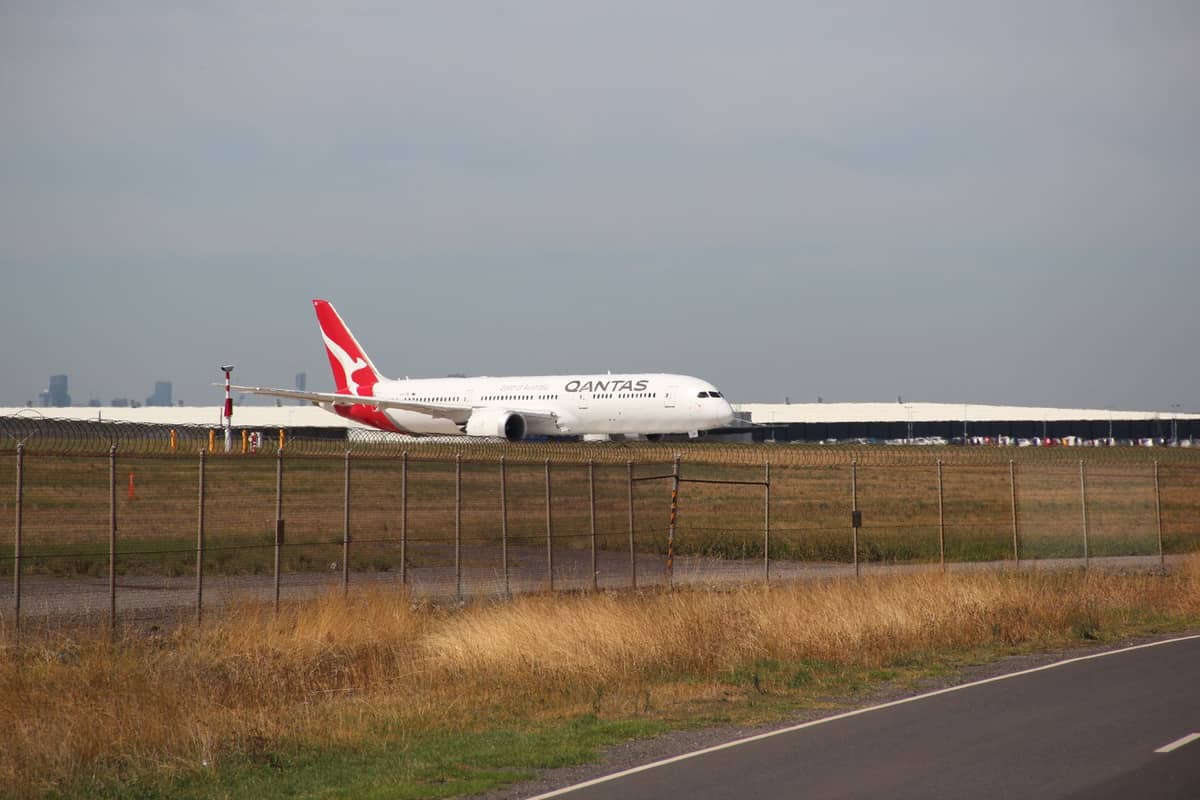
Melbourne Airport, officially known as Tullamarine Airport and coded MEL, is Victoria's primary international and domestic gateway. It handles over 36 million passengers annually in normal years and is operated by Australia Pacific Airports Corporation. The airport sits in the suburb of Tullamarine, roughly 23 km northwest of Melbourne's CBD by road — a journey that takes anywhere from 25 minutes in light traffic to well over an hour during peak hour or if roadworks are active on the Tullamarine Freeway.
One important distinction worth knowing before you book: if your itinerary mentions 'Melbourne' as a destination, confirm which airport you are flying into. Avalon Airport (AVV), used by some Jetstar domestic and international services, is located near Geelong — roughly 55–80 km from the city centre depending on your destination. The transfer logistics for Avalon are completely different, and the journey time is substantially longer. This guide focuses on MEL (Tullamarine). For broader orientation, see our complete guide to Melbourne.
⚠️ What to skip
Melbourne Airport does NOT have a rail or metro connection to the city. This is the single most common source of confusion for first-time arrivals. SkyBus is a private express coach service, not a government train. Public buses also operate from the airport but involve slower, less direct routes. Plan accordingly.
Terminals: Layout and Inter-Terminal Transfers
Melbourne Airport has four terminals, all within a single precinct — meaning you do not need a shuttle bus to move between them. Terminal 1 is used for Qantas domestic services, Terminal 2 for international flights, Terminal 3 for Virgin Australia domestic services, and Terminal 4 for Jetstar, Rex and Link Airways domestic services. For most passengers, terminal navigation is straightforward.
- Terminal 1 (T1) International arrivals and departures. All overseas flights — Qantas international, Emirates, Singapore Airlines, Cathay Pacific, and others — operate from T1.
- Terminal 2 (T2) Domestic departures for Jetstar and Tigerair Australia. Linked internally to T1.
- Terminal 3 (T3) Domestic Qantas and QantasLink operations, plus Virgin Australia domestic services.
- Terminal 4 (T4) Rex Airlines and some charter operations. This terminal also houses the Ground Transport Hub, which is the departure point for SkyBus and public buses into the city.
International passengers connecting to a domestic flight must collect their checked baggage, clear Australian Border Force customs and biosecurity screening, then re-check their bags at the relevant domestic counter. Allow sufficient time for this process, and confirm connection requirements with your airline.
💡 Local tip
Public buses depart from the T4 Ground Transport Hub, while SkyBus also stops outside T1 and T3. Follow the airport’s Ground Transport signage to reach the appropriate stop. If you land at T1, T2, or T3, follow the 'Ground Transport' signs through the terminal or via the external walkway to reach T4. Signage is clear, but carry-on luggage makes the walk feel longer than it is.
Getting from Melbourne Airport to the City: All Your Options
There are four practical ways to get from Melbourne Airport to the CBD: SkyBus express coach, taxi, rideshare (Uber and competitors), and public bus via PTV. Each has real trade-offs across cost, speed, convenience, and reliability. Here is an honest comparison.
- SkyBus Melbourne City Express (A$25.90 one-way, approx. 30 min) The most popular transfer for solo travellers and budget-conscious arrivals. Runs every 10–15 minutes between 4 a.m. and 1 a.m. daily, including public holidays. No service between 1 a.m. and 4 a.m. Drops at Southern Cross Station on Spencer Street in the CBD.
- Taxi (approx. A$55–65, 35–60+ min) Reliable for groups or passengers with heavy luggage. Fares include a standard airport surcharge. Journey time varies significantly with traffic — the Tullamarine Freeway can be heavily congested during morning and afternoon peaks, and roadworks have caused major delays in recent years.
- Rideshare — Uber and others (approx. A$45–70+, 35–60+ min) Often slightly cheaper than a taxi in off-peak periods, but surge pricing can push fares above taxi rates. Rideshare pickup zones at MEL are designated and well-signed; do not attempt to hail a driver outside the approved area.
- PTV Public Bus (varies, 60–90+ min) The cheapest option but the slowest. Services depart from the T4 Ground Transport Hub. Routes connect to the train network at Broadmeadows or Essendon, adding complexity. Suitable for budget travellers not in a hurry, or those connecting to northern suburbs directly.
SkyBus also operates additional routes beyond the core City Express: SkyBus also operates additional routes beyond the core City Express, including services to St Kilda, Frankston and Sunshine; frequencies vary. Gull Geelong runs a dedicated scheduled service between Melbourne Airport and Geelong for passengers arriving at MEL who are heading to the Surf Coast or Bellarine Peninsula. For everything you need to know about moving around once you are in the city, check our dedicated guide to getting around Melbourne.
✨ Pro tip
If you are travelling as two or more people with standard luggage, a taxi or rideshare often works out cheaper per person than SkyBus, and gets you door to door without the walk from Southern Cross Station. Run the numbers before you queue. For solo travellers, SkyBus is almost always the better value.
SkyBus: What to Expect in Practice
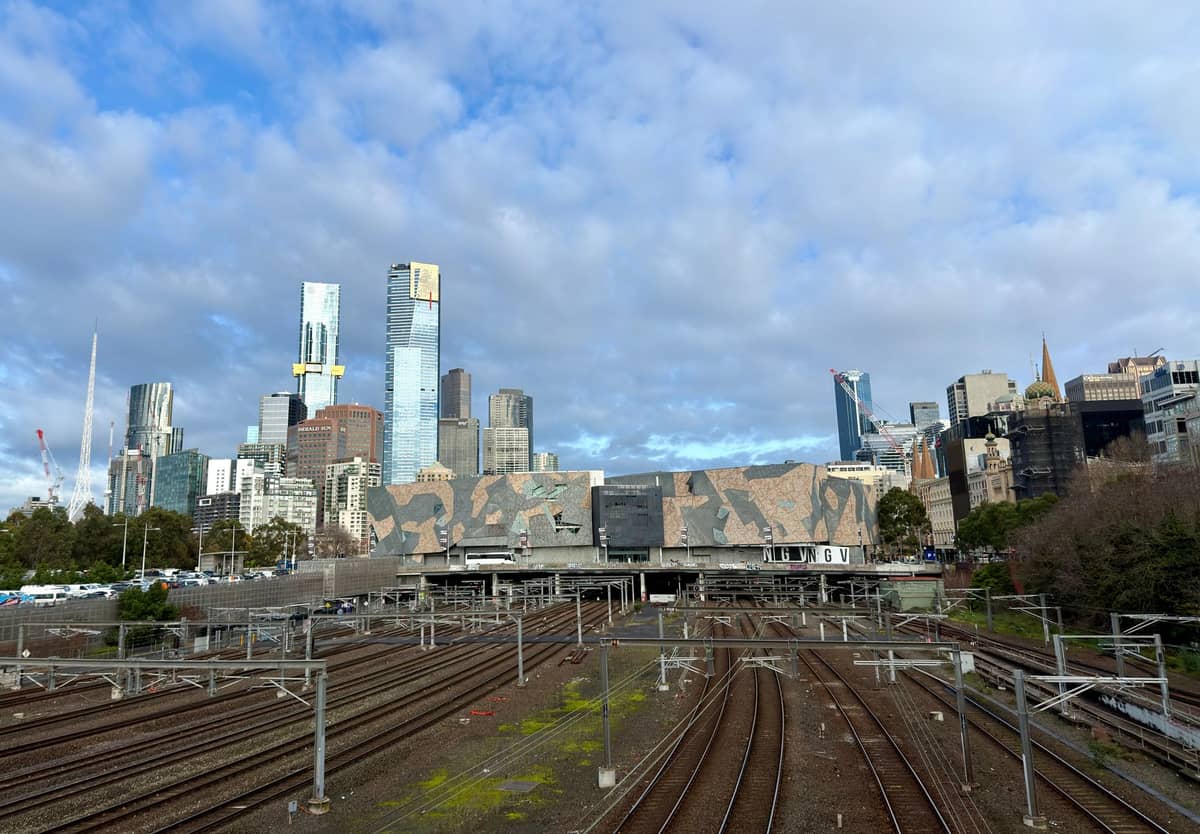
SkyBus is a common airport transfer option for arrivals during service hours. Southern Cross Station is a major transport interchange with tram, train and taxi connections. The journey to the city takes around 30–45 minutes, depending on traffic.
SkyBus coaches stop outside Terminals 1, 3 and 4. You can purchase City Express tickets online or at airport kiosks. Check the airport and SkyBus information for current stop locations and service details.
The published adult one-way fare is A$25.90 and the return fare is A$43.40 — verify current fares directly with SkyBus before travel, as pricing is subject to change. Children and concession fares are available. The coach fleet is air-conditioned with luggage storage below. Journey time is around 30–45 minutes and can vary with traffic.
Practical Tips for Arriving at Melbourne Airport
Most international visitors to Melbourne will need to check their visa status before travel — Australia does not have blanket visa-free or visa-on-arrival arrangements for all nationalities. Use the Australian Government's official visa finder to confirm your requirements well in advance. Currency in Australia is the Australian dollar (AUD); ATMs are available in the international arrivals hall. Melbourne operates on Australian Eastern Standard Time (AEST, UTC+10), shifting to AEDT (UTC+11) during daylight saving, which runs roughly from October to April. For help planning the rest of your trip, the best time to visit Melbourne guide covers seasonal conditions in detail.
- Australian biosecurity rules are among the strictest in the world — declare all food, plant material, and animal products on your incoming passenger card. Failure to declare attracts heavy fines.
- Melbourne's tap water is treated and safe to drink; fill a reusable bottle after clearing security to avoid airport markup on bottled water.
- Australia uses Type I power plugs at 230V/50Hz — pack a universal adapter if your devices use a different standard.
- The emergency number in Australia is 000, not 911 or 112.
- Tipping is not expected or required at the airport or in taxis, though it is appreciated for exceptional service.
- If you are connecting to a domestic flight and your layover is under 90 minutes, contact your airline before travel — the customs and re-check process can be tight during busy periods.
Once you reach the city, the Free Tram Zone covers all trams within the central grid at no cost — no ticket required. For travel beyond the zone, you will need a Myki card, Melbourne's reloadable transit smartcard. For a deeper look at how the tram and train network connects Melbourne's best precincts, the Melbourne CBD neighbourhood guide is a good starting point, and the Flinders Street Station area is usually the first landmark visitors encounter when arriving by train from Southern Cross.
Connecting Onward: Domestic Flights, Regional Transfers, and Day Trips
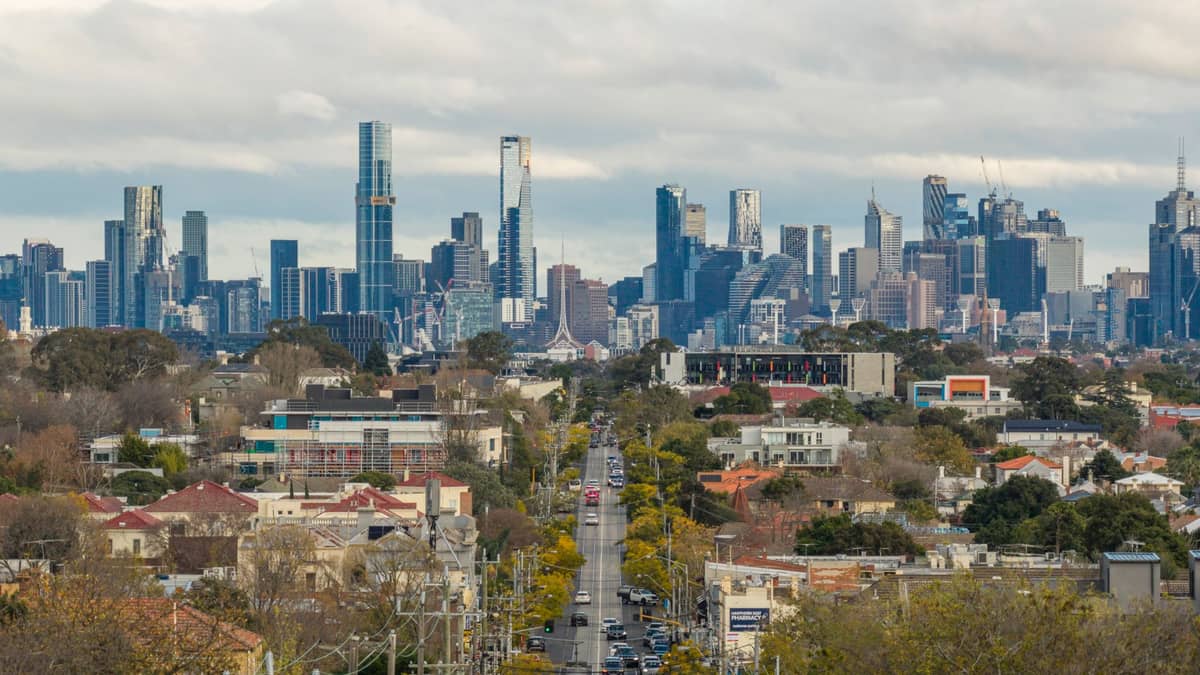
Melbourne is the logical base for exploring Victoria and beyond. If you are planning to rent a car, pick-up counters for all major rental companies are located in the T1 and T4 Ground Transport Hub. Driving out of the airport puts you directly onto the Tullamarine Freeway (City Link), which connects into Melbourne's inner motorway network. Be aware that City Link is a tolled road — you will need a pass or account, which rental companies can arrange but often at a significant daily surcharge. Consider purchasing a casual pass through Transurban before you travel. For regional day trips — whether to the Great Ocean Road or the Yarra Valley wine region — a car is usually the most practical option.
For travellers heading directly to regional Victoria from the airport without stopping in the city, coach connections to Geelong (Gull Geelong), Ballarat, and other destinations are available. Check Melbourne Airport's transport page and individual operator sites for current schedules. If you are spending time in the city before venturing out, our day trips from Melbourne guide covers the most worthwhile options within 2–3 hours of the CBD.
FAQ
Is there a train from Melbourne Airport to the city centre?
No. Melbourne Airport does not have a rail connection. No. Melbourne Airport does not currently have a rail connection. The options are SkyBus express coach, taxi, rideshare, or public bus via PTV. SkyBus is a coach service, not a metro train. The options are SkyBus express coach, taxi, rideshare, or public bus via PTV. Do not confuse SkyBus (a private coach service) with a metro train.
How long does it take to get from Melbourne Airport to the CBD?
The SkyBus City Express takes around 30–45 minutes to Southern Cross Station, depending on traffic. Melbourne Airport estimates a taxi trip to the city at approximately 35 minutes, though times can vary. Check the airport’s current disruption updates before departure.
How much does a taxi from Melbourne Airport cost?
Airport taxi guides estimate approximately A$55–65 for a standard taxi to the CBD, including the airport surcharge. This varies with traffic, route, and any additional tolls. Rideshare services like Uber may cost slightly less in off-peak periods, but surge pricing can push fares higher than a metered taxi.
Which terminal do international flights arrive at in Melbourne?
International flights use Terminal 2 (T2). T1 serves Qantas domestic flights, T3 Virgin Australia domestic flights, and T4 Jetstar, Rex and Link Airways domestic flights. Public buses use the T4 Ground Transport Hub; SkyBus also stops outside T1 and T3.
What is the difference between Melbourne Airport and Avalon Airport?
Melbourne Airport (MEL, Tullamarine) is the primary gateway, located 23 km from the CBD. Avalon Airport (AVV) is used by some Jetstar services and is located near Geelong, roughly 55–80 km from central Melbourne. Transfer options and journey times differ significantly — always confirm which airport your flight uses when booking.
Tickets & tours
Live prices and dates from our booking partner. If you book, we may earn a commission at no extra cost to you.
Planning a trip? Discover personalized activities with the Nomado app.