Great Ocean Road: What to Know Before You Drive Victoria's Legendary Coastal Route
The Great Ocean Road stretches 242 kilometres along Victoria's southwest coast, from Torquay to Allansford. Built by returned servicemen after World War I and completed in 1932, it passes sea-stack limestone formations, temperate rainforest, surf beaches, and small coastal towns. It is best experienced as a multi-day trip, though a long day drive from Melbourne is possible.
Quick Facts
- Location
- Torquay to Allansford, Victoria (approx. 100–240 km southwest of Melbourne)
- Getting There
- Self-drive is the main option; no direct public transit covers the full route. Organised day tours depart Melbourne daily.
- Time Needed
- 1 long day (minimum, highlights only) to 3+ days for the full route
- Cost
- The road is free to drive. Individual stops (national park fees, boat tours, etc.) have separate charges.
- Best for
- Road-trippers, photographers, nature and geology enthusiasts, couples, slow travellers
- Official website
- visitgreatoceanroad.org.au
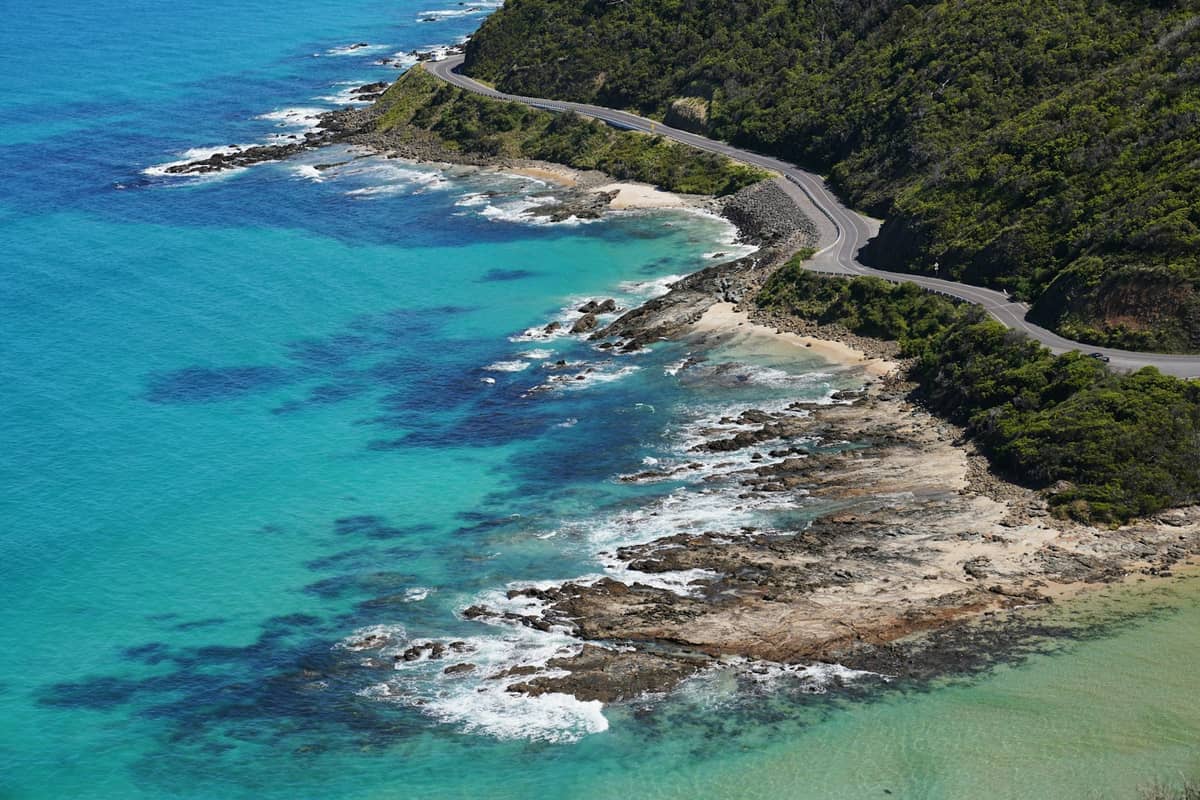
What the Great Ocean Road Actually Is
The Great Ocean Road is not a single attraction you enter and exit. It is a 242-kilometre public coastal highway running between Torquay and Allansford in Victoria, threading together surf towns, ancient river valleys, protected national park, and some of Australia's most photographed coastal geology. The road itself is the experience, and how much of it you absorb depends entirely on how much time you give it.
Construction began in 1919, employing more than 3,000 returned servicemen who built it largely by hand, blasting and carving a route through coastal cliffs. When it was completed in 1932, it became the world's largest war memorial, dedicated to those who died in World War I. That dedication is easy to forget when you are focused on the view, but it adds genuine weight to the drive.
The road holds Australian National Heritage status. If you want context before you go, the Twelve Apostles are the landmark most visitors come specifically to see, but treating the road as a commute to one photo stop misses the point entirely.
The Route: What You Pass and When It Matters
Driving west from Torquay, the first major town is Anglesea, followed by Lorne, a resort town with a main street of cafes and a waterfall within walking distance. Between Lorne and Apollo Bay, the road clings directly to the cliff face in places, with the Southern Ocean filling the windscreen on one side and forested escarpment on the other. This stretch is the most dramatically coastal section of the entire drive, and it is best driven in the morning when light hits the water rather than glaring into your eyes from the west.
Apollo Bay marks a transition point. West of here, the road turns inland through the Otway Ranges, where mountain ash and myrtle beech create a tunnel of dense temperate rainforest. The contrast with the open coast is striking and deliberately worth stopping for, particularly at Maits Rest, a short boardwalk loop through old-growth forest that takes around 45 minutes.
Beyond the Otways, the road rejoins the coast at Princetown and enters the Port Campbell National Park, where the dramatic cliff-face geology begins. This final section, from Princetown to Port Campbell township, contains most of the famous formations: the Twelve Apostles, Loch Ard Gorge, the Arch, London Bridge, and the Grotto. Budget at least two to three hours here, more if you want to walk the clifftop trails properly.
💡 Local tip
If you are driving from Melbourne and back in a single day, consider reversing the route: start at the Twelve Apostles early and drive east toward Torquay. This puts the sun behind you for photography at the key geological stops, and avoids the afternoon glare on the cliff-face section near Lorne.
Tickets & tours
Live prices and dates from our booking partner. If you book, we may earn a commission at no extra cost to you.
The Twelve Apostles and the Port Campbell Coastline
The Twelve Apostles are limestone sea stacks rising up to 45 metres from the Southern Ocean. Despite the name, there were never twelve; eight stacks remain visible today, with ongoing erosion gradually reshaping the formation. The Twelve Apostles are free to visit. A visitor centre sits above the stacks, with two separate clifftop viewing platforms accessible via an underpass below the highway.
Sunrise and sunset are the best times here, not just for light quality but for crowd management. By mid-morning, the carpark can be packed with tour buses, and the viewing platforms become congested. If you arrive before 8 a.m. in summer, you may have the platforms largely to yourself for 30 to 40 minutes. Late afternoon light turns the limestone stacks a deep amber, though you will be sharing the moment with a crowd.
A short drive west brings you to Loch Ard Gorge, which many visitors find more emotionally resonant than the Apostles. The gorge is named after a ship that wrecked here in 1878; two of its 54 passengers survived, reaching the gorge through the surf. The natural chamber of rock, with its perfectly framed slice of ocean, is accessible via a short trail from the carpark. At low tide, you can descend to the beach itself.
The Grotto, London Bridge, and the Bay of Islands are all within 20 kilometres and each rewards a 10-to-20 minute stop. London Bridge, a double-arched rock formation, partially collapsed in 1990, stranding two visitors on the remaining arch who had to be airlifted out. The remaining single arch is still a striking structure, best viewed from the clifftop platform.
Time of Day and Seasonal Conditions
The light on the Great Ocean Road is directional and seasonal in ways that significantly affect the experience. Driving east to west in the morning puts the sun behind you until you pass Apollo Bay. In the afternoon, the westward drive can mean squinting directly into low light for extended stretches on the cliff road between Lorne and Apollo Bay. This is both a driving hazard and a photographic frustration.
Summer (December to February) brings long days and warm temperatures, but also peak crowds and the risk of extreme heat inland through the Otways. Autumn is broadly the most comfortable season: the crowds thin, the light softens, and temperatures remain mild along the coast. Winter driving on the cliff sections requires caution, as rain and spray can reduce visibility, and some sections feel genuinely exposed in a southwesterly. Spring is variable, sometimes producing dramatic stormy seas that make the coastline look its most ferocious, but weather can shift within hours.
⚠️ What to skip
The cliff road between Lorne and Apollo Bay is subject to closures after heavy rain and landslides. Check VicRoads traffic conditions before departure, especially in winter and spring, and allow extra time if the route has been reopened after a closure.
Getting There and Planning the Logistics
From Melbourne, Torquay is roughly 95 kilometres southwest via the Princes Freeway and Surfcoast Highway, around 90 minutes without stops. There is no single public transport option that covers the full route. V/Line operates coach services to several towns along the road including Geelong, Lorne, and Apollo Bay, but services are infrequent and do not allow the flexibility to stop at viewpoints between towns.
The practical options are: rent a car in Melbourne, join a commercially organised day tour departing from the CBD, or plan a combination of V/Line to Apollo Bay and a local bike hire or shuttle for specific sections. For a full overview of transport logistics from the city, the getting around Melbourne guide covers rental car and public transport options in detail.
If you are considering a structured day trip, the Great Ocean Road day trip guide breaks down the different tour formats, what each covers, and what to prioritise if you only have one day.
Fuel is available in Anglesea, Lorne, Apollo Bay, and Port Campbell, but gaps between stations can be significant west of Apollo Bay. Fill the tank before leaving the major towns, particularly if you plan to take any inland detours. Phone coverage is patchy through the Otway Ranges, so download offline maps before you leave.
What to Bring and Practical Notes for the Day
Layered clothing is essential regardless of season. The coast can be windswept and cool even in summer, while the Otway forest section is shadier and can feel several degrees cooler than the open road. A waterproof layer takes up little space and earns its place on almost any day.
Sunscreen is needed even on overcast days. The UV index in Victoria remains high well into autumn, and the open cliff viewpoints offer no shade. Comfortable walking shoes are worth wearing from the start, as the best stops involve short but uneven trail sections.
Accessibility varies considerably by location. The Twelve Apostles viewing platforms are accessible by paved path and are wheelchair-friendly. Other stops such as Loch Ard Gorge beach require steps. The official Great Ocean Road accessibility page lists specific site details and information on beach wheelchair hire for some locations.
ℹ️ Good to know
Mobile coverage drops out significantly between Apollo Bay and Port Campbell. Download offline maps via Google Maps or Maps.me before you leave, and save the VicRoads traffic number for road condition updates.
Who This Drive Is Not For
If your only goal is to photograph the Twelve Apostles and return to Melbourne the same evening, a commercial day tour is more practical than driving yourself. The return journey from the Apostles to Melbourne is around three hours, meaning a solo driver is covering significant highway distance at the end of a long day. Tours drop you back without that burden.
Travellers who become uncomfortable on winding single-lane coastal roads may find the stretch between Lorne and Apollo Bay stressful. The road narrows in places, has limited overtaking opportunities, and occasionally requires pulling into turnouts to pass oncoming vehicles. It is not technically difficult, but it demands concentration.
Those expecting tropical or warm beach conditions will be surprised. The Southern Ocean water temperature is cold year-round, the beaches are often windswept, and the dominant mood of the coastline is dramatic rather than relaxing. That is precisely the point for those who appreciate it.
Insider Tips
- The helicopter flight over the Twelve Apostles, departing from a helipad near the visitor centre, lasts around 15 minutes and provides a perspective of the stacks and cliff erosion that no ground-level viewpoint can match. It is not cheap, but for geology and photography enthusiasts it justifies the cost.
- Otway Fly Treetop Adventures, located in the Otway Ranges section inland from Apollo Bay, offers a treetop walk above the rainforest canopy. It is a genuine contrast to the coastal stops and works well as a midday activity when the clifftops are at their most crowded.
- The beach at Loch Ard Gorge is accessible at low tide via the staircase from the main viewing area. At low tide, the gorge beach is sheltered and quiet, even when the clifftop above it is busy with tour groups.
- Port Campbell township, a small town just east of the Twelve Apostles, has limited but genuinely good dining options. Arriving there for lunch or early dinner lets you time the Apostles for late afternoon light afterward, rather than midday.
- Check the tide chart before visiting the Grotto. At low tide, the flooded cave floor at the Grotto drains partially, and the interplay between rock, water, and light is substantially more interesting than at high tide when the chamber floor is fully submerged.
Who Is Great Ocean Road For?
- Road-trip travellers who want to structure their own pace and stop on impulse
- Photography enthusiasts, particularly those interested in coastal geology and natural light
- Couples looking for a scenic multi-day drive with towns, food, and accommodation along the route
- Nature and ecology visitors drawn to temperate rainforest, seabirds, and coastal wildlife
- First-time visitors to Australia who want to see iconic Victorian landscape outside of Melbourne
Nearby Attractions
Combine your visit with:
- 1000 Steps Kokoda Track Memorial Walk
The Kokoda Track Memorial Walk, known locally as the 1000 Steps, climbs through fern-filled forest in the Dandenong Ranges east of Melbourne. Free to visit and reached by train, it combines a genuine physical workout with quiet moments of WWII commemoration.
- Albert Park Lake
Albert Park Lake is a vast freshwater reserve just minutes from Melbourne's CBD, offering a 4.7km walking and cycling path around calm water, sports ovals, and open parkland. Free to enter and accessible by tram, it rewards early morning walkers, cycling families, and anyone wanting to understand how Melbourne uses its open spaces.
- Bells Beach
Bells Beach, in Wadawurrung country and also known by its Traditional Owner name Djarrak, is a 48-hectare coastal reserve near Torquay that holds the distinction of being the world's first declared surfing reserve. With its sheer sandstone cliffs, deep bowl-shaped break, and annual Rip Curl Pro competition, it draws surfers and non-surfers alike for one of Victoria's most dramatic coastal experiences.
- Brighton Beach Bathing Boxes
Lined up along Dendy Street Beach in Brighton, Melbourne's 96 privately owned bathing boxes are one of Victoria's most recognisable sights. Free to view from the public beach, they reward visitors who time their arrival with the morning light or an empty tide. Here is what you actually need to know before making the trip.
Planning a trip? Discover personalized activities with the Nomado app.