Albert Park Lake: Melbourne's Lakeside Circuit Worth Every Step
Albert Park Lake is a vast freshwater reserve just minutes from Melbourne's CBD, offering a 4.7km walking and cycling path around calm water, sports ovals, and open parkland. Free to enter and accessible by tram, it rewards early morning walkers, cycling families, and anyone wanting to understand how Melbourne uses its open spaces.
Quick Facts
- Location
- 23 Aughtie Drive, Albert Park VIC 3206
- Getting There
- Trams 12, 16, or 96 to St Kilda Road stops; walk to park entrances
- Time Needed
- 1–3 hours depending on pace and activities
- Cost
- Free entry; parking fees apply on-site
- Best for
- Walkers, cyclists, F1 fans, families, morning joggers
- Official website
- www.parks.vic.gov.au/places-to-see/parks/albert-park
What Albert Park Lake Actually Is
Albert Park Lake is a large natural freshwater lake surrounded by parkland in Albert Park, a suburb roughly 3 kilometres south of Melbourne's CBD. The lake sits within Albert Park reserve, which Parks Victoria notes has been used for amateur sport and casual recreation since 1876. Today, it is simultaneously a neighbourhood fitness circuit, a migratory bird habitat, and, once a year, the perimeter of the Australian Formula 1 Grand Prix street circuit.
The sealed path that rings the lake is 4.7 kilometres long, flat, and wide enough to accommodate joggers, cyclists, and families with prams moving in the same direction. There are no entry fees for the park or the lakeside path. Parking is available at several lots with posted fees, but most visitors from the inner city arrive by tram or bicycle.
💡 Local tip
The lake circuit is one-way for cyclists, counterclockwise. Walkers can move in either direction, but following the flow avoids friction with faster riders.
The Experience: Morning, Midday, and Evening
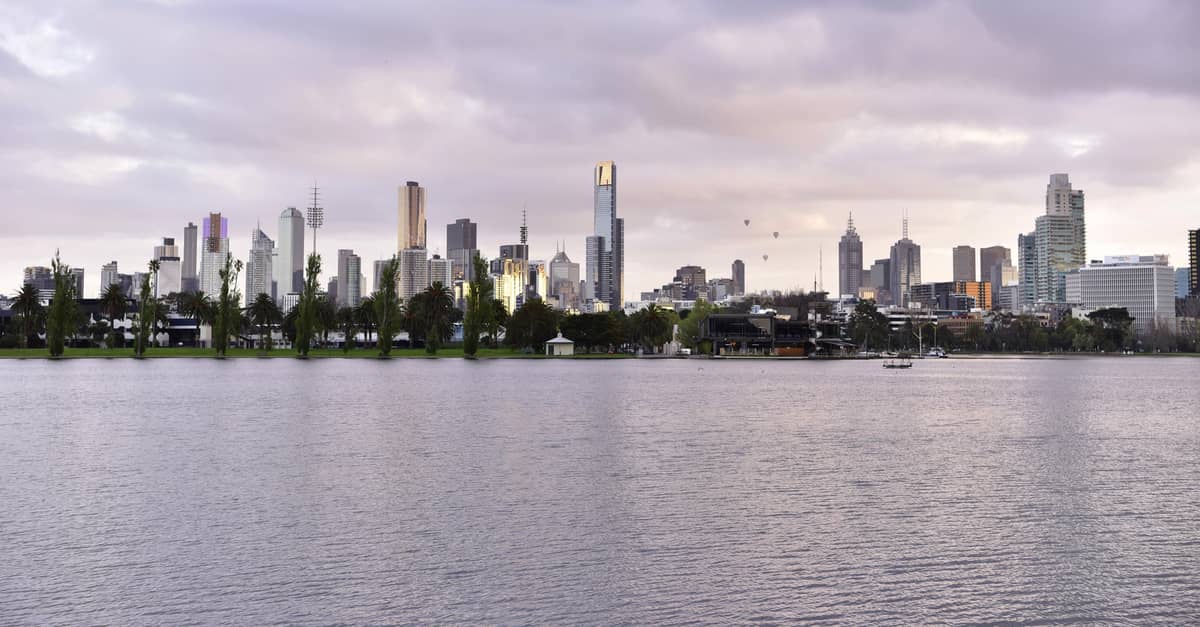
The texture of a visit changes considerably depending on when you arrive. Early morning, from about 6am onward, the lake is at its quietest and most photogenic. The water sits flat and reflective before wind picks up, mirroring the surrounding gums and the Melbourne skyline faintly in the distance. The air carries the scent of damp grass and eucalyptus. Rowers from the Albert Park Rowing Club move through the mist during their training windows, the dip of their oars the only real sound apart from birdsong.
By mid-morning on weekdays, the circuit fills with joggers, dog walkers, and cyclists on a lunch break. Weekends bring a different energy: groups of friends cycling together, parents with kids in cargo bikes, and picnic setups on the grass between the path and the water. The volume of people never quite tips into overcrowding on a normal day, but peak weekend mornings between 8am and 10am are noticeably more congested.
In the evening, particularly in warmer months, the light over the lake turns golden for roughly 40 minutes before sunset, and the western side of the circuit offers the cleanest view of it. The park does not close at night, and the path is not lit, so after dark the circuit is best left to those who know it well and have lights on their bikes.
⚠️ What to skip
The path has no lighting after dusk. Evening walkers should carry a torch or phone light and allow extra time before dark, especially in winter when sunset comes before 5:30pm.
Tickets & tours
Live prices and dates from our booking partner. If you book, we may earn a commission at no extra cost to you.
Great Ocean Road reverse itinerary tour from Melbourne
From 77 €Instant confirmationFree cancellationGreat Ocean Road bus tour with a forest walk
From 90 €Instant confirmationFree cancellationYarra Valley Bus Wine Tour including lunch with a glass of wine and chocolate
From 107 €Instant confirmationFree cancellationHidden bars of Melbourne guided tour
From 115 €Instant confirmationFree cancellation
The Formula 1 Connection
Once a year, Albert Park Lake becomes the centrepiece of the Australian Formula 1 Grand Prix. The race circuit runs around the perimeter of the lake and through the surrounding parkland roads, using temporary infrastructure erected weeks in advance and removed shortly after the event. During Grand Prix weekend, large portions of the park are fenced off and inaccessible to general visitors.
For the rest of the year, the roads that form the circuit are open as normal park roads. Walking or cycling along them during a quiet weekday, you can read the faded paint markings left from the previous event and trace the approximate racing line through corners. It is a peculiar pleasure for motorsport fans: standing on tarmac that, three weeks prior, carried cars at 300 kilometres per hour.
If you're planning a visit around the Grand Prix, check the Melbourne events calendar well in advance, as accommodation in the surrounding suburbs books out months ahead and park access changes significantly during that week.
Wildlife and Ecology
The lake supports a resident population of waterbirds that is more varied than casual visitors often expect. Black swans are the most visible, gliding close to the path edge and unperturbed by foot traffic. Pacific black ducks, purple swamphens, cormorants, and various egret species are common. During migration periods, less common species turn up, making the lake a quiet favourite among Melbourne birdwatchers who treat the circuit as an easy birding loop.
The lake is bordered on its inner edge by sports ovals and on its outer edge by grassy slopes and mature eucalypts. Some sections of the bank have been revegetated with indigenous plantings that provide shelter for smaller bird species. The water itself is calm on most days, but a southerly change in summer can push it into short chop within minutes, which tends to push the swans toward the sheltered northern end.
ℹ️ Good to know
Feeding the waterfowl is discouraged by Parks Victoria, as it disrupts natural feeding patterns and can introduce disease into the population.
Getting There and Getting Around
Trams 12, 16, and 96 run along St Kilda Road, which borders the eastern edge of the park. The stop closest to the main lake path is within a 5–10 minute walk of the circuit. From the CBD, the journey takes around 15 minutes. If you are travelling on a myki card, this is a standard fare trip, outside the Free Tram Zone.
Cycling from the CBD is straightforward using the dedicated lanes along St Kilda Road, one of Melbourne's better-established cycling corridors. For a broader picture of how to move around the city by bike or tram, the getting around Melbourne guide covers route options in detail.
Parking within the Albert Park reserve is available at multiple lots. Fees are posted at each location and vary; check signage on arrival. On Grand Prix weekend and surrounding days, parking in the area becomes extremely difficult and tram travel is the practical choice.
Practical Walkthrough of the Circuit
Most visitors begin at the northern end near Aughtie Drive, where the largest car parks are located and where the rowing sheds and boat ramp are visible. Walking counterclockwise, the first stretch follows the eastern bank, with the open water to your left and the sports ovals to your right. This section catches the morning light and is the busiest part of the path on any given day.
The southern end of the lake is quieter and tree-lined, passing beneath larger canopy cover and offering benches with views back across the water. The western bank is where the path feels most secluded, and it is here that you get the best photographs of the lake with the city skyline appearing low on the horizon. The full 4.7km circuit takes most walkers around 50 to 60 minutes at a relaxed pace. Runners completing it for fitness typically clock 25 to 35 minutes.
Albert Park sits south of the CBD and connects naturally with a wider day in the inner south. The nearby St Kilda Beach is less than 2 kilometres away on foot, and the St Kilda Pier and penguins are reachable in a short tram or bike ride.
Photography Tips and Honest Assessment
The lake photographs well in flat light and at golden hour. The northern end has the clearest city backdrop, while the southern and western sections offer more natural, tree-framed compositions. Black swans against still water in early morning are a reliable subject and require no special equipment.
Be honest with expectations: Albert Park Lake is a well-maintained urban park and a lovely one, but it is not a dramatic landscape. The appeal is calm, accessible, and local in character. Visitors looking for grand scenery or a highlight reel attraction may find it underwhelming. It is better understood as the kind of place that makes Melbourne a liveable city rather than a destination in itself.
Travellers who enjoy green space and easy walking will find it fits naturally into a broader Melbourne itinerary. For context on the city's wider park network, the Melbourne gardens and parks guide covers Albert Park alongside the Royal Botanic Gardens and other options.
💡 Local tip
Melbourne's weather is changeable in all seasons. The lake path is exposed on the western and southern sides, and a southerly wind can make it feel significantly colder than the CBD. Bring a layer regardless of the forecast.
Insider Tips
- Arrive before 7:30am on weekends to have the circuit to yourself and catch the lake fully reflective before wind picks up. By 9am on a Saturday, it is considerably more crowded.
- The boat ramp on the northern bank is where the Albert Park Rowing Club launches; watching scullers on the water in the early morning is one of the more peaceful sights in this part of Melbourne.
- If you are visiting during the week before or after the Grand Prix, sections of the park are progressively fenced off as infrastructure goes up or comes down. Check Parks Victoria's website for current access before making the trip.
- The southwestern corner of the circuit has a small gap in the tree line that frames a clean sightline back to the city skyline. It is easy to miss at walking pace but worth pausing for, especially in the late afternoon.
- For cyclists, the circuit connects to broader bike routes heading toward St Kilda and Port Melbourne. Combining a lake loop with a ride down to the foreshore makes for an efficient half-day itinerary without retracing any ground.
Who Is Albert Park Lake For?
- Walkers and runners wanting a flat, scenic, measured circuit close to the city
- Cycling families or friends looking for a car-free loop on sealed paths
- Formula 1 fans curious to walk the street circuit out of race season
- Birdwatchers, particularly those interested in waterbirds and seasonal migrants
- Travellers who want a low-key, no-cost morning outdoors before heading into the CBD
Nearby Attractions
Combine your visit with:
- 1000 Steps Kokoda Track Memorial Walk
The Kokoda Track Memorial Walk, known locally as the 1000 Steps, climbs through fern-filled forest in the Dandenong Ranges east of Melbourne. Free to visit and reached by train, it combines a genuine physical workout with quiet moments of WWII commemoration.
- Bells Beach
Bells Beach, in Wadawurrung country and also known by its Traditional Owner name Djarrak, is a 48-hectare coastal reserve near Torquay that holds the distinction of being the world's first declared surfing reserve. With its sheer sandstone cliffs, deep bowl-shaped break, and annual Rip Curl Pro competition, it draws surfers and non-surfers alike for one of Victoria's most dramatic coastal experiences.
- Brighton Beach Bathing Boxes
Lined up along Dendy Street Beach in Brighton, Melbourne's 96 privately owned bathing boxes are one of Victoria's most recognisable sights. Free to view from the public beach, they reward visitors who time their arrival with the morning light or an empty tide. Here is what you actually need to know before making the trip.
- Dandenong Ranges
The Dandenong Ranges rise about 40 kilometres east of Melbourne, offering a dramatically different landscape from the city below. Tall mountain ash forests, a celebrated botanic garden, and the Puffing Billy Railway make this one of Victoria's most rewarding day trips. A half-day is possible, but a full day suits the area much better.
Planning a trip? Discover personalized activities with the Nomado app.