St Kilda Beach: Melbourne's Favourite Foreshore, Honestly Reviewed
St Kilda Beach is the closest major beach to central Melbourne, a long crescent of sand backed by palm-lined promenades, a historic pier, and one of the city's most eclectic neighbourhoods. It's genuinely enjoyable on the right day, but knowing when to go and what to expect will shape how much you get out of it.
Quick Facts
- Location
- St Kilda foreshore, Port Phillip Bay, Melbourne, Victoria
- Getting There
- Trams 3a, 12, 16, 96 from CBD; buses 246, 600, 606, 623 also serve St Kilda. Check PTV for current timetables.
- Time Needed
- 1.5 to 3 hours for a beach walk and foreshore stroll; longer if dining or exploring the pier
- Cost
- Free entry. No ticket required. Beach wheelchair services are also free (booking required for Mobi-Chair).
- Best for
- Sunset walks, casual swimming in summer, people-watching, and combining with a broader St Kilda afternoon
What St Kilda Beach Actually Is
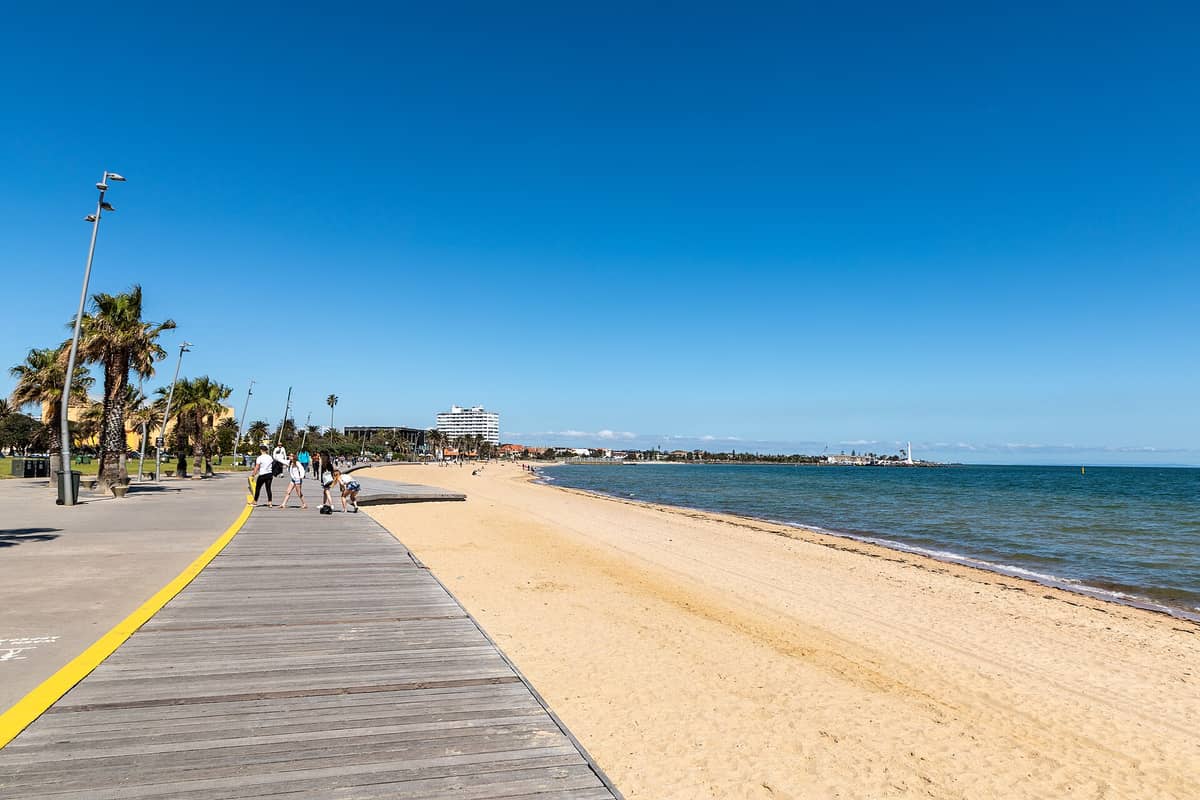
St Kilda Beach is a broad, gently curving stretch of sand along Port Phillip Bay, sitting roughly 6 kilometres south of Melbourne's CBD. It is the city's most accessible major beach and, on warm weekends, one of its busiest public spaces. The beach faces west, which means it catches afternoon sun and produces some of the better sunsets you will find this close to a city centre.
The foreshore itself is substantial: a wide promenade runs the length of the beach, backed by palm trees that give the esplanade a faded seaside resort character rather than a tropical one. Behind the palms sit cafes, the Palais Theatre, the historic kiosk, and a skate park that sees serious use on any given afternoon. The sand is reasonably wide at low tide, though Port Phillip Bay's sheltered, enclosed nature means the water is calm and often warmer than ocean beaches. It also tends to be less clear than ocean beaches, which is worth knowing if you are expecting Mediterranean visibility.
ℹ️ Good to know
St Kilda Beach has no set opening hours — it is public foreshore land accessible at any time. Lifeguards patrol during summer months; swim between the flags when they are present.
How the Beach Changes Through the Day
Early mornings belong to locals. Between 6 and 9 a.m. you will find swimmers doing laps around the pier, joggers moving along the promenade, and dog walkers crossing the upper beach before restrictions apply. The air carries a faint saltwater and seaweed smell, the bay surface is usually flat, and the light on the water at this hour is worth the early start if you are carrying a camera.
By late morning on weekdays, the beach is quiet enough to feel genuinely relaxing. Families with young children set up near the main lifeguard flags, and the kiosk begins doing steady trade. On summer weekends, however, the dynamic shifts considerably from around 11 a.m. onward: the car parks fill, the promenade becomes congested, and finding a patch of sand with any privacy requires walking toward the quieter southern end near the sailing club. This is not a criticism so much as context.
Afternoons are the most social stretch. The skate park reaches peak energy, beach volleyball courts see organised games, and the foreshore cafes fill up with people who have finished swimming. Late afternoon, roughly from 4 p.m. in summer, is when many photographers and couples arrive for the westward sunset. The light turns the bay copper and the palm silhouettes read well against it.
💡 Local tip
For sunset photos from the pier, arrive by 4:30 p.m. in summer to find a good position without fighting crowds. The pier extends far enough that you get an unobstructed view back toward the city skyline and across the bay.
Tickets & tours
Live prices and dates from our booking partner. If you book, we may earn a commission at no extra cost to you.
Great Ocean Road reverse itinerary tour from Melbourne
From 77 €Instant confirmationFree cancellationGreat Ocean Road bus tour with a forest walk
From 90 €Instant confirmationFree cancellationYarra Valley Bus Wine Tour including lunch with a glass of wine and chocolate
From 107 €Instant confirmationFree cancellationHidden bars of Melbourne guided tour
From 115 €Instant confirmationFree cancellation
The St Kilda Pier and Its Famous Residents
The St Kilda Pier is one of the most recognisable features of the foreshore and extends well out into Port Phillip Bay. Walking to the end and back takes around 20 minutes at a comfortable pace. The pier terminates at the Pavilion, a heritage-listed kiosk where you can buy coffee and watch the bay in relative quiet even when the beach is crowded.
At the base of the breakwater attached to the pier, a small colony of Little Penguins (Eudyptula minor) returns to their burrows each evening around dusk. This is a genuinely remarkable thing to witness close to a major city, and it is free. The penguins are easily disturbed, so visitors are asked to keep voices low and avoid flash photography. For a more structured viewing experience with interpretation and ranger guidance, the St Kilda Pier penguin viewing page covers timing and etiquette in detail.
The Neighbourhood Around the Beach
St Kilda as a suburb adds considerable value to a beach visit. Acland Street, a short walk from the foreshore, is known for its European-style cake shops and eclectic dining mix. Fitzroy Street connects the beach to the broader neighbourhood and has a long history of cafes, bars, and street life. The area's character is genuinely mixed: long-term residents, backpackers, weekend visitors, and the occasional travelling performer all share the same footpaths. For a wider look at the suburb, the St Kilda neighbourhood guide covers dining, accommodation, and what the area is like at different times of year.
Luna Park, the heritage-listed amusement park, sits directly at the northern end of the beach and its entrance is genuinely unmissable: a large grinning face that has not changed meaningfully since the park opened in 1912. Whether you go inside is optional, but the facade alone is worth a photograph and gives the northern end of the foreshore a fairground atmosphere on busy days.
A short walk south of the main beach brings you to the Port Phillip Sailing Club and the calmer, less frequented southern stretch of sand. This end of the beach is noticeably quieter on weekends and is where you are more likely to find a spot to sit without neighbours. If you want to extend the foreshore walk further south, a path continues toward Port Melbourne and connects eventually to the broader bay trail. The guide to beaches near Melbourne covers how St Kilda compares with other options if you have transport and more time.
Getting There and Moving Around
Public transport to St Kilda is straightforward from the city centre. Trams 3a, 12, 16, and 96 all serve the area, and tram 96 in particular runs from Spencer Street along Fitzroy Street and deposits you very close to the esplanade. The journey from the CBD takes around 25 to 35 minutes depending on traffic. Bus routes 246, 600, 606, and 623 also serve the suburb. Always check current timetables via the Public Transport Victoria (PTV) network before you travel, as routes and frequencies change.
Driving is possible but adds complexity: parking along the foreshore fills quickly on warm weekend afternoons and can require significant walking from wherever you do find a space. Most visitors arriving by public transport have an easier and more relaxed arrival experience than those who drive.
Accessibility
The City of Port Phillip has made genuine efforts to improve beach access. Seasonal beach matting is laid near the St Kilda Life Saving Club, providing a firm surface from the promenade to the water's edge. A free Mobi-Chair (beach wheelchair) service is available, though booking is required in advance. There is also a Changing Places facility at the Life Saving Club; access requires an MLAK key. Visitors who need assistance operating the Mobi-Chair should arrange to bring someone, as staff cannot provide physical assistance.
ℹ️ Good to know
The accessible beach matting and Mobi-Chair service are seasonal. Contact the City of Port Phillip directly to confirm dates and booking procedures before your visit.
Weather, Seasons, and When to Visit
Melbourne's climate is temperate but genuinely changeable. Summer (December to February) brings average maximum temperatures of around 25°C, occasionally much higher, and is the obvious season for swimming. That said, heatwave days exceeding 38°C do occur, and the beach can feel punishing rather than pleasant on those afternoons. The city's well-known pattern of four seasons in one day is not an exaggeration, so a beach bag on a November morning can become entirely appropriate by noon. For a fuller picture of timing, the best time to visit Melbourne guide covers seasonal trade-offs in detail.
Autumn visits (March to May) offer something different: smaller crowds, water that has retained summer warmth into early March, and the kind of flat grey light over the bay that makes for atmospheric rather than postcard photographs. Winter visits are not out of the question for a foreshore walk, particularly on clear mornings when the bay is still and the CBD skyline reads sharply against pale sky, but swimming in July requires a specific tolerance for cold.
Spring (September to November) is variable. Warm days arrive unpredictably, crowds build from October onward, and the foreshore gardens are at their most colourful. This is when St Kilda Beach starts to feel like a beach again after winter without yet being overwhelmed.
What to Bring and Photography Notes
In summer, sunscreen is non-negotiable: the UV index in Melbourne reaches extreme levels on clear summer days. A hat and water bottle are practical rather than optional. The beach has public toilets and shower facilities on the foreshore, which reduces the need to carry too much. Cafes and kiosks are plentiful, so you do not need to overpack food.
For photography, the most interesting light falls in the hour before sunset when the westward orientation of the beach brings warm direct light across the sand and the pier structure. The painted bathing boxes at the southern end of the foreshore have become a well-known image, though the more celebrated painted boxes are actually at Brighton Beach further along the bay. St Kilda does have changing sheds along the foreshore, but visitors expecting Brighton-style boxes here will be mildly disappointed.
⚠️ What to skip
Do not use flash photography near the penguin colony at the pier breakwater. Even accidental flash from a phone camera can disturb the birds and you will be asked to leave the area if it happens repeatedly.
Insider Tips
- The quietest and most pleasant stretch of sand on a busy weekend is the southern section beyond the sailing club. Walk past the main crowds and you will often find significantly more space within five minutes.
- If you want to see the Little Penguins at the pier, book a viewing session in advance and arrive at the time on your ticket. The penguins do not run to a fixed schedule and timing varies by season.
- The foreshore kiosk near the middle of the pier serves food and beverages seven days a week and can be a peaceful spot even when the main beach is busy, because many visitors do not walk all the way along the pier.
- Weekday mornings in January and February offer a version of St Kilda Beach that weekend visitors rarely see: open sand, swimmers doing laps, and the promenade to yourself. If your schedule allows a midweek visit, it is worth prioritising.
- The St Kilda Esplanade Market runs on Sundays along the upper promenade and adds a browsable layer to a foreshore morning without requiring a separate trip.
Who Is St Kilda Beach For?
- Travellers who want a beach day without leaving the city and its public transport network
- Families with children looking for calm, shallow water and foreshore amenities
- Visitors combining a beach walk with an afternoon in the St Kilda neighbourhood
- Photographers chasing westward sunset light over Port Phillip Bay
- Anyone wanting to see Little Penguins in the wild in an urban setting
Nearby Attractions
Other things to see while in St Kilda:
- Luna Park Melbourne
Luna Park Melbourne has been welcoming visitors through its iconic grinning mouth since 1912, making it one of Australia's oldest operating amusement parks. Perched on the St Kilda foreshore, it combines heritage rides, carnival atmosphere, and sweeping bay views into an experience that works equally well for families and anyone drawn to classic fairground nostalgia.
- St Kilda Pier & Little Penguins
At the end of St Kilda Pier, a colony of little penguins waddles ashore every night after sunset. The experience is free and surprisingly easy to reach from central Melbourne — but tickets are limited and must be booked in advance.
Planning a trip? Discover personalized activities with the Nomado app.