Best Beaches Near Melbourne: Bay, Peninsula & Beyond
Melbourne sits on Port Phillip Bay, giving the city access to calm bay beaches within 30 minutes of the CBD, and wilder ocean surf beaches a 90-minute drive south. This guide covers the best beaches near Melbourne by type, with frank notes on safety, crowds, and what each beach actually delivers.
Tickets & tours
Live prices and dates from our booking partner. If you book, we may earn a commission at no extra cost to you.
TL;DR
- Melbourne's closest beaches (St Kilda, Brighton, Elwood) are bay beaches: calm, family-friendly, and reachable by public transport.
- For surf, head to the Mornington Peninsula: Gunnamatta, Portsea Back Beach, and Sorrento ocean-side are powerful and not suitable for beginners.
- Beaches are generally patrolled on weekends and public holidays during summer (November to March). Always check St Kilda Beach patrol flags before entering the water.
- Brighton's bathing boxes are famous for photos but you cannot rent or enter them. Manage expectations.
- The Mornington Peninsula rewards a full day trip: hot springs, wineries, and ocean beaches all within the same region.
Understanding Melbourne's Beach Geography
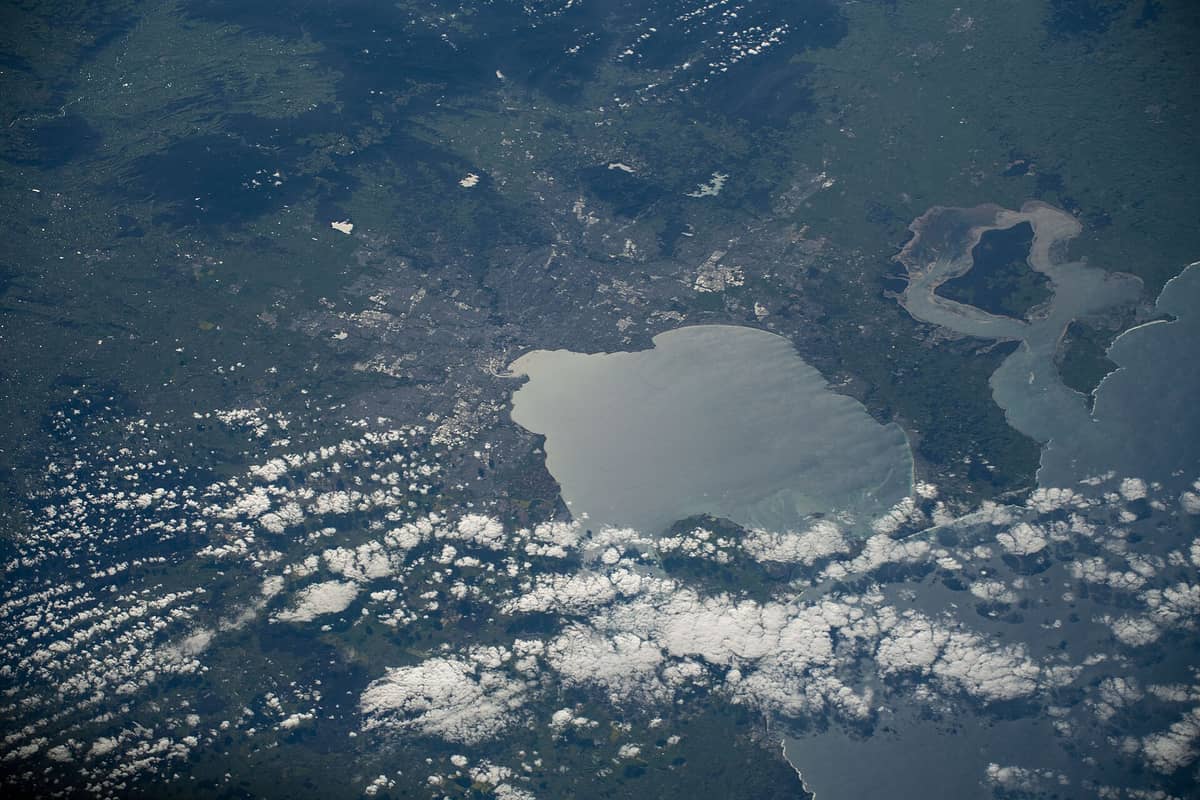
Melbourne sits at the northern tip of Port Phillip Bay, a large enclosed body of water roughly 50 km across. This geography defines what most Melbourne beaches actually are: sheltered bay beaches with small waves, soft sand, and water that warms up reasonably well by January and February. These are not the dramatic surf beaches people picture when imagining the Australian coast. They are excellent for families, casual swimmers, and anyone wanting easy access from the city.
The ocean beaches, including those at Gunnamatta and Portsea Back Beach on the Mornington Peninsula, require a drive of around 90 minutes to two hours from central Melbourne. These face Bass Strait directly, which pushes in powerful swells, strong rip currents, and conditions that change quickly. They are spectacular to look at and worth visiting, but swimming at them is a serious undertaking. For full context on planning the drive south, the day trips from Melbourne guide covers logistics in detail.
⚠️ What to skip
Ocean beaches on the Mornington Peninsula such as Gunnamatta and Portsea Back Beach can have strong surf and unpredictable rip currents. These are not calm swimming spots. Patrol coverage is limited and seasonal. Always check Beachsafe (beachsafe.org.au) before you go, and only swim between the red and yellow flags at a patrolled beach.
The Best Bay Beaches Close to the City
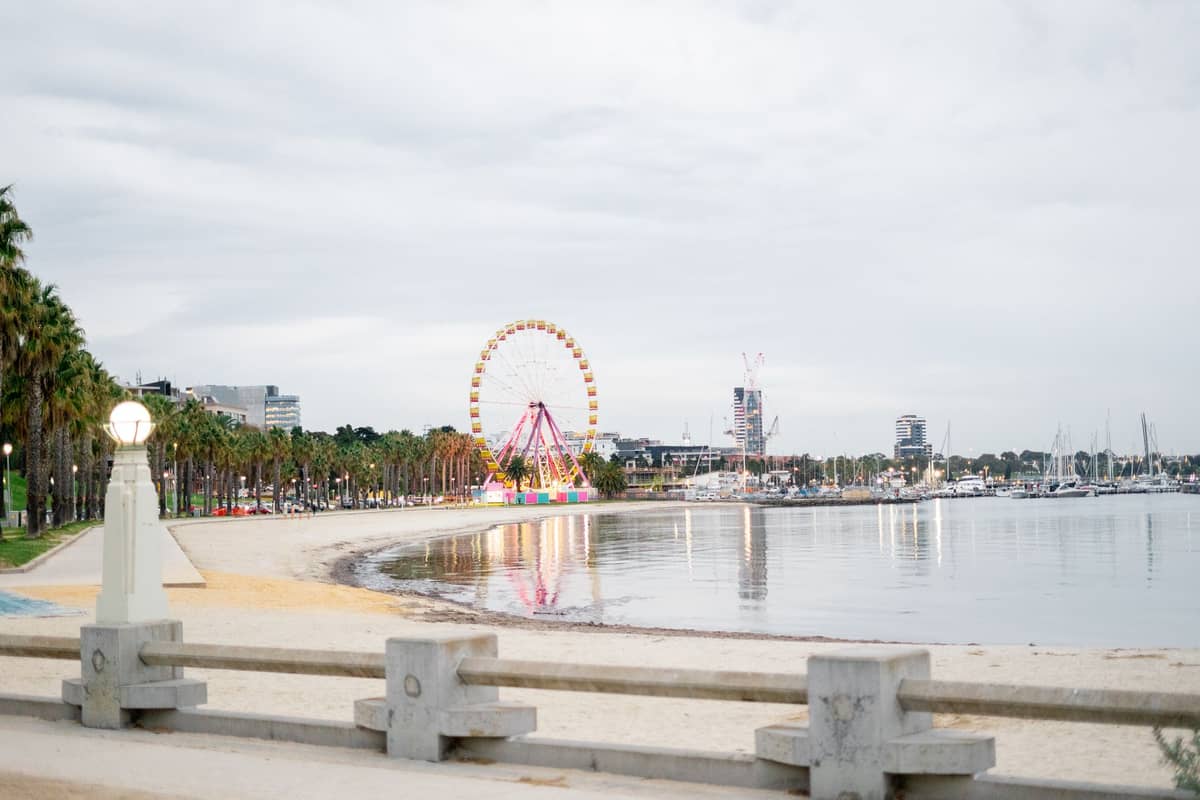
The bayside suburbs running south from the CBD form a string of sandy beaches that are practical, accessible, and genuinely pleasant on a warm day. St Kilda Beach is the most prominent: a wide, north-facing stretch of sand about 6 km from the CBD, reachable by tram. The beach itself is broad and the foreshore is lined with cafes, the St Kilda Esplanade market on Sundays, and Luna Park next door. It gets crowded on summer weekends, particularly between December and February.
Worth noting: St Kilda Beach operates a swimming-only zone from the pier to Marina Reserve, meaning boats and watercraft are kept away from swimmers in that corridor. This is a practical safety measure, not just a formality. Within 200 metres of shore more broadly, vessels can share the water with swimmers at speeds up to 5 knots, so be aware of your surroundings when swimming outside flagged areas.
Elwood Beach, about 2 km south of St Kilda, is quieter and more local in character. Port Melbourne and Middle Park beaches sit north of St Kilda and are popular with residents but see fewer tourists. Further south, Hampton and Sandringham offer a suburban beach experience with good facilities and a slower pace. All of these are bay beaches with similar water conditions. If you're travelling with children or anyone not confident in the water, any of these bay options is significantly safer than heading to the ocean side of the peninsula. For the broader picture of what to do around the bay, the St Kilda neighbourhood guide is a useful companion.
- St Kilda Beach The most visited, widest foreshore strip, patrolled in summer, busy on weekends. Tram access direct from CBD via routes 3, 16, and 96.
- Elwood Beach Calmer and less commercial than St Kilda, with a good park and kiosk. Popular with local families.
- Brighton Beach Famous for the colourful bathing boxes. Good swimming beach, train access from Flinders Street. The boxes are privately owned and cannot be entered by visitors.
- Hampton Beach Further south, quieter than Brighton, with a solid café strip on Hampton Street nearby.
- Sandringham Beach Around 25 km south of the CBD by train, Sandringham has a pretty foreshore and is less crowded than beaches closer to the city.
- Williamstown Beach Across the bay to the west, Williamstown offers beach access combined with heritage streetscapes and good eating along the foreshore.
Brighton's Bathing Boxes: What You Actually Get
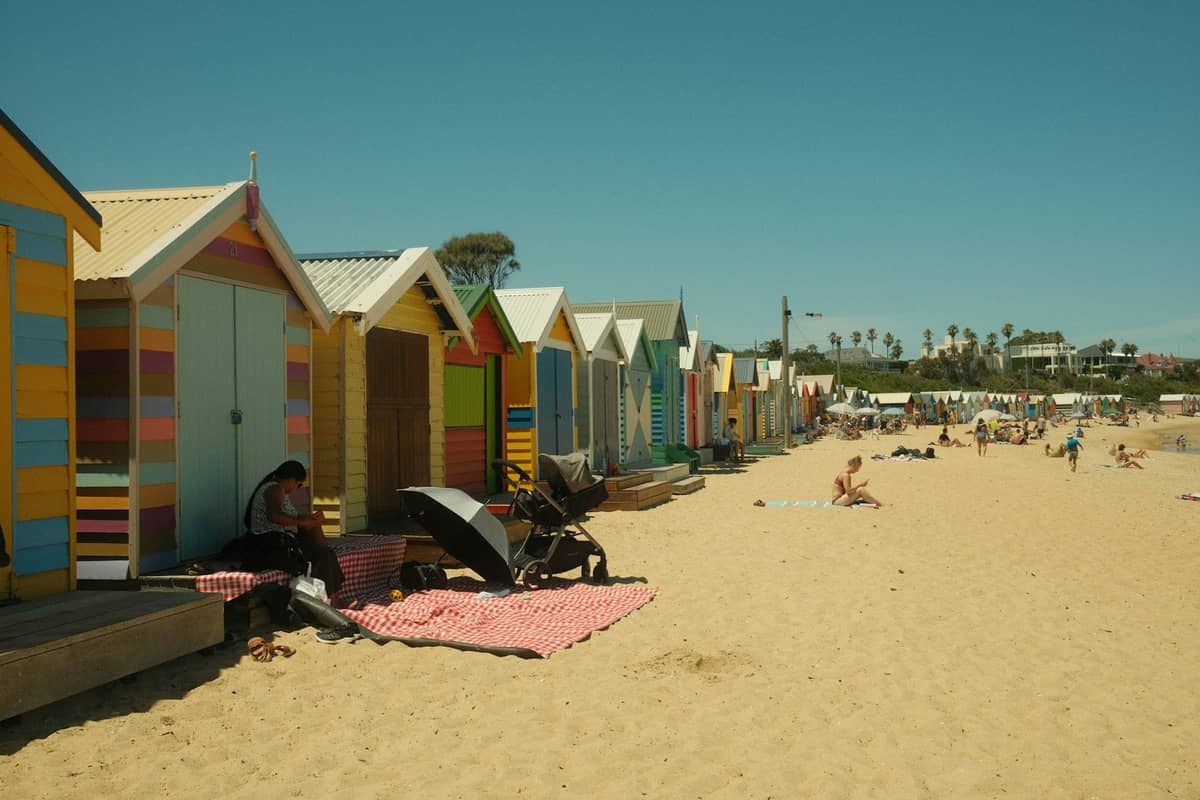
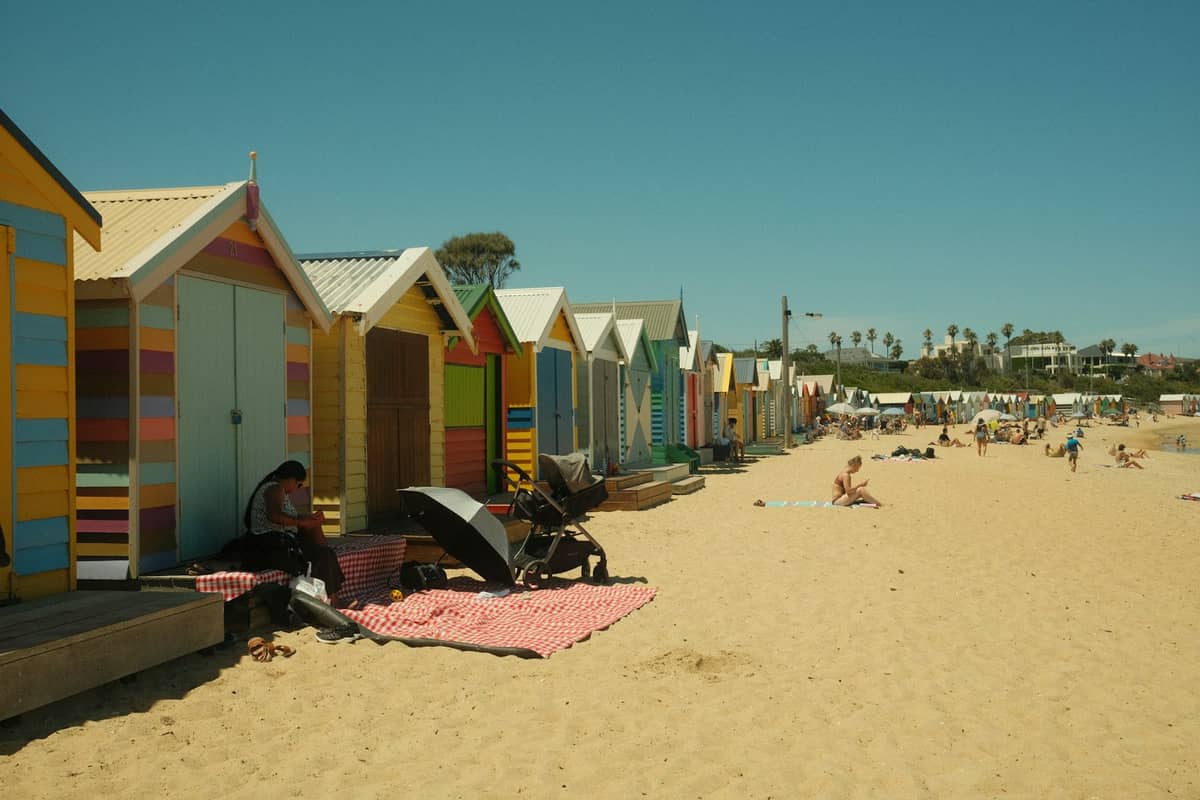
No guide to Melbourne beaches can skip the bathing boxes at Brighton, and no guide should oversell them either. The Brighton bathing boxes are 82 privately owned wooden changing huts painted in bold stripes and geometric patterns, lined up on the foreshore at Dendy Street Beach in Brighton. They photograph beautifully, especially in morning light with the city skyline faint in the background.
What they are not: a tourist attraction you can enter, use, or explore beyond the exterior. The boxes are owned by private individuals (wait lists for ownership run long) and are closed to the public. You walk along, take photos, and move on. The beach itself is a pleasant swimming spot and worth the trip to Brighton, but set realistic expectations about the boxes. The train ride from Flinders Street to Middle Brighton Station takes around 35 minutes and drops you a short walk from the boxes.
💡 Local tip
For the best photos of the Brighton bathing boxes, arrive before 9 a.m. on a weekday. Afternoon light puts the boxes in shadow and the foreshore fills with other visitors mid-morning on weekends. The beach faces west, so morning light is clean and direct.
Mornington Peninsula: Ocean Beaches and the Drive South
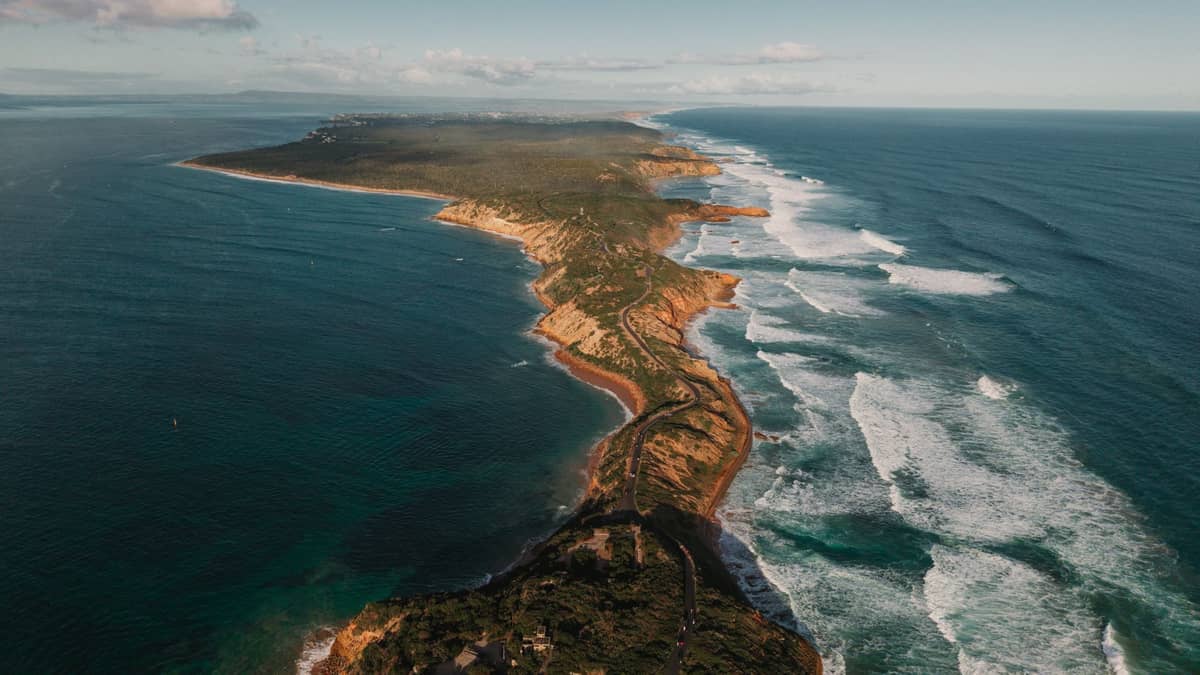
The Mornington Peninsula forms the eastern arm of Port Phillip Bay, curving south towards the Heads where the bay meets Bass Strait. On the bay side, beaches like Mornington, Mount Martha, Dromana, and Rosebud are calm and popular with families in summer. On the ocean side, facing Bass Strait directly, the character changes entirely. The Mornington Peninsula ocean beaches are dramatic, powerful, and patrol coverage is limited.
Gunnamatta Beach is one of the most visited ocean beaches on the peninsula. Parks Victoria manages the area and the beach is patrolled during summer and school holidays, but not daily. Swell and current conditions vary enormously. On a 1-metre day, confident swimmers can manage. On a 2-metre-plus day with a strong rip running, this beach can be genuinely dangerous. Always check conditions in advance and follow lifeguard directions without exception.
Portsea Back Beach (also called London Bridge area) is a similar proposition: spectacular cliff and rock scenery, powerful surf, and conditions that demand respect. The front beach at Portsea, on the bay side, is a complete contrast and one of the more pleasant sheltered spots on the peninsula. Combining both in a single day gives you the full range of what the peninsula offers. Add a detour to Point Nepean National Park at the tip of the peninsula for the clifftop walk and historic fortifications.
Getting to the peninsula requires a car. No practical direct public transport connects Melbourne CBD to the ocean beaches. Drive time from the city is around 90 minutes to Rosebud, 100 to 110 minutes to Portsea or Gunnamatta, longer in summer holiday traffic. Alternatively, the peninsula can be combined with a visit to the Mornington Peninsula hot springs at Fingal, which makes for a well-rounded day.
Beach Safety in Melbourne: What the Flags Mean and Why It Matters
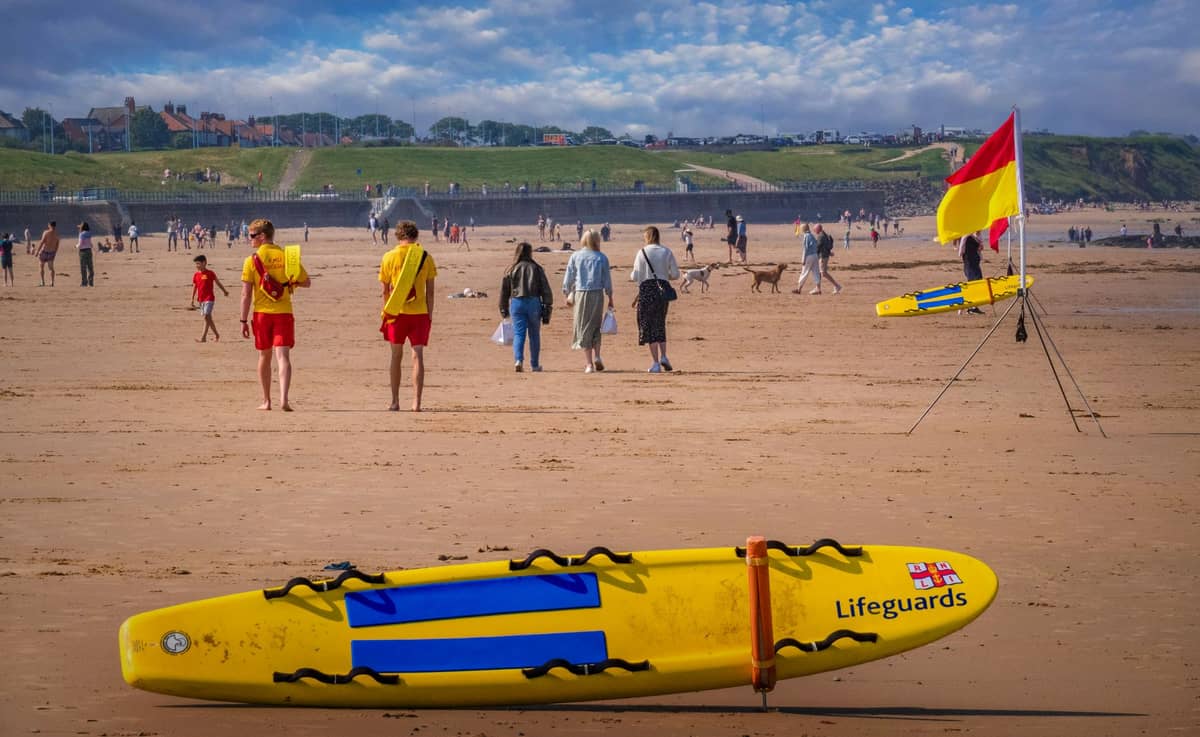
Melbourne beaches operate under Australian beach patrol conventions. Surf Life Saving Victoria patrols beaches during summer (generally November to March) on weekends and public holidays. Some high-use beaches like St Kilda are patrolled more frequently. The patrol schedule varies by beach and date, so checking Beachsafe (beachsafe.org.au) before visiting any beach is worth making a habit.
- Red and yellow flags: swim here. This is the patrolled swimming area. Stay within the flags.
- Red flag: do not swim. Conditions are assessed as too dangerous.
- Blue and white quartered flag: a Surf Life Saving club is present and on patrol.
- No flags visible: the beach is not currently patrolled. Swim with caution and be very conservative about water entry.
Bay beaches like St Kilda and Brighton look calm and often feel safe. Hazards still exist: submerged objects, shallow sandbars, boat traffic in shared zones, and occasional jellyfish blooms. Ocean beaches operate at a different level of risk entirely, with rip currents being the primary cause of drowning incidents at Australian beaches. If you can see waves breaking in channels alongside sand bars, there is likely a rip running through that channel. Swim across a rip, not against it, and signal for help if you cannot make progress.
✨ Pro tip
Travelling with children? Stick to the patrolled bay beaches (St Kilda, Brighton, Elwood) during the November-March season and go in the morning before afternoon sea breezes pick up and chop the water. Water temperatures in Port Phillip Bay peak around 20-22°C in late January and early February.
Planning Your Beach Day: Practical Details
Melbourne's weather is famously changeable. The saying that you get four seasons in a day is a cliché, but a day that starts sunny and calm can turn cold and windy by 3 p.m. Check the Bureau of Meteorology forecast and factor in afternoon sea breeze patterns, particularly in summer when a southerly change can drop temperatures 10°C within an hour. The best time to visit Melbourne guide breaks down seasonal patterns in more detail.
For the city beaches, public transport is straightforward. Trams run to St Kilda from the CBD along St Kilda Road (routes 3, 16, 67, and 96 pass through or near the foreshore area). Brighton and Sandringham are accessible by train from Flinders Street Station on the Sandringham line. For all beach trips, bring sunscreen with SPF 50+ as a minimum: Melbourne's UV index regularly reaches extreme levels in summer even when it feels overcast. Australia has some of the highest melanoma rates in the world, and UV exposure at Melbourne's latitude is not to be underestimated.
If you're building a larger itinerary that includes beaches alongside Melbourne's other highlights, the 3 days in Melbourne itinerary and one-week Melbourne itinerary both incorporate beach day logic with practical driving and transit notes.
ℹ️ Good to know
Melbourne sits on the traditional lands of the Wurundjeri Woi-wurrung and Bunurong peoples of the Kulin Nation. The coastline and bay hold deep cultural significance. The City of Melbourne provides more information on Traditional Owner connections at melbourne.vic.gov.au/aboriginal-melbourne.
FAQ
Is St Kilda Beach good for swimming?
Yes, St Kilda Beach is generally good for swimming in summer. It faces north across Port Phillip Bay, so conditions are usually calm. The beach is patrolled during the summer season, typically on weekends and public holidays from November to March. Swim between the red and yellow flags and check Beachsafe for current patrol status before visiting.
What is the closest beach to Melbourne CBD?
St Kilda Beach is the closest major beach, around 6 km from the CBD and accessible by tram in about 20-25 minutes. Port Melbourne Beach is similarly close and quieter, though it has fewer facilities. Both are bay beaches with calm water.
Can I swim at Gunnamatta Beach?
Gunnamatta is patrolled during summer and school holidays, but conditions can be very powerful even on those days. It is not suitable for weak swimmers, children, or anyone unfamiliar with ocean beach surf conditions. Always check Beachsafe before visiting, and only swim when red and yellow flags are flying with lifeguards present.
Are Melbourne's beaches free to access?
Yes, all of Melbourne's public beaches are free to access. There are no entry fees for St Kilda, Brighton, Elwood, Sandringham, or any of the peninsula beaches. Parking nearby may incur a cost, and facilities like kiosks and cafes charge normal prices.
Do you need a car to reach the best beaches near Melbourne?
Not for the bay beaches. St Kilda, Elwood, Brighton, and Sandringham are all accessible by public transport using trams or trains from the CBD. For ocean beaches on the Mornington Peninsula (Gunnamatta, Portsea Back Beach, Sorrento ocean side), a car is effectively necessary as no practical direct public transport option covers that route.
Tickets & tours
Live prices and dates from our booking partner. If you book, we may earn a commission at no extra cost to you.
Planning a trip? Discover personalized activities with the Nomado app.