Mornington Peninsula: Beaches, Wineries, and Hot Springs One Hour from Melbourne
The Mornington Peninsula stretches 192 km of shoreline south of Melbourne, packing surf beaches, calm bay shores, world-class hot springs, working wineries, and rugged national park cliffs into one coastal region. It works as a long day trip or a weekend escape, and the range of experiences means almost every kind of traveller finds something worth the drive.
Quick Facts
- Location
- 90 km south of Melbourne CBD; Visitor Centre at 359B Point Nepean Rd, Dromana VIC 3936
- Getting There
- By car via Nepean Hwy or Mornington Peninsula Fwy (approx. 1–1.5 hrs). Limited public buses via Frankston; a car gives far more flexibility
- Time Needed
- Full day minimum; 2 days recommended to cover both bay and ocean sides
- Cost
- Free to explore most beaches and foreshore areas; individual attractions (hot springs, parks, wineries) charge separately — verify current prices before visiting
- Best for
- Outdoor enthusiasts, couples, wine lovers, families seeking beach days, anyone wanting distance from the city
- Official website
- www.mornpen.vic.gov.au/Things-to-do/Explore-Mornington-Peninsula
What the Mornington Peninsula Actually Is
The Mornington Peninsula is a wedge of land that pushes south from Melbourne between Port Phillip Bay to the west and Western Port Bay to the east, tapering to a narrow tip at Point Nepean. It is not a single attraction with a gate and a ticket — it is a region, and that distinction matters for planning. The Mornington Peninsula Shire lists 192 km of shoreline, which means you cannot see it in a morning. What you can do is choose a side, choose a focus, and do that well.
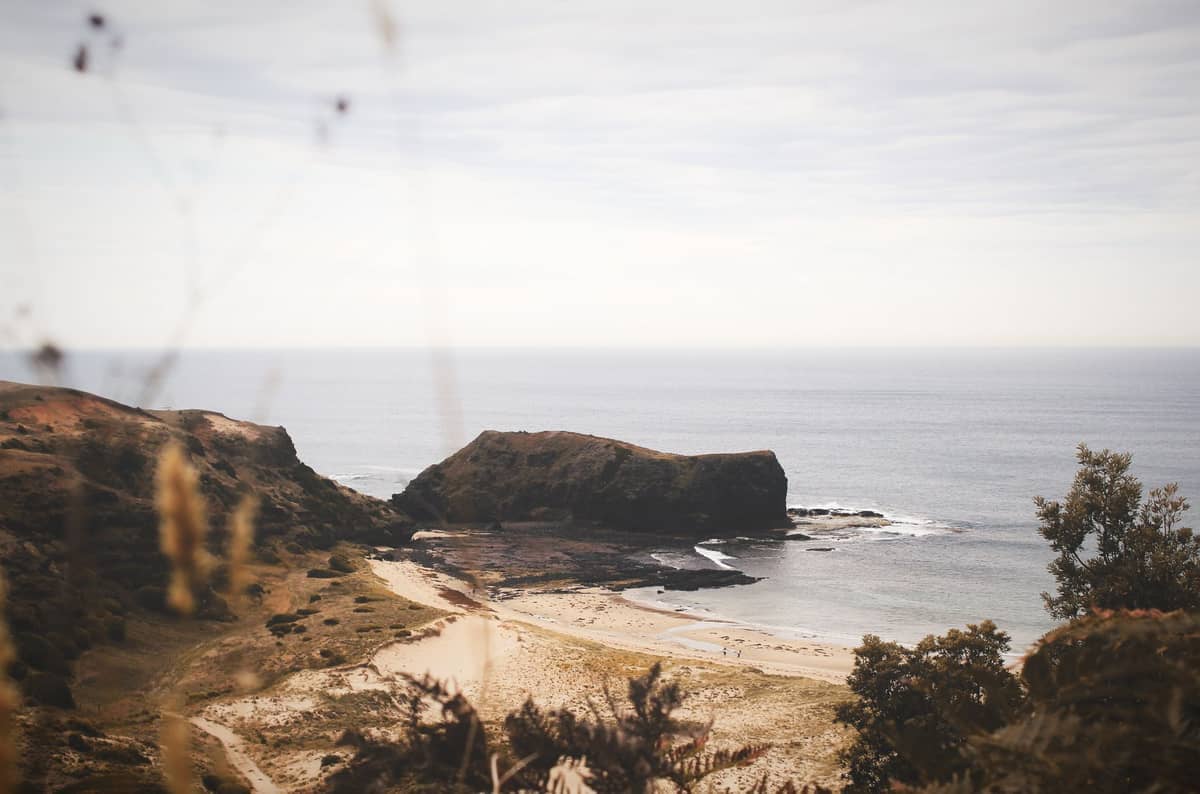
The two coastlines feel almost like different places. The bay side runs along calm, shallow water with the kind of flat beach that suits children, paddleboards, and long morning walks. The ocean side faces Bass Strait, and the surf is proper surf: cold, powerful, and best watched from the cliffs at Cape Schanck if you are not confident in the water. Inland, the Red Hill and Merricks wine country sits on elevated ground, and the Mornington Peninsula National Park wraps around the southern tip with walking trails and dramatic cliff-top views.
ℹ️ Good to know
The Mornington Peninsula Visitor Information Centre in Dromana is open daily 10:00 am to 4:00 pm and is a practical first stop if you arrive without a plan. Staff can advise on current road conditions, park closures, and what is open that day.
The Two Coastlines: Bay Side vs Ocean Side
The bay side is where the peninsula's most photographed features sit. Mornington, Mount Martha, and Safety Beach line the inner shore, with low-key promenades, cafes, and pier jetties that turn orange and gold in the late afternoon. This is where families tend to concentrate, and where morning swimmers do their laps before the crowds arrive. The water is shallow and warm by Australian standards in summer, and the bottom is sandy rather than rocky. Parking fills quickly on summer weekends, particularly at popular spots like Mount Martha foreshore, so arriving before 9 am makes a real difference.
The ocean side is quieter and considerably wilder. Gunnamatta, Portsea Back Beach, and Point Nepean beach face Bass Strait with full exposure, and surf conditions can change fast. Rip currents are a genuine hazard at ocean beaches — swim only at patrolled sections and read the flags. The wind is stronger here too, and fine sand gets into everything. That said, if you want a coastal walk with real drama — clifftops, raw scrubland, the lighthouse at Cape Schanck standing white against grey sky — this side of the peninsula delivers it in a way the bay side simply cannot.
Tickets & tours
Live prices and dates from our booking partner. If you book, we may earn a commission at no extra cost to you.
Mornington Peninsula sightseeing and Bay cruise
From 107 €Instant confirmationFree cancellationMornington Peninsula Winery tour with lunch and wine tasting
From 97 €Instant confirmationFree cancellationMornington Peninsula food and wine taste trail guided tour
From 116 €Instant confirmationFree cancellationMornington Peninsula tour with chairlift, lunch and chocolate tasting
From 138 €Instant confirmationFree cancellation
Mornington Peninsula National Park and Point Nepean
The Mornington Peninsula National Park covers the southern tip of the peninsula and extends along the ocean coast. The park contains some of the best walking on the peninsula: the Bushrangers Bay Trail, the Cape Schanck Boardwalk, and the network of tracks through Point Nepean National Park at the very tip. Point Nepean has a layered history as a quarantine station, military fortification, and national park, with tunnels, gun emplacements, and historical infrastructure still visible along the trail.
Cape Schanck is worth singling out. The walk from the car park to the lighthouse takes around 20 minutes along a boardwalk that descends to a rocky platform at the water's edge. At low tide, the rock shelf is exposed and the wave action is extraordinary. The lighthouse itself has been operating since 1859 and is managed by Parks Victoria. Arrive in the early morning for the best light — by late morning the car park fills and the boardwalk gets busy. Access roads to eastern areas of the park, including Cape Schanck, run via Boneo Road.
Accessibility varies significantly within the park. Parks Victoria provides all-terrain and beach wheelchairs at some locations, but sections like the Fingal beach access involve a long, steep staircase that is not suitable for everyone. Check the Point Nepean National Park page for current access details and trail conditions before you go, as closures for maintenance or fire danger do occur.
Hot Springs: What to Expect
The Mornington Peninsula Hot Springs at Fingal are the most visited thermal bathing facility in Victoria, drawing on naturally warm, mineral-rich groundwater. The main complex has tiered pools at different temperatures set into a hillside with views across the bay, plus private cave pools, a day spa, and a series of therapeutic bathing areas. This is not a casual drop-in experience. Advance booking is strongly recommended, particularly on weekends and public holidays when sessions sell out days in advance. The atmosphere shifts noticeably between visits: weekday mornings are calm, the terraces nearly empty, steam rising from warm water while the surrounding landscape is quiet and cool. On a Saturday afternoon in January, the same space feels closer to a theme park.
Prices and session lengths are set by the facility and subject to change — verify current rates directly before visiting. For context on timing your trip around seasonal conditions, the best time to visit Melbourne guide covers regional weather patterns that affect the peninsula too.
💡 Local tip
Book hot springs sessions online at least 3–5 days ahead for weekends, longer during school holidays. Arriving slightly before your session time is worth it — the morning shift tends to thin out as the day progresses and later arrivals crowd the pools.
Wine Country: Red Hill and the Inland Routes
The inland hills around Red Hill, Merricks, and Tuerong form one of Victoria's cooler-climate wine regions, with Pinot Noir and Chardonnay as the varieties most associated with the area. The elevated terrain and maritime influence from both bays create conditions that differ noticeably from the Yarra Valley to the north. Cellar doors are spread across back roads, and the experience of visiting is inherently unhurried — this is not a dense strip of back-to-back wineries. You will be driving between them, which means a designated driver or a winery tour operator is the only sensible approach if you intend to taste seriously.
Most cellar doors operate on weekends and some weekdays, but hours vary by property and season. The Red Hill Epicurean Centre and the Red Hill market (held on the first Saturday of most months) are useful anchors if you want to combine wine with local produce. For travellers choosing between day trip options, the peninsula wine experience is quieter and more pastoral than the Yarra Valley wine day trip — fewer large estates, more small producers, and longer distances between stops.
Getting There: Car Is King
The Mornington Peninsula is reachable by public transport from Melbourne via Frankston, but bus connections into the peninsula itself are limited and infrequent. Without a car, you are largely restricted to what is within walking distance of a bus stop, which cuts out most of what makes the region worth visiting: the national park, the hot springs, the cellar doors, and the ocean beaches. This is one day trip where renting a car or joining a guided tour is genuinely the better option for most travellers.
Driving from central Melbourne, the most common route takes the Nepean Highway through the bayside suburbs, or the Mornington Peninsula Freeway for faster access. Either way, expect 60 to 90 minutes depending on traffic, which can be considerably longer on Friday afternoons. For route planning and broader day trip context, the day trips from Melbourne guide covers transport options across the region.
⚠️ What to skip
Fuel prices are higher on the peninsula than in Melbourne. Fill up before you leave the city, or at least before turning off the main highway into the back roads of the wine country or national park.
Practical Details and What to Bring
Melbourne's weather applies to the peninsula with extra wind. The ocean coast in particular is exposed, and a warm, clear morning in the city can translate to a cold and gusty afternoon at Cape Schanck. Layers are not optional — pack a windproof outer layer regardless of the season. In summer, sun protection is critical: the UV index on the coast is high, shade is limited on beach walks, and the reflection off water accelerates burning.
For national park walks, wear closed shoes with grip. The Cape Schanck boardwalk is managed and relatively easy, but some trails cross loose cliff-top terrain where sandals are a bad choice. Water is essential — there are no shops inside the national park. For families, the bay-side beaches have more amenities: toilets, grassy picnic areas, and gentle entry into calm water. The ocean beaches are not appropriate for young children or non-swimmers due to surf and rip conditions.
Photography is best in the early morning and in the hour before sunset. The lighthouse at Cape Schanck is well-composed against the sky at either end of the day. The bay-side jetties, particularly at Mornington and Sorrento, catch warm light late in the afternoon. If a coastal circuit appeals to you, the best views in Melbourne guide includes some regional vantage points worth comparing.
Who Should Reconsider
Travellers without a car who are short on time will find the peninsula frustrating rather than rewarding. The distances between highlights are not walkable, public transport access is genuinely limited, and a rushed half-day means you see the highway towns but miss the coastline, the wine country, and the national park. Travellers who struggle with motion sickness should also know that the back roads between wineries and the national park are narrow and winding.
On peak summer weekends, popular spots like the hot springs, Portsea, and Sorrento become very congested. If your visit falls in December or January and you are sensitive to crowds, midweek travel or an early arrival makes the experience significantly better. The peninsula is not particularly suited to travellers looking for urban energy, nightlife, or extensive indoor cultural attractions — it is fundamentally an outdoor destination, and grey, rainy weather changes the calculus considerably.
Insider Tips
- The ocean and bay sides of the peninsula are connected by the Sorrento–Queenscliff ferry, which crosses Port Phillip Bay and links to the Bellarine Peninsula on the other side. It is a practical way to build a loop rather than retracing your route back to Melbourne.
- Most visitors drive the peninsula from north to south and turn around at Point Nepean. Reversing the direction — starting at Cape Schanck and working north — means you hit the national park while it is quiet and reach the bayside towns for lunch, rather than arriving at the park when everyone else does after midday.
- The Red Hill Market, held on the first Saturday of the month (check current dates before going), is a genuine farmers market with local produce, cheese, wine, and plants — not a souvenir market. It opens at 8 am and starts thinning out by noon.
- Mobile coverage is patchy inside the national park and on some back roads in the wine country. Download offline maps for the area before you leave Melbourne, and do not rely on real-time navigation in the more remote sections.
- The Visitor Information Centre in Dromana stocks printed walking maps for the national park that are more detailed than what Parks Victoria has available online. Pick one up if you are planning serious hiking — the tracks are not all well-signed.
Who Is Mornington Peninsula For?
- Couples looking for a relaxed overnight escape with wine, good food, and coastal scenery
- Outdoor enthusiasts who want cliff-top walking, surf beaches, and national park trails within reach of the city
- Families with older children who want structured beach time on the calm bay side with easy facilities nearby
- Wine travellers interested in cool-climate Pinot Noir and Chardonnay from small producers in a pastoral setting
- Anyone needing a proper reset from Melbourne who can commit at least a full day and ideally a night
Nearby Attractions
Combine your visit with:
- 1000 Steps Kokoda Track Memorial Walk
The Kokoda Track Memorial Walk, known locally as the 1000 Steps, climbs through fern-filled forest in the Dandenong Ranges east of Melbourne. Free to visit and reached by train, it combines a genuine physical workout with quiet moments of WWII commemoration.
- Albert Park Lake
Albert Park Lake is a vast freshwater reserve just minutes from Melbourne's CBD, offering a 4.7km walking and cycling path around calm water, sports ovals, and open parkland. Free to enter and accessible by tram, it rewards early morning walkers, cycling families, and anyone wanting to understand how Melbourne uses its open spaces.
- Bells Beach
Bells Beach, in Wadawurrung country and also known by its Traditional Owner name Djarrak, is a 48-hectare coastal reserve near Torquay that holds the distinction of being the world's first declared surfing reserve. With its sheer sandstone cliffs, deep bowl-shaped break, and annual Rip Curl Pro competition, it draws surfers and non-surfers alike for one of Victoria's most dramatic coastal experiences.
- Brighton Beach Bathing Boxes
Lined up along Dendy Street Beach in Brighton, Melbourne's 96 privately owned bathing boxes are one of Victoria's most recognisable sights. Free to view from the public beach, they reward visitors who time their arrival with the morning light or an empty tide. Here is what you actually need to know before making the trip.
Planning a trip? Discover personalized activities with the Nomado app.