Point Nepean National Park: The Complete Visitor Guide
Sitting at the very tip of the Mornington Peninsula, about 110 km south of Melbourne, Point Nepean National Park combines a 19th-century quarantine station, Cold War-era fort, and rugged coastal walking trails into one of Victoria's most layered day trips. Entry is free, the landscape is striking, and there is far more here than a single afternoon can cover.
Quick Facts
- Location
- 3880 Point Nepean Road, Portsea VIC 3944 — approximately 110 km south of Melbourne
- Getting There
- Train to Frankston, then Bus 788 to the park entrance; or drive via M1, Eastlink (M3) and Mornington Peninsula Freeway (M11)
- Time Needed
- Half day minimum; a full day is recommended to reach Fort Nepean
- Cost
- Free park entry. Shuttle bus to Fort Nepean is ticketed separately — check Parks Victoria for current fares
- Best for
- History enthusiasts, coastal walkers, photographers, and families wanting structured nature access
What Point Nepean National Park Actually Is
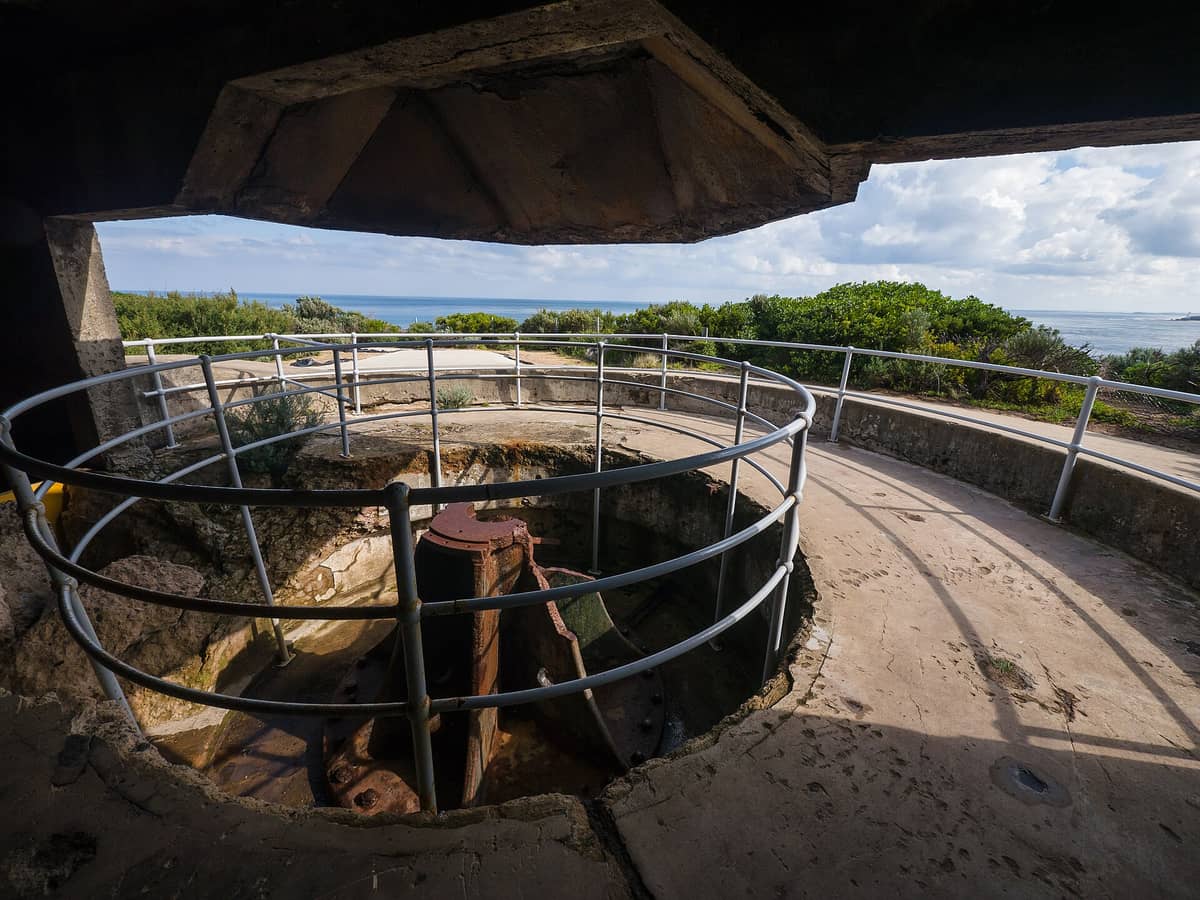
Point Nepean National Park occupies the narrow western tip of the Mornington Peninsula, where Port Phillip Bay and Bass Strait converge at one of the most strategically significant stretches of Victorian coastline. The park holds two headline attractions — a quarantine station with roughly 50 heritage-listed buildings dating from 1852, and Fort Nepean, whose fortifications were first constructed in the 1880s and remained in use through both World Wars, until 1945. The park itself was declared a national park in 1988, but its human history reaches back considerably further.
The land sits within Bunurong Country, and the Bunurong people have a deep, continuous relationship with this coastline. That context is worth holding in mind as you move through a landscape that European settlers rapidly militarised and quarantined — layering institutional history over a place that had been home for tens of thousands of years.
For most visitors arriving from Melbourne, this park works best as a full-day trip. Combining it with a drive along the peninsula is one way to structure the day. You'll find practical suggestions in the Mornington Peninsula guide if you want to build a broader itinerary.
💡 Local tip
The park is open daily. The Point Nepean Information Centre opens daily at 10 am, except Christmas Day.
The Quarantine Station: Where the Park's Story Begins
Most visitors enter near the Quarantine Station precinct, and it is worth slowing down here rather than rushing straight to the fort. The station was established in 1852 to isolate passengers arriving by ship who showed signs of infectious disease — a practice that continued well into the 20th century. The roughly 50 buildings form one of the most intact quarantine precincts in Australia, and the architectural range across them tells the story of how the facility expanded and changed over time.
Selected Quarantine Station buildings are open to visitors daily from 9 am to 4:30 pm. Walking through the grounds in the morning, when the light is flat and cool and other visitors are still sparse, gives the place a particular quietness that suits the subject matter. The buildings carry the weight of real human suffering — people who arrived in a new country and were immediately separated, held in uncertainty, sometimes for months.
The paths within the Quarantine Station precinct include accessible options, with ramps in public buildings, making this part of the park navigable for visitors with mobility requirements. A standard wheelchair and two all-terrain beach wheelchairs are available to borrow free of charge from the Information Centre.
Tickets & tours
Live prices and dates from our booking partner. If you book, we may earn a commission at no extra cost to you.
Great Ocean Road reverse itinerary tour from Melbourne
From 77 €Instant confirmationFree cancellationGreat Ocean Road bus tour with a forest walk
From 90 €Instant confirmationFree cancellationYarra Valley Bus Wine Tour including lunch with a glass of wine and chocolate
From 107 €Instant confirmationFree cancellationHidden bars of Melbourne guided tour
From 115 €Instant confirmationFree cancellation
Fort Nepean: The Walk, the Shuttle, and What You Find at the End
Fort Nepean sits at the very tip of the park, and reaching it requires either a solid walk along the Nepean Track, a bicycle ride, or a ride on the park shuttle bus. The shuttle accommodates standard wheelchairs but not motorised scooter-style or Parks Victoria all-terrain wheelchairs — confirm the current schedule and fare at the Information Centre on arrival.
The fortifications date from the 1880s and represent a period when the colonial government was genuinely anxious about naval attack on Port Phillip Bay. The guns installed here were capable of ranging across the Rip — the narrow, turbulent passage where bay meets strait — and The fort's firing on a German vessel in August 1914 is recognised as the first shot of the British Empire in World War I. That detail gives Fort Nepean a place in the broader narrative of the war.
The tunnels and gun emplacements at the fort are genuinely atmospheric. The temperature inside the concrete corridors drops noticeably even on warm days, and the texture of the walls — rough cast concrete with bolts and brackets still in place — makes the military function tangible in a way that museum displays rarely achieve. At the point itself, the views across the Rip toward Queenscliff are sharp on clear days, with strong tidal currents visible in the water below.
⚠️ What to skip
The walk to Fort Nepean and back covers considerable distance along an exposed peninsula. Carry water, sun protection, and a wind layer — the tip is significantly more exposed than the car park area, and conditions can change quickly on this coastline.
Timing Your Visit: How the Park Changes Through the Day
Arriving early — close to the 6 am vehicle opening — gives walkers and cyclists the peninsula almost entirely to themselves. The coastal light in the first hour after sunrise is low and directional, useful for photography, and the wildlife is more active: honeyeaters and wrens move through the coastal scrub, and wallabies are occasionally visible near the treeline. By mid-morning on weekends in spring and summer, the car park fills steadily and the shuttle queue lengthens.
Summer afternoons on the peninsula can be very hot and windy in alternation. A cool southerly change that feels pleasant at the car park can become uncomfortably strong at the tip. Autumn (March to May) is arguably the most comfortable season for the longer walks: the temperatures are mild, the crowds thin compared to January, and the afternoon light on the bay has a different quality to the harsh summer glare.
Winter visits are feasible and can be atmospheric — the Rip turns grey-green and the waves on the Bass Strait side are considerably larger, giving the fort's position a more serious character. The trade-off is shorter daylight hours and the possibility of rain. Check the Bureau of Meteorology forecast for Portsea specifically, not just Melbourne, before you leave the city.
If you are trying to decide when in the year to make this trip alongside other Melbourne activities, the best time to visit Melbourne guide covers the seasonal trade-offs across the region.
Getting There: Practical Transport Options
By car, the drive from central Melbourne takes approximately 90 minutes to two hours depending on traffic. Follow the M1 (Monash Freeway), then Eastlink (M3), then the Mornington Peninsula Freeway (M11) toward Portsea. The final stretch along Point Nepean Road is narrow and can back up on busy weekend mornings. Arriving before 9 am avoids most of this.
By public transport, take a train to Frankston Station on the Frankston line, then board Bus 788 toward Portsea. The journey adds time and requires checking current PTV timetables, as service frequency on the bus route is limited. This is a viable option on a relaxed schedule but a poor choice if you want to maximise time in the park.
A third option: the ferry between Queenscliff and Sorrento crosses Port Phillip Bay and puts you on the Sorrento side of the peninsula, from which the park is a short drive. This works well if you are approaching from the Geelong direction or combining the park with a night in the peninsula township.
For a broader look at how to plan travel around Victoria's south coast, the day trips from Melbourne guide includes Point Nepean in a wider set of options.
Photography, Walking Trails, and Natural Character
The vegetation along the peninsula spine is coastal scrub and low heath: tea-tree, banksia, and coast wattle, with the occasional she-oak providing height. It is not dramatic forest scenery, but it has a particular texture at low angles and in diffuse light. The smell changes notably as you approach the point — salt, kelp from the tideline below, and sometimes the acrid trace of seabird colonies on the rocks.
From the fort and the point beyond, photographers get two very different compositional opportunities: the calm, broad sweep of Port Phillip Bay on one side, and the exposed, windswept Bass Strait coast on the other. Early morning gives the bay side a mirror quality on still days. Telephoto lenses reward patience — the shipping traffic through the Rip is constant, and watching large container vessels navigate the narrow passage against the tidal flow is unexpectedly compelling.
Those interested in broader natural landscapes around Melbourne may also want to consider the Dandenong Ranges or the walking options at Yarra Bend Park for contrast — both offer very different terrain within reach of the city.
Who Should Reconsider This Trip
Point Nepean National Park is not the right choice for every traveler. If you have a single day in Melbourne and want to pack in maximum urban variety, this trip consumes most of that day in transit alone. The park rewards people who are comfortable with open space, moderate walking, and a kind of historical seriousness that takes time to absorb. Visitors hoping for a beach day will find the surf beach on the Bass Strait side rough and unsuitable for swimming, and the bay side is more about scenery than sand.
Young children can manage the Quarantine Station area comfortably, but the full walk to Fort Nepean is too long for small kids unless you plan on the shuttle. Check current shuttle availability before relying on it as the plan for a family visit.
Insider Tips
- The park's Information Centre opens at 10 am — if you arrive earlier on foot or by bike, you'll have the trails to yourself but won't be able to borrow a wheelchair or confirm the shuttle schedule. Plan accordingly.
- The ferry between Sorrento and Queenscliff makes it possible to visit Point Nepean as part of a loop: drive down one side of the peninsula, ferry across, and return via Geelong. Far more interesting than doubling back on the same road.
- The tunnels inside Fort Nepean are significantly cooler than outside. On a hot summer day, the temperature contrast is striking. A light layer is worth carrying even in January.
- Parking can be busy on summer weekends. Check Parks Victoria’s current parking information before choosing an alternative location.
- The Quarantine Station buildings between 9 am and 10 am — before the Information Centre opens and before day-trippers arrive from Melbourne — offer some of the best photography light and the most solitude in the entire park.
Who Is Point Nepean National Park For?
- History enthusiasts who want depth beyond a placard — the fort and quarantine station reward slow exploration
- Photographers working with landscape, architectural, or documentary subjects across a single location
- Walkers and cyclists looking for a structured but scenic route with historical context at the end
- Travelers combining the park with a broader Mornington Peninsula itinerary rather than treating it as a standalone trip
- Families with older children who can handle a moderate walk and are curious about Australian military and colonial history
Nearby Attractions
Combine your visit with:
- 1000 Steps Kokoda Track Memorial Walk
The Kokoda Track Memorial Walk, known locally as the 1000 Steps, climbs through fern-filled forest in the Dandenong Ranges east of Melbourne. Free to visit and reached by train, it combines a genuine physical workout with quiet moments of WWII commemoration.
- Albert Park Lake
Albert Park Lake is a vast freshwater reserve just minutes from Melbourne's CBD, offering a 4.7km walking and cycling path around calm water, sports ovals, and open parkland. Free to enter and accessible by tram, it rewards early morning walkers, cycling families, and anyone wanting to understand how Melbourne uses its open spaces.
- Bells Beach
Bells Beach, in Wadawurrung country and also known by its Traditional Owner name Djarrak, is a 48-hectare coastal reserve near Torquay that holds the distinction of being the world's first declared surfing reserve. With its sheer sandstone cliffs, deep bowl-shaped break, and annual Rip Curl Pro competition, it draws surfers and non-surfers alike for one of Victoria's most dramatic coastal experiences.
- Brighton Beach Bathing Boxes
Lined up along Dendy Street Beach in Brighton, Melbourne's 96 privately owned bathing boxes are one of Victoria's most recognisable sights. Free to view from the public beach, they reward visitors who time their arrival with the morning light or an empty tide. Here is what you actually need to know before making the trip.
Planning a trip? Discover personalized activities with the Nomado app.