Dandenong Ranges: Forests, Gardens, and Steam Trains One Hour from Melbourne
The Dandenong Ranges rise about 40 kilometres east of Melbourne, offering a dramatically different landscape from the city below. Tall mountain ash forests, a celebrated botanic garden, and the Puffing Billy Railway make this one of Victoria's most rewarding day trips. A half-day is possible, but a full day suits the area much better.
Quick Facts
- Location
- Dandenong Ranges, approx. 40 km east of Melbourne CBD; Botanic Garden at 24 The Georgian Road, Olinda
- Getting There
- Train to Belgrave or Croydon via Belgrave/Lilydale line (PTV), then local bus connections; driving is more flexible
- Time Needed
- 4–6 hours for a focused visit; full day recommended to combine forest walks, the garden, and Puffing Billy
- Cost
- National park and Botanic Garden: free entry. Puffing Billy Railway: separate paid fare — check puffingbillyrailway.org.au for current pricing
- Best for
- Families, nature walkers, photographers, anyone needing a break from the city
What the Dandenong Ranges Actually Are
The Dandenong Ranges are not a single attraction with a gate and a ticket booth. They are a low mountain range — the highest point, Mount Dandenong, sits at around 633 metres — covered in a patchwork of national park, botanic garden, state forest, and small townships connected by winding roads. Dandenong Ranges National Park, managed by Parks Victoria, protects the core of the area and is the anchor for most hiking and forest experiences. Alongside it sit the Dandenong Ranges Botanic Garden (formerly the National Rhododendron Gardens until its renaming in 2017) and the Puffing Billy Railway, each requiring its own plan.
Understanding this geography matters for planning. If you drive up without a clear idea of where you are going, you can easily lose an hour on winding ridge roads between Olinda, Sassafras, and Belgrave without arriving anywhere in particular. The most efficient approach is to pick two or three specific sites, sequence them geographically, and treat the slow drive through the ranges itself as part of the experience.
⚠️ What to skip
The national park closes on days with an Extreme Fire Danger Rating or during severe weather events. During summer, particularly on hot, windy days, check Parks Victoria's fire danger status before you leave Melbourne. The Botanic Garden also closes during extreme fire danger and severe weather events.
The Forest: What You See, Smell, and Hear
Walking into the tall eucalypt forest of Dandenong Ranges National Park is one of the more immediate sensory shifts available within an hour of Melbourne. The mountain ash trees here, Eucalyptus regnans, are among the tallest flowering plants on Earth, and while the ranges don't hold the record specimens, the canopy still closes well overhead on many tracks. Light filters through in shafts on clear mornings, catching fern fronds at ground level. The air smells different here: cooler, damp with leaf litter, with the faint eucalyptus sharpness you don't get in drier lowland bush.
The understorey is dominated by tree ferns, primarily Cyathea australis and Dicksonia antarctica, which give the forest an almost prehistoric texture. On a weekday morning, particularly after rain, the forest is quiet enough that you will hear crimson rosellas before you see them and watch lyrebirds scratching the leaf litter on quieter side trails. The lyrebird, capable of mimicking chainsaws, camera shutters, and other birds with equal facility, is not guaranteed, but the ranges are one of the more accessible places in Victoria to encounter one.
Weekends change the atmosphere substantially. Trails near the Sherbrooke picnic area and along the Kokoda Track Memorial Walk fill with families, dog walkers, and day-trippers from Melbourne by late morning. If solitude in the forest matters to you, arrive before 9:00 am or target the less-signposted trails farther from the main car parks.
Tickets & tours
Live prices and dates from our booking partner. If you book, we may earn a commission at no extra cost to you.
Great Ocean Road reverse itinerary tour from Melbourne
From 77 €Instant confirmationFree cancellationGreat Ocean Road bus tour with a forest walk
From 90 €Instant confirmationFree cancellationYarra Valley Bus Wine Tour including lunch with a glass of wine and chocolate
From 107 €Instant confirmationFree cancellationHidden bars of Melbourne guided tour
From 115 €Instant confirmationFree cancellation
Dandenong Ranges Botanic Garden: Seasonal Timing Is Everything
The Dandenong Ranges Botanic Garden opened in 1960 and spent most of its life known as the National Rhododendron Gardens. The name change in 2017 reflected a broader planting scope, but rhododendrons and azaleas remain the centrepiece. The garden sits on 40 hectares at Olinda and is free to enter, open daily from 10:00 am to 4:30 pm, with gates locking at 5:00 pm. It closes on Christmas Day, Total Fire Ban days, and during severe weather events.
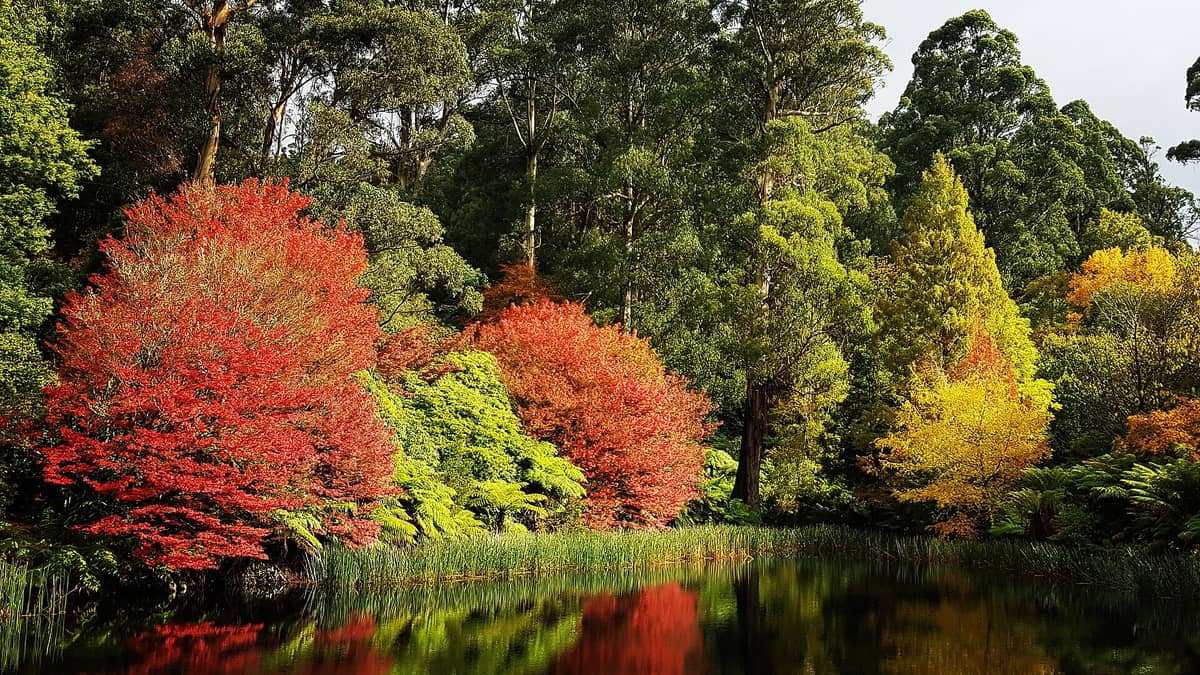
The single most important thing to know is that the garden's appeal is heavily tied to season. Spring (September to November) is the primary flowering season for rhododendrons and azaleas, when the hillside paths become corridors of deep pink, red, and white. Autumn (April to May) brings its own spectacle as deciduous oaks and maples turn, the colours made richer by the mist that frequently settles over Olinda at this elevation. In winter, the garden is quieter and less colourful but still worth a short visit for the structure of the plantings and the moody light. Summer, surprisingly, is the least dramatic time visually.
The paths are wide and sealed along the main routes, but several sections are steep enough that Parks Victoria does not recommend unassisted wheelchair access. Come with good footwear even on the sealed paths — the gradient catches people off guard, especially on the way back up from the lower garden.
💡 Local tip
Photography in the Botanic Garden is best in the first hour after opening. The light is softer, the paths emptier, and the mist that clings to Olinda on cool mornings often hasn't fully lifted — it adds atmosphere to the rhododendron beds in a way that midday sun doesn't replicate.
Puffing Billy Railway: Context Before You Book
The Puffing Billy Railway is the most recognisable attraction in the Dandenong Ranges and also the one most prone to visitor disappointment when expectations aren't calibrated. It is a narrow-gauge heritage steam railway that has operated in some form since 1900 and runs through the ranges between Belgrave and Gembrook. The journey is genuinely scenic, and the sight and sound of a working steam locomotive in a fern gully is hard to replicate. Children typically love it without reservation.
Adults travelling without children should understand what Puffing Billy is and isn't. It is a heritage experience, not a high-speed or particularly comfortable ride. The wooden carriages have open sides (passengers traditionally dangle their legs out, which is part of the appeal). The pace is slow, the stops are spaced along the ranges, and the full Belgrave-to-Gembrook return journey takes most of a day. Shorter sections are available. Fares vary by journey and are updated periodically — check puffingbillyrailway.org.au for current pricing before visiting, as fares change by season.
Crowds at Belgrave station on weekend mornings can be substantial, particularly during school holidays and the rhododendron season. Booking ahead online is advisable. Weekday departures are noticeably quieter.
Getting There and Getting Around
The most practical way to explore the Dandenong Ranges is by car. The ranges cover a large area and the key sites — the national park, the Botanic Garden, the Puffing Billy stations — are spread across different townships connected by winding roads. For context on planning a broader itinerary, the day trips from Melbourne guide covers transport logistics across multiple destinations.
Without a car, Train access to the southern park is via Upper Ferntree Gully or Belgrave on the Belgrave line; bus route 688 links Croydon and Upper Ferntree Gully. This puts you close to the Puffing Billy Railway departure point and within reach of some park trails. The Botanic Garden at Olinda is less accessible by public transport, requiring a connection to local bus services — check PTV journey planning for current routes and timetables, as frequencies are limited.
The roads through the ranges, particularly around Olinda, Sassafras, and Kallista, are narrow and sometimes shared with cyclists. Parking in the small village centres on weekends in spring fills quickly by 10:30 am. If you arrive and find the Olinda car park full, driving down toward Kalorama or across to Sherbrooke often reveals quieter spots within walking distance of the same trails.
ℹ️ Good to know
The Dandenong Ranges sit at a notably higher elevation than Melbourne, and the temperature difference can be 5–8°C cooler on any given day. Even in summer, bring a layer. In winter and on rainy days, the paths through the fern gullies become genuinely slippery — waterproof shoes make a significant difference.
The Villages: Sassafras, Olinda, and the Experience Between Stops
Part of what makes the Dandenong Ranges appealing is the cluster of small villages that serve as rest points between forest and garden. Sassafras, perched on the ridge, is known for its tea rooms and small antique shops along a single main street. Olinda, a short drive away, has a similar character with cafes and galleries. Neither village is large, and both get crowded on spring weekends, but they offer something the parks themselves don't: somewhere to sit with coffee and food. For Melbourne's broader food and cafe context, the Melbourne coffee guide gives useful background on what Melburnians expect from a cafe experience — standards that the better Dandenong Ranges venues meet comfortably.
The drive between villages is itself part of the experience. The roads pass through canopy tunnels of mountain ash and turn sharply along ridge lines with occasional open views east toward the Yarra Valley. It is slow driving, and trying to rush it defeats the purpose. Allow at least 20 minutes between any two sites that look close together on a map — the terrain adds time that flat city navigation doesn't.
Who Should Reconsider the Trip
The Dandenong Ranges ask for a certain pace. Visitors who want high visual drama in a short, efficient window may find the experience doesn't match the travel time required. The forest is genuinely beautiful, but it rewards wandering rather than ticking. If you have only a few hours in Melbourne and are weighing up options, a city attraction that requires no travel time might use those hours better.
The ranges are also not ideal for travellers seeking the kind of expansive, high-altitude mountain scenery found in places like the Grampians or the alpine northeast of Victoria. The Dandenong Ranges are modest in scale — their appeal is intimacy and greenness, not grandeur. Similarly, those with significant mobility limitations should check Parks Victoria's site-specific accessibility information before planning, as access varies substantially across the different picnic areas and walking trails. For other Melbourne green spaces that are more centrally located and easier to access, the Royal Botanic Gardens Victoria or Carlton Gardens are worth considering.
Insider Tips
- If your priority is the Botanic Garden, visit during the last two weeks of October when the rhododendron bloom is typically at its peak. Midweek visits during this period are dramatically quieter than weekends, which can become congested with tour groups.
- Mist in the ranges is not a problem — it is an asset. Overcast or lightly foggy mornings produce much better forest photography than bright sunny days, when harsh dappled light creates blown highlights through the canopy.
- The Kokoda Track Memorial Walk (the 1000 Steps, accessed from Ferntree Gully Picnic Ground) is one of the better maintained trails in the national park and gives a genuine sense of the tall forest without requiring navigation skills. It is well signposted and manageable for most fitness levels.
- If you are combining the ranges with Puffing Billy, consider parking at Menzies Creek or Emerald rather than the busy Belgrave terminus — you can board mid-route, often with shorter queues, and the intermediate stations have their own character.
- The small towns close early. Most cafes and tea rooms in Sassafras and Olinda stop serving by 4:30–5:00 pm. Plan your food stop for early afternoon rather than after a long walk.
Who Is Dandenong Ranges For?
- Families with children who will appreciate Puffing Billy and the novelty of the forest environment
- Nature photographers seeking fern gully and canopy scenes within a day trip of Melbourne
- Couples or solo travellers visiting in spring or autumn for the gardens and village atmosphere
- Melbourne visitors spending four or more days in the city who want contrast to the urban experience
- Birdwatchers with an interest in lyrebirds, crimson rosellas, and other southeastern Australian forest species
Nearby Attractions
Combine your visit with:
- 1000 Steps Kokoda Track Memorial Walk
The Kokoda Track Memorial Walk, known locally as the 1000 Steps, climbs through fern-filled forest in the Dandenong Ranges east of Melbourne. Free to visit and reached by train, it combines a genuine physical workout with quiet moments of WWII commemoration.
- Albert Park Lake
Albert Park Lake is a vast freshwater reserve just minutes from Melbourne's CBD, offering a 4.7km walking and cycling path around calm water, sports ovals, and open parkland. Free to enter and accessible by tram, it rewards early morning walkers, cycling families, and anyone wanting to understand how Melbourne uses its open spaces.
- Bells Beach
Bells Beach, in Wadawurrung country and also known by its Traditional Owner name Djarrak, is a 48-hectare coastal reserve near Torquay that holds the distinction of being the world's first declared surfing reserve. With its sheer sandstone cliffs, deep bowl-shaped break, and annual Rip Curl Pro competition, it draws surfers and non-surfers alike for one of Victoria's most dramatic coastal experiences.
- Brighton Beach Bathing Boxes
Lined up along Dendy Street Beach in Brighton, Melbourne's 96 privately owned bathing boxes are one of Victoria's most recognisable sights. Free to view from the public beach, they reward visitors who time their arrival with the morning light or an empty tide. Here is what you actually need to know before making the trip.
Planning a trip? Discover personalized activities with the Nomado app.