Bells Beach: Australia's Most Iconic Surf Break
Bells Beach, in Wadawurrung country and also known by its Traditional Owner name Djarrak, is a 48-hectare coastal reserve near Torquay that holds the distinction of being the world's first declared surfing reserve. With its sheer sandstone cliffs, deep bowl-shaped break, and annual Rip Curl Pro competition, it draws surfers and non-surfers alike for one of Victoria's most dramatic coastal experiences.
Quick Facts
- Location
- 90 Bells Beach Road, Bells Beach VIC 3228 — approx. 100 km southwest of Melbourne via the Great Ocean Road
- Getting There
- No direct public transit. By car: take the Princes Freeway to Geelong, then head toward Torquay and follow signs to Bells Boulevard. The Surf Coast Walk passes through the reserve and links it with sections toward Torquay and Point Addis.
- Time Needed
- 1 to 2 hours for a casual visit; allow half a day if combining with the Surf Coast Walk or nearby Torquay
- Cost
- Free general entry. During the Rip Curl Pro event, day passes are listed at A$20 (adult) and parking at A$8 — verify current pricing with the official event page before visiting
- Best for
- Surf culture enthusiasts, coastal walkers, photographers, and day-trippers from Melbourne
What Bells Beach Actually Is
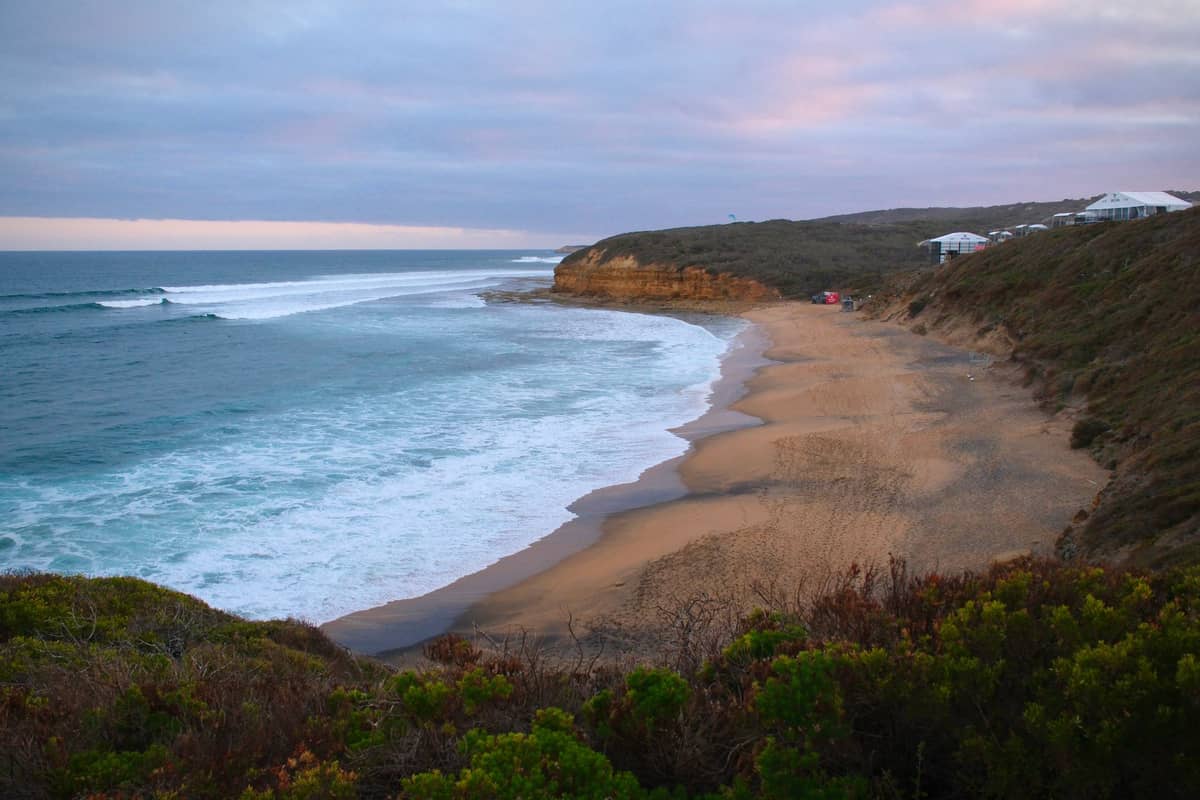
Bells Beach, also known by its Wadawurrung name Djarrak, is not a typical beach you spread a towel on. There is no sandy foreshore accessible at most tides. Instead, the reserve is defined by towering sandstone cliffs that drop dramatically to a powerful left-hand point break far below. The ocean appears from the clifftop as something between spectacle and force of nature: deep swells rolling in from the Southern Ocean, hitting the rock shelf, and peeling across the bay in long, grinding waves that can reach well over three metres during winter swells.
The 48-hectare Bells Beach Surfing Recreational Reserve was declared the world's first surfing reserve in 1971, a designation that recognized not just the quality of the wave but the cultural weight this place had already accumulated within Australian surfing. That status carries practical meaning: the reserve is managed specifically to protect both the coastal environment and its character as a surf break. It is managed by the Great Ocean Road Coast and Parks Authority, with coastal management responsibilities also involving other agencies.
ℹ️ Good to know
No general admission fee applies at Bells Beach Surfing Recreational Reserve. The car park and cliff-top viewing areas are open to visitors without charge. There are no posted opening or closing hours for the reserve itself.
The Clifftop Experience: What You Actually See
Most visitors experience Bells Beach entirely from above. The main viewing area sits at the top of the cliff, accessed from the car park via a short, well-worn path. From here, the bowl of the bay opens below you: a sweeping arc of dark cliff face, the grey-green churn of the Southern Ocean, and the distinct white lines of incoming swell. When surf is running, this vantage point is genuinely absorbing. You can track a set for several seconds as it builds, picks up the reef shelf, and breaks — watching surfers negotiate it from above gives a sense of scale that is hard to get at beach level.
The cliffs themselves are layered sandstone, eroded into irregular shelves and overhangs, their faces stained rust and ochre where minerals have leached through. At low tide, rocky platforms are exposed at the base, though accessing the water from the cliff is not a casual undertaking and requires care. On flat, windless days when the surf is small, the beach feel is tranquil rather than dramatic — the reserve is still worth the trip for the geological landscape and the coastal heathland, but manage expectations accordingly.
The air carries a consistent mineral saltiness even on calm days, and in winter when large Southern Ocean swells push through, the sound of the break is audible from the car park, a low rhythmic crash that builds before you even reach the cliff edge.
Tickets & tours
Live prices and dates from our booking partner. If you book, we may earn a commission at no extra cost to you.
Great Ocean Road reverse itinerary tour from Melbourne
From 77 €Instant confirmationFree cancellationGreat Ocean Road bus tour with a forest walk
From 90 €Instant confirmationFree cancellationYarra Valley Bus Wine Tour including lunch with a glass of wine and chocolate
From 107 €Instant confirmationFree cancellationHidden bars of Melbourne guided tour
From 115 €Instant confirmationFree cancellation
Time of Day and Seasonal Differences
Early morning visits have a particular quality. Surfers who have made the drive from Torquay or beyond are already in the water before 7 a.m. on good days, and the light from the northeast catches the cliff faces and the back of the waves in a way that makes photography much more rewarding than midday. The car park is typically quiet, the heathland behind the cliffs smells of coastal scrub and dew, and there is a sense of the place belonging to people who came specifically for the surf rather than the Instagram moment.
Midday in summer brings more visitors, families, and people working through a Great Ocean Road road trip, which is worth acknowledging. The experience at that hour is less atmospheric but still worthwhile — the cliff views do not diminish with the crowd, and the reserve is large enough that you can walk along the clifftop in either direction and find quieter stretches. Parking fills quickly on weekends between November and April.
Winter, specifically June through August, is when Bells is at its surfing peak. Southern Ocean groundswells arrive with regularity, and the waves during this period can reach heights that render the clifftop viewing genuinely thrilling. The weather is cool and often overcast, temperatures hovering between 7 and 14 degrees Celsius, and a waterproof layer is essential. Wind is the main variable: offshore winds (blowing from the land out to sea) produce cleaner, more defined waves and better viewing conditions. Onshore winds make the water messy and the clifftop experience raw in a less enjoyable way.
💡 Local tip
For the best photography: arrive before 9 a.m. in summer, when the angle of light is favorable and the surf zone is already active. Bring a zoom lens or a telephoto setting — the cliff-to-water distance is significant, and surfers in the lineup appear small from the main viewing area.
Cultural and Historical Context
The Wadawurrung people are the Traditional Custodians of this coastal country, and the name Djarrak reflects a connection to this land that predates European settlement by tens of thousands of years. Visitors should be aware that the landscape they are walking through carries Indigenous cultural significance, not just surfing mythology.
Within Australian surf culture, however, Bells Beach occupies a specific position. The Rip Curl Pro, held here since 1961, is the longest-running professional surfing event in the world. It is part of the World Surf League Championship Tour, meaning when the swell cooperates, the best surfers on the planet compete in this water. The event typically takes place in late March or April and runs across multiple days, with competition held when the surf conditions meet professional standards. The event has held a broader place in popular culture since featuring in the 1991 film Point Break, a scene that has outlasted the film itself in recognition.
Bells Beach sits near the beginning of the Great Ocean Road, one of Australia's most celebrated coastal drives. Torquay, the nearest town, is home to the Australian National Surfing Museum. Visiting both on the same trip makes geographic and thematic sense.
Getting There and Getting Around the Reserve
Bells Beach is approximately 100 kilometres southwest of Melbourne's CBD. By car, the standard route is via the Princes Freeway to Geelong, then through Torquay and onto Bells Boulevard, following reserve signage. The drive takes roughly 90 minutes from central Melbourne under normal conditions, though traffic on summer weekends and public holidays will add time.
There is no direct public transport connection from Melbourne to Bells Beach. Visitors without a car can take a V/Line train to Geelong and then arrange a taxi or rideshare for the remaining distance, but this is not a convenient option. The reserve is effectively a car-dependent destination, which is worth factoring in if you are planning a broader day trip.
The Surf Coast Walk passes through the Bells Beach reserve and connects it to Torquay to the north and Point Addis to the south. It is a multi-day walk in its entirety, but individual sections are walkable as day hikes. This is a worthwhile consideration if you want more than a 30-minute clifftop stop. For context on how Bells Beach fits into a wider coastal itinerary, see the Great Ocean Road day trip guide for route and timing advice.
⚠️ What to skip
The cliff edges at Bells Beach are unfenced in many sections. The sandstone is unstable and can crumble without warning. Keep a safe distance from the edge, particularly after rain, and do not attempt to descend to the beach via unofficial paths down the cliff face.
Practical Notes and Who Should Reconsider Visiting
Facilities at Bells Beach are minimal outside of Rip Curl Pro event days. There is a car park and basic toilet facilities, but no cafe, no hire shop, and no food vendors during ordinary visits. Bring water and any food you need. The nearest services are back in Torquay.
On event days during the Rip Curl Pro, facilities expand significantly: accessible parking, accessible toilets, a viewing platform, and a shuttle service are listed by the event organizers. Prices and provisions should be confirmed against the current event year's information before travelling.
Accessibility at Bells Beach is limited in ordinary circumstances. The path from the car park to the main viewing area involves uneven terrain and a moderate gradient. People with mobility limitations should confirm current on-site conditions before visiting. For comparison, the more developed beachfronts at St Kilda Beach closer to Melbourne offer flatter access and significantly more infrastructure.
Visitors who come expecting a beach day will be disappointed. There is no easy beach access, no swimming area, and no surf school here. Bells Beach is a place to watch surfing and absorb coastal landscape, not to swim or sunbathe. If you are travelling with young children expecting beach activities, plan for that mismatch in advance.
If your main goal is a beautiful stretch of Victorian coastline you can actually walk on at beach level, the broader region offers alternatives. The best beaches near Melbourne guide covers options that balance accessibility with scenic quality across a range of distances from the city.
Combining Bells Beach With a Broader Itinerary
Bells Beach works best as part of a day trip rather than a standalone destination. Pairing it with the drive along the Great Ocean Road toward the Twelve Apostles and Loch Ard Gorge makes geographic sense — you are already heading west from Melbourne and the reserve is a logical first stop before continuing the coastal route. Allow time for Torquay itself, which has a surf culture and retail strip worth an hour of your time.
For those planning a full regional itinerary, the day trips from Melbourne guide covers how to structure a Surf Coast excursion alongside other options like the Yarra Valley and Mornington Peninsula, which helps when weighing competing priorities across limited days.
Insider Tips
- Arrive before 8 a.m. on weekdays during winter swell season if you want the car park to yourself and the best chance of watching serious surfers in the water without crowds at the clifftop.
- Check a surf forecast app (Swellnet and Surfline both cover Bells Beach) before making the drive. On flat days with no swell, the cliffs are still scenic but the reason most people come — the wave — simply will not be there.
- The Rip Curl Pro event schedule is determined by swell conditions on a waiting period basis, not a fixed daily programme. If you are attending, confirm the competition is running that day before driving out — the event can sit in a hold period for days.
- Walk south along the cliff from the main viewing area rather than stopping only at the car park lookout. Within five minutes you reach a secondary vantage point with a broader angle across the bay and fewer people.
- Phone reception at the reserve is inconsistent depending on your carrier. Download offline maps before leaving Torquay if you plan to walk any section of the Surf Coast Walk from here.
Who Is Bells Beach For?
- Surf culture enthusiasts wanting to see a legendary professional competition wave in person
- Photographers seeking dramatic coastal geology and action shots of surfers from above
- Great Ocean Road day-trippers looking for a meaningful first stop before heading southwest
- Hikers tackling sections of the Surf Coast Walk between Torquay and Point Addis
- Travellers interested in Australian coastal history and Indigenous place names
Nearby Attractions
Combine your visit with:
- 1000 Steps Kokoda Track Memorial Walk
The Kokoda Track Memorial Walk, known locally as the 1000 Steps, climbs through fern-filled forest in the Dandenong Ranges east of Melbourne. Free to visit and reached by train, it combines a genuine physical workout with quiet moments of WWII commemoration.
- Albert Park Lake
Albert Park Lake is a vast freshwater reserve just minutes from Melbourne's CBD, offering a 4.7km walking and cycling path around calm water, sports ovals, and open parkland. Free to enter and accessible by tram, it rewards early morning walkers, cycling families, and anyone wanting to understand how Melbourne uses its open spaces.
- Brighton Beach Bathing Boxes
Lined up along Dendy Street Beach in Brighton, Melbourne's 96 privately owned bathing boxes are one of Victoria's most recognisable sights. Free to view from the public beach, they reward visitors who time their arrival with the morning light or an empty tide. Here is what you actually need to know before making the trip.
- Dandenong Ranges
The Dandenong Ranges rise about 40 kilometres east of Melbourne, offering a dramatically different landscape from the city below. Tall mountain ash forests, a celebrated botanic garden, and the Puffing Billy Railway make this one of Victoria's most rewarding day trips. A half-day is possible, but a full day suits the area much better.
Planning a trip? Discover personalized activities with the Nomado app.