1000 Steps Kokoda Track Memorial Walk: What to Know Before You Go
The Kokoda Track Memorial Walk, known locally as the 1000 Steps, climbs through fern-filled forest in the Dandenong Ranges east of Melbourne. Free to visit and reached by train, it combines a genuine physical workout with quiet moments of WWII commemoration.
Quick Facts
- Location
- Ferntree Gully Picnic Ground, Upper Ferntree Gully, Dandenong Ranges, Victoria
- Getting There
- Upper Ferntree Gully station (Belgrave line), then approx. 1,200 m walk to the bottom of the steps
- Time Needed
- 1.5 to 3 hours depending on pace and stops
- Cost
- Free entry
- Best for
- Fitness walkers, history enthusiasts, nature seekers wanting day trips from Melbourne
What Is the Kokoda Track Memorial Walk?
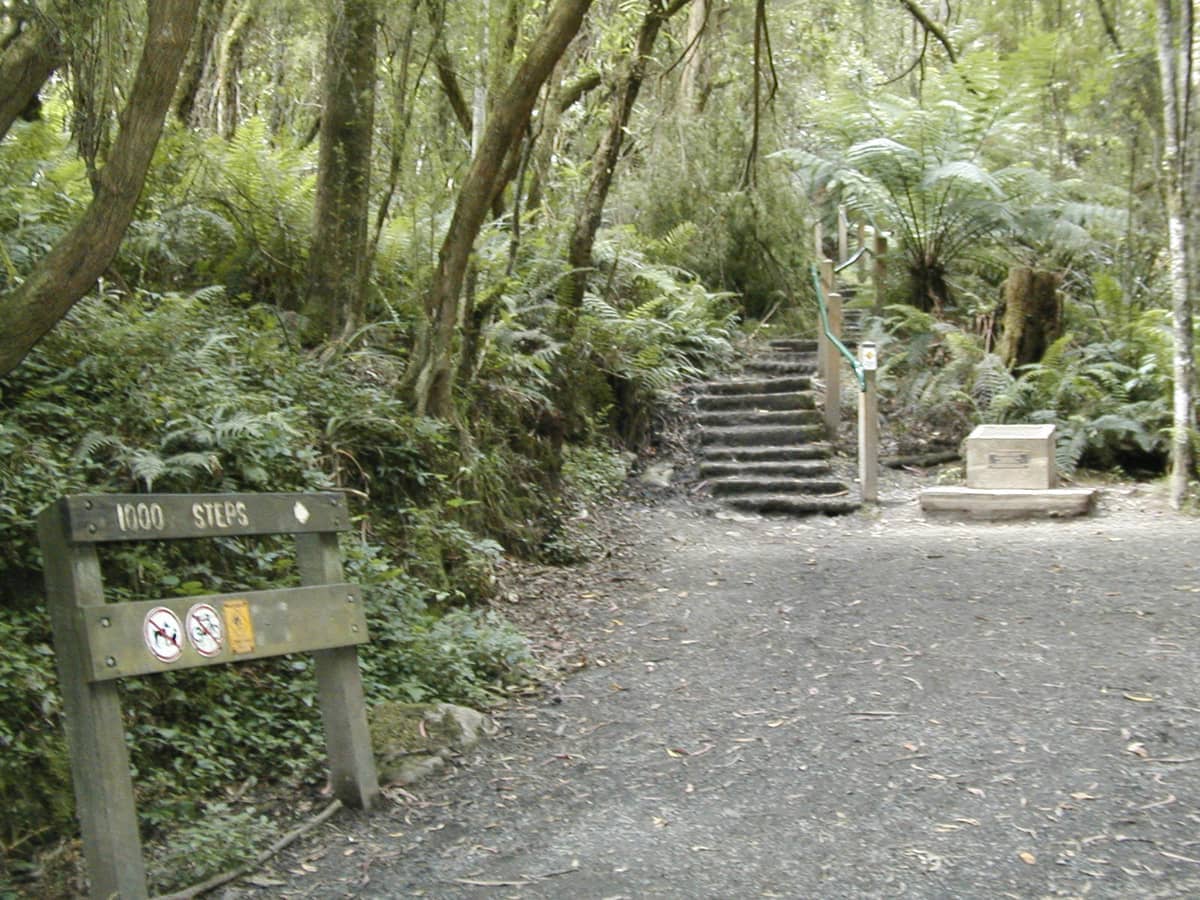
The Kokoda Track Memorial Walk, managed by Parks Victoria and widely known as the 1000 Steps, is a steep bushwalk set within the Dandenong Ranges National Park, roughly 35 kilometres east of central Melbourne. The path climbs through lush rainforest along a creek from the Ferntree Gully Picnic Ground, reaching a clearing with views through the trees. At its heart, it is two things at once: a challenging physical trail and a place of solemn remembrance for Australian forces who fought on the Kokoda Track in Papua New Guinea during World War II.
The walk sits within one of the most accessible pockets of tall-forest bushland near a major Australian city. For visitors combining a day in nature with a broader Melbourne trip, the Dandenong Ranges offer a genuinely different landscape from the flat urban grid. If you are planning a wider day out of the city, the nearby Dandenong Ranges have further trails, gardens, and villages worth exploring in the same direction.
ℹ️ Good to know
Parks Victoria occasionally restricts access due to fire danger ratings or track conditions. Check the Parks Victoria website for current alerts before making the trip, especially in summer.
The History Behind the Steps
The steps themselves predate the memorial by decades. The track was established in the early twentieth century as a recreational route through the ranges, and concrete steps were installed in 1950 to formalise the ascent. The site took on its commemorative dimension in 1998, when Kokoda campaign veterans adopted the park as a war memorial site.
Along the route, fourteen plaques are dedicated to Australian Military Forces who fought and died on Kokoda. That campaign saw Australian forces, many of them young militia soldiers with limited training, hold and eventually repel a Japanese advance through the Owen Stanley Range across one of the most hostile terrains imaginable. Walking the steps, particularly in high humidity and summer heat, gives a faint physical echo of what those conditions demanded. The plaques do not shout for attention; they sit quietly against the tree ferns, and most visitors slow down to read them.
The naming connection to the original Kokoda Track in Papua New Guinea is intentional and taken seriously. This is not a novelty route named for dramatic effect. Veterans and their families visit regularly, and the atmosphere near the plaques tends to be respectful without being reverential to the point of solemnity.
Tickets & tours
Live prices and dates from our booking partner. If you book, we may earn a commission at no extra cost to you.
Melbourne Flexi Attractions Pass
From 103 €Instant confirmationMelbourne Flexi Attractions Pass
From 137 €Instant confirmationMelbourne Flexi Attractions Pass
From 75 €Instant confirmationMelbourne Unlimited Attractions Pass
From 0 €Instant confirmation
What the Walk Actually Feels Like
From the Ferntree Gully Picnic Ground, the lower section of the track begins among picnic shelters and the sounds of birds, with crimson rosellas and sulphur-crested cockatoos audible most mornings. The air smells of eucalyptus and damp earth, and in cooler months, a low mist sits in the gully that does not lift until mid-morning.
The steps begin in earnest within the first few minutes, and there is no flat section to ease you in. The incline is consistent and genuinely demanding. By the halfway point, most walkers feel it in their legs and lungs. The tree canopy provides shade, which makes a significant difference in warmer weather, but the climb itself is the challenge regardless of season. Plan for about 45 minutes to an hour on the way up at a moderate pace.
Near the top, the forest opens slightly and views through the trees reward the effort. The descent via the adjacent Lyrebird Track is faster but harder on the knees, so walking poles are genuinely useful here, not just performative gear. The full out-and-back typically takes between 90 minutes and 3 hours depending on fitness, how long you spend reading the plaques, and whether you linger at the top.
💡 Local tip
Wear proper closed-toe shoes with grip. Thongs, sandals, or fashion trainers with flat soles make the descent genuinely risky on damp or leaf-covered steps.
When to Go and What to Expect at Different Times
Weekday mornings before 9 a.m. are the quietest window. The regular walkers, mostly local fitness regulars, arrive early and clear the track by mid-morning. On weekend mornings, particularly between 8 a.m. and 11 a.m. the lower sections can feel crowded near the base, with a steady stream of visitors moving both up and down simultaneously. The steps are wide enough in most places to pass without issue, but the narrower sections require a little patience.
Autumn and spring offer the most comfortable conditions. Autumn brings cooler air and fallen leaves that muffle footsteps, giving the walk a contemplative quality. Spring sees the ferns at their most lush, with new fronds unfurling at eye level. Summer visits are possible but the combination of humidity and direct effort means you will sweat heavily; bring significantly more water than you think you need. Winter is mild at this elevation but the steps can be slippery after rain, which happens throughout the year without a clear dry season.
If you are thinking about the broader question of timing your Melbourne visit around outdoor activities, the best time to visit Melbourne guide covers seasonal conditions across the region in more detail.
Getting There Without a Car
The Kokoda Track Memorial Walk is one of the more accessible natural attractions near Melbourne for visitors relying on public transport. Trains on the Belgrave line run from Flinders Street Station to Upper Ferntree Gully, and from the station it is approximately a 1,200 metre walk to the lower entrance at Ferntree Gully Picnic Ground. The station-to-trail approach is approximately 1,200 metres.
The Belgrave line train journey from central Melbourne takes roughly 45 to 55 minutes. A myki card or mobile myki is required for the journey; check current Public Transport Victoria ticketing options before boarding. For a full overview of how the train and tram network operates, see the getting around Melbourne guide.
Driving is also straightforward: the Ferntree Gully Picnic Ground has a car park, but it fills early on weekend mornings. Arriving before 8 a.m. on weekends will generally secure a space. Note that dogs are not permitted on the trail; assistance dogs are welcome subject to Parks Victoria entry requirements.
Accessibility and Who Might Want to Skip This One
The route is not suitable for wheelchairs or prams. The steps are steep, uneven in places, and the surface changes from concrete to compacted earth and root. Anyone with significant knee or hip problems should approach the descent with caution, or consider turning back before the top if the climb already caused discomfort.
For travellers with very limited time in Melbourne, this walk requires at least half a day once you factor in the train journey each way. It is a meaningful experience, but it is not something you slot between two city-centre activities. If your interest is primarily in the wartime history rather than the physical challenge, the
If your interest is primarily in WWII history and you prefer a city-based experience, the Immigration Museum in central Melbourne covers Australian identity and history in an accessible format. For those who want a day in nature without the steep climb, the Royal Botanic Gardens Victoria offer a very different but rewarding alternative.
Photography and Practical Notes
The forest light is best in the first two hours after sunrise, when shafts of light cut through the mountain ash canopy at low angles. The fern gullies photograph particularly well in soft overcast light, which diffuses contrast and brings out the green depth of the understorey. A wide-angle lens or phone with a good wide mode captures the scale of the trees better than a telephoto.
When photographing the memorial plaques, take your time. They are set against textured bark and stone, and the lettering is often partially shadowed. A small reflector or fill flash can help in deeply shaded sections. The plaques are part of an active memorial site, so photograph them with appropriate restraint.
For those interested in combining this with other nature experiences around Melbourne, the Puffing Billy steam railway at Belgrave departs not far from Upper Ferntree Gully and makes a logical pairing. See the Puffing Billy Railway page for details on combining both in a single day trip.
Insider Tips
- Arrive at the car park before 8 a.m. on weekends. By 9:30 a.m. it is often full, and latecomers park far down Mount Dandenong Tourist Road and add significant distance to the approach.
- Carry more water than the distance suggests. The combination of sustained uphill effort and forest humidity means most people underestimate how much they drink.
- The descent is harder on the body than the ascent for most walkers. Trekking poles make a real difference coming down, particularly on wet or leaf-covered sections.
- Read every plaque on the way up rather than rushing past. The cumulative effect of name after name builds into something genuinely moving, and the uphill pace forces you to slow down anyway.
- If you are catching the train, check the Belgrave line timetable before leaving your accommodation. Services run less frequently than inner-city lines, and missing a train can add 30 to 40 minutes of waiting time to your return.
Who Is 1000 Steps Kokoda Track Memorial Walk For?
- Fitness walkers and runners looking for a challenging hill session outside the city
- History-minded travellers interested in Australian WWII commemoration
- Nature lovers who want tall forest and tree ferns without a multi-day commitment
- Day-trippers combining the walk with the Puffing Billy Railway or other Dandenong Ranges attractions
- Visitors wanting a meaningful free experience that requires no bookings
Nearby Attractions
Combine your visit with:
- Albert Park Lake
Albert Park Lake is a vast freshwater reserve just minutes from Melbourne's CBD, offering a 4.7km walking and cycling path around calm water, sports ovals, and open parkland. Free to enter and accessible by tram, it rewards early morning walkers, cycling families, and anyone wanting to understand how Melbourne uses its open spaces.
- Bells Beach
Bells Beach, in Wadawurrung country and also known by its Traditional Owner name Djarrak, is a 48-hectare coastal reserve near Torquay that holds the distinction of being the world's first declared surfing reserve. With its sheer sandstone cliffs, deep bowl-shaped break, and annual Rip Curl Pro competition, it draws surfers and non-surfers alike for one of Victoria's most dramatic coastal experiences.
- Brighton Beach Bathing Boxes
Lined up along Dendy Street Beach in Brighton, Melbourne's 96 privately owned bathing boxes are one of Victoria's most recognisable sights. Free to view from the public beach, they reward visitors who time their arrival with the morning light or an empty tide. Here is what you actually need to know before making the trip.
- Dandenong Ranges
The Dandenong Ranges rise about 40 kilometres east of Melbourne, offering a dramatically different landscape from the city below. Tall mountain ash forests, a celebrated botanic garden, and the Puffing Billy Railway make this one of Victoria's most rewarding day trips. A half-day is possible, but a full day suits the area much better.
Planning a trip? Discover personalized activities with the Nomado app.