Yarra Bend Park: Melbourne's Wild Bushland Retreat
Just four kilometres from the CBD, Yarra Bend Park delivers 260 hectares of river gorges, forested trails, and genuine urban wilderness. It is one of the few places in Melbourne where you can lose sight of city skylines entirely, and it rewards visitors who take time to explore beyond the boathouse.
Quick Facts
- Location
- Yarra Bend Road, Fairfield VIC 3078 / Boathouse Road, Kew VIC 3101
- Getting There
- Buses 200, 202 or 207 to Yarra Bend Park/Studley Park Road stop; approx. 5-min walk to Studley Park Boathouse
- Time Needed
- 2–4 hours for a thorough visit; half a day if combining trails and boathouse
- Cost
- Free general entry; individual activity or facility charges may apply
- Best for
- Walkers, cyclists, wildlife watchers, families, and anyone needing distance from the city without leaving it
- Official website
- www.parks.vic.gov.au/places-to-see/parks/yarra-bend-park
What Yarra Bend Park Actually Is
Yarra Bend Park is a 260-hectare bushland reserve on Wurundjeri Country, curling along the Yarra River through the inner suburbs of Fairfield, Kew and Alphington. Yarra Bend Park and neighbouring Studley Park were reserved in 1877 and combined with several reserves in 1929, and the park is managed by Parks Victoria and ranks among the largest tracts of near-natural bushland remaining in inner Melbourne.
The landscape is defined by river bends, steep vegetated banks, open grasslands and pockets of eucalyptus woodland. Unlike formal botanical gardens or manicured parks, Yarra Bend looks and sounds more like country Victoria than a city park. On weekday mornings, the only audible competition to birdsong is the occasional rowing crew on the water below.
ℹ️ Good to know
No park-wide opening hours are specified by Parks Victoria. General access is available throughout the day, but check for any restrictions on specific facilities or tracks before visiting, particularly after heavy rain when riverside trails can become slippery or partially closed.
The Landscape: What You See When You Get There
The park's most dramatic feature is the Yarra River itself, which carves a deep curve through the reserve. From the higher ridge trails, you look down onto the river through a canopy of river red gums and box trees. The water colour changes with seasonal rainfall, running clear and low in late summer and running brown after heavy rain. The sound of the current is always present on the lower paths.
Dights Falls sits near the park's western edge on the Yarra River. The weir here was constructed in the 1840s, making it one of Melbourne's oldest built water structures. At normal flow levels, the falls produce a steady roar audible from well up the bank. In very dry periods the flow drops considerably, but the curved weir remains a compelling piece of early colonial infrastructure, often photographed from both banks.
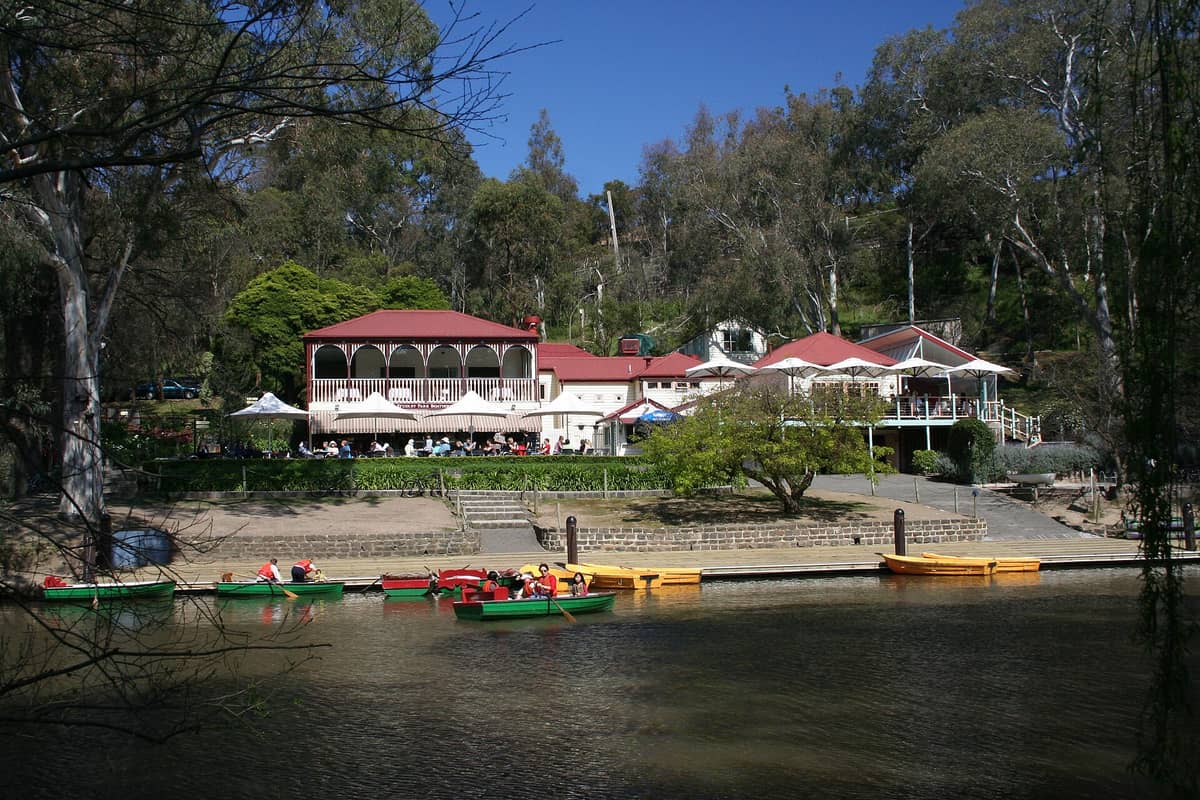
Studley Park Boathouse, a heritage-listed Victorian structure on the river's edge, serves as the park's most recognizable landmark. It offers rowing boat and canoe hire, and its riverside cafe provides a practical rest point mid-walk. For anyone planning a longer day in the area, it makes sense to factor this in alongside a visit to the Yarra River corridor that connects the park downstream toward the city.
Tickets & tours
Live prices and dates from our booking partner. If you book, we may earn a commission at no extra cost to you.
Yarra Valley Bus Wine Tour including lunch with a glass of wine and chocolate
From 107 €Instant confirmationFree cancellationYarra Valley Gourmet full-day tour
From 113 €Instant confirmationFree cancellationGreat Ocean Road reverse itinerary tour from Melbourne
From 77 €Instant confirmationFree cancellationGreat Ocean Road bus tour with a forest walk
From 90 €Instant confirmationFree cancellation
How the Park Changes Through the Day
Early mornings, particularly between dawn and 9am, are when Yarra Bend is at its most atmospheric. The light filters low through the eucalypts at a flat angle, casting long shadows across the grass clearings. The resident colony of Grey-headed Flying Foxes is typically returning from a night of foraging during these hours, and watching them return to the trees is remarkable, and free.
By mid-morning on weekends, the trails along the river attract significant numbers of cyclists and joggers. The main shared paths can feel narrow when traffic is heavy in both directions. If you prefer solitude, the steeper trails away from the river banks are almost always quieter, regardless of the time.
Late afternoon in autumn brings a particular quality of golden light onto the open grassland sections. The bats begin to emerge from the canopy around dusk, pouring out into the sky in loose waves. Watching the colony depart is one of the genuinely unusual free experiences available anywhere near Melbourne's inner suburbs. Bring a layer: temperature drops quickly once the sun clears the ridge line.
💡 Local tip
The flying fox colony is best observed from the viewing platform at Bellbird Picnic Area or from Yarra Boulevard. The smell in the immediate vicinity of the roost is pungent; this is worth knowing before you choose your picnic spot.
Walking the Trails: A Practical Walkthrough
The park contains a network of tracks ranging from flat riverside paths suitable for prams and casual walkers to steeper bush tracks with uneven surfaces. No single circuit covers everything, so most visitors self-select a route based on how far they want to walk and how much elevation they are comfortable with.
Parks Victoria’s visitor guide describes the Dights Falls Trail as a 3.2 km, roughly one-hour return walk, beginning on the north side of Kane’s Bridge.
Cyclists use the shared paths through the park as part of longer inner-suburb loops. If you are walking, stay to one side on the main river trail and listen for approaching bikes. The narrower bush tracks are generally quieter for those wanting a less busy walk.
- Wear closed-toe shoes with grip; the riverside tracks have exposed roots and loose stone
- Carry water, particularly in summer when temperatures can exceed 30°C and shade is incomplete on ridge sections
- Download an offline map before entering; mobile coverage is unreliable in the deeper gully sections
- Assistance dogs are welcome throughout Parks Victoria's parks and reserves; check individual trail access for specific needs
- After rain, lower riverside tracks near Dights Falls can flood or become very muddy; allow extra time or reroute via the upper paths
Getting There Without a Car
Parks Victoria lists bus routes 200, 202, and 207 as serving a stop at Yarra Bend Park/Studley Park Road, from which Studley Park Boathouse is approximately a five-minute walk. For updated timetables and connections, use the Public Transport Victoria trip planner before you travel, as services and frequencies can vary.
The park is also accessible by bicycle from the inner suburbs via the Yarra Trail, which connects the reserve to the broader cycling network. From Fitzroy or Collingwood, the ride into the park takes around fifteen to twenty minutes along mostly dedicated paths, making it an appealing way to arrive while avoiding parking concerns on weekends.
Parking is available at several access points, including near Studley Park Boathouse and off Yarra Bend Road in Fairfield, but spaces fill quickly on weekend mornings, particularly in spring and autumn when conditions are at their most pleasant. Plan to arrive before 9am if driving.
History and Cultural Context
Yarra Bend Park sits on Wurundjeri Country. The Wurundjeri Woi-wurrung people have deep and ongoing connections to this section of the Yarra River, which holds significant cultural importance. The river itself, known as Birrarung in the Woiwurrung language, was central to the life and movement of the Kulin peoples long before European settlement.
The area's colonial history is layered and not uniformly cheerful. Yarra Bend was the site of the Yarra Bend Asylum, one of Victoria's earliest psychiatric institutions, which operated from 1845 until 1925. The main asylum buildings are gone, but the history gives the reserve a depth that extends well beyond recreational greenery. For visitors interested in exploring Melbourne's layered past in civic institutions, the Immigration Museum in the CBD offers a complementary perspective on the colonial period.
Yarra Bend Park and Studley Park were reserved in 1877 and combined with several reserves in 1929, and the park has been protected as public open space for nearly 150 years. That longevity shows: the tree canopy in the older sections has significant age and scale, particularly along the river terraces where old-growth river red gums have hollows used by native parrots and possums.
Wildlife: What to Realistically Expect
The Grey-headed Flying Fox colony is the park's most unusual wildlife feature. At peak periods the colony can contain thousands of individuals, creating a sound, smell and spectacle unlike anything in a typical city park. The colony size fluctuates seasonally and can shift location within the park.
Beyond the bats, the park supports a reasonable diversity of bird species: Eastern Rosellas, Sulphur-crested Cockatoos, Kookaburras, and various waterbirds along the river. Platypus have been recorded in the Yarra within this stretch of river, though sightings are uncommon and require patience, low movement, and early morning timing. The Birrarung Marr parklands closer to the CBD offer a contrasting riverside experience if you want greener lawns alongside your birdwatching.
Short-beaked Echidnas occasionally appear on the grassy slopes, particularly in the quieter sections away from main paths. These sightings are genuinely unusual and worth stopping for; echidnas are slow-moving but will dig down rapidly if they feel threatened, so keep distance and avoid casting a shadow over them.
⚠️ What to skip
Melbourne's weather is famously variable. Summer days can swing from pleasant to over 35°C rapidly. In high heat, exposed ridge sections of the trail become uncomfortable quickly. Check the Bureau of Meteorology forecast before a summer visit and consider rescheduling if a heatwave is forecast.
Who Should Think Twice Before Visiting
Yarra Bend Park is not a curated experience. There are no interpretive displays on most trails, no food vendors beyond the boathouse cafe, and no formal guided experiences included in the free entry. Visitors expecting signposted highlights, easy navigation or the compact convenience of a formal attraction may find the park underwhelming.
Travellers with limited mobility should check specific trail conditions with Parks Victoria or Yarra City Council before visiting, as terrain varies considerably across the reserve. The boathouse precinct and some other areas have more accessible surfaces than the ridge tracks. For an accessible Melbourne parks experience with better infrastructure, Royal Botanic Gardens Victoria provides sealed paths, clear signage, and extensive facilities.
Insider Tips
- The flying fox colony flies out at sunset. Position yourself at Bellbird Picnic Area or on Yarra Boulevard before sunset for a good view of the colony departing.
- Bus routes 200, 202 and 207 run from the city via Clifton Hill and take around twenty to thirty minutes depending on service. Google Maps does not always surface these routes accurately for Yarra Bend; use the PTV journey planner directly for correct stop information.
- The Studley Park Boathouse cafe is popular on weekend mornings. Arrive before 10am if you want to secure a riverside table without a long wait.
- The upper ridge trail between the boathouse and Fairfield side offers views down into the Yarra Gorge that most visitors miss entirely, as the majority stick to the lower riverside path. The surface is rougher but the added elevation changes the experience completely.
- Platypus sightings, while rare, are most likely in the early morning before 8am on calm days in the quieter river sections upstream from Dights Falls. Keep low, move slowly along the bank, and scan for the distinctive ripple pattern of a surfacing animal.
Who Is Yarra Bend Park For?
- Walkers and trail runners who want a genuine bushland loop within cycling or bus distance of the CBD
- Wildlife enthusiasts, particularly those interested in the flying fox colony or patient enough to watch for platypus
- Families with children old enough for moderate uneven terrain, especially those interested in the boathouse and river
- Cyclists using the Yarra Trail network and looking to extend a ride into proper bushland
- Visitors wanting a mental break from the city without committing to a full day trip
Nearby Attractions
Combine your visit with:
- 1000 Steps Kokoda Track Memorial Walk
The Kokoda Track Memorial Walk, known locally as the 1000 Steps, climbs through fern-filled forest in the Dandenong Ranges east of Melbourne. Free to visit and reached by train, it combines a genuine physical workout with quiet moments of WWII commemoration.
- Albert Park Lake
Albert Park Lake is a vast freshwater reserve just minutes from Melbourne's CBD, offering a 4.7km walking and cycling path around calm water, sports ovals, and open parkland. Free to enter and accessible by tram, it rewards early morning walkers, cycling families, and anyone wanting to understand how Melbourne uses its open spaces.
- Bells Beach
Bells Beach, in Wadawurrung country and also known by its Traditional Owner name Djarrak, is a 48-hectare coastal reserve near Torquay that holds the distinction of being the world's first declared surfing reserve. With its sheer sandstone cliffs, deep bowl-shaped break, and annual Rip Curl Pro competition, it draws surfers and non-surfers alike for one of Victoria's most dramatic coastal experiences.
- Brighton Beach Bathing Boxes
Lined up along Dendy Street Beach in Brighton, Melbourne's 96 privately owned bathing boxes are one of Victoria's most recognisable sights. Free to view from the public beach, they reward visitors who time their arrival with the morning light or an empty tide. Here is what you actually need to know before making the trip.
Planning a trip? Discover personalized activities with the Nomado app.