St Kilda sits about 6 km southeast of Melbourne's CBD on the shore of Port Phillip Bay, combining a working beach with heritage entertainment venues, a compact café and restaurant strip, and a nightlife scene that draws both locals and visitors. The suburb has a layered character: families on the sand in the morning, market browsers along the Esplanade by mid-morning, and a crowd that skews progressively older and louder as the evening moves toward midnight.
St Kilda is Melbourne's most recognizable bayside suburb: part beach town, part entertainment precinct, part lived-in neighborhood with decades of counterculture history. It rewards visitors who explore beyond the foreshore, but it's honest enough not to pretend the tourist activity stops when you turn your back.
Orientation
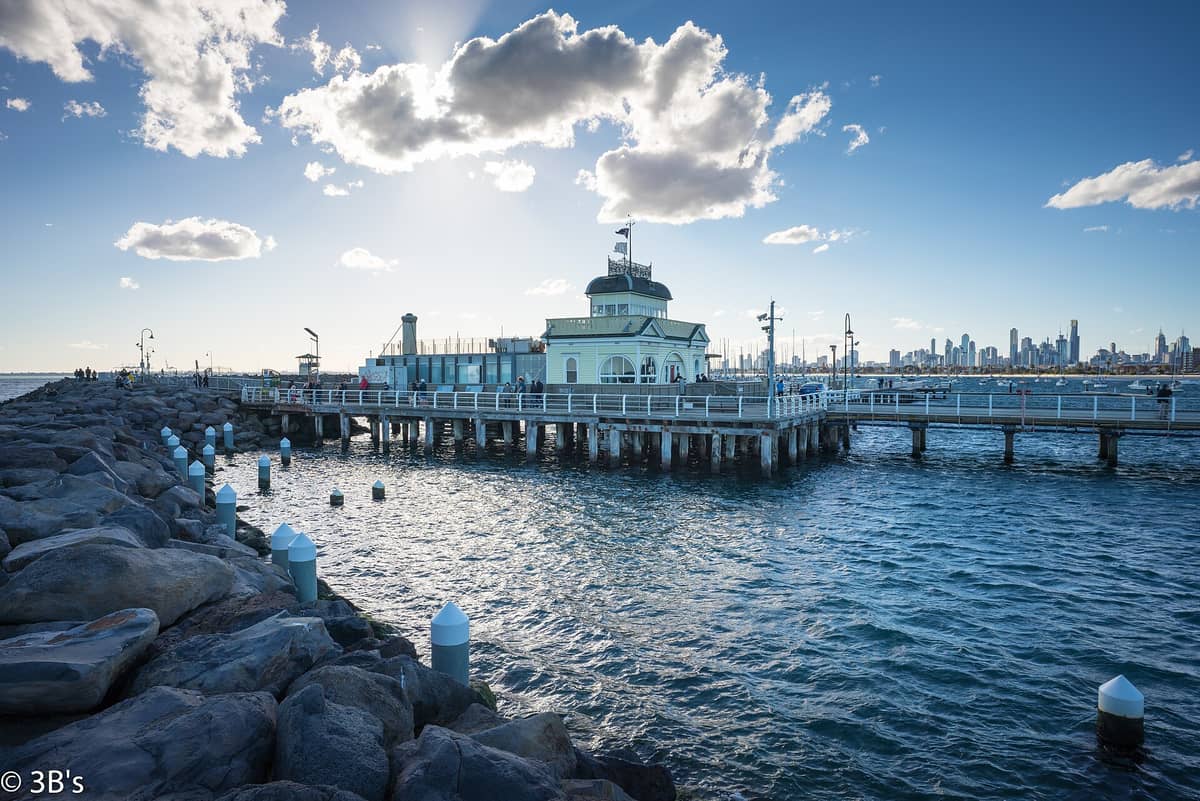
St Kilda sits in the City of Port Phillip, roughly 6 km southeast of Melbourne's central grid. The suburb is bounded by St Kilda Road to the north and west (the long boulevard that connects the CBD to the bay), Balaclava to the east, Elwood to the south, and the foreshore of Port Phillip Bay to the west. The foreshore itself runs continuously between Port Melbourne to the north and Elwood to the south, with St Kilda Pier marking the neighborhood's most prominent landmark on the water.
The spine of the suburb is Fitzroy Street, which runs from St Kilda Road down toward the beach, passing café terraces, restaurants, and a cluster of bars that become progressively livelier after dark. Acland Street, running roughly perpendicular and a few blocks inland from the water, is the other major commercial strip, known particularly for its European-style cake shops, delis, and weekend foot traffic. Together, these two streets define the visitor experience of St Kilda.
For context within Melbourne's wider inner south, St Kilda connects naturally to South Yarra and Prahran to the northeast, and is about 3 km from the edge of the Southbank arts precinct. If you're planning a broader Melbourne trip, understanding St Kilda's position on the bay helps: it is a destination suburb, not a through-route, so most people arrive deliberately rather than passing through.
Character & Atmosphere
St Kilda has been cycling through reinvention for over a century. The suburb was Melbourne's first seaside resort in the 1880s, then declined into something grittier through the mid-twentieth century, then was gradually gentrified without ever fully losing its edge. That layering is still visible today. Heritage-listed amusement parks sit next to wine bars. Art Deco apartment blocks overlook the same beach as chain cafés and gelato stands.
Early on a weekday morning, the foreshore is the domain of swimmers, cyclists, and dog walkers. The light over Port Phillip Bay at sunrise is genuinely good: the bay catches color early, and the pier stretches out into calm water before the wind picks up. The smell is salt and eucalyptus from the Morton Bay figs along the Esplanade. By mid-morning on weekends, the Sunday market draws a different crowd along the Upper Esplanade, and Acland Street fills up for brunch.
By mid-afternoon on a warm day, the beach is at capacity: families with umbrellas, teenagers in the shallows, people reading on the grass above the sand. This is when St Kilda feels most like a resort town. The Esplanade Hotel's outdoor area fills, and the café terraces on Fitzroy Street are fully occupied. After dark, the suburb shifts again. Fitzroy Street in particular becomes a nightlife corridor, with bars staying open late and the crowd becoming younger and louder. It's not a place for a quiet evening if you're near the main strips on a Friday or Saturday.
ℹ️ Good to know
St Kilda has a dual identity that surprises some visitors: it is simultaneously a local residential neighborhood with primary schools, supermarkets, and families, and a major tourist draw. The two coexist, but they occupy different parts of the day and different blocks.
What to See & Do
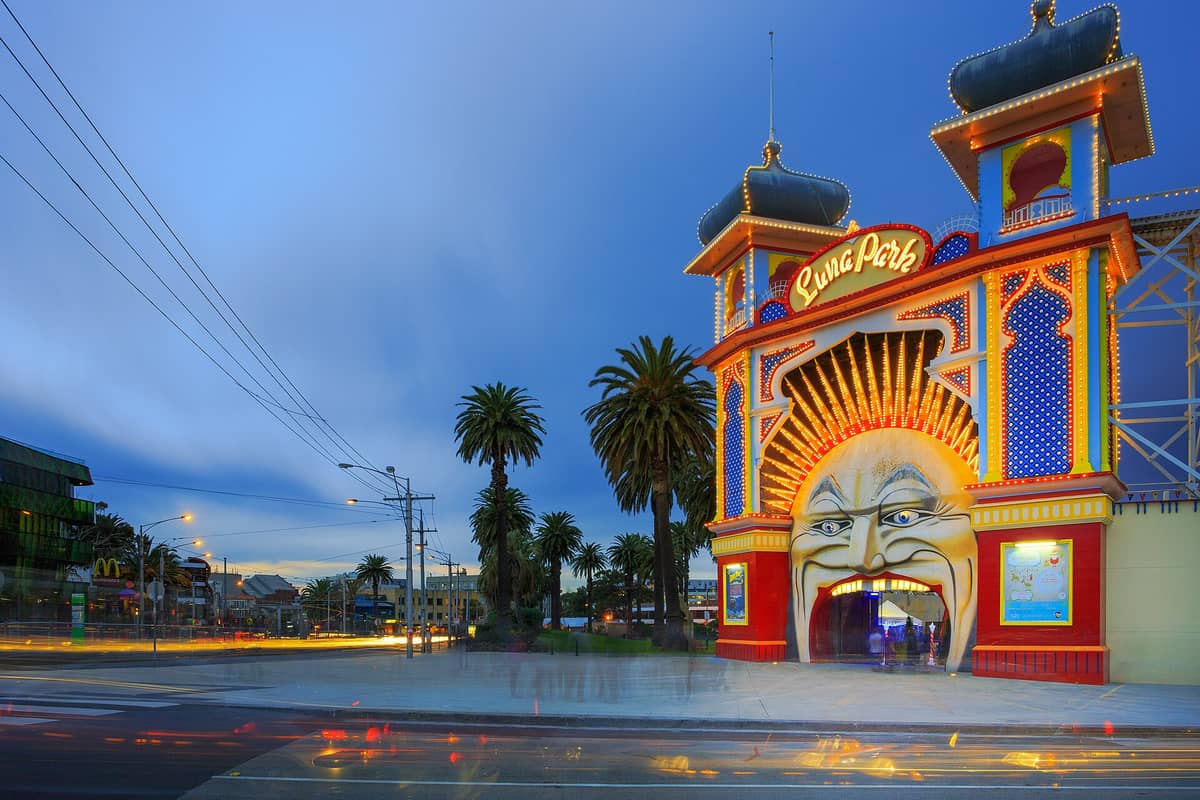
The most recognizable landmark is Luna Park, the heritage-listed amusement park on the lower end of the Esplanade whose grinning face entrance has been greeting visitors since 1912. It is a working amusement park with rides, and is particularly atmospheric at night when the lights are running. Entry to the grounds is free; rides are ticketed separately.
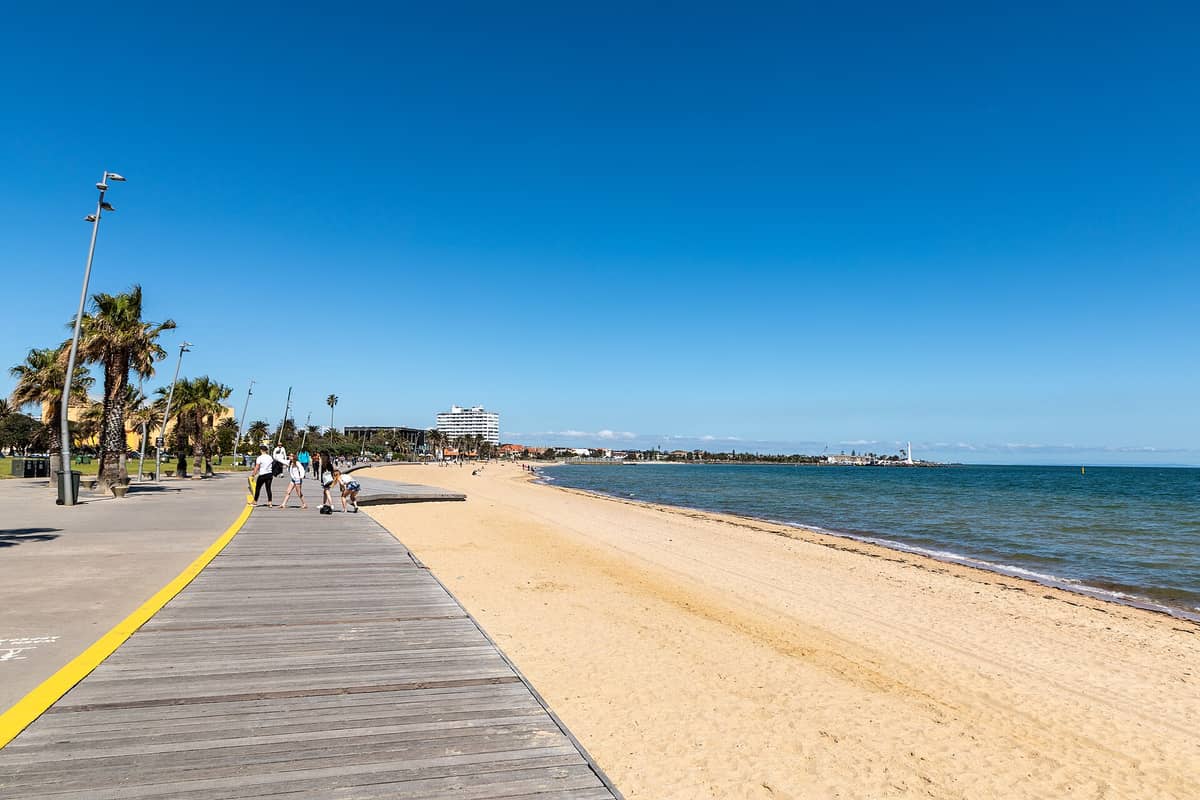
The St Kilda Beach itself is wide, sandy, and easily accessible from the tram terminus at the end of Acland Street. The beach is not the most dramatic in Victoria, it's a bay beach rather than an ocean beach, so waves are gentle, making it suitable for families and calm-water swimmers. The water is generally clear in good conditions, though the council advises checking for closures and swimming between the flags. Kite surfers, stand-up paddleboarders, and open-water swimmers all use the bay regularly.
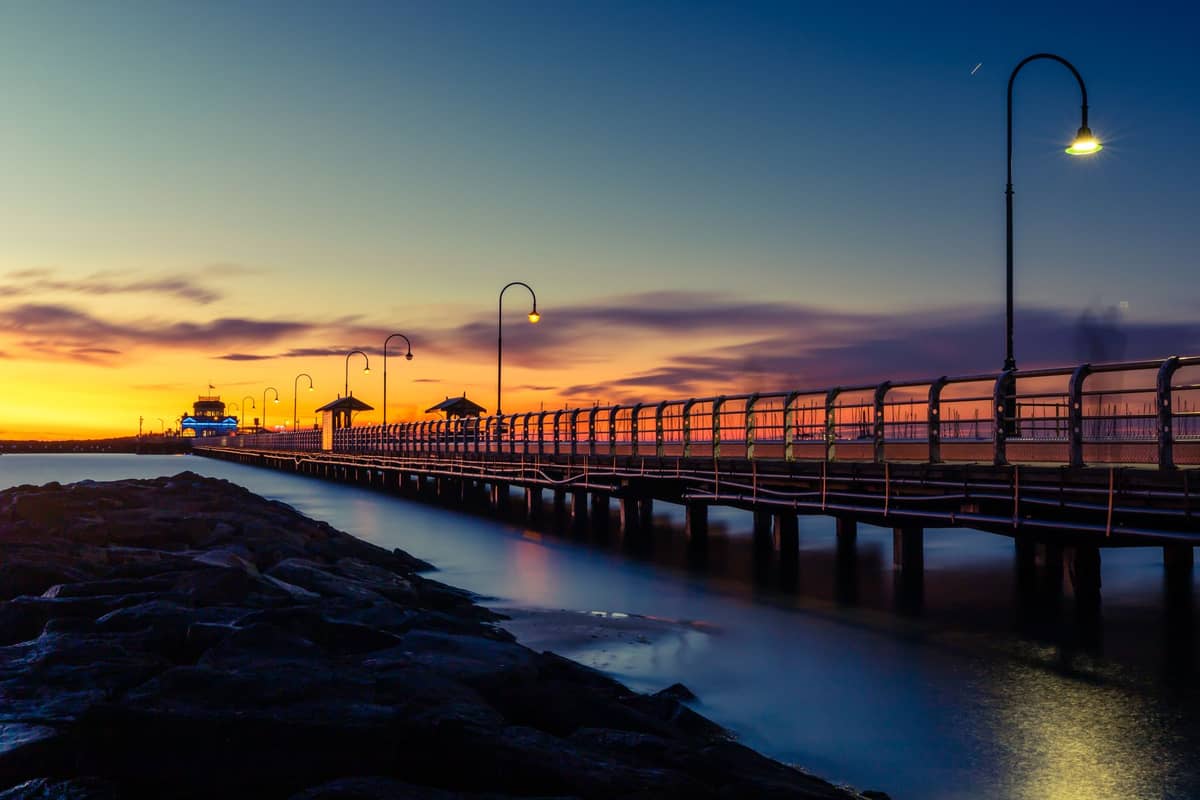
St Kilda Pier is worth the walk out: the breakwater at its end shelters a small colony of Little Penguins that return to nest each evening. The St Kilda Pier penguins are visible from the breakwater after sunset without the need to travel to Phillip Island, though viewing is at a respectful distance and subject to guidelines from Parks Victoria. Note that jumping or diving from the pier is prohibited.
The Palais Theatre: a heritage Art Deco concert venue on the foreshore that hosts major touring acts; check its calendar if you're visiting.
The Upper Esplanade Sunday Market: one of Melbourne's longer-running arts and craft markets, running along the strip above the beach.
The Botanical Gardens at St Kilda (small but pleasant, adjacent to the suburb) and Catani Gardens at the foreshore end of Fitzroy Street.
Watersports hire along the foreshore: kayaks, stand-up paddleboards, and bike hire are all available seasonally.
Street art: the suburb has a strong history of public murals and commissioned works, concentrated around the back streets near Grey Street and Blessington Street.
For a broader look at what Melbourne's beach neighborhoods offer, the best beaches near Melbourne guide puts St Kilda in context alongside Mornington Peninsula and other coastal options.
⚠️ What to skip
Alcohol is prohibited on the St Kilda foreshore from 1 November to 31 March under City of Port Phillip local laws. The ban applies from Langridge Street to Thackeray Street. This is actively enforced during summer. Plan accordingly if you're thinking about beach picnics with wine.
Eating & Drinking
St Kilda's food scene is genuinely strong, though it takes some navigation. The most photographed section of Acland Street, near the junction with Barkly Street, is famous for its cake shops: Viennese-style window displays full of Black Forest tortes, cream horns, and Jewish apple cakes reflect the suburb's mid-twentieth century Eastern European migrant history. These are worth visiting at least once for coffee and cake in the morning, though they operate in an increasingly tourist-facing context.
Fitzroy Street has a concentration of restaurants covering Italian, Japanese, Middle Eastern, and modern Australian food at a range of price points. Lunch on the terraces here in good weather is one of the better value experiences in Melbourne's inner south: you get bay breezes, long sightlines toward the water, and food that generally outperforms expectations given the foot traffic. The strip can be overpriced at dinner, particularly for wine, so check menus before sitting down.
For coffee, St Kilda is part of Melbourne's broader specialty café culture. The suburb has several well-regarded independent cafés on the back streets away from the main tourist corridors. The Melbourne coffee guide covers what to expect from the city's café scene more broadly.
The bar scene is anchored at the older end by the Esplanade Hotel, a sprawling pub on the Upper Esplanade that has been a live music venue for decades. It hosts bands most weekends and has a large outdoor area that is reliably busy in summer. Beyond the Espy (as locals call it), there are cocktail bars and wine bars on Fitzroy Street and the surrounding streets, ranging from low-key neighborhood spots to more deliberately styled venues.
Acland Street cake shops: best in the morning for coffee and European-style pastry.
Fitzroy Street restaurant terraces: good for lunch in warm weather; choose carefully for dinner.
The Esplanade Hotel: live music, large beer garden, no pretension.
Grey Street and surrounding back streets: where the neighborhood's independent café and bar scene is concentrated.
Sunday market food stalls: seasonal street food along the Esplanade during the weekly market.
Getting There & Around
St Kilda is well served by tram from the CBD, which is the standard way most visitors arrive. Tram route 96 (the light rail to St Kilda) runs from Spencer Street in the CBD along St Kilda Road, terminating at the junction of Fitzroy and Acland Streets, a short walk from the beach. This route is within the Free Tram Zone for part of its journey through the CBD, but once you pass the boundary into St Kilda, a myki card with loaded credit is required. Route 16 also serves the St Kilda Pier area. Route 12 provides access along St Kilda Road.
The nearest train station to the suburb is Balaclava, on the Sandringham line, which is one station from Windsor. From Balaclava it is a manageable walk into the heart of St Kilda, though most visitors find the tram more intuitive. Route 606 bus also operates in the area. Journey time from Flinders Street Station by tram is approximately 25 to 35 minutes depending on traffic.
Within St Kilda, most of the main attractions are walkable from the Fitzroy-Acland Streets tram terminus. Luna Park and the Palais Theatre are right at the foreshore end of the Esplanade. The pier is a short walk further along the waterfront. Cycling is a good option: the Bay Trail runs continuously along the foreshore, connecting St Kilda to Port Melbourne to the north and Elwood and beyond to the south. Bike hire is available near the beach in season.
💡 Local tip
If you're combining St Kilda with the CBD in one day, take the tram one way and consider a rideshare back to avoid retracing your steps. The tram is the better option for arriving, since it drops you right at the beach end of the main street without needing to navigate.
For a full overview of how to move around Melbourne's neighborhoods, the getting around Melbourne guide covers myki, tram zones, and transit logistics in detail.
Where to Stay
Staying in St Kilda puts you on the water and in one of Melbourne's most characterful neighborhoods, but it means trading central CBD access for beach proximity. The tram journey to the CBD is reliable but takes 30 minutes or more in peak hour. For visitors whose primary interest is the beach, the Esplanade, and the dining and nightlife on Fitzroy Street, it makes sense as a base. For visitors whose itinerary is focused on the CBD, Southbank, or the inner north, the commute adds up.
Accommodation in St Kilda ranges from backpacker hostels (several are clustered near the beach, reflecting the suburb's history as a budget traveler hub) to mid-range hotels and serviced apartments. The Esplanade itself and the streets immediately behind it have the most hotel concentration. Apartments are a practical option for longer stays, particularly given the availability of self-catering across Acland Street's food shops and the Prahran Market nearby.
The where to stay in Melbourne guide compares St Kilda against other neighborhoods including the CBD, Fitzroy, and South Yarra, which is useful if you're still deciding on a base.
A note on noise: accommodation on Fitzroy Street and adjacent blocks will experience significant street noise on Friday and Saturday nights. This is not a quiet neighborhood after 10 pm on weekends. Rooms facing the bay or on side streets toward Balaclava are considerably calmer. Read accommodation reviews specifically for noise if this matters to you.
Honest Assessment: Who St Kilda Is For
St Kilda is a genuine neighborhood with real character, but it manages a large volume of visitors, and some of that shows. Fitzroy Street and the foreshore are identifiably tourist corridors, with the pricing and energy that comes with high foot traffic. The suburb works best for visitors who can time their arrival, spend a morning at the beach before the crowds arrive, browse the Sunday market, and have dinner at one of the better restaurants before the late-night scene takes over.
It is not well suited to visitors who prioritize quiet, those who find beach resort energy tiring, or anyone expecting a distinctly local Melbourne experience on every block. The further you move from the main strips toward the residential streets running east toward Balaclava, the more the suburb reveals a calmer, more everyday side: bookshops, neighborhood cafés, small parks. That version of St Kilda exists and is worth finding, but it requires stepping off the tram and walking away from the water.
If you're building a full Melbourne itinerary, St Kilda pairs naturally with a visit to Prahran Market nearby, or can anchor a half-day that includes the bay trail south toward Elwood. The 3-day Melbourne itinerary incorporates St Kilda as one of the suburb stops that balances the inner-city experience.
TL;DR
St Kilda is Melbourne's main bayside suburb, about 6 km from the CBD via tram routes 12, 16, and 96, with a beach, a heritage amusement park, and a foreshore that is busy from late morning through the evening on weekends.
Best for: beach-focused visitors, nightlife seekers, travelers who want the full Melbourne-by-the-sea experience and don't mind trading CBD proximity for atmosphere.
Not ideal for: visitors who want a quiet base, those for whom the CBD and inner-north cultural scene is the priority, or anyone who finds high-tourist-traffic areas draining.
Alcohol is banned on the St Kilda foreshore from 1 November to 31 March; noise on Fitzroy Street on weekend nights is significant; street parking is limited and not recommended.
The Sunday Esplanade Market, the Little Penguin colony at the pier breakwater at dusk, and the Palais Theatre concert calendar are the most distinctive local experiences beyond the beach itself.
Three days in Melbourne is enough to move past the obvious tourist circuit and get a real sense of the city. This itinerary covers the CBD laneways, inner-north neighbourhoods, bayside suburbs, and cultural institutions, with practical transport advice, realistic crowd warnings, and enough flexibility to make it your own.
The Australian Open is one of the four Grand Slam tennis tournaments and the biggest annual sporting event in Melbourne. This guide covers tickets, getting to Melbourne Park, navigating the grounds, and how to make the most of your visit whether you're going for a single session or the full fortnight.
Melbourne sits on Port Phillip Bay, giving the city access to calm bay beaches within 30 minutes of the CBD, and wilder ocean surf beaches a 90-minute drive south. This guide covers the best beaches near Melbourne by type, with frank notes on safety, crowds, and what each beach actually delivers.
Melbourne is a stronger museum city than many visitors expect. Whether you're drawn to world-class art collections, colonial history, hands-on science, or Australia's sporting obsession, these are the museums worth your time.
Melbourne's weather is notoriously unpredictable, but the city rewards visitors year-round. This guide breaks down every season by weather, events, crowds, and value so you can pick the right time for your trip.
Melbourne rewards those who look up, look out, and look across. Whether you want 360-degree city panoramas from 285 metres up, golden-hour shots of the skyline from the bay, or dramatic coastal cliffs an hour from the CBD, this guide covers every angle worth seeking out.
Melbourne is one of Australia's great base cities, with extraordinary landscapes, wildlife, history, and wine country within a two-hour drive. This guide covers the best day trips from Melbourne, from dramatic ocean coastlines to misty mountain ranges, with realistic travel times and what to prioritise.
Melbourne rewards curious visitors with an impressive range of genuinely free experiences. From world-class art galleries and heritage reading rooms to wild penguin encounters and the city's famous laneway culture, these are the best free things to do in Melbourne.
From the Free Tram Zone to airport transfers, myki cards to rideshare, this guide covers every practical detail you need to navigate Melbourne's transport network confidently. No fluff, just the information that actually matters.
A Great Ocean Road day trip from Melbourne is one of the most iconic outings in Australia, but it requires serious planning. This guide covers the full route, realistic timelines, tour options with price ranges, the best stops beyond the Twelve Apostles, and clear warnings about what most visitors get wrong.
Melbourne Airport (MEL) sits 23 km northwest of the city centre at Tullamarine. This guide covers every transfer option — SkyBus, taxi, rideshare, and public bus — with current pricing, journey times, and the insider details that save you time and money on arrival.
Melbourne's built environment tells the story of a city that went from a colonial outpost to a gold rush boomtown to a modern metropolis in under two centuries. This guide covers the key buildings, neighbourhoods, and walking routes to understand how it all fits together.
Melbourne's coffee culture is serious business. This guide breaks down the best café neighbourhoods, what drinks to order, what to pay, and how to navigate the city's specialty scene like a local. Whether you're landing at Tullamarine or already in the CBD, here's what you need to know.
The Melbourne Cup is Australia's most famous horse race, held annually at Flemington Racecourse each November. This guide covers everything from buying tickets and getting to the track to dress codes, the full Carnival schedule, and a clear picture of what to expect on race day.
Melbourne runs one of the most packed event calendars in the Southern Hemisphere, with major festivals, sporting events, and cultural programs spread across every season. This guide breaks down what's on, when to go, and how to plan around it without getting caught out by full hotels or sold-out tickets.
Melbourne rewards couples who slow down and look beyond the obvious. This guide covers the city's most genuinely romantic experiences, from sunrise walks through the Royal Botanic Gardens to candlelit laneway dinners and scenic day trips, with candid notes on what's worth it and what to skip.
Melbourne takes its parks seriously. From UNESCO-listed formal gardens to wild river corridors just minutes from the CBD, the city's green spaces range from manicured and historic to untamed and surprising. This guide covers the best of them, with practical advice on what to expect at each.
Melbourne rewards those who look beyond the obvious. This guide uncovers the city's overlooked art museums, geological surprises, historic estates, and quiet urban escapes that most visitors walk straight past.
Melbourne's laneways are the city's most distinctive feature: a network of narrow alleys, covered arcades, and public art corridors threading through the CBD grid. This guide covers the essential stops, practical logistics, and what most visitors get wrong about the street art scene.
Melbourne's live music scene spans everything from intimate 80-person rooms above pubs to ornate theatres holding thousands. This guide breaks down the best venues by style and suburb, explains how to find and book gigs, and covers the practical details that most listings skip.
Melbourne's market scene goes well beyond tourist postcards. This guide covers the city's best permanent and weekly markets, with verified opening hours, what each one does best, candid assessments of which are worth your time, and practical tips for getting the most out of each visit.
Melbourne, Australia is home to one of the world's most diverse urban food cultures, shaped by over 200 years of immigration waves. This guide breaks down the city's key multicultural food neighbourhoods, what to eat in each, when to go, and how to navigate them like a local.
Melbourne's nightlife scene runs deep, from laneway cocktail bars to legendary live music rooms that shaped Australian rock. This guide breaks down the best neighbourhoods, venues, and practical logistics so you can navigate it like a local.
Melbourne, Australia rewards budget travellers more than most major cities. From free tram rides and world-class free museums to cheap market food and no-cost beaches, this guide covers every practical angle for spending less without missing out.
Seven days is enough time to get well beyond Melbourne's postcard highlights. This itinerary balances the CBD's iconic landmarks, inner-suburb character, a coastal day trip, and the regional Victorian countryside — with practical logistics for every step.
Melbourne rewards shoppers who look beyond the chain stores. This guide covers the city's best shopping precincts, heritage arcades, weekend markets, and neighbourhood strips — with practical notes on what's worth your time and what to skip.
Melbourne's street art scene is one of the most concentrated and celebrated in the world. This guide covers the essential laneways, the City of Melbourne's official self-guided walk, neighbourhood murals beyond the CBD, and practical advice for getting the most out of every visit.
Melbourne rewards walkers like few other cities. From the iconic laneways of the CBD to the bayside foreshore of St Kilda, this guide covers the best guided tours, official self-guided routes, and neighbourhood walks, with straightforward notes on what's worth your time and what to skip.
Melbourne is one of Australia's most family-friendly cities, with a range of attractions spread across the inner city and beyond. This guide covers the best things to do with kids in Melbourne, from free rainy-day museums to weekend wildlife encounters, with practical notes on costs, transport, and what's actually worth your time.
Melbourne rewards visitors who look beyond the obvious. This guide covers the city's best experiences across culture, food, sport, nature, and neighbourhoods — with practical details on getting around, what to skip, and how to make the most of every day in Melbourne, Australia.
Melbourne is one of the world's great sporting cities, hosting world-class events across football, cricket, tennis, and more. This guide covers every major venue, how to get tickets, the best seasons to visit, and the practical details that actually matter.
Melbourne's food scene is one of the most diverse and serious in the Southern Hemisphere. This guide covers the dishes, neighbourhoods, markets, and cultural context you need to eat well in Melbourne — whether you have three days or three weeks.
Choosing where to stay in Melbourne shapes your entire trip. This guide breaks down every major neighbourhood by location, transport access, price range, atmosphere, and who it suits best, so you can book with confidence.
The Yarra Valley is one of Australia's most accessible cool-climate wine regions, sitting about 65 km from central Melbourne. This guide covers how to get there, which cellar doors are worth your time, tour vs. self-drive decisions, and how to plan around the seasons.