Best Walking Tours & Self-Guided Walks in Melbourne
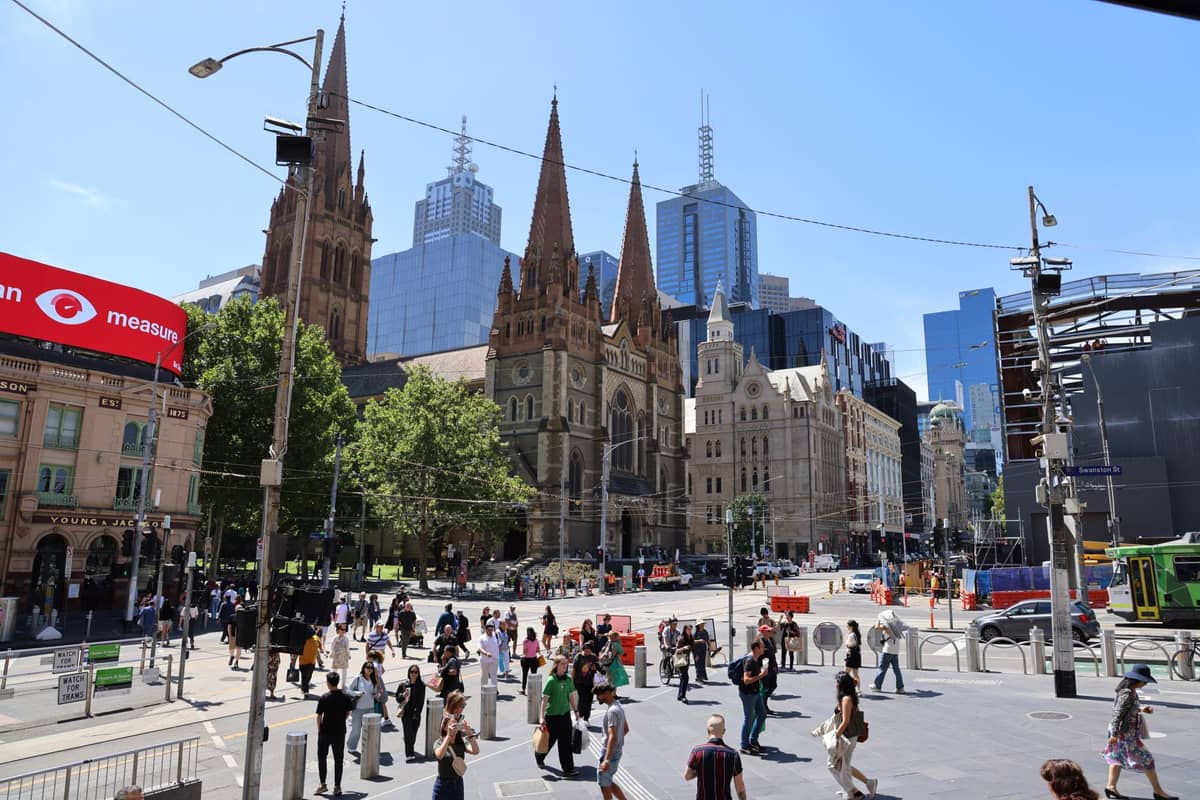
Melbourne rewards walkers like few other cities. From the iconic laneways of the CBD to the bayside foreshore of St Kilda, this guide covers the best guided tours, official self-guided routes, and neighbourhood walks, with straightforward notes on what's worth your time and what to skip.
Tickets & tours
Live prices and dates from our booking partner. If you book, we may earn a commission at no extra cost to you.
TL;DR
- The City of Melbourne offers official self-guided walk guides (free to download or pick up at visitor centres) covering laneways, parks, the Yarra River, and Aboriginal Melbourne.
- The free Heart of the City route covers around 2.5 km in 90 minutes, a solid introduction to the Melbourne CBD.
- The two-hour daily guided tour from Federation Square is tip-based, not genuinely free. Budget at least A$10-20 per person if you join.
- Melbourne Greeter Service pairs you with volunteer locals for 2-4 hour free walks. Booking in advance is essential.
- Carry a rain layer year-round. Spring weather is highly variable, and October is typically the wettest month. Check our best time to visit Melbourne guide for seasonal planning.
Why Melbourne Is One of the World's Best Cities to Walk
Melbourne is built for pedestrians in a way that many Australian cities are not. The central grid is compact, the laneways reward exploration, and the Yarra River provides a natural corridor connecting the CBD to inner suburbs. The Free Tram Zone means you can extend a walk, hop on a tram to recover, and walk back without spending a cent on transport.
The city sits on the traditional lands of the Wurundjeri Woi-wurrung and Bunurong peoples of the Kulin Nation, and dedicated walks explore this deep cultural history alongside the colonial and immigrant layers that followed. That range, from First Nations significance to Victorian-era architecture to contemporary street art, makes Melbourne unusually rich walking territory.
ℹ️ Good to know
Melbourne's central area covers approximately 37.7 km² as a local government area, but the walkable core is much tighter. Most key attractions sit within a 3-4 km radius of Federation Square, making extended day walks entirely practical without public transport.
Official Self-Guided Walks: The City of Melbourne Routes
The City of Melbourne publishes a set of curated self-guided walks, available as free printed guides from visitor centres at Melbourne Town Hall and Fitzroy Gardens, and downloadable from the official walk pages. These routes are researched and updated by the city itself, which makes them more reliable than third-party apps that sometimes contain outdated information.
- Heart of the City Roughly 2.5 km, taking around 90 minutes at a comfortable pace. Covers the CBD grid's highlights including arcades, the Yarra riverfront, and major civic landmarks. Best starting point is Federation Square.
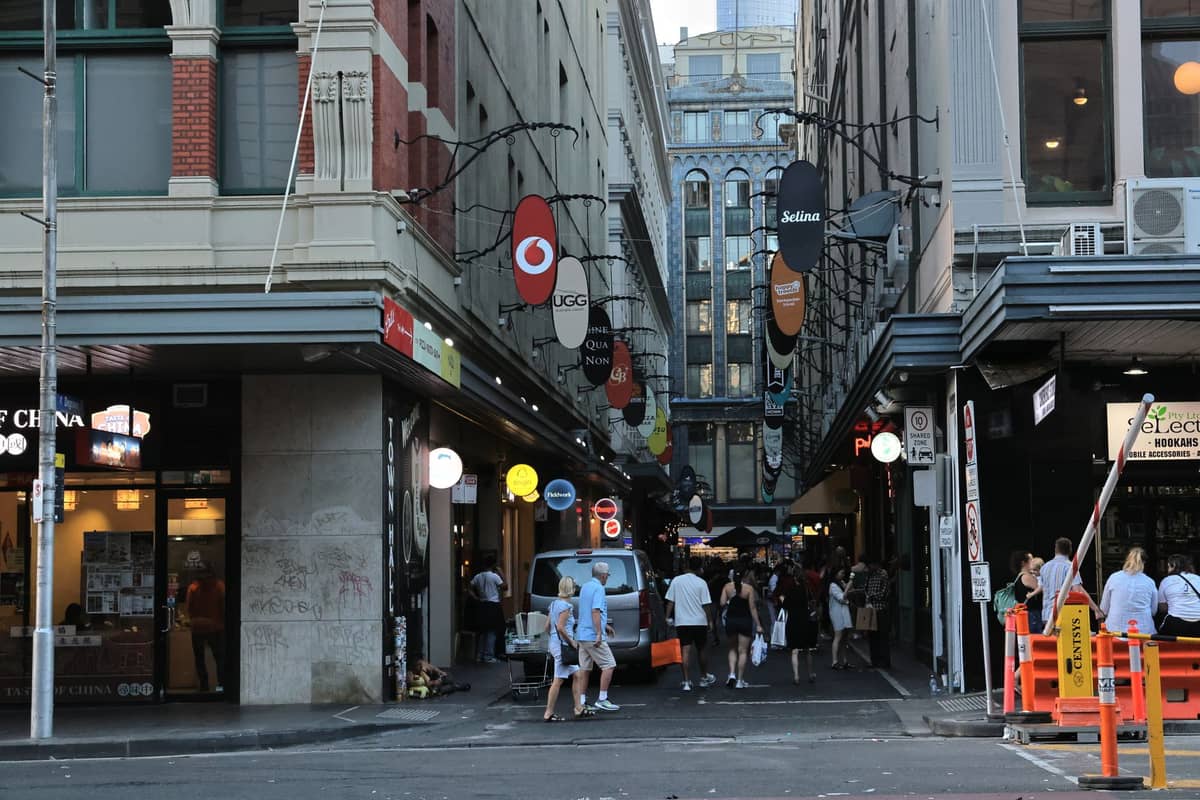
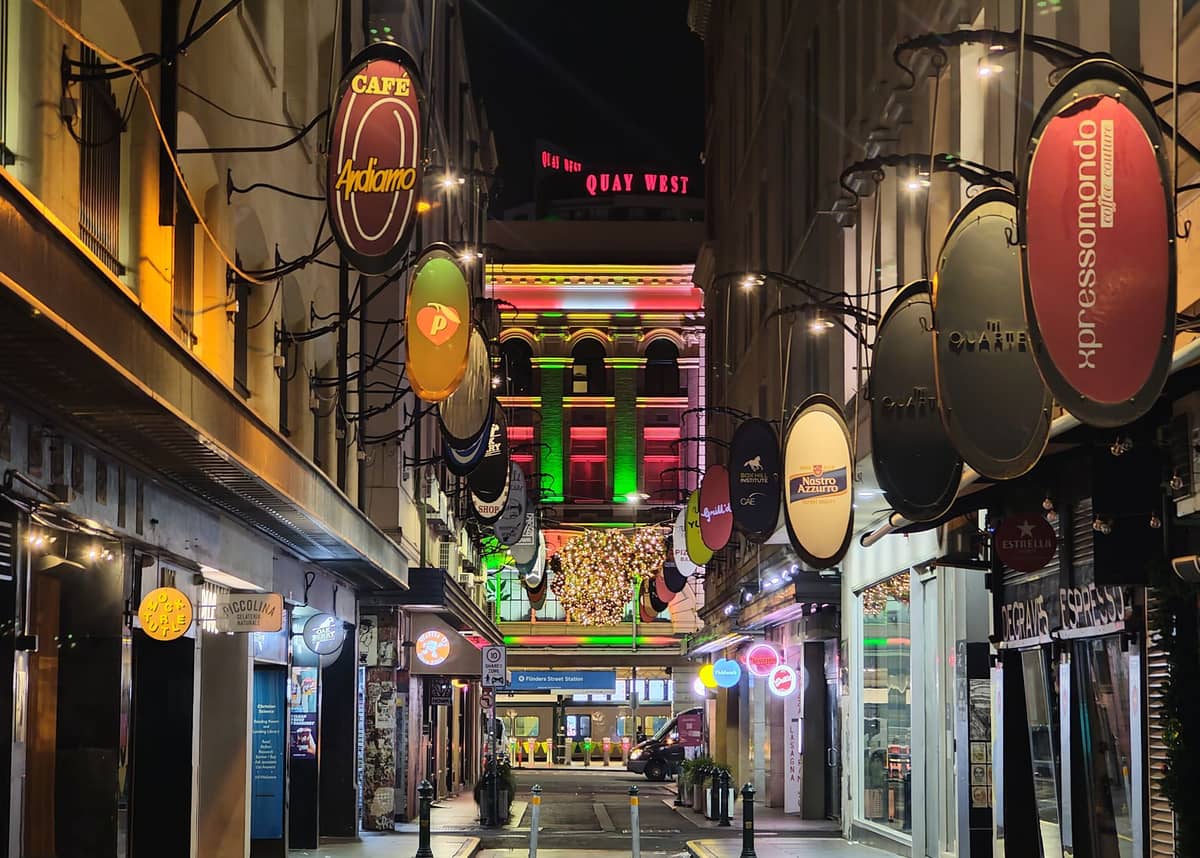
- Arcades and Laneways Dedicated to Melbourne's famous network of hidden passages, including the Royal Arcade, Block Arcade, Degraves Street, and Hosier Lane. Allow 2 hours to explore properly rather than rush through.
- Secret Parks and Gardens A quieter route revealing pocket parks and green spaces often missed by visitors focused on the main attractions. Good option in summer heat when shade becomes valuable.
- Yarra River Discovery Follows the river corridor from the CBD toward the inner suburbs. Connects well with Birrarung Marr and can be extended into a half-day route.
- Aboriginal Melbourne Focuses on sites of cultural significance to the Wurundjeri Woi-wurrung and Bunurong peoples. An important complement to the more standard city walks, and the most distinctive route in the set.
The Arcades and Laneways route deserves special attention. Melbourne's network of 19th-century arcades and inner-city laneways is genuinely one of the city's defining features. The Royal Arcade, dating from 1870, and the Block Arcade are architecturally significant, while Hosier Lane is the city's most-photographed street art canvas. For a deeper dive into the street art scene specifically, the City of Melbourne also publishes a separate street art map.
Guided Walking Tours: What's Actually Worth Paying For
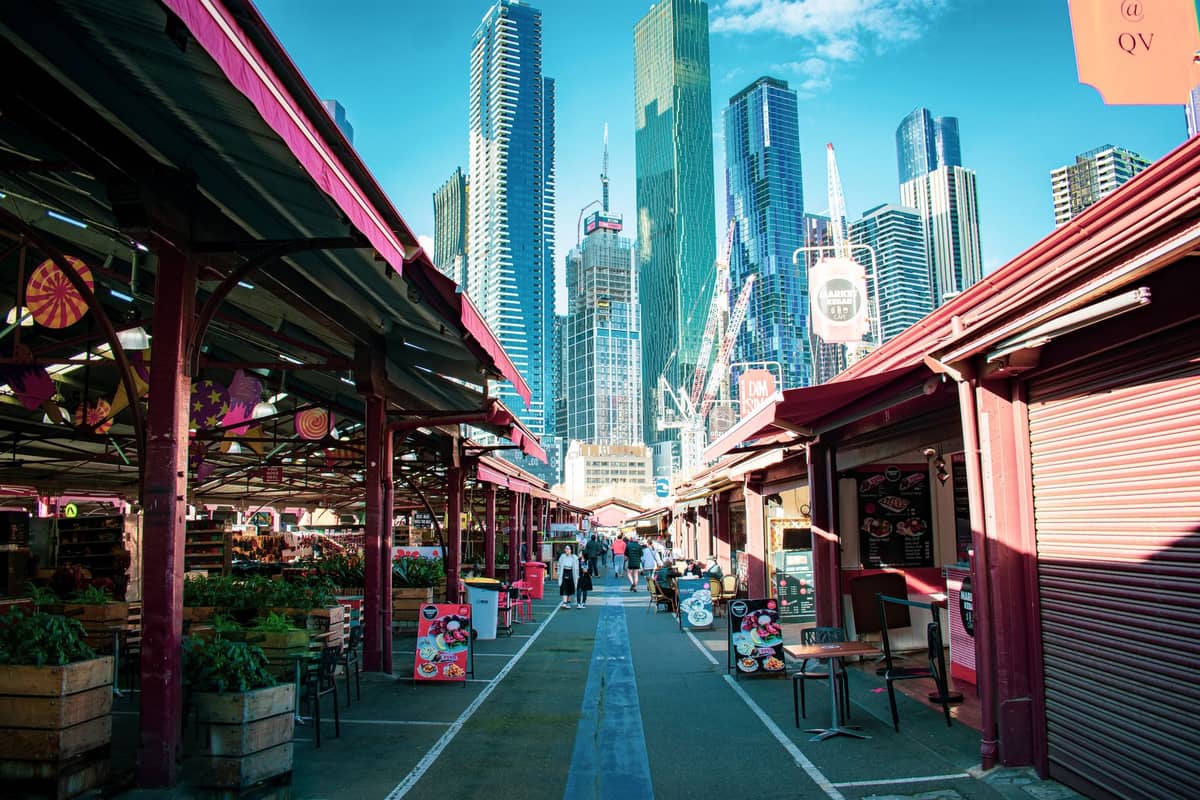
The most prominent daily guided option is the two-hour tour departing from Federation Square at 11 am, finishing at Queen Victoria Market. It is listed by the City of Melbourne and operates on a tip-based model, not a fixed entry fee. This is a common format across many cities, and it works well if you understand the expectation upfront: guides earn their income from tips, so budget A$10-20 per person as a minimum if you find the tour valuable.
⚠️ What to skip
The City of Melbourne's Heart of the City walk is a free self-guided route; check the official walks page for current guided-tour options and booking details.
For something genuinely free, the Melbourne Greeter Service pairs visitors with volunteer locals who share their area of interest or their neighbourhood over 2-4 hours. This is not a polished commercial product, and the quality varies with the individual greeter, but it offers something no paid tour can: a conversation with someone who actually lives here. Booking in advance is essential since capacity is limited. Check the City of Melbourne's walks page for current arrangements before travelling.
Private tour operators offer more specialised options: after-dark laneway tours, food-focused walks through the Queen Victoria Market precinct, architecture tours of the CBD, and First Nations cultural experiences with Aboriginal guides. These cost A$40-90 per person depending on duration and group size. For architecture specifically, the heritage detail in the city's arcade buildings and the contrast with contemporary towers makes this a worthwhile investment for anyone interested in the built environment.
Neighbourhood Walks Worth Planning Around
Beyond the CBD, several of Melbourne's inner neighbourhoods reward a purposeful walk rather than just passing through. Fitzroy is the most walkable: Brunswick Street and Smith Street run parallel for about 1.5 km each, with enough cafes, bookshops, galleries, and architecture to fill a half-day. Combine both streets in a loop for a natural 3 km route.
St Kilda offers a different texture entirely. The foreshore walk from St Kilda Beach south toward Port Melbourne, or north along the bay toward Middle Park, is flat, accessible, and genuinely pleasant on a clear day. The pier at St Kilda is worth reaching at dusk when Little Penguins return to their nests beneath the breakwater. This is free to watch and requires no booking, though the colony can be disturbed by flash photography, which is prohibited.
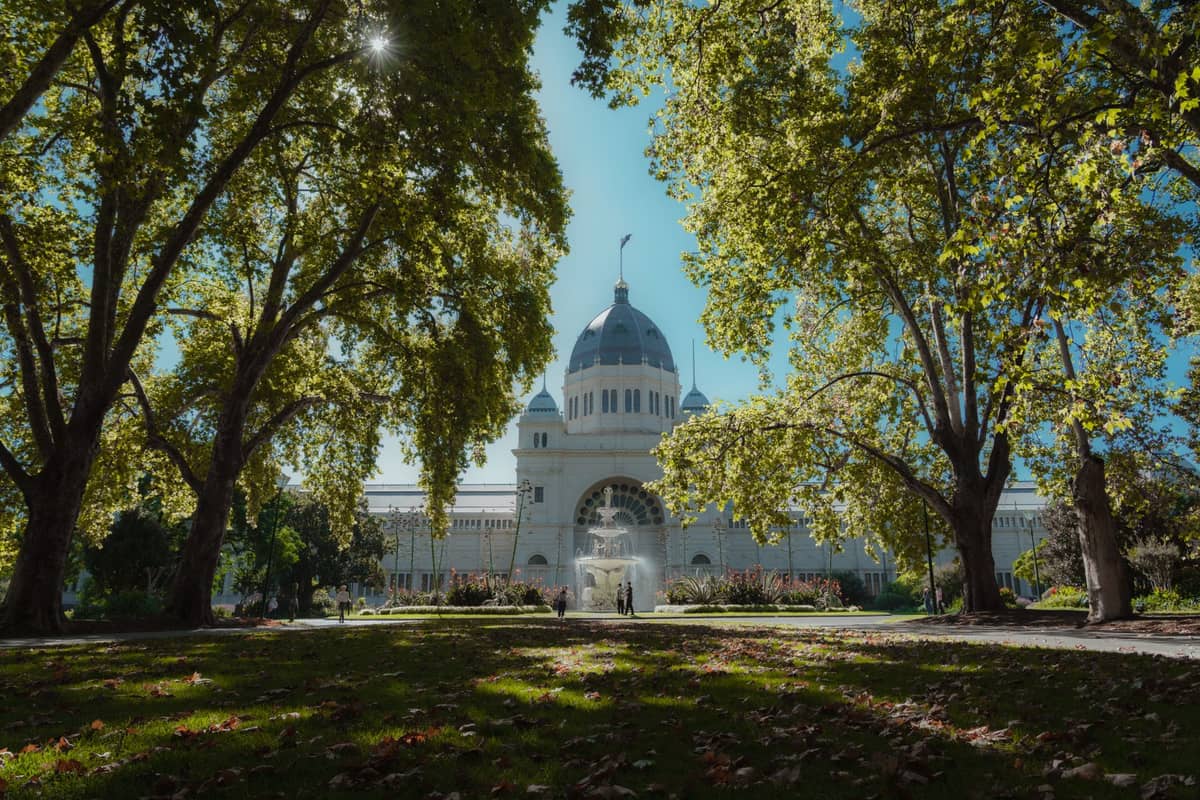
Carlton's walk centres on the Royal Exhibition Building and the Carlton Gardens before heading down Lygon Street. This area combines UNESCO World Heritage architecture with Melbourne's Italian precinct, and the contrast between the formal gardens and the restaurant strip makes for an interesting 90-minute loop.
- CBD Laneways Loop (1.5-2 hours) Start at Federation Square, walk through Hosier Lane, cut north through the Flinders Lane laneway network, visit the Royal Arcade and Block Arcade, then return via Degraves Street. Entirely flat, mostly under cover.
- Southbank to Docklands Riverfront (2-3 hours) Follow the north bank of the Yarra from Federation Square west to Docklands. Or cross at Princes Bridge and walk the Southbank promenade. Best in the morning before the lunch crowd arrives.
- Fitzroy Loop (2-3 hours) Brunswick Street north from Johnston Street, cut across to Smith Street, walk south back to Johnston. Add Collingwood's retail strip if you want another 45 minutes.
- Carlton Heritage Walk (1.5 hours) Carlton Gardens, Royal Exhibition Building exterior, Melbourne Museum approach, then south down Lygon Street to Grattan Street. Best on weekday mornings when the precinct is quieter.
- St Kilda Foreshore Walk (1-2 hours) St Kilda Beach to the pier and back, or continue north to Middle Park. Flat and accessible. Add Acland Street for a street-level complement.
Practical Logistics: Timing, Weather, and What to Carry
Melbourne's weather is genuinely unpredictable, particularly in spring. The local saying is that you can experience four seasons in one day, and while this is an exaggeration, it reflects the reality that conditions can shift from sunny to rainy within a few hours. October is typically the wettest month. A compact rain jacket takes up almost no space and eliminates the most common way that a walking day goes sideways.
For the CBD itself, mornings from 8-10 am are noticeably quieter than midday, particularly in the laneways. If you want to photograph Hosier Lane without dozens of people in frame, arrive before 9 am on a weekday. The same applies to the Royal Arcade and Block Arcade interiors. Queen Victoria Market operates Tuesday and Thursday to Sunday with varying hours by section, and Saturday mornings are the most crowded but also the most atmospheric.
✨ Pro tip
Comfortable walking shoes are more important than you might think. Melbourne's laneway cobblestones and bluestone footpaths are uneven, and the CBD grid means a full day of sightseeing can easily reach 15-20 km. Fashion footwear that looks fine in photos will cause real problems by mid-afternoon.
The Free Tram Zone covers the central grid, Docklands, and Southbank, which means you can break any CBD walk with a free tram ride if fatigue sets in. Trams outside this zone require a Myki card. For planning connections and checking tram routes in real time, use the PTV app. More on getting around is covered in the getting around Melbourne guide.
What to Combine With Your Walk
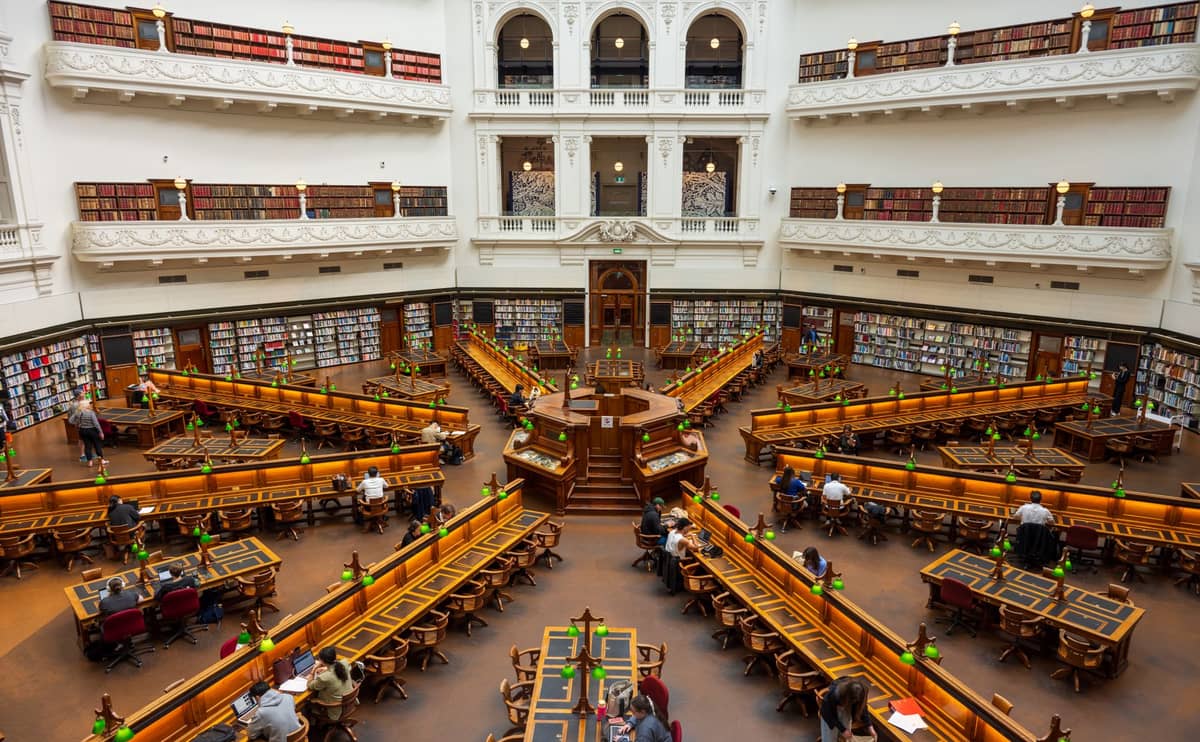
Most of Melbourne's best walks pass directly by major attractions, so it makes sense to build entry times into your route rather than treat them separately. The State Library of Victoria sits at the top of the CBD grid and is free to enter. The domed La Trobe Reading Room is worth pausing for 20 minutes even if you have no interest in libraries. Similarly, the Ian Potter Centre: NGV Australia at Federation Square has free permanent collection access and is a natural bookend to any laneway walk that starts or finishes at the square.
If your walk takes you to Carlton, the Melbourne Museum is immediately adjacent to the Carlton Gardens. Entry is A$18 for adults. For a street art extension to the laneway walk, the dedicated Melbourne street art guide covers beyond Hosier Lane into less-photographed areas of the CBD and inner north.
💡 Local tip
The City Circle Tram (Route 35) circles the CBD perimeter and is free within the Free Tram Zone. It makes a useful orientation loop before you start walking, helping you get a sense of the central grid's scale before committing to a route on foot.
FAQ
Are walking tours in Melbourne actually free?
The Melbourne Greeter Service is genuinely free, run by volunteer locals, and offers two-to-four-hour orientations. Bookings are essential. Check the City of Melbourne's official walks page for current guided-tour options.
How long does it take to walk the Melbourne CBD?
The central grid from Flinders Street to La Trobe Street (north-south) and from Spencer Street to Spring Street (east-west) covers roughly 2 km by 1 km. You can cross it quickly, but a proper exploration of laneways and arcades takes 2-4 hours. The official Heart of the City self-guided route covers around 2.5 km in 90 minutes at a comfortable pace.
What is the best self-guided walk in Melbourne for first-time visitors?
The CBD laneways loop, starting at Federation Square and weaving through Hosier Lane, Degraves Street, the Royal Arcade, and the Block Arcade, is the most useful introduction to what makes Melbourne distinct from other Australian cities. The City of Melbourne's official Arcades and Laneways printed guide adds historical context that makes the route significantly more rewarding.
Is Melbourne safe to walk around at night?
The CBD and Southbank are generally well-lit and active into the evening, particularly around Flinders Street, Federation Square, and the Southbank promenade. As in any city, awareness of surroundings is sensible. Some laneways are quieter after dark. St Kilda's Fitzroy Street has a livelier nightlife scene that can be rowdy on weekends but is not unusually unsafe.
What should I wear for a walking tour in Melbourne?
Comfortable, flat-soled shoes are the main priority. Melbourne's bluestone laneways and uneven footpaths cause problems for heels or thin-soled fashion shoes on a full day out. Carry a light rain layer regardless of the forecast, especially in spring and autumn when conditions change quickly. Layers are more practical than a single heavy jacket given how Melbourne's temperature can shift within a few hours.
Tickets & tours
Live prices and dates from our booking partner. If you book, we may earn a commission at no extra cost to you.
Planning a trip? Discover personalized activities with the Nomado app.