Melbourne Museum: What to See, When to Go, and What to Know First
Melbourne Museum is one of Australia's largest museums, in Carlton Gardens, opposite the World Heritage-listed Royal Exhibition Building in Carlton. With permanent galleries spanning natural history, First Peoples culture, science, and Australian social history, it rewards careful exploration far more than a rushed walk-through.
Quick Facts
- Location
- 11 Nicholson Street, Carlton VIC 3053
- Getting There
- Tram 86 or 96 to Stop 11; buses 250, 251, 402 on Rathdowne Street; ~15 min walk from Parliament Station
- Time Needed
- 2–4 hours depending on your interests
- Cost
- Adults A$18, Seniors A$12, children under 16 free. Extra charges apply to some temporary exhibitions.
- Best for
- Families, natural history enthusiasts, rainy-day visits, curious adults
- Official website
- museumsvictoria.com.au/melbournemuseum
What Kind of Place Is This?
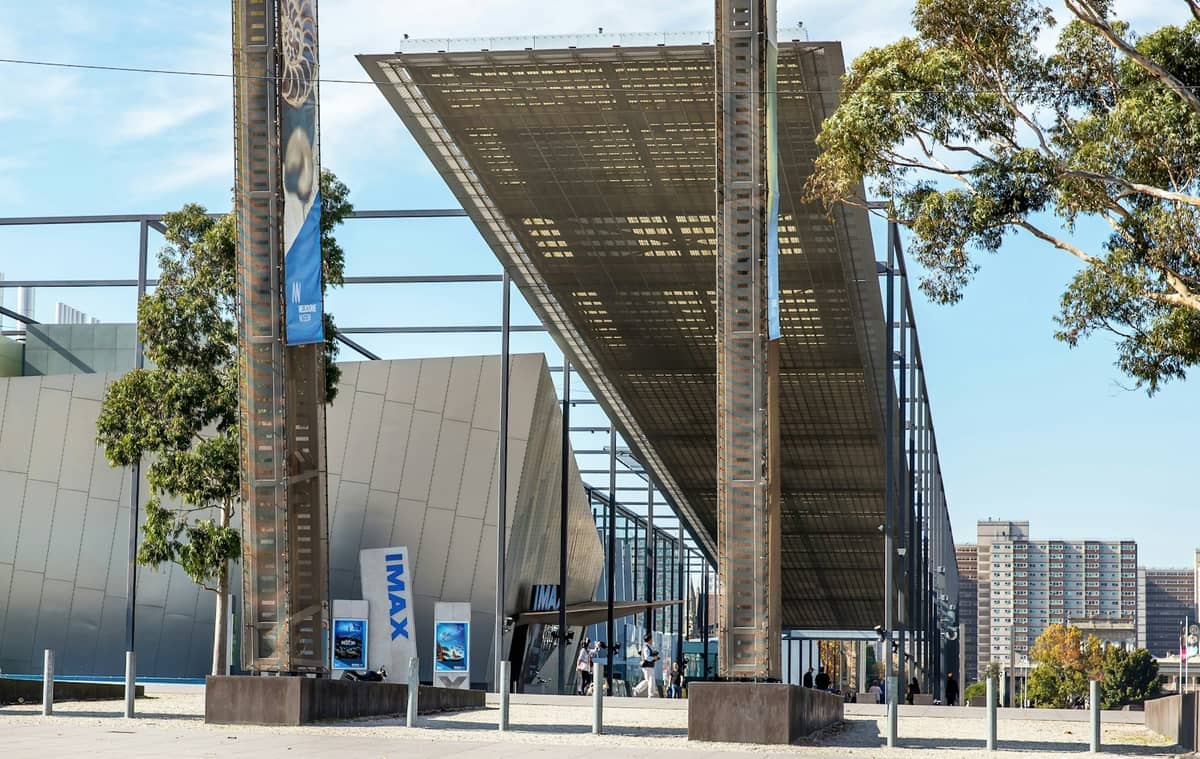
Melbourne Museum opened on 21 October 2000 as part of the Carlton Gardens precinct, making it a relatively young institution with a carefully curated identity. It is operated by Museums Victoria, the same body that runs Immigration Museum and Scienceworks, and its scale is immediately apparent when you approach from Nicholson Street: the building is enormous, angular, and designed by Denton Corker Marshall with a facade that reads more like a civic statement than a traditional museum entrance.
The collection spans natural history, science, human biology, First Peoples culture, and social history, which means very different types of visitors can find genuine depth here. Families with young children, amateur naturalists, and people interested in the continent's ecological history will each find galleries calibrated to them. It is not a generalist crowd-pleaser that skims every topic; several of its permanent galleries are genuinely detailed.
ℹ️ Good to know
Opening hours: 9 am to 5 pm daily. Closed on Good Friday and Christmas Day. Confirm hours on the official site before visiting, especially around public holidays.
The Building and Its Setting
The museum sits opposite the Royal Exhibition Building, a UNESCO World Heritage Site completed in 1880 and one of Australia's finest surviving examples of exhibition-hall architecture. The contrast between the two buildings is striking and intentional: the 19th-century sandstone dome beside an angular, glass-and-steel structure from the year 2000. Most visitors pass through Carlton Gardens to reach the museum entrance, and that walk past the Royal Exhibition Building is worth slowing down for.
Carlton itself adds useful context to the visit. The neighbourhood has long been associated with Melbourne's university precinct and its Italian immigrant community. If you're combining the museum with a broader exploration of the area, the Carlton neighbourhood guide outlines the surrounding streets, including Lygon Street's dining strip a few minutes' walk away.
Inside, the building's atrium is dramatic, with natural light filtering through a large glazed roof. The volume of the central space can feel disorienting on your first visit, since galleries branch off across multiple levels and wings. Pick up a floor map at the entrance, or the orientation will cost you time.
Tickets & tours
Live prices and dates from our booking partner. If you book, we may earn a commission at no extra cost to you.
Key Permanent Galleries
Forest Gallery
This is the most visually distinctive space in the museum: a large, climate-controlled indoor forest with living plants, birds, insects, and frogs. The temperature and humidity shift as you move through it. Leaf litter, birdsong, and the smell of damp soil make it feel less like an exhibit and more like an enclosed ecosystem. Early in the morning, before school groups arrive, the gallery is genuinely quiet and worth lingering in.
First Peoples Gallery
One of the museum's most significant permanent spaces, the First Peoples Gallery presents the culture and history of Aboriginal and Torres Strait Islander peoples, The gallery presents Aboriginal culture and history through a permanent exhibition co-created with Aboriginal people. It includes objects, oral histories, and contemporary perspectives alongside historical material. It avoids the flattening effect common in cultural galleries that present Indigenous life as purely historical.
Science and Life Gallery
This wing focuses on human biology, evolution, and the natural world, and it is the section most likely to hold children's attention through interactive exhibits. Fossil specimens and skeletal reconstructions anchor the natural history component. The exhibits here are less narrative-heavy than the First Peoples Gallery, and more hands-on.
Mind and Body and Temporary Exhibitions
The Mind and Body space explores neuroscience, health, and human experience through a mix of objects, graphics, and interactive components. The quality of the experience here depends on which rotating temporary exhibitions are on during your visit. These can be genuinely excellent or merely competent, and they sometimes carry a separate admission charge above the standard ticket price. Check the museum's official website for what's currently showing before you pay at the door.
When to Visit and How the Day Unfolds
Weekday mornings between 9 and 11 am offer the calmest conditions, particularly during school terms. School excursions tend to arrive mid-morning and occupy the Science and Life galleries heavily. If you're visiting with older children or as an adult, the First Peoples Gallery and Forest Gallery see comparatively less foot traffic during those hours.
Weekend afternoons get crowded, especially on wet days when half of Melbourne seems to decide a museum is the answer. The atrium becomes genuinely noisy, and queues form at the cloakroom. Midweek visits, if your schedule allows, are noticeably more comfortable.
💡 Local tip
Book tickets online in advance for popular temporary exhibitions. Standard general admission can usually be purchased at the door, but special shows sell out on busy weekends.
Weather in Melbourne is famously changeable. Because the museum is entirely indoors, it functions well on any kind of day, which makes it a reliable option during Melbourne's grey winter weeks or sudden summer storms. For context on what the weather might look like during your trip, the guide on the best time to visit Melbourne covers the seasonal patterns clearly.
Getting There
The most direct public transport option is tram 86 or 96, alighting at Stop 11 on Nicholson and Gertrude Streets, about a five-minute walk from the museum entrance. The museum stop is outside the CBD Free Tram Zone, so a fare is required for travel to it.
If you're arriving by train, Parliament Station is the closest, roughly 15 minutes on foot through the Carlton Gardens. The walk is pleasant and gives you that approach past the Royal Exhibition Building. Buses 250, 251, and 402 stop on Rathdowne Street, adjacent to the museum precinct.
Paid parking is available in the museum's own car park. Driving into Carlton from the city centre during peak hours adds unnecessary complexity; public transport is meaningfully faster.
ℹ️ Good to know
Accessibility: The main entrance is step-free, and galleries have lift and ramp access throughout. Free standard wheelchairs are available from the foyer; booking ahead is recommended for these. Accessible parking is in the museum car park.
Photography, Facilities, and Practical Details
Photography for personal, non-commercial use is permitted throughout most of the museum. The Forest Gallery is the most photogenic space, particularly in the hour after opening when light levels inside are steadier. Flash photography is discouraged near living exhibits. Some temporary exhibitions impose their own photography rules, which are posted at the gallery entrance.
The museum has a cafe and a dedicated restaurant, both in the atrium area. The food is priced at tourist-venue rates, which is to say higher than the surrounding neighbourhood. For a better meal at a similar price point, the Italian restaurants on Lygon Street are a five-minute walk away and worth considering for lunch if you're doing a half-day visit.
The museum shop is well-stocked with science books, educational toys, and locally made goods. Children reliably want to stop here. If you're planning a full day in Carlton, the nearby Royal Exhibition Building and the Carlton Gardens are worth combining into the same visit.
Who Might Want to Skip It
Visitors who have already spent significant time in natural history museums in Sydney, London, or New York may find Melbourne Museum's collection less surprising than they hoped. The fossil and specimen collection, while solid, does not compete with the scale of institutions like the Natural History Museum in London. If your interest is specifically in art rather than science or history, the NGV's two venues are a stronger use of your time.
Travellers on extremely tight schedules with only one or two days in the city should consider whether the two-to-four-hour commitment fits their priorities. The 3 days in Melbourne itinerary helps map out how to balance the museum against other major attractions. If you're travelling specifically with younger children, Melbourne Museum is close to the top of the list; if you're solo or couple-travelling with a focus on food and architecture, the calculus changes.
Insider Tips
- The Forest Gallery is best experienced in the first 30 minutes after opening at 9 am. The birds are more active, the space is quieter, and the light through the canopy is at its most atmospheric before the crowds arrive.
- Children under 16 enter free, and eligible full-time students with a valid student card also receive free concession entry. Always carry student identification if you're eligible.
- The museum's IMAX theatre (operated separately from main museum admission) runs a different schedule and has its own ticket pricing. Check the IMAX website before your visit if you want to combine both.
- If you're visiting during school holidays, arrival exactly at 9 am makes a noticeable difference. By 10:30 am on a holiday weekday, the atrium is significantly louder and the popular interactive exhibits have queues.
- The Carlton Gardens between the museum and Nicholson Street are worth a slow walk after your visit. The fountain near the Royal Exhibition Building is a good landmark for meeting your group if you split up inside.
Who Is Melbourne Museum For?
- Families with children of primary school age, particularly for the Forest Gallery and interactive science exhibits
- Adults with a genuine interest in First Peoples culture and Australian ecological history
- Rainy or cold days when an outdoor itinerary is not practical
- Visitors who want a substantial, several-hour indoor experience without multiple entry fees
- School-age travelers interested in natural history, biology, or Australian identity
Nearby Attractions
Other things to see while in Carlton & Parkville:
- Carlton Gardens
Carlton Gardens is a 26-hectare Victorian-era park in inner-north Melbourne, inscribed on the UNESCO World Heritage List alongside the Royal Exhibition Building. It blends formal garden design, towering elms, and one of Australia's most architecturally significant public spaces into a single walkable precinct.
- Melbourne Zoo
The Royal Melbourne Zoological Gardens has been open since 1862, making it Australia's oldest zoo. Spread across Royal Park in Parkville, it combines heritage gardens with modern animal habitats and conservation exhibits. Here is what a visit actually looks like, and how to make the most of it.
- Royal Exhibition Building
Built in 1879–1880 and inscribed on the World Heritage List in 2004, the Royal Exhibition Building is one of Australia's most significant Victorian-era structures. Standing beside the Carlton Gardens with its 60-metre dome visible from across the neighbourhood, it rewards visitors who arrive with context and realistic expectations about access.
Planning a trip? Discover personalized activities with the Nomado app.