Royal Exhibition Building: Melbourne's UNESCO World Heritage Landmark
Built in 1879–1880 and inscribed on the World Heritage List in 2004, the Royal Exhibition Building is one of Australia's most significant Victorian-era structures. Standing beside the Carlton Gardens with its 60-metre dome visible from across the neighbourhood, it rewards visitors who arrive with context and realistic expectations about access.
Quick Facts
- Location
- 9 Nicholson Street, Carlton VIC 3053
- Getting There
- Trams 86 and 96 to Stop 11 near Nicholson and Gertrude streets; Parliament Station is a short walk
- Time Needed
- 45–90 minutes (exterior and gardens); longer for guided dome tours or events
- Cost
- Exterior and gardens: free. Interior access via events or tours — check official site for pricing
- Best for
- Architecture lovers, history enthusiasts, and visitors combining with Melbourne Museum next door
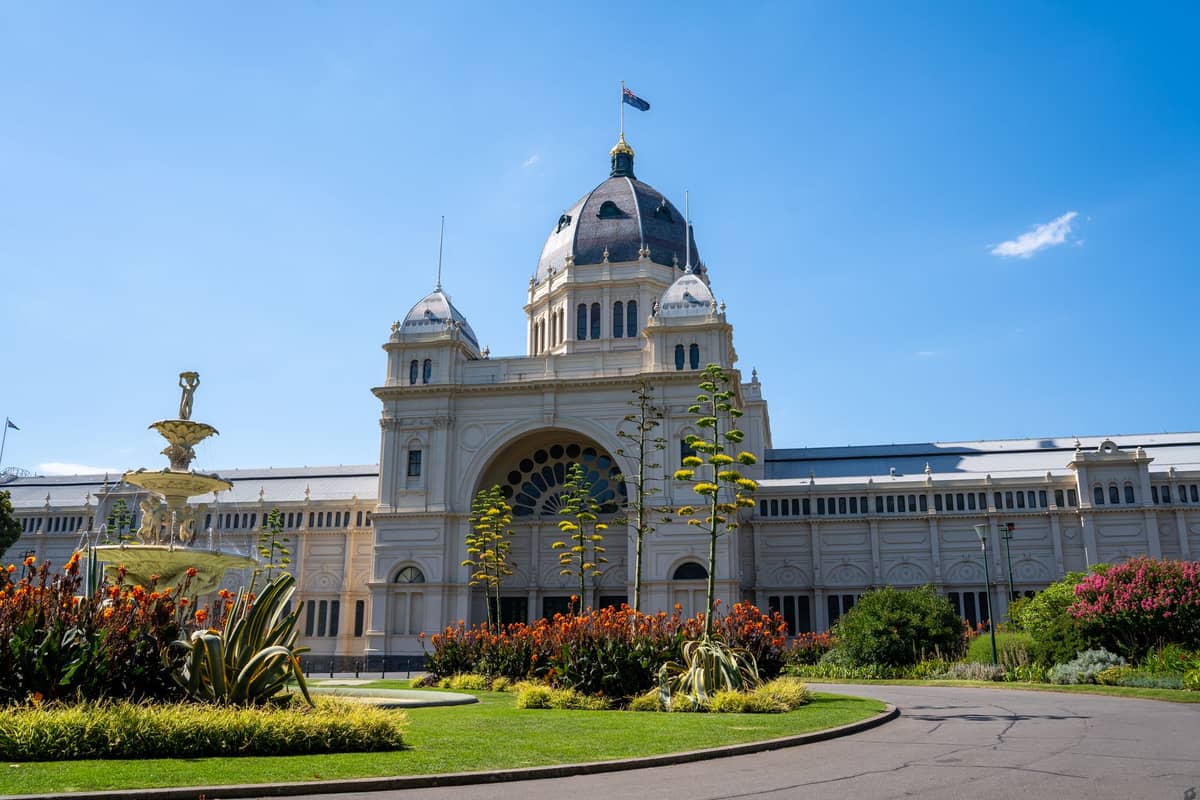
What the Royal Exhibition Building Actually Is
The Royal Exhibition Building is not a museum you walk into on a whim. It is a functioning events and ceremonial venue that also happens to be one of Australia's UNESCO World Heritage-listed properties — and a rare surviving Great Exhibition hall of its era, substantially intact. Understanding that distinction shapes the entire visit.
Built between 1879 and 1880 to host the Melbourne International Exhibition, The building was ready for the exhibition's opening on 1 October 1880. It was designed by architect Joseph Reed in an eclectic style that borrows from Italian Renaissance, Byzantine, and Romanesque traditions, all pulled together under a main dome that reaches 68 metres above ground. At the time of its construction, Melbourne was one of the wealthiest cities in the world by some measures, and this building was a deliberate expression of that confidence.
The site was inscribed on the UNESCO World Heritage List in 2004 as part of the property named Royal Exhibition Building and Carlton Gardens — the landscaped surroundings are considered inseparable from the building's heritage value. This matters practically: the gardens are freely accessible every day, and walking them gives you an excellent exterior view of the dome and the building's full symmetry without needing to book anything.
ℹ️ Good to know
The building's interior is not open for general public admission. Access is through ticketed guided tours (including the popular dome tour), or through events held on-site. Check the official City of Melbourne page or a reputable booking platform before visiting to confirm what's running during your dates.
The Exterior: What You See Without a Ticket
The Carlton Gardens approach from Nicholson Street gives the best first impression. Walk south from the corner of Carlton Street and Nicholson Street and the building's north facade appears ahead of you, framed by mature elms and fountain basins that are part of the original 1880 landscape design. In morning light, the cream-coloured render catches the sun at an angle that makes the decorative arches and pilasters sharper and more legible than at midday.
The dome is the visual anchor. Unlike many domed structures where the dome only becomes visible close up or from the interior, this one is genuinely prominent from the surrounding streets and parks. From the south lawn of Carlton Gardens, you get the full elevation: the central drum and lantern sit above an octagonal base, and the proportions are generous enough that the building never looks compressed or squat despite the wide, low wings extending from the central pavilion.
Morning weekdays are quiet. By midday on weekends, school groups from Melbourne Museum (which sits adjacent on the south side) spill into the gardens and the noise level rises considerably. If you want peaceful time with the building's exterior and a clear shot at the fountain without a scrum of people in the frame, arrive before 10am.
The Carlton Gardens themselves are worth at least 20 minutes of slow walking. They form a formal Victorian garden layout with tree-lined promenades, ornamental ponds, and cast-iron fountains. The overall precinct, with its mix of heritage architecture and green space, makes this one of the more rewarding urban walks in inner Melbourne. For broader context on Melbourne's green spaces, the Melbourne gardens and parks guide covers the wider network.
Tickets & tours
Live prices and dates from our booking partner. If you book, we may earn a commission at no extra cost to you.
Great Ocean Road reverse itinerary tour from Melbourne
From 77 €Instant confirmationFree cancellationGreat Ocean Road bus tour with a forest walk
From 90 €Instant confirmationFree cancellationYarra Valley Bus Wine Tour including lunch with a glass of wine and chocolate
From 107 €Instant confirmationFree cancellationHidden bars of Melbourne guided tour
From 115 €Instant confirmationFree cancellation
The Interior and Dome Tour
The interior of the Royal Exhibition Building is not permanently open to the public. When events are not running, guided tours are the standard way inside, and the dome tour is the most popular option. Prices and schedules vary, so check a booking platform or the City of Melbourne's What's On page close to your visit date — availability is not guaranteed year-round.
Inside, the Great Hall is the defining space. The central nave is enormous, with a coffered barrel-vaulted ceiling painted in decorative panels and natural light filtering in through high clerestory windows. The scale is easier to absorb from the interior than any photograph suggests: the floor area alone covers several thousand square metres, and the dome, seen from directly below, reveals layered painted decoration that is invisible from outside.
The dome tour takes visitors through areas not accessible during standard events, including elevated vantage points with views over Carlton and toward the CBD. It is physically demanding in parts — stairs and narrow passages are involved — so confirm the route if mobility is a concern. Check directly with the venue for current accessibility arrangements before booking.
💡 Local tip
If you are visiting Melbourne Museum next door (which is always worth doing), check whether a combined ticket or joint booking is available. The two venues share the same precinct and work well together as a half-day.
Historical Weight: Why This Building Matters
The building hosted the Melbourne International Exhibition in 1880 and the Centennial International Exhibition in 1888, drawing enormous crowds at a time when international exhibitions were the dominant form of global cultural and commercial exchange. It later served as the venue for the inauguration of the Australian Commonwealth Parliament on 9 May 1901 — an event of direct constitutional significance for Australia as a nation.
During both World Wars, the building was used for military purposes, including as a quarantine facility and a military depot. For much of the 20th century it functioned as a venue for examinations, trade shows, and public events, which is partly what kept it intact when many comparable structures in other cities were demolished. The decision not to tear it down is not romantic chance; it reflects the building's continued utility.
Carlton itself has a layered history worth understanding before you visit. The neighbourhood's university precinct and Italian-influenced dining strip on Lygon Street developed through waves of post-war migration, making the area a study in cultural accretion. The Carlton neighbourhood guide gives useful context for combining your visit with lunch or a walk through the area's architecture.
Photography: Getting the Best Shots
For the classic symmetrical facade shot, stand at the northern end of the central axis in Carlton Gardens, roughly aligned with the main fountain. A standard wide lens is sufficient; you do not need ultra-wide to capture the full elevation from this distance. The building's cream render photographs well in overcast conditions, which soften the contrast between the dome and the sky — Melbourne's frequently cloudy days are actually an advantage here.
The south facade, facing Melbourne Museum, is slightly different in character and less frequently photographed. It catches afternoon light well and gives an angle that includes both buildings in one frame. Early morning, before the museum opens and the forecourt fills up, is the cleanest window for this shot.
💡 Local tip
Drone photography is not permitted over Carlton Gardens or the heritage precinct without specific authorisation. Standard camera use in the public gardens is unrestricted.
Getting There and Practical Logistics
The building sits at 9 Nicholson Street, Carlton, on the eastern edge of the Carlton Gardens. Tram routes 86 and 96 serve Stop 11 near the Nicholson and Gertrude Street intersection, a short walk from the gardens. Parliament Station on the City Loop is also within reasonable walking distance, taking roughly 10–12 minutes on foot through Fitzroy Gardens.
If you are using Melbourne's free tram zone to navigate the central city, note that the free zone boundary may not extend to this stop — confirm on the PTV network map or the getting around Melbourne guide before boarding. A Myki card covers the tram fare if you are outside the free zone.
Paid parking is available on surrounding streets and in nearby car parks, but weekday availability near the museum and building can be limited during school term. On weekends, street parking along Rathdowne Street and the side streets off Carlton Gardens is generally easier to find than on the Nicholson Street frontage.
Melbourne's temperate climate means the open garden visit is comfortable for most of the year, though summer afternoons can be warm. The gardens offer limited shade beyond the tree-lined promenades, so a hat and water are sensible if you are visiting between December and February. Rain can arrive quickly at any time of year; the building's covered entry portico provides some shelter, but there is no covered waiting area in the gardens themselves.
Who Gets the Most From This Visit, and Who Might Not
Visitors with an interest in Victorian architecture, Australian colonial history, or heritage preservation will find the building genuinely compelling. The same goes for travellers combining it with Melbourne Museum, which shares the precinct and covers natural history, science, and Australian cultural history in a purpose-built facility on the southern side of the gardens.
Those drawn to Melbourne's other notable architectural landmarks will find this fits naturally into a broader itinerary. Flinders Street Station and the State Library of Victoria are both within the CBD and represent different expressions of the same era's civic ambition. The Melbourne architecture guide maps out the wider picture.
Travellers who want an interactive, self-guided experience at their own pace may find the limited public access frustrating. If the building is hosting a private event on the day you visit, you will not get inside at all. Confirm availability before making this a priority stop, particularly if your time in Melbourne is short. For visitors who are not especially interested in 19th-century history or architecture, the exterior is worth a glance while visiting Melbourne Museum, but it does not need to anchor an entire afternoon.
Insider Tips
- The building's dome is one of the better-known landmarks visible from Lygon Street to the west — if you are walking between the university precinct and the gardens, you can track your approach by keeping the dome in your eyeline.
- Melbourne Museum and the Royal Exhibition Building are adjacent and separately managed, so check each venue's current admission details when planning.
- The building occasionally hosts ticketed public events, exhibitions, and ceremonial functions that allow access without booking a standard tour. Checking the City of Melbourne's What's On page a week or two before your visit sometimes surfaces options that are not widely advertised.
- The ornamental fountain at the northern end of Carlton Gardens is operational in warmer months and makes for a useful foreground element in wide-angle shots of the building's facade.
- If you are visiting on a weekday morning and the building is not open for tours, the perimeter walk around all four facades takes about 20 minutes at an easy pace and reveals significant variation in detail and decorative treatment between the different elevations.
Who Is Royal Exhibition Building For?
- Architecture and heritage travellers wanting to see Australia's only UNESCO-listed Great Exhibition hall
- History enthusiasts interested in colonial Melbourne and the site of Australia's first federal parliament
- Visitors combining a half-day at Melbourne Museum with an exterior exploration of the precinct
- Photographers looking for well-composed Victorian civic architecture with accessible sightlines
- Travellers using Carlton as a base who want a walkable cultural landmark close to Lygon Street dining
Nearby Attractions
Other things to see while in Carlton & Parkville:
- Carlton Gardens
Carlton Gardens is a 26-hectare Victorian-era park in inner-north Melbourne, inscribed on the UNESCO World Heritage List alongside the Royal Exhibition Building. It blends formal garden design, towering elms, and one of Australia's most architecturally significant public spaces into a single walkable precinct.
- Melbourne Museum
Melbourne Museum is one of Australia's largest museums, in Carlton Gardens, opposite the World Heritage-listed Royal Exhibition Building in Carlton. With permanent galleries spanning natural history, First Peoples culture, science, and Australian social history, it rewards careful exploration far more than a rushed walk-through.
- Melbourne Zoo
The Royal Melbourne Zoological Gardens has been open since 1862, making it Australia's oldest zoo. Spread across Royal Park in Parkville, it combines heritage gardens with modern animal habitats and conservation exhibits. Here is what a visit actually looks like, and how to make the most of it.
Planning a trip? Discover personalized activities with the Nomado app.