St Kilda Pier and the Little Penguin Viewing Experience: What to Expect
At the end of St Kilda Pier, a colony of little penguins waddles ashore every night after sunset. The experience is free and surprisingly easy to reach from central Melbourne — but tickets are limited and must be booked in advance.
Quick Facts
- Location
- Pier Road, St Kilda VIC 3182 — about 450 m walk from shore to the breakwater viewing area
- Getting There
- Trams 12, 16, or 96 to St Kilda; Bus 606 also serves the area
- Time Needed
- About 45 minutes for a viewing session, plus time to walk to the pier’s end
- Cost
- Free, but advance booking is required — tickets are limited
- Best for
- Families, wildlife lovers, sunset walkers
- Official website
- www.penguins.org.au/attractions/st-kilda
What Is the St Kilda Penguin Viewing Experience?
The St Kilda Penguin Viewing Experience is at the far end of St Kilda Pier, beside the breakwater. The pier was redeveloped and reopened to the public in December 2024, and a new penguin viewing boardwalk opened in October 2025. Here, a colony of approximately 1,400 little penguins — the world's smallest penguin species, standing roughly 33 centimetres tall — makes its home among the rocks of the breakwater. Every evening after sunset, the birds return from a day of feeding at sea and clamber back to their burrows in a slow, slightly comical procession that tends to make even adults go quiet.
This is not a zoo enclosure or a staged wildlife show. The penguins are wild, and their behaviour is unscripted. On some nights dozens may cluster in the shallows before clambering up in small groups; on others only a handful appear. That unpredictability is part of what makes the experience feel genuine rather than theatrical.
ℹ️ Good to know
Two viewing sessions run each night, with timing set around sunset. Session times change seasonally; check the time stated on your ticket before visiting.
The Walk Out: The Pier Itself
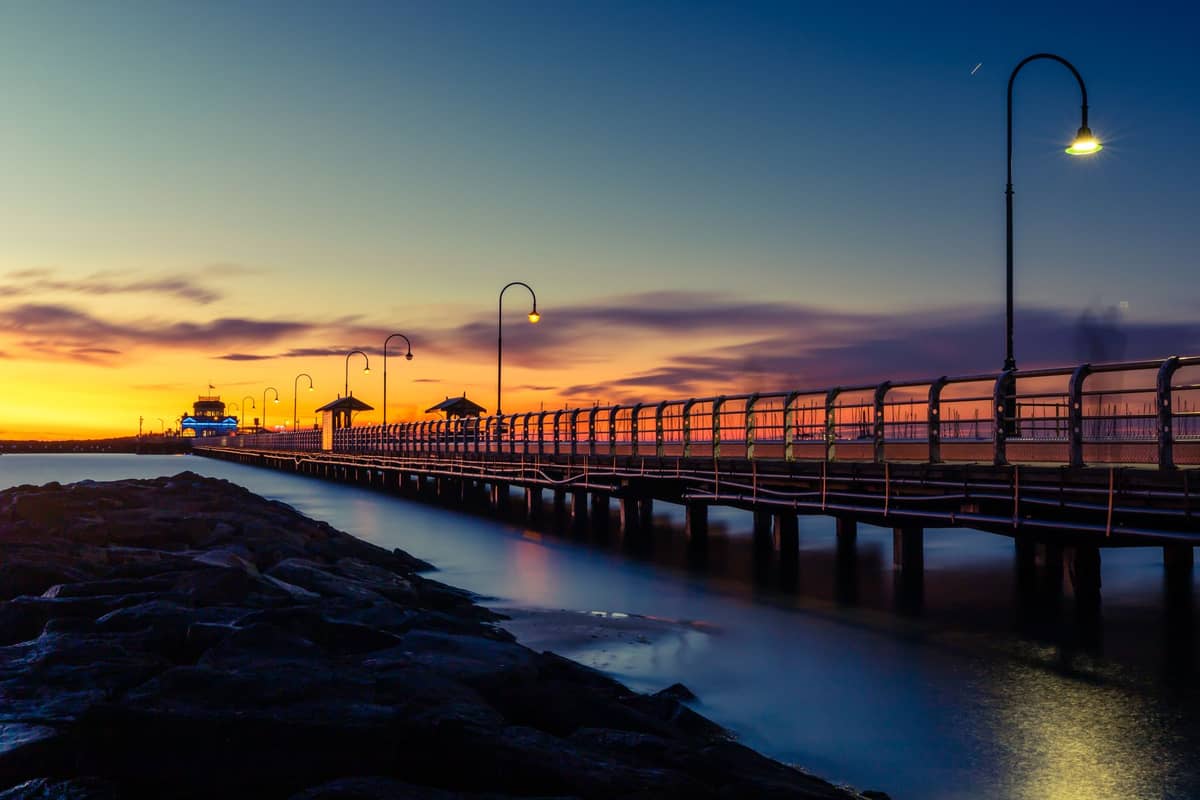
Getting to the viewing area is part of the experience. The pier stretches about 450 metres from the shore to the breakwater, and that walk sets the tone. In the late afternoon, joggers and dog walkers use the pier during its open hours; dogs must be leashed, and are not permitted on the breakwater. by the time the first session approaches, the crowd transitions toward families and wildlife watchers.
The new pier, which opened in December 2024 after a major redevelopment, has a flat, disability-compliant walkway along its length, making it accessible to wheelchair users and prams. The surface is smooth, but the walk is exposed to Port Phillip Bay on both sides, so expect wind regardless of season.
As you walk out, the Melbourne city skyline recedes behind you and the bay opens up. On clear evenings, this stretch offers some of the most uncluttered water views in inner Melbourne. If you want context on what else St Kilda's foreshore has to offer, the St Kilda Beach is a short walk north along the promenade.
Tickets & tours
Live prices and dates from our booking partner. If you book, we may earn a commission at no extra cost to you.
Penguin Parade Express Guided Tour from Melbourne
From 95 €Instant confirmationFree cancellationPuffing Billy and Phillip Island Penguin Parade Bus Tour
From 143 €Instant confirmationFree cancellationPhillip Island Penguin Parade small-group tour
From 97 €Instant confirmationFree cancellationPhillip Island Penguin Parade and Churchill Island farm tour
From 94 €Instant confirmationFree cancellation
The Penguin Session: What Actually Happens
Staff from Phillip Island Nature Parks manage the sessions at the viewing boardwalk, explain what to look and listen for, and enforce the key rules: no flash photography, keep noise low, and do not attempt to touch or approach the birds.
The sound comes before the sight. Penguins are louder than most people expect. Their calls are guttural and repetitive, somewhere between a bark and a bray, and you can hear the colony chattering in the rocks before you spot individual birds in the water. When penguins do emerge from the shallows, they move with an odd rolling gait, hopping between rocks and pausing frequently, apparently unimpressed by the row of people watching from above.
Visibility is low after dark, and the viewing area uses wildlife-friendly lighting. Bright lights and phone torches are not permitted near the birds. If you are hoping to photograph the penguins, conditions are dim; adjust expectations accordingly: the experience is about being present with the birds, not capturing sharp images.
⚠️ What to skip
Flash photography, bright lights, and phone torches are not permitted near the birds. Please follow staff directions on site.
Practical Logistics: Getting There and Getting In
Trams 12, 16, and 96 stop near St Kilda Pier and are practical ways to arrive without a car. Bus 606 also serves the area. Check Public Transport Victoria for current route details and fares before travelling.
Limited paid parking is available near the St Kilda Sea Baths and along adjacent roads, but spaces fill quickly on weekends and in summer. If you are combining the penguin session with dinner in the area, St Kilda has a dense concentration of restaurants and cafes within a few minutes' walk of the pier.
Admission is free, but this is not a walk-up experience. Tickets must be booked in advance through Phillip Island Nature Parks, and capacity is limited. Sessions can book out quickly, so check availability when the next week's tickets are released.
💡 Local tip
Book directly via the Phillip Island Nature Parks website at penguins.org.au. Do not rely on third-party booking platforms — confirm your ticket source is the official operator.
How Weather and Seasons Affect the Experience
Melbourne's weather is genuinely changeable year-round, and the pier is fully exposed to Port Phillip Bay. Even on a calm summer evening, the temperature at the end of the pier drops noticeably after sunset. In winter, wind and cold can make the session uncomfortable if you are underdressed. Bring at least one more layer than you think you need, and consider wind-resistant outerwear regardless of season.
The penguins are active year-round, but session times vary with seasonal sunset changes. In midsummer, the later sunset can mean a later evening visit. In winter, sessions start earlier, which suits an earlier evening schedule but comes with colder, windier conditions on the water.
For guidance on when Melbourne's weather is most manageable for outdoor activity, the best time to visit Melbourne covers seasonal conditions in detail. Autumn (March to May) and spring (September to November) tend to offer the most pleasant evenings on the pier, though spring weather in Melbourne is famously unpredictable.
Cultural and Ecological Context
Little penguins (Eudyptula minor) are native to southern Australia and New Zealand. The St Kilda colony is unusual in that it exists within an urban environment: these birds commute between Port Phillip Bay and the breakwater while surrounded by one of Australia's largest cities. The colony's ongoing presence is due in large part to habitat protection measures built into the breakwater's design and active management by Parks Victoria and Phillip Island Nature Parks.
St Kilda is on the traditional lands of the Bunurong people of the Kulin Nation, and the bay has been a source of food and cultural significance for Indigenous communities long before European settlement. This context is worth holding in mind when visiting any part of Melbourne's coast.
If the St Kilda experience sparks broader interest in penguin watching, the large-scale Penguin Parade at Phillip Island offers a much larger colony, though it requires a dedicated day trip from Melbourne and comes with an admission charge.
Who Should Manage Their Expectations
This experience tends to disappoint people who arrive expecting a guaranteed, close-up wildlife encounter similar to a managed zoo exhibit. The penguins are wild, and on any given night they may be fewer in number than hoped, or may take a long time to appear. Visibility is low at both sessions by definition — you are watching animals return to their burrows after dark, using dim red lighting. Photography is difficult, and anyone hoping to get sharp souvenir shots of penguins will likely leave frustrated.
Very young children who cannot stand quietly in low light for an extended period may find the session hard going. The pier walk itself is flat and manageable, but the viewing time requires patience and stillness. For families with older children who have a genuine interest in wildlife, it works very well.
Insider Tips
- Arrive at least 10 minutes before your session, as recommended by Phillip Island Nature Parks, and be ready to show your booking confirmation.
- Dress for the water, not the shore. The temperature at the end of the pier after sunset can feel 4 to 6 degrees colder than it does on the Esplanade. A wind-resistant layer over warm clothing is the practical combination.
- The later session (90 minutes after sunset) is generally less crowded than the first. If you want more breathing room at the railing and a more relaxed atmosphere, book the second session.
- Avoid using your phone torch or any bright personal light near the penguins; follow staff directions about lighting at the viewing area.
- Check Phillip Island Nature Parks' updates before travelling to the pier, and follow the operator's instructions if your session is affected by weather.
Who Is St Kilda Pier & Little Penguins For?
- Families with children aged 6 and up who have a genuine interest in animals
- Wildlife enthusiasts looking for an urban, free-entry nature experience
- Travellers who want to combine a sunset pier walk with an evening wildlife session
- Visitors who have already done the major indoor museums and want something different after dark
- Anyone with limited time who cannot make it to Phillip Island but wants to see little penguins
Nearby Attractions
Other things to see while in St Kilda:
- Luna Park Melbourne
Luna Park Melbourne has been welcoming visitors through its iconic grinning mouth since 1912, making it one of Australia's oldest operating amusement parks. Perched on the St Kilda foreshore, it combines heritage rides, carnival atmosphere, and sweeping bay views into an experience that works equally well for families and anyone drawn to classic fairground nostalgia.
- St Kilda Beach
St Kilda Beach is the closest major beach to central Melbourne, a long crescent of sand backed by palm-lined promenades, a historic pier, and one of the city's most eclectic neighbourhoods. It's genuinely enjoyable on the right day, but knowing when to go and what to expect will shape how much you get out of it.
Planning a trip? Discover personalized activities with the Nomado app.