Melbourne's Multicultural Food Districts: A Neighbourhood Guide
Melbourne, Australia is home to one of the world's most diverse urban food cultures, shaped by over 200 years of immigration waves. This guide breaks down the city's key multicultural food neighbourhoods, what to eat in each, when to go, and how to navigate them like a local.
Tickets & tours
Live prices and dates from our booking partner. If you book, we may earn a commission at no extra cost to you.
TL;DR
- Melbourne's multicultural food scene is concentrated in distinct neighbourhoods, not spread evenly across the city.
- Footscray is the standout destination for Vietnamese, Ethiopian, and South Sudanese food; Richmond's Victoria Street is the more central alternative for Vietnamese.
- Carlton's Lygon Street is famous for Italian food but has become tourist-heavy; seek out the older, family-run trattorie over the flashier newcomers.
- Queen Victoria Market (open Tue, Thu–Sat from 6am, Sun from 9am; closed Mon and Wed) is the single best place to sample Melbourne's multicultural produce in one stop.
- For a broader overview of eating in the city, see what to eat in Melbourne before choosing your neighbourhood.
Why Melbourne Has One of the World's Great Multicultural Food Scenes
Melbourne's food diversity is not a marketing slogan. It is the direct product of successive immigration waves that began with Chinese arrivals during the 1850s Gold Rush, continued through post-World War II European migration from Italy, Greece, and Yugoslavia, and accelerated through the late 20th century with significant Vietnamese, Lebanese, Indian, and East African communities. The 2021 Census recorded that Greater Melbourne is home to speakers of Mandarin, Vietnamese, Greek, Punjabi, Arabic, and dozens of other languages. That linguistic diversity maps almost exactly onto the city's neighbourhood food geography.
The result is a city where authenticity exists in pockets rather than being diluted across the whole metro area. You do not find the best pho in the CBD. You find it in Footscray or Richmond. The best Greek coffee is not in South Yarra. It is in Oakleigh or Northcote. Understanding this geography is the difference between a mediocre meal and one you will talk about for years.
ℹ️ Good to know
Melbourne sits on the traditional lands of the Wurundjeri Woi-wurrung and Bunurong peoples of the Kulin Nation. Indigenous Australian food culture, including native ingredients like wattleseed, lemon myrtle, and finger limes, is increasingly featured at contemporary Melbourne restaurants. Look for menus that source from First Nations producers.
Footscray: The Most Genuinely Multicultural Eating District
Footscray, about 5 km west of the CBD, is the neighbourhood that food-literate Melburnians name first when asked about multicultural dining. It is accessible by train on the Werribee and Williamstown lines, or by tram. The main drag is Hopkins Street and the surrounding blocks, where Vietnamese pho shops, Ethiopian injera restaurants, South Sudanese diners, and Chinese barbecue joints share the same 200-metre stretch. For context on how the broader inner-west fits together, the Footscray neighbourhood guide covers the precinct in full.
The Vietnamese food here is the most important stop. Pho broth in Footscray is typically richer and less sweet than what you find in the CBD's tourist-oriented Vietnamese restaurants. Portions are generous and prices are low, with most bowls running around AUD $15-20. Bun bo Hue (spicy Hue-style beef noodle soup) is less commonly found elsewhere in the city; several Footscray shops specialise in it. For banh mi, the Vietnamese bread roll, Footscray's bakeries rival anything in Sydney's Cabramatta.
The East African dining scene in Footscray is less well-known to visitors but equally worth seeking out. Ethiopian restaurants serve injera flatbread with communal platters of stewed legumes, vegetables, and meat. South Sudanese diners tend to be smaller, family-run, and less polished in decor, which is usually a good sign. Weekends are the best time to visit: the Footscray Market is livelier, and many restaurants run specials or expanded menus on Saturday mornings.
💡 Local tip
Footscray's food scene is at its best between 11am and 2pm on weekends, when families are eating and kitchens are at full capacity. Avoid visiting on public holidays without checking ahead, as many smaller family-run restaurants close for extended periods.
Richmond and Victoria Street: Vietnamese Food Closer to the City
Victoria Street in Richmond runs for about 1 km through the suburb's Vietnamese precinct, roughly 3 km east of the CBD. It is the more central option for Vietnamese food and remains legitimate rather than touristy, though it has become more gentrified over the past decade. The street's character sits somewhere between Footscray's raw authenticity and an inner-city dining strip. Prices are marginally higher than Footscray but still well below CBD equivalents. Richmond is also home to Melbourne Cricket Ground, which makes the suburb extremely crowded on match days; adjust your visit accordingly. For more on the area, the Richmond and South Yarra guide provides broader context.
Beyond Vietnamese food, Richmond has a secondary strip of Greek and Middle Eastern shops around Swan Street. This is not the city's primary destination for either cuisine, but it fills a gap if you are already in the area. Swan Street itself has evolved into a broader dining and bar precinct with cuisines ranging from Neapolitan pizza to Japanese ramen, so it no longer has a single ethnic identity.
Carlton and Lygon Street: Italian Heritage With Caveats
Lygon Street in Carlton is Melbourne's most famous multicultural food strip and also its most uneven. The Italian community that settled this area from the 1950s onwards built a genuinely important culinary precinct. The coffee culture here predates Melbourne's wider specialty coffee obsession by decades. The question is which parts of Lygon Street still deliver on that heritage and which have been replaced by overpriced tourist traps. For the full picture of the neighbourhood, the Carlton neighbourhood guide is worth reading alongside this one.
The honest answer: the northern end of Lygon Street, closer to Brunswick Street, holds more of the old-guard Italian operators. The southern end, closer to Grattan Street, is where the gelato shops with neon signs and the restaurants with sidewalk spruikers cluster. These are not necessarily bad, but they are calibrated to foot traffic rather than repeat local custom. The Carlton and United Breweries heritage building and the old Italian social clubs nearby are reminders of what the street once was.
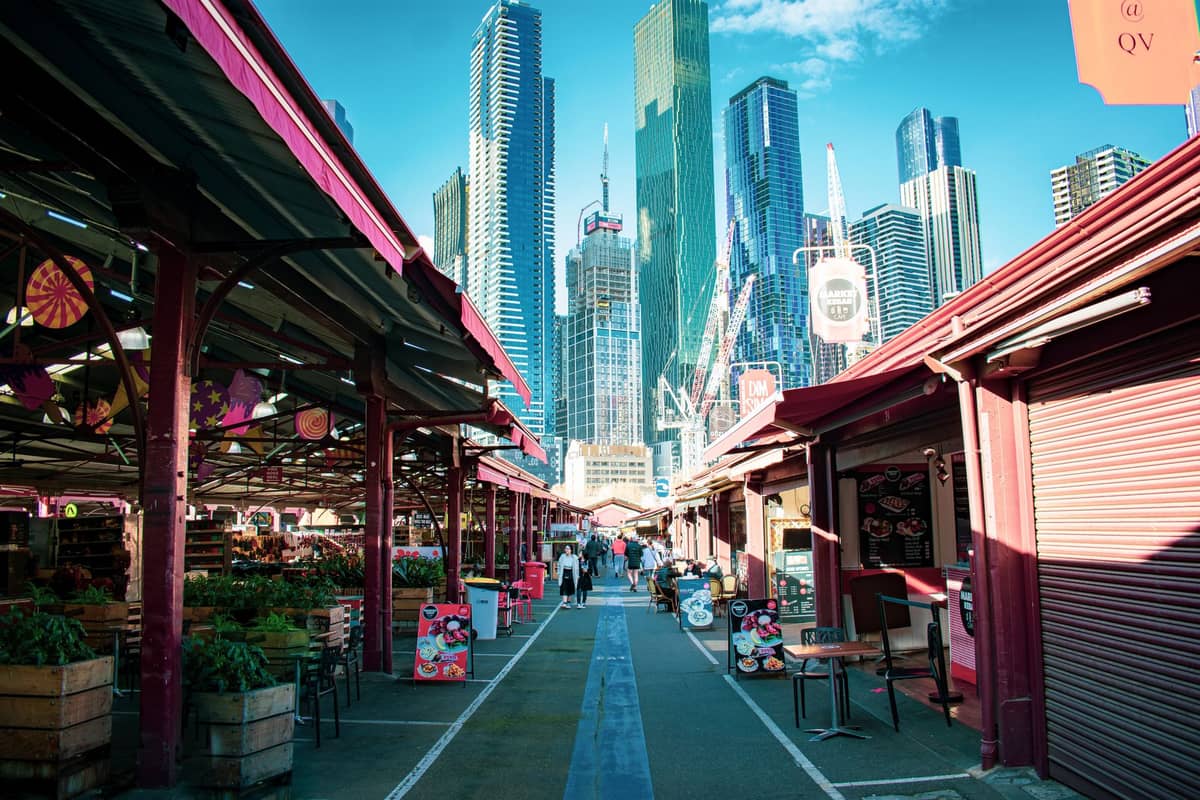
Carlton's other significant food asset is the Queen Victoria Market, a short walk or tram ride away into the CBD. The market trades Tuesday, Thursday, and Friday from 6am to 3pm, Saturday from 6am to 4pm, and Sunday from 9am to 4pm. It is closed Monday and Wednesday, and on most public holidays. Always verify hours at the official QVM website before visiting, especially around Easter or the Christmas period. The market's multicultural character comes through in its deli hall, where Italian smallgoods, Greek olives, Lebanese pastries, and Asian spices share the same covered shed. It is one of the most concentrated multicultural food experiences in the city. For a guide to Melbourne's broader market culture, see the Melbourne markets guide.
⚠️ What to skip
Avoid the restaurant touts on Lygon Street who stand on the pavement offering deals or discounted set menus. Restaurants confident in their quality do not need to pull in customers this way. Walk past and look for places with regular local clientele rather than tourist-facing signage.
Brunswick: Middle Eastern, Turkish, and the Newer Wave
Brunswick, running north of Fitzroy along Sydney Road, is where Melbourne's Lebanese, Turkish, and broader Middle Eastern food culture is most concentrated. Sydney Road itself is one of the longest continuous strips of independent businesses in the country, and the food offer reflects the suburb's history as a destination for postwar migration from the Mediterranean and, more recently, from the Horn of Africa. The Brunswick neighbourhood guide covers the area's broader character.
For practical eating, Brunswick's strengths are Lebanese bakeries (open early, cheap, and producing fresh manoushe and pide from wood-fired ovens), Turkish gozleme stalls, and a string of halal butchers and spice shops that supply much of Melbourne's Middle Eastern home cooking. This is a suburb where you eat well for under AUD $15 at breakfast or lunch. Several Turkish restaurants around Barkly Street and Glenlyon Road are popular with the local community rather than tourists, which is always the more reliable indicator of quality.
Brunswick has also become a landing zone for newer food communities over the past decade. Eritrean, Somali, and Afghan food operators have opened alongside the established Middle Eastern businesses. The suburb's food scene changes faster than Carlton or Richmond because rents are more accessible, which makes it worth revisiting annually rather than relying on old recommendations.
Fitzroy and Collingwood: Not a Multicultural Food District, But Worth Knowing Why
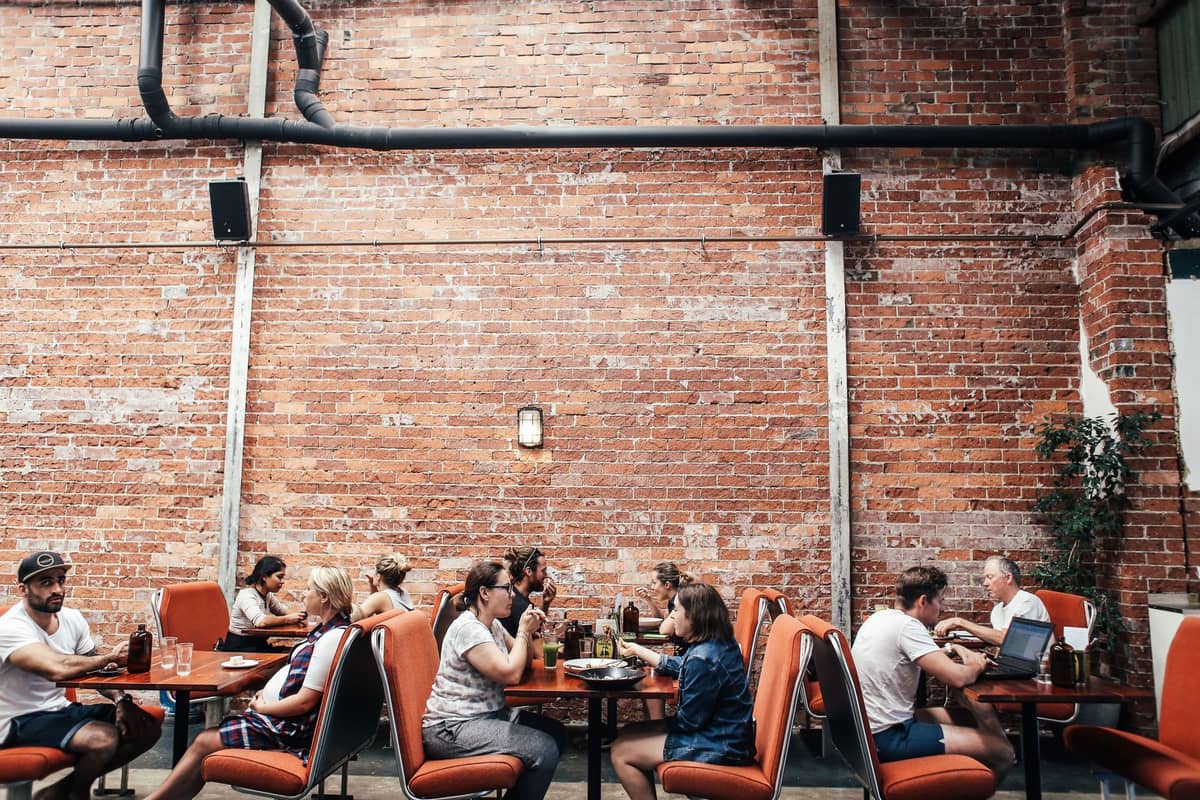
Fitzroy and Collingwood get significant attention in Melbourne food coverage, but they are primarily contemporary dining destinations rather than multicultural food districts in the traditional sense. The multicultural food you find here, whether it is a Japanese izakaya on Smith Street or a Sri Lankan curry shop on Johnston Street, is filtered through the inner-city dining lens: higher prices, smaller portions, and presentation calibrated to the Instagram era. That is not a criticism, just an accurate description. If that style of eating appeals to you, the Fitzroy neighbourhood guide has more detail.
The exception worth noting is Fitzroy's Spanish and Latin American presence around Johnston Street, which has historical roots and a few long-standing venues. The Fitzroy Town Hall area hosts community events connected to the Spanish-speaking population, and some of the taqueria and ceviche spots nearby have genuine credibility. But for the majority of multicultural eating, Footscray and Brunswick will serve you better for less money.
Practical Tips for Eating Across Melbourne's Food Districts
- Go at lunchtime on weekdays Many family-run multicultural restaurants offer their best value and freshest cooking at weekday lunches, when they are feeding local workers rather than weekend crowds.
- Use public transport, not a car Footscray, Richmond, Carlton, and Brunswick are all well served by train or tram. Parking is difficult and adds stress to what should be a relaxed outing. A Myki card covers all modes.
- Bring cash to smaller venues Many independent multicultural restaurants have minimum card transaction amounts of AUD $10-15, and some smaller stalls are cash only. An ATM run before you start will save friction.
- Tipping is not obligatory Service charges are not standard in Australia, and tipping is genuinely optional. Rounding up on a card or leaving a few dollars on the table is appreciated but never expected.
- Check public holiday hours proactively Melbourne has more public holidays than most Australian cities (including the Melbourne Cup day in November). Many multicultural restaurants close or reduce hours on these days without advance online notice.
- Footscray: best for Vietnamese, Ethiopian, South Sudanese food. Train access on Werribee and Williamstown lines.
- Victoria Street, Richmond: best central option for Vietnamese food. Trams on Bridge Road, trains to Richmond station.
- Lygon Street, Carlton: Italian heritage. Walk from the CBD or tram on Swanston Street. Be selective about which venues you choose.
- Sydney Road, Brunswick: Lebanese, Turkish, Middle Eastern, and newer East African food. Trams run the full length of Sydney Road.
- Oakleigh (further south-east): Melbourne's most authentic Greek food precinct, about 20 km from the CBD but accessible by train on the Pakenham/Cranbourne line.
- Springvale (south-east): Vietnamese and Cambodian food at some of the cheapest prices in the metro area. Train access on the Cranbourne line.
If your time is limited and you want to experience several food cultures in a single outing, Queen Victoria Market on a Saturday morning is the most efficient option in the city. It is not a substitute for sitting down to a meal in Footscray or Brunswick, but the deli hall and food stalls give you a compressed version of Melbourne's multicultural produce culture. Pair that morning visit with the Melbourne coffee guide to understand the city's espresso culture, which is itself partly rooted in Italian and Greek migration history.
For travellers planning a full itinerary that incorporates Melbourne's food culture alongside its other attractions, the 3 days in Melbourne itinerary includes neighbourhood meal stops that align with the districts covered above. And if budget is a consideration, a significant portion of Melbourne's multicultural food scene falls within reach of the Melbourne on a budget guide, since the most authentic multicultural restaurants are often the most affordable.
FAQ
What is the best suburb in Melbourne for multicultural food?
Footscray is the most consistently recommended suburb for genuinely multicultural eating, with Vietnamese, Ethiopian, and South Sudanese food all concentrated in a small area. It is about 5 km west of the CBD and accessible by train. Richmond's Victoria Street is the closer alternative for Vietnamese specifically, while Brunswick on Sydney Road is the best destination for Lebanese and Turkish food.
Is Melbourne's Chinatown worth visiting for food?
Melbourne's Chinatown in the CBD, centred on Little Bourke Street, is one of the longest continuously operating Chinatowns in the world outside of China. It is worth visiting for its history and for a number of long-established Cantonese and yum cha restaurants. However, for the most diverse and affordable Chinese food, the inner-west suburbs (Box Hill and Doncaster in the east, and Springvale in the south-east) have broader options at lower prices.
When is the best time to visit Melbourne's food markets?
Queen Victoria Market trades Tuesday, Thursday, and Friday from 6am to 3pm, Saturday from 6am to 4pm, and Sunday from 9am to 4pm. It is closed Monday, Wednesday, and most public holidays. Saturday mornings offer the best combination of fresh produce, food stalls, and atmosphere. Always check the official QVM website for changes around public holidays.
How do I get around Melbourne's food districts without a car?
All of the main multicultural food districts are accessible by public transport using a Myki card. Footscray is on the Werribee and Williamstown train lines. Richmond has its own train station. Carlton and Brunswick are served by trams (routes 1, 8, 19, and 57 among others). The CBD's Free Tram Zone covers central stops at no cost. For a full overview of navigating the city, see the getting around Melbourne guide.
Is the food in Melbourne's multicultural districts affordable?
Generally yes, especially compared to CBD restaurants. A bowl of pho in Footscray typically costs AUD $15-20. A Lebanese manoushe in Brunswick can be under AUD $10. Ethiopian communal platters for two people usually run AUD $35-50. Prices are highest in Carlton's Lygon Street tourist strip and lowest in further-out suburbs like Springvale and Oakleigh.
Tickets & tours
Live prices and dates from our booking partner. If you book, we may earn a commission at no extra cost to you.
Planning a trip? Discover personalized activities with the Nomado app.