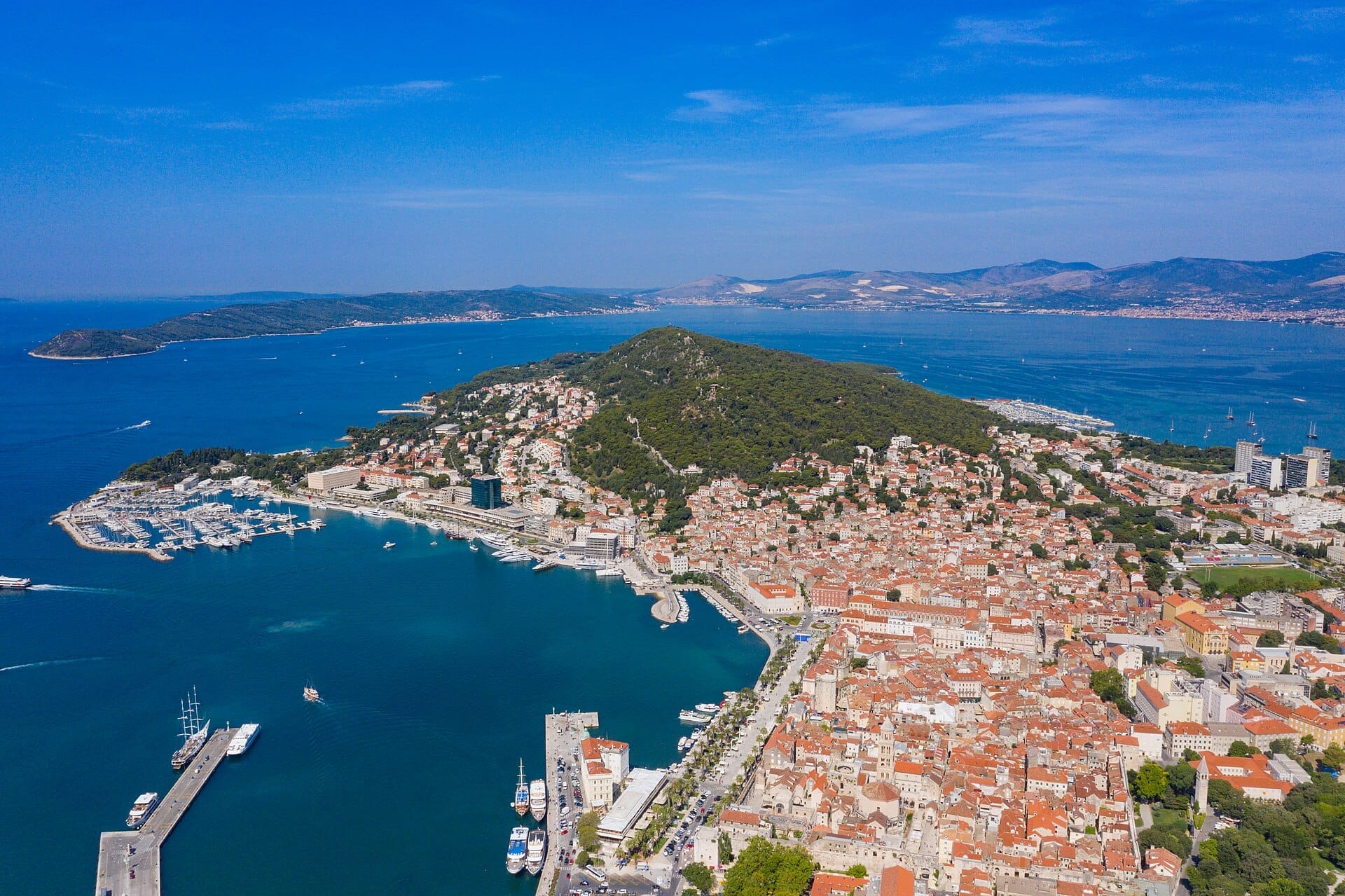
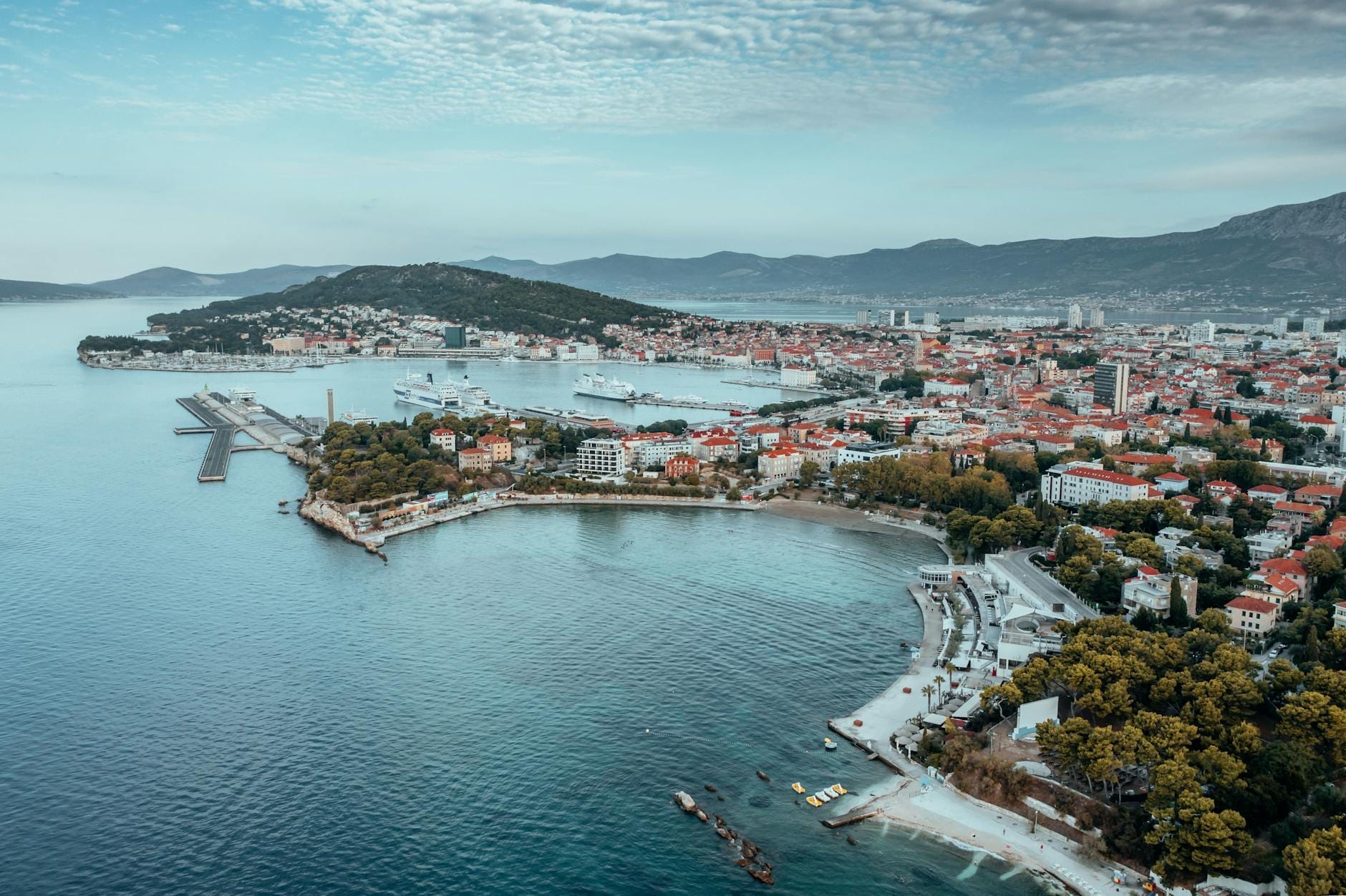
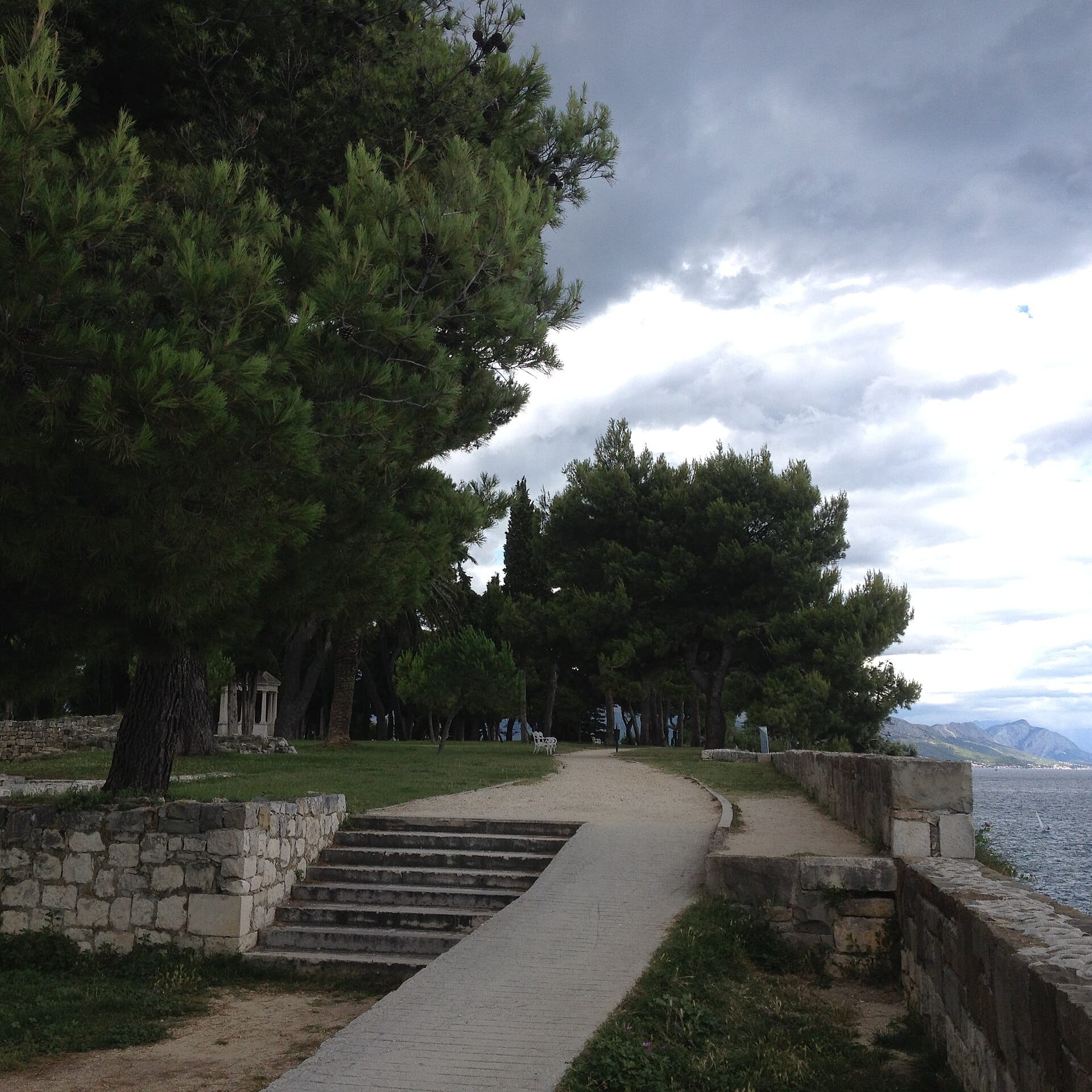
Marjan Hill is Split's forested western peninsula, a 297-hectare protected park that rises above the Adriatic just minutes from the old town. Locals jog its ridge at dawn, families swim in its coves through summer, and anyone who climbs to the 178-meter summit of Telegrin gets one of the most complete panoramas in Dalmatia.
Marjan is where Split breathes. A 3-kilometer wooded peninsula forming the city's western anchor, it holds hiking trails, rocky swimming coves, centuries-old chapels, and a summit viewpoint that puts every Adriatic island within sight. Unlike any other neighborhood in Split, its value is measured in altitude and pine canopy rather than cafés and nightlife.
Orientation
Marjan occupies the entire western end of Split's central peninsula. It begins at the foot of the hill just west of the Varoš quarter, which is itself a short walk from the historic center, and extends roughly 3 kilometers westward into the Adriatic before tapering toward Bene beach. The protected Marjan Forest Park covers 297.11 hectares, making it by far the largest green space within Split's city limits.
Think of the peninsula as a long ridge running east to west, with two very different flanks. The southern face drops steeply to the sea in limestone cliffs and small rocky coves, with clear water directly below. The northern side slopes more gradually down toward the residential coastal suburbs and the wider bay. The spine along the top connects all the key viewpoints and is linked by the paved ridge path locals call the Šetnica, which runs the full length of the park.
The most convenient entry point is the stone staircase at the base of the eastern slope, reachable by walking west from the Riva promenade through the Varoš neighborhood in roughly 15 to 20 minutes. There are several staircase access points along the southern and eastern base of the hill, all clearly marked. Varoš itself, Split's oldest residential quarter, acts as a buffer zone between the tourist energy of Diocletian's Palace and the quiet of the park.
From Marjan's summit at Telegrin, the city's geography becomes immediately legible. You can see the arc of Kaštela Bay to the northwest, the mountain ridges of Mosor and Kozjak rising behind the city, the island chain of Brač, Hvar, Šolta, and Vis spread across the southern Adriatic, and the flatlands where ancient Salona once stood just a few kilometers inland. It is the best free orientation tool in Split.
Character & Atmosphere
In the early morning, Marjan is entirely a local institution. Joggers are on the Šetnica ridge path by 6am, following a route they have likely run hundreds of times. Dog walkers take the lower pine-shaded loops in the first hour of light. Older residents climb the stone steps slowly, thermos in hand. The light at this hour comes in low from the east, catching the limestone on the southern cliff face and turning it pale gold before the air temperature climbs.
By mid-morning the mix shifts. Families with young children head toward the calmer northern shore beaches. Hikers tackle the longer routes toward Telegrin. The dense canopy of Aleppo pine and Mediterranean scrub keeps the interior trails surprisingly cool even in peak summer, which explains why locals retreat here in July and August when the stone city below turns into a heat sink. The shade is genuine and immediate once you are 10 minutes from the trailhead.
Afternoons bring swimmers and sunbathers to the southern coves and the rocky platforms above the water on the south face. The cliffs here drop directly into clear turquoise sea, and the rock climbing routes on the limestone walls are regularly used by a dedicated local climbing community. As the sun moves west, the light shifts from blue-green to deep amber over the open Adriatic, and the ridge fills with people who have timed their walk for the sunset view from Telegrin or from the lookout benches along the Šetnica.
After dark, Marjan is quiet and unlit. The trails are empty past 9pm and are not a place to navigate without a torch. This is not a nightlife destination by any definition. The atmosphere after sunset belongs to the residential edges: families eating on apartment terraces, the faint sound of televisions through open windows, the occasional jogger on the lower loops. If you are looking for Split's nightlife, that energy is concentrated entirely on the other side of the city.
ℹ️ Good to know
Marjan has been a protected forest park since 1964 and was classified as a protected cultural landscape in 2014. The park is managed under a public order act that restricts certain activities, including lighting fires and playing amplified music on the trails. Current access rules and any seasonal closures should be verified with the Marjan Public Institution before visiting.
What to See & Do
The summit of Telegrin, at 178 meters, is the single most rewarding destination on the peninsula. A small stone viewpoint tower at the top gives a 360-degree panorama that stretches across virtually every landmark in the broader region: the islands of Brač, Hvar, Šolta, and Vis strung across the southern Adriatic; the outlines of Čiovo and Trogir to the northwest; the mountain wall of Mosor and Kozjak behind the city; the blue curve of Kaštela Bay; and, on a clear day, the unmistakable profile of Klis Fortress perched on its limestone crag directly north. The walk from the eastern trailhead to Telegrin takes 45 to 60 minutes at a moderate pace with modest elevation gain.
Along the ridge and tucked into the hillside are several historic structures that most visitors walk past without stopping. The Church of St. Nicholas dates to the 13th century and sits in a rocky hollow on the southern face, easy to miss if you are moving fast. On the hill there are also the remains of a 16th-century Jewish cemetery, one of the older Jewish burial sites on the eastern Adriatic coast, and several small chapels scattered across the upper slopes that mark centuries of quiet religious use of this hill by Split's residents.
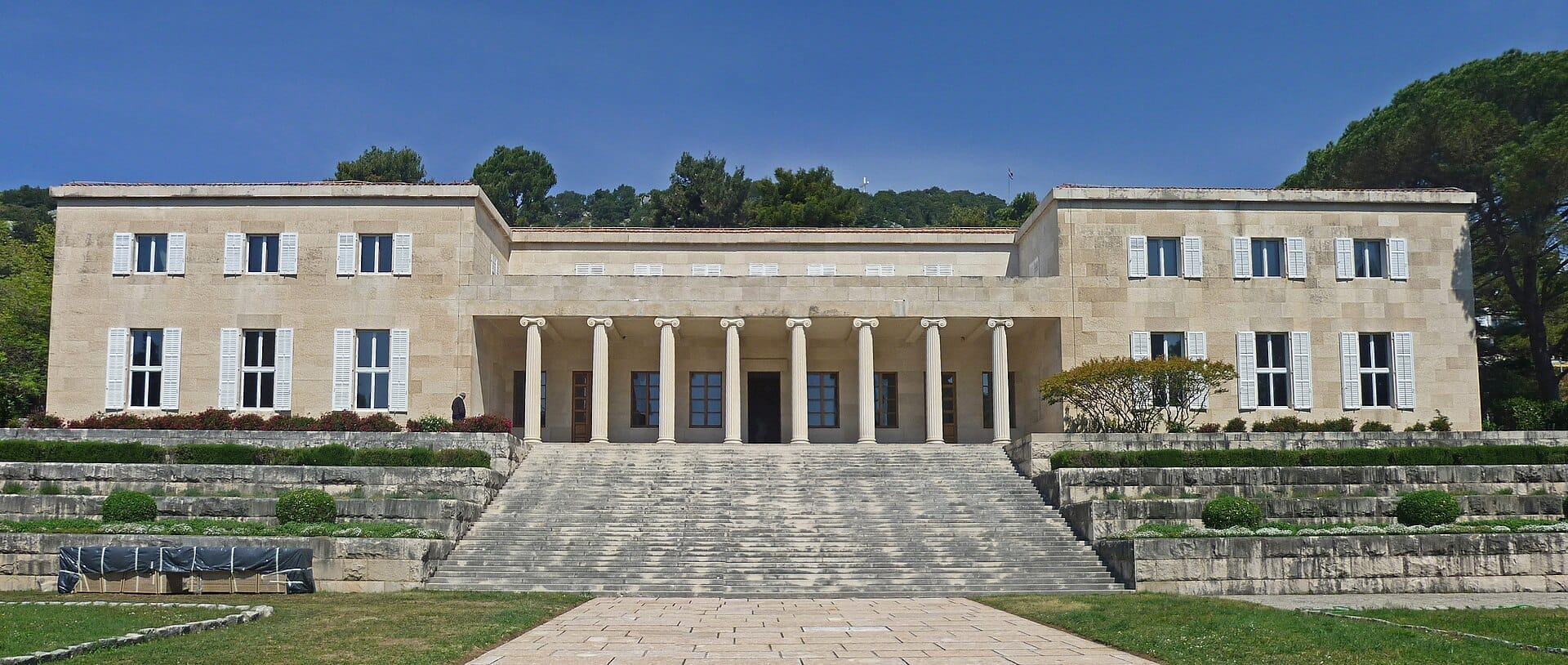
Just below the eastern slopes of Marjan, technically outside the park boundary but closely associated with the neighborhood, the Meštrović Gallery is worth planning time for. The sculptor Ivan Meštrović designed the villa himself, and the grounds and sea-facing terrace make it one of the more quietly compelling cultural stops in Split. The building's position, with open views across the southern bay, connects it visually and emotionally to the landscape of Marjan above.
Bene beach at the western tip is the peninsula's most accessible swimming destination, with a combination of rocky platforms and a small pebble area, plus calmer water than the more exposed city beaches. The northern shore has several additional cove beaches that fill on summer afternoons but rarely reach the density of Split's urban beaches. Rock climbing on the south face cliffs is organized through local climbing clubs, and the routes there are well-documented on dedicated climbing resources.
Šetnica ridge path: paved route running the length of the park, suitable for walking and cycling
Bene beach: rocky swimming cove at the western tip, calmer and less crowded than city beaches
Meštrović Gallery: sculptor's villa at the eastern base of the hill, sea-view terrace
Church of St. Nicholas: 13th-century church on the south face
16th-century Jewish cemetery: historic cemetery on the eastern Adriatic
Rock climbing routes: south-face limestone cliffs above the sea
City zoo: small zoo at the base of the hill, suitable for families with young children
For families, combining the lower trails with the zoo and a swim at Bene makes a natural half-day. For serious hikers, completing the full ridge walk from the eastern staircase to Bene and returning via the northern coastal path is a satisfying 3 to 4 hour loop with no significant route-finding required. If you want to connect Marjan to the rest of Split's historic streets and squares, the Split walking tour guide includes routes that link the park trailhead to Diocletian's Palace and the Riva.
💡 Local tip
The best light for photography from Telegrin arrives in the late afternoon, roughly two hours before sunset, when the island chain to the south turns deep blue against a backlit sky. Bring water for the climb regardless of the season, and especially between June and September when the exposed sections of the upper trail can be intensely hot.
Eating & Drinking
Marjan is not a restaurant district, and that is a deliberate consequence of its protected status. There are no cafés, restaurants, or food stalls inside the park boundaries. If you are planning more than an hour on the trails, pack water and food before you start. This applies year-round but is especially critical in summer.
The exception is the café-bar at Bene beach on the western end, which operates during the summer season and serves cold drinks, coffee, and simple snacks. It is functional rather than notable, but the outdoor seating above the cove earns it a place on the itinerary for anyone finishing a long ridge walk and wanting a cold beer before the return journey.
The better food options are at Marjan's edges, particularly in the Varoš neighborhood at the eastern base of the hill. Varoš is Split's oldest residential quarter, a compact network of narrow streets on a gentle slope between the hill and the Diocletian's Palace area. It has several small konobas (traditional Dalmatian taverns) serving grilled fish, peka dishes (meat or seafood slow-cooked under a cast-iron bell), and local wine poured by the decanter. These places tend to be quieter and noticeably more affordable than restaurants directly on the tourist waterfront. A fish lunch with wine at a typical Varoš konoba runs about 20 to 35 EUR per person.
The northern coastal road that runs along the base of the hill also has a scattering of cafés and small restaurants oriented toward local residents rather than visitors. For a full overview of Dalmatian food culture in Split, including peka, brudet (fish stew), and the local pastry fritule, the guide to Split's food scene covers everything you need to know before sitting down.
Getting There & Around
Walking is the simplest and most practical way to reach Marjan from the city center. From the Riva, head west along the seafront past the ACI Marina and continue into the Varoš quarter. The main staircase entrance to the hill is at the foot of the eastern slope, about 15 to 20 minutes on foot from the Riva. Additional staircase access points are distributed along the eastern and southern base of the hill.
Split has no metro or tram system. Local city buses operated by Promet Split run along the northern coastal road and can get you closer to the Bene end of the peninsula without the full ridge walk, which is useful if you want to start at the western tip and walk back east. For a complete overview of bus routes, taxi options, and how to navigate the wider city, the guide to getting around Split has the practical details.
Cycling is possible on the Šetnica ridge path, which is wide enough for most of its length. Bike rental shops near the city center offer hourly and daily rates. The route along the northern coastal road to Bene is largely flat and makes for a pleasant 20-minute ride from the edge of Varoš. A few sections near the Telegrin summit approach require dismounting. Bring a lock: there are no formal bike storage facilities inside the park.
⚠️ What to skip
The trails on the southern face of Marjan include steep and in places unmarked sections above limestone cliffs. After rainfall, the rock becomes genuinely slippery. Stick to marked paths, avoid cliff edges in wet conditions, and do not attempt the southern face routes after dark. Trails are completely unlit after sunset.
Where to Stay
Marjan is primarily residential and recreational rather than a hotel district. The slopes above Varoš and the Varoš quarter itself offer apartments and private rooms, generally at lower prices than the historic core. The tradeoff is practical: Varoš streets are narrow, often stepped, and on a slope, which makes arriving with heavy luggage genuinely inconvenient. For a full comparison of Split's neighborhoods and accommodation options, the guide to where to stay in Split covers the full picture.
Staying near Marjan suits a specific kind of traveler. If you prioritize quiet mornings, easy access to the sea on uncrowded rocks rather than packed tourist beaches, and a 20-minute walk to the historic center rather than being in the middle of it, this area delivers well. You are far enough from the Riva and the Palace to avoid late-night noise from bars, but close enough to reach both on foot without effort. The absence of tour groups walking past your door at 9am is a genuine quality-of-life advantage over staying inside the old town walls.
Families should consider the Marjan edge seriously. The lower trails are pushchair-accessible in places, the city zoo sits at the base of the hill, and Bene beach has calmer, shallower water than the more exposed beaches on the south side of the city. For couples, the combination of evening walks on the ridge and dinner in a quiet Varoš konoba is one of Split's more romantic itineraries without any effort required. The Split with kids guide goes into more detail on the family logistics.
Marjan as a Base for Day Trips
One underappreciated advantage of staying near Marjan is that it keeps you connected to Split's wider day-trip network without the noise of the tourist center. The ferry terminal for the islands is a 25-minute walk east along the seafront. You can spend a dawn jog on the Šetnica and still be on a morning boat to Hvar Island before 9am. The proximity to both the park and the ferries is a combination that most city-center accommodations cannot match.
The view from Telegrin also functions as a useful geographical orientation for the wider region. Standing at the summit, you can pick out the white walls of Klis Fortress on its ridge to the north, the coastal strip of Kaštela to the northwest, and the flatlands where ancient Salona once stood. The Salona Roman ruins are only about 5 kilometers from the city center and pair naturally with a Marjan morning as a half-day itinerary. For the full range of excursion options from Split, the day trips from Split guide covers national parks, island crossings, and everything in between.
TL;DR
Marjan Hill is Split's 297-hectare forested peninsula, 15 to 20 minutes on foot from the Riva, with hiking trails, rocky swimming coves, and a 178-meter summit panorama covering every major Adriatic island.
Best in the early morning for jogging and trail walking, and in the late afternoon for the sunset views from the Šetnica ridge path or Telegrin summit tower.
No restaurants inside the park: bring water and food for longer walks. Dining options are in the adjacent Varoš neighborhood, where traditional konobas serve Dalmatian fish and peka at moderate prices.
Ideal for active travelers, couples wanting quiet and sea access, and families with children (zoo at the base, calm beach at Bene). Not suitable for anyone prioritizing nightlife, urban dining variety, or easy luggage logistics.
Not for everyone: trails on the south face are steep and unlit after dark, and staying near Marjan means accepting a 20-minute walk to the historic core and limited nearby dining.
Three days in Split is enough to cover the Roman palace that doubles as a living neighborhood, hike the forested hill above the city, and reach one of Croatia's best day trip destinations. This guide gives you a realistic, sequenced plan with specific timings, honest cost breakdowns, and clear advice on when to go and what to avoid.
Split sits on one of the most beach-rich stretches of the Adriatic, with options ranging from sandy city bays to remote island coves. This guide covers the best beaches in Split itself, plus the top island and coastal spots reachable on a day trip.
Split rewards travelers differently depending on when they arrive. This guide breaks down every season, from the shoulder-season sweet spots of June and September to the realities of peak summer and the quiet appeal of winter, so you can choose the right time for your trip.
Split sits at the centre of some of the most spectacular island waters in the Mediterranean. Whether you want to float inside a glowing sea cave, swim at a legendary beach, or explore a remote island with excellent local wine, this guide covers every boat tour worth booking from Split's piers.
Split is one of the best-positioned cities in the Mediterranean for day trips. Within two hours you can reach cascading national park waterfalls, medieval island towns, ancient Roman ruins, and secluded Adriatic beaches. This guide covers the top destinations worth leaving the city for, with practical advice on getting there.
Krka National Park is the most practical major day trip from Split: under 90 minutes away, no ferry schedules, and waterfalls that justify the early alarm. This guide covers every transport option, the Lozovac vs. Skradin entrance debate, current swimming restrictions, and how to time your visit to avoid the worst of the summer crowds.
Plitvice Lakes is one of the most dramatic natural landscapes in Europe, and it's doable as a day trip from Split if you plan correctly. This guide covers every transport option, the true cost breakdown, seasonal timing, and what separates a good tour from a rushed one.
Split rewards the budget-conscious traveller generously. Most of the city's greatest attractions cost nothing at all, from wandering a 1,700-year-old Roman palace to hiking a forested hill above the Adriatic. Here are 12 genuinely free things to do in Split.
Split and Klis stood in for the slave city of Meereen in seasons 4 and 5 of Game of Thrones. This guide breaks down every filming location, what each site looks like in real life versus on screen, and how to plan an efficient half-day covering both.
Everything you need to know about getting around Split, Croatia — from Split Airport (SPU) to the city center, navigating the Old Town on foot, catching ferries to the islands, and reaching national parks by bus. Practical costs, seasonal warnings, and zero fluff.
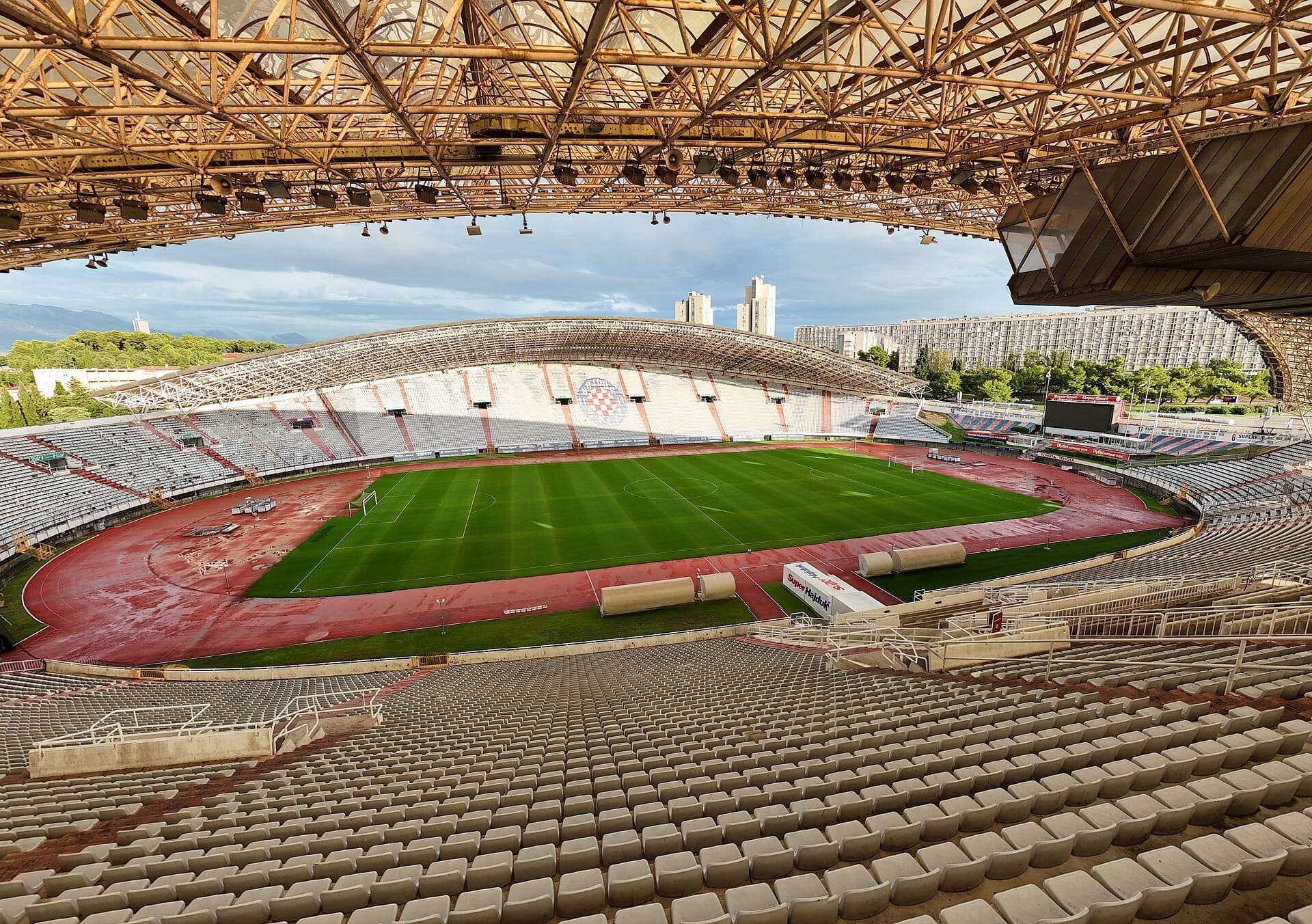
Hajduk Split is more than a football club — it is the heartbeat of Dalmatia. This guide covers everything you need to attend a match at Poljud: ticket prices, booking platforms, stand selection, matchday logistics, and how to fit a fixture into your Split itinerary.
Split rewards those who wander past Diocletian's Palace. From a cliff-edge sunset terrace to Roman ruins swallowed by meadows, these are the places locals love and guidebooks overlook.
Split is Croatia's second-largest city and one of the Mediterranean's most compelling destinations. But is it worth visiting, and for how long? This guide cuts through the hype with specific advice on timing, realistic expectations, and what the city does better than anywhere else in the Adriatic.
Split is the undisputed hub for island hopping in Croatia, with direct ferry connections to Brač, Hvar, Vis, Korčula, Mljet, and beyond. This guide covers every practical detail: which islands are actually worth your time, how to book ferries before they sell out, the best seasonal windows, and how to build a realistic multi-island itinerary without wasting half your trip at port.
Split, Croatia rewards couples who look past the ferry crowds and party reputation. A 1,700-year-old Roman palace you can wander at dusk, a pine-forested hill with island views, and ferry access to Hvar within an hour — this guide covers how to experience the best of Split as a couple, including when to go, where to eat, and which day trips are actually worth your time.
July and August are the most intense months to visit Split, Croatia. Scorching heat, Adriatic waters at their warmest, packed beaches, major festivals, and ferry connections firing on all cylinders. This guide breaks down exactly what to expect and how to make the most of it.
Split, Croatia in winter is a genuinely different destination from its summer self. Fewer crowds, lower prices, and the same UNESCO-listed palace walls — but with real trade-offs around island access, restaurant closures, and unpredictable rain. This guide gives you the full picture.
Split, Croatia runs on a late-night schedule that catches most visitors off guard. This guide breaks down how the evening actually works, from afternoon beach clubs to Old Town bars, rooftop cocktails, and the boat parties that define summer nights on the Adriatic.
Split, Croatia is one of the Mediterranean's most rewarding cities for budget-conscious travelers. This guide breaks down real daily costs, the best free attractions, where to eat without the tourist markup, and exactly when to visit to cut accommodation costs by up to 50%.
Split, Croatia is genuinely safe for most travelers, but that doesn't mean risk-free. This guide covers the real threats, from pickpockets in Diocletian's Palace to overcharging scams, so you can visit confidently and without unnecessary worry.
Three realistic ways to travel from Split to Dubrovnik, each with different trade-offs. This guide breaks down ferry schedules, bus operators, driving logistics, and seasonal factors so you can book the right option for your trip.
Everything you need to know about the Split to Hvar ferry crossing: which operators run the route, how long it takes, what tickets cost, and how schedules shift dramatically between summer and winter. Includes booking tips and common mistakes to avoid.
Split's old town is one of Europe's most remarkable urban spaces, where a 4th-century Roman emperor's retirement palace became a living city. This self-guided walking tour covers the full route, key landmarks, practical timing, and honest advice on what's worth your time.
Split, Croatia is one of the Adriatic's most rewarding family destinations, blending a UNESCO Roman palace, sandy-bottom beaches, and easy island day trips into a trip that works for all ages. This guide covers the best family attractions, seasonal planning, day trip logistics, and honest tips on what to skip.
Split is one of the Mediterranean's most layered cities: a Roman palace you can sleep inside, a hill park above a working harbor, and ferry connections to some of Croatia's finest islands. This guide covers the best things to do in Split, from UNESCO-listed history to practical day-trip logistics, with honest advice on what to skip.
Ultra Europe is one of Europe's biggest electronic music festivals, held every July in Split, Croatia. This guide covers dates, tickets, the venue, what to expect from Destination Ultra island events, and practical tips for first-timers.
Dalmatian cuisine is one of the most distinct regional food cultures in Croatia — built on olive oil, fresh seafood, and slow-cooked meat dishes with roots going back centuries. This guide breaks down exactly what to eat in Split, dish by dish, with context on ingredients, seasonality, and where to find the real thing.
Not all of Split's neighborhoods are created equal. This guide breaks down the four main areas where visitors stay, who each one suits, what to expect on price, and what nobody warns you about before you book.