Marjan Hill & Forest Park: Split's Green Lung Above the Adriatic
Marjan Forest Park (Park šuma Marjan) is a protected peninsula of pine, Mediterranean scrub, and limestone cliffs rising 178 metres above Split's western edge. Free to enter and open around the clock, it offers panoramic viewpoints, quiet hiking trails, small rocky beaches, and medieval chapels — all within walking distance of Diocletian's Palace.
Quick Facts
- Location
- Western peninsula of Split, ~10-min walk from Diocletian's Palace
- Getting There
- Walk west from Riva promenade; bus lines serve the Spinut and Mejaši areas on the north slope
- Time Needed
- 1.5 hrs for a single viewpoint loop; 3-4 hrs for a full traverse to the western tip
- Cost
- Free entry year-round
- Best for
- Hikers, families, photographers, and anyone wanting a break from the crowds
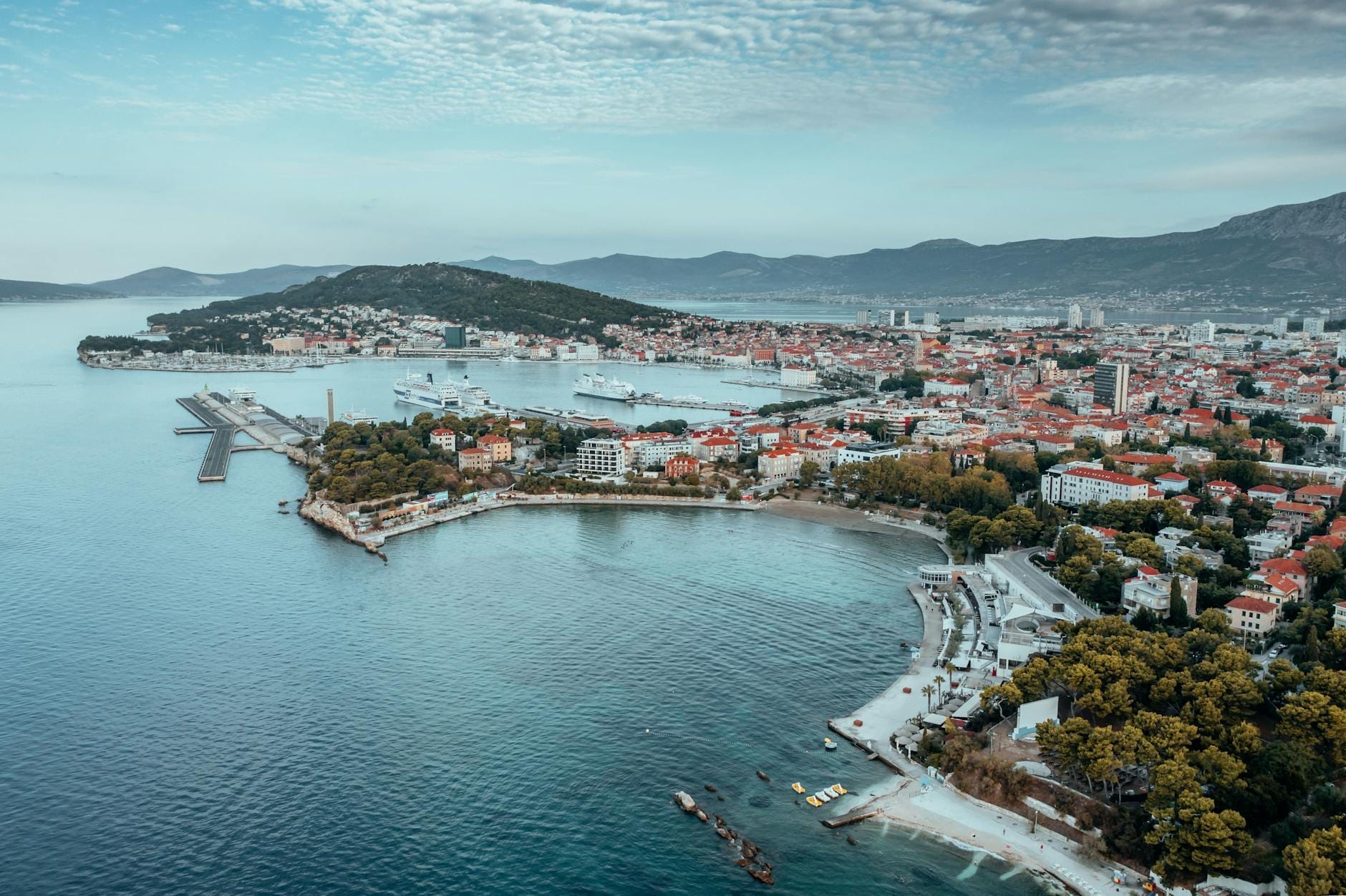
What Marjan Forest Park Actually Is
Marjan Forest Park (Croatian: Park šuma Marjan) is a protected forest park covering a forested peninsula that juts westward from the city of Split into the Adriatic Sea. The hill stretches roughly 3.5 km from east to west and 1.5 km north to south, with its highest point, Telegrin, reaching 178 metres. More than 300 plant species grow along its trails, dominated by Aleppo pine, holm oak, and the kind of aromatic Mediterranean scrub that fills the air with something between rosemary and sea salt on warm afternoons.
The park is not a manicured botanical garden. Paths are rocky underfoot, signage is sparse in places, and the further west you walk, the quieter and wilder it becomes. That contrast with Split's lively waterfront is precisely the point. If you've already covered Diocletian's Palace and need to decompress, Marjan is where locals go.
💡 Local tip
Wear proper footwear. Flip-flops work for the first paved stretch near the eastern entrance but become a liability on limestone paths further in. Light trail shoes are ideal.
A Place With Deep Roots: History and Protected Status
Marjan's use as a recreational and spiritual retreat goes back to the era of Diocletian himself in the 3rd century. In 1964 it was declared a protected forest park, It was declared a specially protected forest park in 1964, a status that limits development and motor-vehicle access within its boundaries.
Evidence of its long human use is scattered throughout: several small medieval churches and chapels are carved into the hillside rock or tucked along the southern slopes. The Church of St. Nicholas (Sveti Nikola) and the tiny Chapel of St. Jerome are among the most atmospheric. Neither functions as a major tourist site, but stumbling across them mid-hike is one of Marjan's genuinely memorable moments.
Tickets & tours
Hand-picked options from our booking partner. Prices are indicative; availability and final rates are confirmed when you complete your booking.
Blue Cave and Hvar 5 islands tour from Split
From 145 €Instant confirmationFree cancellationKrka national park tour from Split
From 27 €Instant confirmationFree cancellationAll-inclusive Blue Lagoon tour from Split with three islands visit
From 68 €Instant confirmationFree cancellationGuided kayaking tour with snorkeling stops from Split
From 50 €Instant confirmationFree cancellation
The View from Telegrin and How It Changes Through the Day
The summit of Telegrin at 178 metres delivers a 360-degree orientation that no map or rooftop bar in Split can match. To the east, the terracotta rooftops of the old town and the campanile of the Cathedral of Saint Domnius are framed against the Mosor mountain range. To the south and west, the islands of Šolta, Brač, and Hvar arrange themselves across the sea in a sequence that, on a clear day, stretches deep into the Adriatic.
Morning light between 07:00 and 09:00 hits the eastern-facing slopes and city rooftops in a way that makes photography straightforward even with a phone camera. By midday in summer, the bare limestone at the summit reflects heat intensely and shade disappears. Late afternoon, when the sun drops behind the peninsula and the sea shifts from blue to copper, is when the views are most dramatic. For the broader context of Split's geography and what you're looking at, a walking tour of the city before your Marjan visit helps you orient yourself.
Note that there is no café or water point at or near the summit. Bring water with you, more in summer. The ascent from the eastern entrance takes around 30-40 minutes at a moderate pace.
Trails, Routes, and What to Expect Underfoot
The most popular route from the city side is Marta's Trail (Staza babe Marte), a well-worn path that climbs through pine forest along the southern slope before reaching higher viewpoints. It's the park's social spine: in the early morning you'll pass older Split residents doing their daily constitutional, dogs off-leash, and occasionally a group of runners. The trail surface is compacted earth and loose limestone gravel — manageable but not suitable for wheelchairs or pushchairs in most sections.
A second set of paths traces the northern coastal edge, passing above small bays and offering views toward the mainland and the suburb of Spinut below. These are less frequented and noticeably quieter. The full traverse from the eastern park entrance to the western tip near the Institute of Oceanography and Fisheries covers roughly 3.5 km one way. Most visitors do a partial loop rather than the full distance.
ℹ️ Good to know
Vehicle access within the park is restricted. If you're staying near the western end of Split's peninsula, check current access rules before driving toward the park boundary. Cycling is permitted on designated routes.
Beaches, Bays, and the Southern Coastline
Marjan's southern and western shores drop to a series of small rocky and pebble beaches accessible via steep paths from the main trail. These are not organised, lifeguarded beaches with sunbed rentals. They are quiet coves, mostly frequented by locals who know where to find them, and the water clarity is notably better than at the more crowded city beaches to the east.
The most accessible of these is Kaštelet beach near the park's eastern boundary. Further west, Bene is the park's main organised recreational area, with a concrete platform, basic facilities, and a small café that operates in summer. It tends to attract families. If you're comparing options, the best beaches around Split range from the urban Bačvice to more remote island coves, and Marjan's beaches sit solidly in the middle of that spectrum: not the most convenient, but far less crowded.
Crowds, Seasons, and When to Go
Marjan operates differently from the paid attractions in Split's centre. In July and August, the eastern entrance paths and the Vidilica viewpoint café area see real foot traffic by 09:00, but the park is large enough that solitude is available to anyone willing to walk 20 minutes beyond the first viewpoint. By contrast, in October, November, or March, you can walk for an hour and encounter only a handful of other people.
Spring is arguably the best season for the park. Temperatures are mild, the vegetation is green rather than the dry-yellow of August, wildflowers appear along the southern paths, and the light is clear without the summer haze that sometimes flattens the island views. Winter visits are viable and often atmospheric but check conditions after heavy rainfall, as some paths become slippery.
If you're visiting Split in summer, Marjan provides meaningful relief from both heat and crowds. The pine canopy on the mid-slope trails creates genuine shade, and the sea breeze above the southern cliffs is reliable by early afternoon. For broader context on navigating Split in peak season, the guide to Split in summer covers how to pace a visit across the city's main areas.
Who This Is For, and Who Might Pass
Marjan is a genuine park, not a themed attraction. It rewards people who are happy moving at their own pace, don't need interpretive signage at every turn, and appreciate the specific pleasure of looking out over an old city from a forested hillside. Families with older children manage well; families with prams or toddlers who refuse to be carried will find most of the trails frustrating beyond the first paved section near the entrance.
Visitors with very limited mobility should know honestly that the accessible portions of the park are confined to the lower eastern approaches. The interior trails and all viewpoints require negotiating uneven stone and significant gradients. There is no cable car or paved access to the summit.
Travellers whose primary interest is Roman history, food, nightlife, or beach swimming may find the park pleasant but not essential to their trip. If your time in Split is short and you're prioritising, a three-day Split itinerary can help you decide whether to include it based on your pace.
Insider Tips
- The Vidilica café, near the first major viewpoint on the eastern ascent, often opens early and serves coffee with an Adriatic panorama. It's a legitimate reason to start your walk before 08:00 — the terrace is quieter before tour groups arrive from the old town.
- The small medieval chapels on the southern slopes are easy to miss because they're not signposted from the main trail. Ask locally or look for faint side paths leading toward the cliff face on the section between the eastern entrance and the summit.
- If you want to combine Marjan with a swim, descend to the northern shore bays rather than the southern ones in the afternoon. The southern beaches lose their shade earlier, and the northern bays stay cooler longer due to orientation.
- Marjan's pine forest is also a significant bird habitat. Early morning in spring, the tree canopy along Marta's Trail is genuinely noisy with songbirds. Bring binoculars if that interests you.
- There are limited public toilets and water points inside the park beyond the eastern entrance area and the Bene recreational zone. Plan accordingly, especially in summer.
Who Is Marjan Hill & Forest Park For?
- Hikers and trail runners looking for accessible terrain above a coastal city
- Photographers wanting elevated views of Split's old town and the Dalmatian islands
- Families with children old enough to walk uneven paths independently
- Travellers seeking a free, crowd-free break from Split's tourist centre
- Early risers who want to combine a morning walk with the best light conditions of the day
Nearby Attractions
Other things to see while in Marjan Hill & Peninsula:
- Meštrović Gallery
Perched on the southern slopes of Marjan Hill, the Meštrović Gallery occupies the neoclassical villa Ivan Meštrović designed as his home, studio, and legacy. With nearly 200 sculptures in marble, bronze, and wood, plus a terraced Mediterranean garden overlooking the Adriatic, it rewards visitors who make the short walk from the Riva.
- Poljud Stadium
Designed by Croatian architect Boris Magaš and opened in 1979, Poljud Stadium is the home of HNK Hajduk Split and one of the most architecturally distinctive sports venues in southeastern Europe. Its sweeping seashell-shaped roof, officially protected cultural heritage status, and passionate local fan culture make it a serious point of interest even for visitors with no particular interest in football.
- Sustipan
Sustipan is a small peninsula jutting into Split harbor that delivers some of the city's best sunset views, complete silence during off-hours, and layers of history stretching from a medieval Benedictine monastery to a 19th-century cemetery. Entry is free, the walk from the old town takes about ten minutes, and it remains a quiet escape close to the city center.