3 Days in Split: The Perfect Day-by-Day Itinerary
Three days in Split is enough to cover the Roman palace that doubles as a living neighborhood, hike the forested hill above the city, and reach one of Croatia's best day trip destinations. This guide gives you a realistic, sequenced plan with specific timings, honest cost breakdowns, and clear advice on when to go and what to avoid.
Plan and book this trip
Tools from our partner Travelpayouts help you compare flights and hotels. If you book through them, we may earn a commission at no extra cost to you.
Flights
Hotels map
TL;DR
- Three days in Split covers the historic core, Marjan Hill, and one strong day trip — enough to leave with a genuine feel for the city rather than a rushed checklist.
- Diocletian's Palace is the centerpiece of any Split itinerary. Arrive before 9am: cruise ship crowds hit the Peristyle by 10am and don't thin out until late afternoon. The full picture is in our things to do in Split guide.
- May and September are the best months: temperatures in the low-to-mid 20s Celsius, lighter crowds, and lower accommodation prices than peak summer.
- Budget around €50-100 per person per day for food, entry fees, and local transport — not counting accommodation. Staying inside the palace walls costs more but saves time every morning.
- Day 3 is for leaving the city. Klis Fortress, Trogir, and the 5-island boat tour are the top options — each completely different in character. See our day trips from Split guide for a full comparison.
How to Structure Your 3 Days in Split
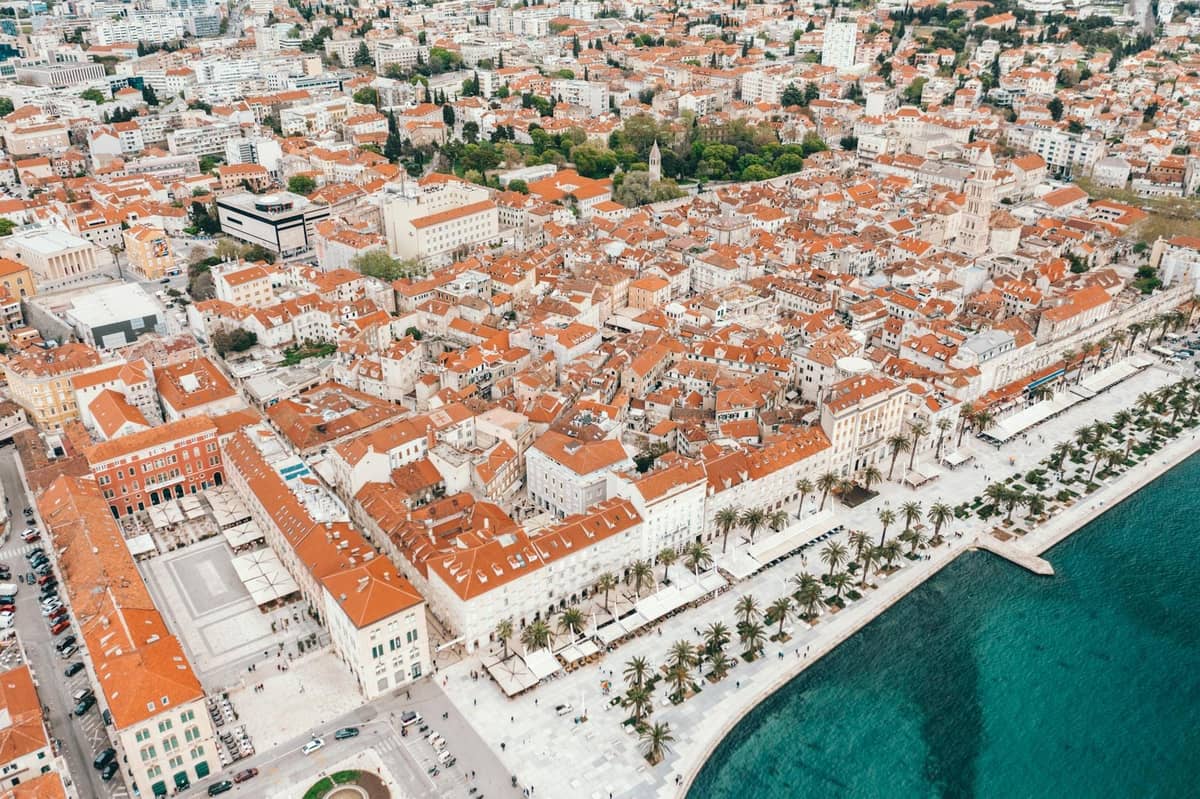
Split is Croatia's second-largest city, home to around 170,000 residents and well over a million visitors annually. It is not a quiet seaside town you can drift through in an afternoon. The old town alone — built inside and around a Roman emperor's retirement palace — deserves at least half a day of serious attention, and the surrounding neighborhoods, hills, and coastline reward anyone who bothers to look beyond the palace walls.
The most logical three-day structure is: Day 1 for the historic core and waterfront, Day 2 for Marjan Hill, local markets, and the city's quieter neighborhoods, and Day 3 for a day trip outside Split entirely. If you arrive with only two full days, compress Days 1 and 2 and prioritize whichever day trip interests you most. For a detailed route through the old town before you arrive, the Split walking tour guide is worth reading in advance.
💡 Local tip
Book accommodation inside or directly adjacent to Diocletian's Palace if your budget allows. Walking out your door into a 1,700-year-old Roman complex every morning is worth the premium, and you will save meaningful time compared to commuting in from the suburbs. Rooms here start around €80 per night and rise steeply in July and August — book early.
Day 1: Diocletian's Palace, the Riva, and the Old Town
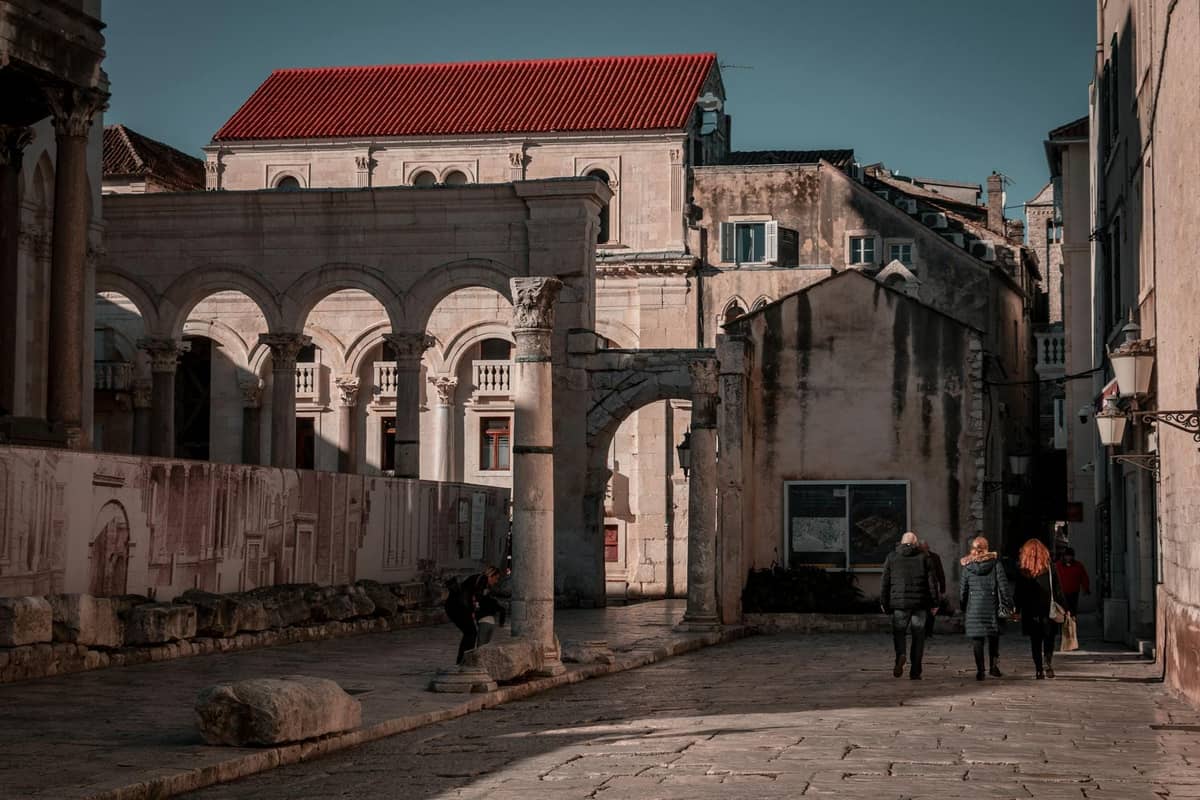
Start Day 1 at Diocletian's Palace no later than 8:30am. Built in the early 4th century AD as Emperor Diocletian's retirement complex, the palace is not a ruin in any conventional sense. Around 3,000 people still live and work inside the original Roman walls, which have been continuously inhabited for 1,700 years. The UNESCO-listed site covers roughly 38,000 square meters and its four gates, towers, and internal streets remain largely intact. The Peristyle — the colonnaded central courtyard — is the heart of the complex. Spend 20 to 30 minutes here before the tour groups arrive.
From the Peristyle, climb the Cathedral of Saint Domnius bell tower for panoramic views over the palace rooftops and out to the Adriatic. Tickets are around €3-5 at the entrance and the climb is steep but short. The cathedral itself is built inside what was originally Diocletian's mausoleum — a detail that takes a moment to fully register. It is one of the oldest Christian cathedrals in the world, converted from a pagan tomb.
Spend an hour in Diocletian's Cellars, the vaulted underground halls beneath the palace that now host a permanent exhibition and occasional markets. Entry is around €8 for the paid halls under the Peristyle. These spaces give the clearest sense of the original palace's scale — they served as the structural foundation for everything built above over the following 17 centuries, and their proportions remain largely unchanged. If you only pay for one attraction inside the palace, make it this one.
By late morning, walk north through the Golden Gate, the best-preserved of the palace's four original Roman entrances, to see the Gregorius of Nin statue by Ivan Meštrović. Rubbing the statue's toe for good luck is a local tradition that every tour group does — it is touristy, but takes ten seconds and the bronze sculpture itself is genuinely impressive. Meštrović created it in 1929 to honor the 10th-century bishop who championed the Croatian language in church liturgy over Latin.
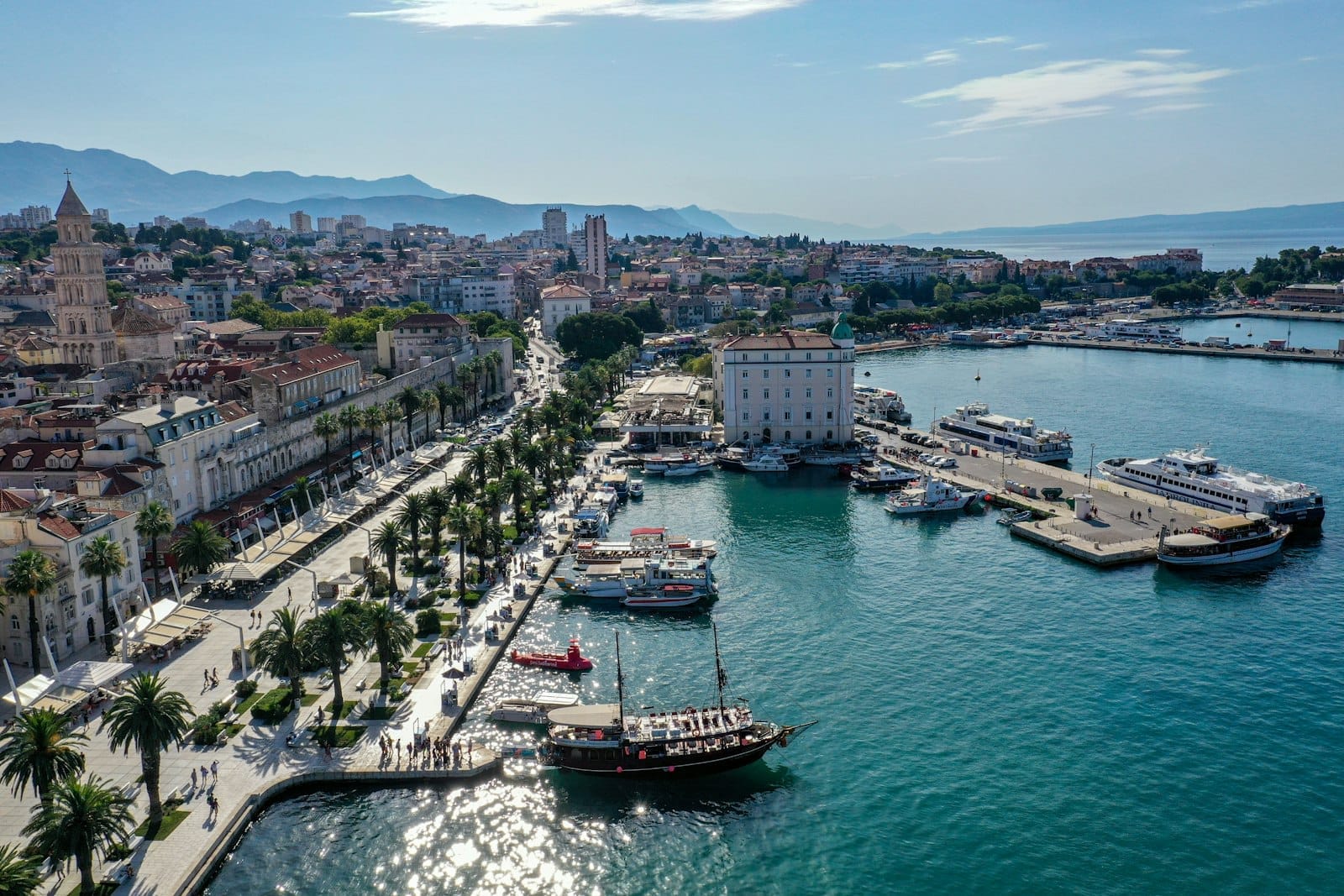
Spend the afternoon on the Riva promenade, Split's seafront waterfront that locals treat as an outdoor living room. Grab a coffee at one of the cafe terraces, watch the ferries come and go, and recover from the morning on your feet. The Riva is free and best in early evening when the Adriatic light hits the water and the cruise ship crowds have mostly retreated to their ships. It also functions as the social center of Split's nightlife — by 9pm, the terraces fill up and the pace changes entirely.
⚠️ What to skip
Cruise ships dock near the Riva and typically send thousands of passengers into the old town between 9am and 4pm. In peak summer, this makes the Peristyle and the cellars noticeably congested. Arriving before 9am or after 5pm makes a significant difference. If you miss the morning window, use the midday hours for the Riva, lunch, or a quieter attraction like the Archaeological Museum.
Day 2: Marjan Hill, Local Markets, and the City Neighborhoods
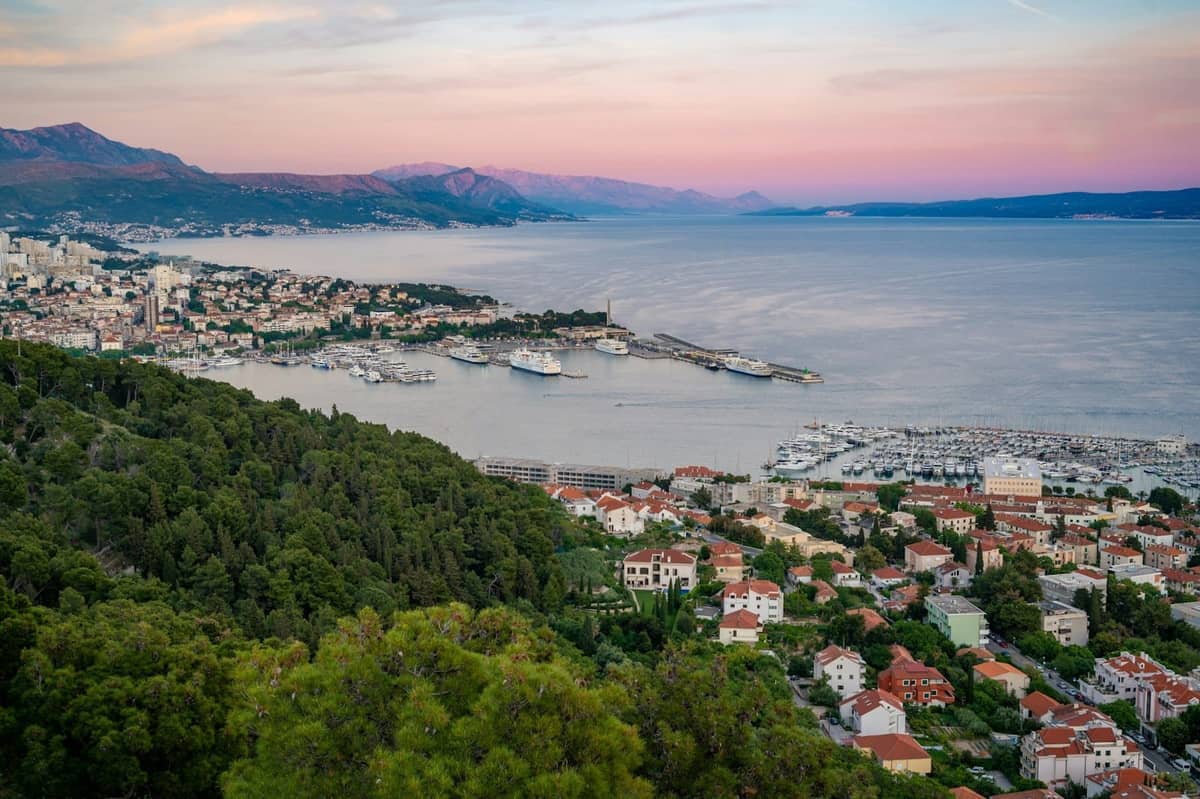
Start Day 2 with a morning hike up Marjan Hill, the forested peninsula that forms the western edge of the city. The most direct route from the old town involves around 200 steps to the main viewpoint. On a clear day the views stretch across to the islands of Brač, Hvar, and Šolta, with the Mosor mountain range rising behind the city to the north. The full hike takes 30 to 45 minutes at a moderate pace. Go early: it is cooler, quieter, and the light is better for photographs.
Near the top, the Teraca Vidilica cafe serves food and coffee with views that justify the stop. On the way down, the western side of Marjan has several small rocky beaches that local residents use on weekday mornings when the tourist beaches are at capacity. They are not sandy, but they are substantially quieter than anything closer to the center.
Back in the lower city, visit the Pazar Market just east of the palace walls. Split's main open-air produce market runs every morning until around noon. Vendors sell local olive oil, lavender products, dried figs, and cheeses from the Dalmatian hinterland. Prices are reasonable and the atmosphere is genuinely local. Pick up snacks here rather than paying tourist-facing prices inside the palace streets.
In the afternoon, the Meštrović Gallery is worth two hours of your time. Set in the sculptor Ivan Meštrović's former villa on the western edge of the city, the collection spans his full career across painting, sculpture, and drawings. The building itself, with its sea-facing terrace and Mediterranean garden, is as much a draw as the collection. Entry runs around €10. Note that opening hours vary by season — verify before visiting, as this is one of the attractions flagged for seasonal closures.
- Bačvice Beach and picigin Bačvice is Split's most famous city beach, around a 10-minute walk east of the Riva. The traditional game of picigin — played in shallow water, requiring acrobatic saves — is a Split institution and a genuine cultural spectacle. The beach gets packed on summer afternoons; go in the morning or visit Žnjan beach further east for more space and a less frenetic atmosphere.
- Republic Square (Prokurative) This neo-Renaissance square just west of the Riva hosts outdoor concerts and events throughout summer. It is architecturally striking, less visited than the palace, and usually free to walk through. Worth 20 minutes even if nothing is scheduled.
- Evening food and wine Split's restaurant scene concentrates around the palace streets and along the Riva. A food tour, typically around €60 per person, is a practical way to sample Croatian wines, pršut ham, and local cheeses in a single session without over-researching individual restaurants. Alternatively, walk one block back from the Peristyle and quality-to-price ratio improves immediately.
Day 3: The Best Day Trips from Split
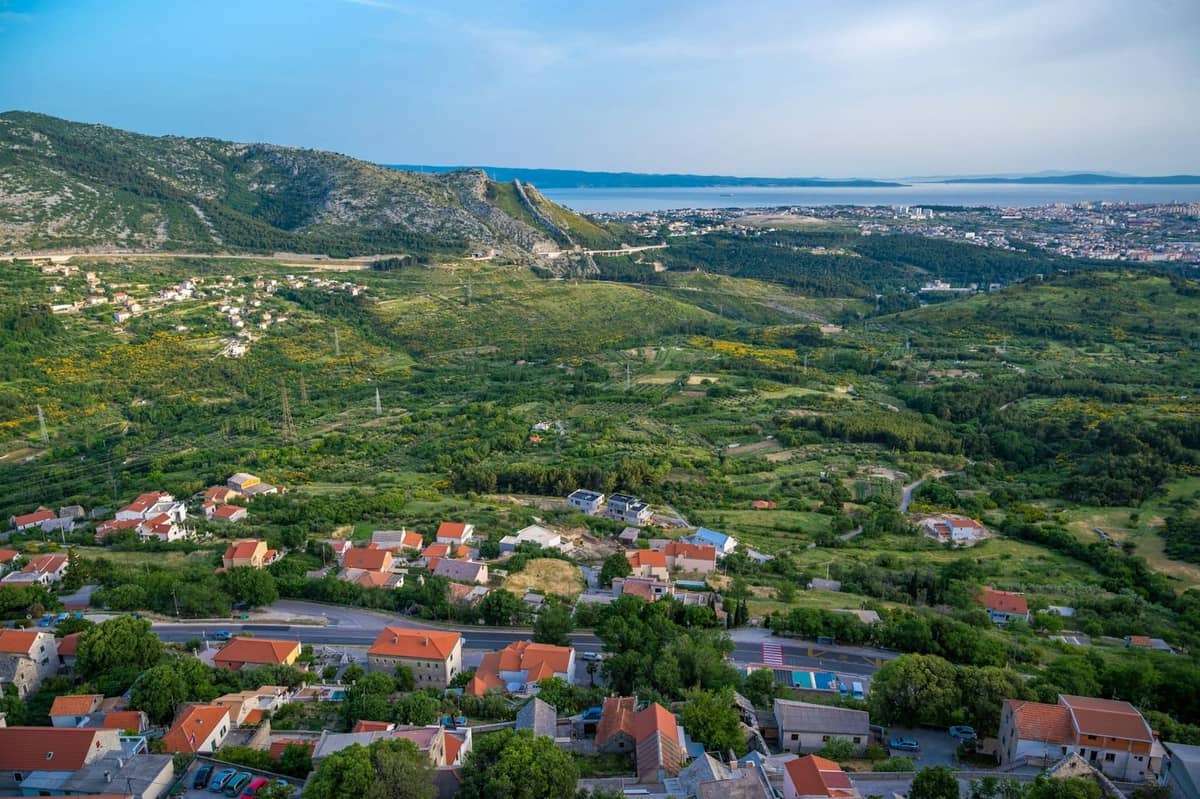
Day 3 is best spent leaving Split entirely. The city's position on the Dalmatian coast gives it access to some of Croatia's most impressive destinations within an hour or two. The three most popular options are Klis Fortress, Trogir, and a 5-island boat tour. They are different enough in character that the right choice depends entirely on what you prioritize.
- Klis Fortress (20-minute bus ride) The medieval hilltop fortress above Split served as the city of Meereen in Game of Thrones and offers sweeping views over the Dalmatian coastline and hinterland. Entry is around €10. Bus line 22 from the city center takes roughly 20 minutes. If you have extra time, combine it with a stop in Solin to see the Roman ruins of ancient Salona — one of the largest Roman cities on the eastern Adriatic coast.
- Trogir (30-40 minutes by bus) A UNESCO World Heritage city built on a small island connected to the mainland by bridge. The old town is compact and walkable, with a Romanesque cathedral dedicated to Saint Lawrence and strong Venetian architectural influence throughout. The bus from Split's main terminal runs frequently and costs only a few euros each way. Trogir works well as a half-day trip combined with an afternoon back on the Riva.
- 5-Island Boat Tour (full day, 10 hours) Tours typically include the Blue Cave on Biševo, stops on Hvar and Vis, and two or three smaller islands. Full-day tours run around €80-100 per person through major booking platforms, departing from the Riva. This is a serious time commitment — reserve it for when you have energy and check the weather forecast first. Rough seas affect the Blue Cave visit specifically.
If you want something more nature-focused, Krka National Park is feasible from Split in a single day — around 1.5 hours by car or organized tour. Plitvice Lakes is technically doable but involves around 2.5 hours of driving each way, which makes for a long day. Our day trips from Split guide covers all the options with transport logistics, costs, and honest assessments of which trips are worth the travel time.
✨ Pro tip
Book the 5-island boat tour at least 48 hours in advance in peak summer. Spots fill quickly and last-minute availability is either nonexistent or limited to lower-quality vessels. If you are visiting in July, book as soon as your dates are confirmed. The Blue Cave section is particularly prone to cancellation in choppy conditions, so factor in a backup plan.
Practical Details: Costs, Timing, and What to Skip
The best time to visit Split for a 3-day itinerary is May, early June, or September. Average temperatures in these months sit in the low-to-mid 20s Celsius, crowds are noticeably lighter than July and August, and accommodation prices are generally 20-40% lower than peak summer. October is underrated: the sea stays warm enough to swim, temperatures remain pleasant, and the city recovers some of its local character after the summer rush. July and August are not impossible, but they require earlier starts, more patience, and advance booking across every category.
For a realistic cost breakdown: budget around €15-20 for the palace cellars and bell tower combined, around €10 for Klis Fortress, around €10 for the Meštrović Gallery, and €80-100 per person for the 5-island boat tour. Meals at sit-down restaurants in the old town average €15-25 per person for mains. Street food and Pazar Market snacks bring that down significantly. All prices are approximate and should be verified before travel. Full cost planning is covered in the Split on a budget guide.
- Walking tours of the palace run 1-2 hours and cost around €20-30 per person. They are worth taking on Day 1 for historical context and orientation before you explore independently — the layers of Roman, medieval, and modern history inside the walls are genuinely hard to parse without a framework.
- The Game of Thrones Museum in Split is entertaining for fans but adds little for non-fans. Entry runs around €10. If you are a serious GoT follower, our guide to filming locations in Split covers the museum and the actual on-location sites.
- Bačvice beach is enjoyable but oppressively crowded on summer afternoons. Go in the morning, or head to Žnjan beach further east for more sand and fewer bodies.
- Avoid the most expensive restaurants directly on the Peristyle. The markup is almost entirely for location. Walk one or two blocks back into the palace streets and both quality and value improve immediately.
- The Archaeological Museum Split is worth considering if you have a serious interest in Roman history — it holds artifacts from ancient Salona and a strong numismatic collection. It is not essential for a 3-day itinerary with limited time.
Getting around Split itself is easy on foot within the old town. For Marjan Hill and outer neighborhoods, local buses are cheap and reliable. For day trips, buses from the main terminal handle Trogir and Klis directly, while boat tours depart from the Riva. The getting around Split guide covers transport options, fare structures, and recommended routes in detail.
Seasonal Variations That Affect Your Itinerary
Summer in Split, particularly July and August, transforms the city in ways that affect every part of a 3-day itinerary. The Ultra Europe music festival typically runs in mid-July, drawing large international crowds and pushing accommodation prices to their annual peak. If that is your scene, the Ultra Europe Split guide has full details on timing, tickets, and where to stay. If it is not, those two weeks are the single hardest time to find good-value accommodation anywhere in the city.
Winter in Split is mild by Northern European standards, with temperatures typically ranging from 5-12°C in January and February, but the city operates at a noticeably quieter pace. The palace and Riva remain open year-round, but boat tours run reduced schedules and some seasonal businesses close entirely between November and March. For a realistic picture of what Split offers outside peak season, the Split in winter guide covers what stays open, what to realistically expect, and why some travelers actually prefer it.
FAQ
Is 3 days enough time in Split?
Three days gives you enough time to properly explore the historic core, hike Marjan Hill, and complete one solid day trip. It is not enough to see everything, but it is enough to leave with a genuine feel for the city rather than a rushed checklist. If you want to do both a nature-focused day trip and an island boat tour, add a fourth day.
What is the best day trip from Split for a 3-day itinerary?
Klis Fortress is the most time-efficient: it takes half a day, costs around €10, and rewards you with historical depth and panoramic views. Trogir is better for architecture lovers and works well as a half-day. The 5-island boat tour is the most memorable if the weather cooperates, but it is a full 10-hour commitment and needs advance booking in summer.
How do I avoid crowds at Diocletian's Palace?
Arrive before 9am and you will often have the Peristyle largely to yourself. Cruise ships typically dock between 9am and 4pm and their passengers concentrate heavily in the palace core. Evening visits after 6pm are also significantly calmer, though some paid attractions close earlier in the day. The cellars and bell tower are the two most affected spots.
What should I budget for 3 days in Split?
A comfortable mid-range budget is around €50-100 per person per day, covering food, attraction entry fees, and local transport but not accommodation. Accommodation inside the palace walls often starts around €80 per night and rises well above €200 in peak summer. You can do it for less with self-catering and free attractions, or significantly more with fine dining and private boat charters.
When is the best time of year to visit Split for 3 days?
May and September offer the best overall balance of good weather, manageable crowds, and reasonable prices. July and August are peak season with intense heat, maximum crowds, and premium prices across the board. October is underrated: sea temperatures remain warm enough to swim, days are still long, and the city returns to something closer to its normal rhythm.