Plitvice Lakes National Park: The Complete Day Trip Guide from Split
Plitvice Lakes National Park is Croatia's oldest and most celebrated national park, a UNESCO World Heritage Site of 16 cascading turquoise lakes and hundreds of waterfalls carved through a karst limestone landscape. It sits roughly 3.5 to 4 hours from Split by car, making it one of the more demanding but rewarding day trips from the Dalmatian coast.
Quick Facts
- Location
- Central Croatia, between Mala Kapela and Lička Plješivica mountains — approx. 3.5–4 hrs from Split by car
- Getting There
- Direct buses from Split bus station; by car via A1 motorway toward Zagreb, exit at Plitvička Jezera
- Time Needed
- 4–6 hours on-site minimum; full day if doing a longer route
- Cost
- Admission varies by season; verify current prices at np-plitvicka-jezera.hr before visiting
- Best for
- Nature lovers, photographers, families with older children, hikers
- Official website
- np-plitvicka-jezera.hr/en
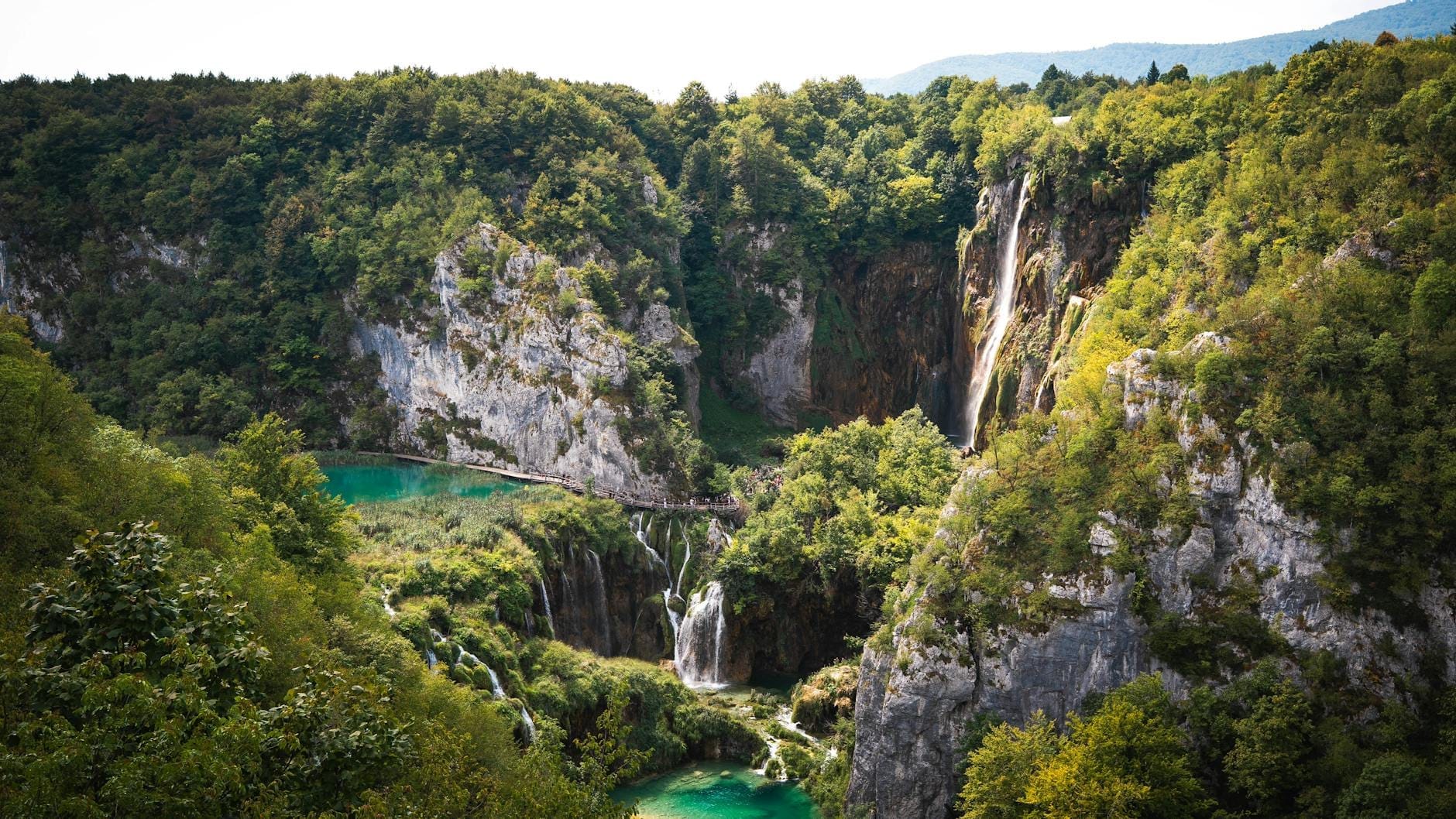
What Plitvice Lakes Actually Is
Plitvice Lakes National Park, known in Croatian as Nacionalni park Plitvička jezera, was established on 8 April 1949 as Croatia's first national park. It covers 296.85 square kilometres of mountainous karst terrain in central Croatia, split between Lika-Senj County and Karlovac County, close to the Bosnian border. In 1979, UNESCO inscribed it as a World Heritage Site specifically for the outstanding ongoing geological processes that shape it.
The park contains 16 named lakes, arranged in two groups: 12 Upper Lakes and 4 Lower Lakes. They are not simply bodies of still water side by side. Each lake sits at a different elevation, and water cascades over travertine (tufa) dams between them, creating a stacked waterfall system unlike anything else in Europe. The largest waterfall, Veliki Slap, drops 78 metres, making it the tallest waterfall in Croatia and the highest in the park. Travertine dams grow continuously at roughly 1 centimetre per year, meaning the landscape is genuinely changing over geological time.
The colours that dominate every photograph of the park — deep teal, aquamarine, grey-blue — are not post-processed. They result from light interacting with the mineral content and algae in the water. In direct morning sun, the lakes can shift from a greenish-blue to an almost electric turquoise within minutes. That colour performance is the detail most visitors remember longest.
ℹ️ Good to know
Plitvice is open year-round, but the visitor experience changes dramatically by season. Summer brings peak crowds; spring and autumn offer better light, lower prices, and more breathing room on the boardwalks. Always verify current ticket prices and seasonal hours at np-plitvicka-jezera.hr before your visit.
Getting There from Split
From Split, Plitvice Lakes is not a casual outing. The drive along the A1 motorway takes approximately 3.5 to 4 hours under good conditions, and the bus journey can take 4 to 5 hours depending on the service. That travel time is the single most important factor in planning your visit. For a full rundown of logistics and route options, the day trip guide from Split to Plitvice Lakes covers bus schedules, car hire options, and what to realistically expect from the journey.
By car, the route is straightforward: follow the A1 north from Split toward Zagreb and take the exit for Plitvička Jezera. There are two main park entrances, Entrance 1 (near the Lower Lakes) and Entrance 2 (closer to the Upper Lakes). Most visitors use Entrance 1 for a first visit. Parking fills quickly in summer, so arriving before 8:00 is not excessive.
Organised bus tours from Split exist and are a reasonable option if you want to avoid driving. They typically include transport, a guide, and the entrance fee, though the trade-off is a fixed schedule and less flexibility on which route you walk. If you book a tour, confirm how many hours you actually spend in the park versus on the road.
💡 Local tip
If you are visiting in July or August, aim to be at the park entrance before it opens. Boardwalks at the Lower Lakes become shoulder-to-shoulder crowded by late morning, which reduces both the experience and the quality of photographs considerably.
Tickets & tours
Hand-picked options from our booking partner. Prices are indicative; availability and final rates are confirmed when you complete your booking.
Private Day Trip to Plitvice Lakes from Split
From 485 €Instant confirmationFree cancellationPlitvice Lakes National Park guided private tour from Split
From 820 €Instant confirmationFree cancellationPlitvice Lakes National Park tour from Split
From 65 €Instant confirmationFree cancellationPlitvice Lakes and Zadar private tour with lunch from Split
From 2.500 €Instant confirmationFree cancellation
The Routes: Choosing What to Walk
The park offers seven designated visitor routes, ranging from a short 2–3 hour loop of the Lower Lakes to full-day combinations that cover both Upper and Lower sections. There are also four hiking trails that climb into the forested areas surrounding the lake system. For a first visit on a day trip from Split, the combination routes covering both sections are worth the effort, but they require at least 5–6 hours of walking on-site.
The Lower Lakes are denser, more dramatic, and more photographed. Wooden boardwalks run just centimetres above the water surface, and in some sections you walk directly alongside the falls. The sound here is constant: rushing water from multiple directions at once, with the occasional electric boat motor from the park's shuttle service crossing the large Kozjak lake. The Upper Lakes feel quieter and more forested, with wider paths and longer sightlines across the water.
The park operates electric boats and a train (bus shuttle) to help visitors move between sections. These are included in the entrance fee and are worth using to manage time, especially if your day is short. The boat crossing on Lake Kozjak, the largest lake, takes about 15 minutes and provides a perspective you cannot get from the shore.
How the Experience Changes by Time of Day and Season
Morning at Plitvice before 9:00 is noticeably different from mid-afternoon. Mist sits over the water in cooler months, the boardwalks are quiet enough to hear individual waterfalls clearly, and the low-angle light catches the water in ways that flat midday sun does not. By late morning in peak season, the atmosphere shifts: the paths fill, voices overlap the water sounds, and patience becomes part of the experience.
Spring, from April through early June, is widely considered the best period. Snowmelt feeds the waterfalls to maximum volume, the forest is fully green, and visitor numbers have not yet reached summer levels. Autumn, particularly September and October, brings warm daytime temperatures, the start of leaf colour change in the surrounding forest, and a significant drop in crowds after the August peak.
Winter visits are possible and have a specific appeal: frozen falls, snow on the boardwalks, and very few other people. However, some routes may be closed due to ice hazards, the boat service runs on a reduced schedule, and conditions can be genuinely cold and slippery. If you are visiting Split in the colder months, read the guide to Split in winter to understand how seasonal changes affect day trips and what to pack.
Practical Details: What to Bring and Wear
Footwear matters more here than at most attractions. The wooden boardwalks become slippery when wet, which they frequently are from spray and condensation. Trainers with grip or light hiking shoes are far better than sandals or smooth-soled footwear. The boardwalks can also be narrow and uneven in places, so mobility considerations are real: the park is not fully accessible for wheelchairs or pushchairs, particularly on the Lower Lakes routes.
Bring water and food, especially if you are visiting in peak season. The park has cafes near both entrances and a restaurant near Lake Kozjak, but queues are long in summer and prices reflect the captive audience. A packed lunch and a refillable bottle will serve you better than waiting in line for 30 minutes mid-walk.
Swimming and wading are strictly prohibited throughout the park. The water looks inviting enough that this rule surprises some visitors, but it exists to protect the fragile tufa formations and the ecosystem. The same principle applies to leaving the marked trails: the park asks all visitors to follow the designated routes and take all waste with them.
⚠️ What to skip
Do not enter the water anywhere in the park. Swimming is prohibited and rangers enforce this actively. The tufa formations that create the waterfalls are living geological structures that take years to form and can be damaged by even minor disturbance.
Photography at Plitvice: What Actually Works
Plitvice is one of the most photographed places in Croatia, and the challenge is not finding good subjects — it is managing the people. The iconic shots of boardwalks hovering over turquoise water with no crowds require either a very early arrival or a visit in the shoulder season. In peak July and August, most angles will include other visitors unless you shoot tight or use a longer focal length.
For the falls themselves, a shutter speed slow enough to show water movement rather than frozen droplets works well, typically somewhere between 1/15 and 1/4 of a second. A small tripod or a steady surface helps. Overcast light is actually preferable to bright sun for the water: it reduces glare and allows the colour of the water itself to dominate the frame rather than surface reflections.
The walk to Veliki Slap from the Lower Lakes section is short but visually significant: the 78-metre fall appears at the end of a forested canyon and is audible before it is visible. Combined with a visit to Krka National Park, which is closer to Split and accessible as a half-day trip, these two parks offer a thorough picture of Croatia's karst waterfall landscapes — though they are best visited separately rather than on the same day.
Who This Trip Is Not For
Be honest about the effort this day trip requires. You are looking at 7 to 8 hours of total travel from Split and back, plus a minimum of 4 hours of walking on-site. If you are travelling with very young children, have limited mobility, or are in Split for only a day or two, that time-to-payoff ratio deserves serious thought.
Krka National Park sits considerably closer to Split and offers a comparable waterfall experience with far less travel time. It is a more practical option for shorter trips or for anyone who wants the experience without the full-day commitment. See the Krka National Park day trip guide for the comparison. And if you are still weighing your options for the overall itinerary, the broader day trips from Split guide covers the full range of options based on travel time and interests.
Plitvice in summer with a large coach tour group can feel more like a theme park queue than a nature experience. If you are sensitive to crowds and cannot travel in the shoulder season, manage expectations accordingly. The park is undeniably impressive, but the gap between the experience at 8:00 on an April Tuesday and at 11:00 on an August Saturday is significant enough to be worth planning around.
Insider Tips
- Book your park tickets in advance online during summer. On-site queues to purchase tickets at peak season can add 45 minutes to an hour before you even enter the park.
- Start at Entrance 1 and work through the Lower Lakes first thing in the morning. The most photographed boardwalk sections get crowded fastest, so seeing them early means you get them in better light with fewer people.
- The electric boat on Lake Kozjak fills up quickly. If you need to cross from the Lower to Upper Lakes, join the boat queue before you feel ready to stop walking — the wait grows throughout the day.
- Layers matter more than most visitors expect. The forested canyon sections of the Lower Lakes stay cool even in summer, while open areas near the Upper Lakes can feel much warmer. A light layer you can tie around your waist covers both.
- If the park is your primary reason for visiting central Croatia, consider staying one night nearby rather than doing a same-day return from Split. Starting the next morning before the day-trippers arrive transforms the experience.
Who Is Plitvice Lakes National Park For?
- Nature and landscape photographers who are willing to plan around lighting and crowds
- Hikers and walkers comfortable with 10+ kilometres on varied terrain
- Families with children aged 8 and older who can manage full-day walks
- Travellers with more than 3 days in Split who have already covered the city's core sights
- Anyone visiting Croatia in April, May, September, or October when the crowds are manageable and the scenery is at its best
Nearby Attractions
Combine your visit with:
- Archaeological Museum Split
Founded in 1820, the Archaeological Museum Split (Arheološki muzej Split) is widely regarded as the oldest museum institution in Croatia. Its collection of some 150,000 artifacts, spanning prehistoric through medieval periods, makes it the most complete record of ancient Dalmatia in existence. The arcaded garden alone, lined with Roman sarcophagi and stone inscriptions, is worth the ticket price.
- Blue Cave (Biševo)
The Blue Cave, or Modra špilja, is a flooded sea cave on Biševo island whose interior glows an otherworldly blue when sunlight enters through a submerged opening. Reachable only by small boat, it sits about 50 km southwest of Split and draws visitors from across the Dalmatian coast. The light effect is real — but timing, weather, and crowds determine whether the experience feels magical or rushed.
- Brač Island
Brač is the largest island in Dalmatia, covering around 395–396 km² and rising to about 778 metres at Vidova Gora, the highest peak among all Adriatic islands. Reachable by ferry from Split in under an hour, it delivers a full day of beach, landscape, and stone-village atmosphere without the crowds that descend on Hvar.
- Cetina River Canyon
The Cetina River Canyon carves through limestone karst southeast of Split, delivering sheer cliff walls, the 49-metre Gubavica Falls, and one of Dalmatia's most rewarding rafting routes. Whether you kayak the emerald water, walk the gorge paths, or simply lunch beside the historic Radmanove Mlinice mills, it is a compelling contrast to Split's coastal crowds.