Cetina River Canyon: Gorges, Waterfalls, and Rafting Near Split
The Cetina River Canyon carves through limestone karst southeast of Split, delivering sheer cliff walls, the 49-metre Gubavica Falls, and one of Dalmatia's most rewarding rafting routes. Whether you kayak the emerald water, walk the gorge paths, or simply lunch beside the historic Radmanove Mlinice mills, it is a compelling contrast to Split's coastal crowds.
Quick Facts
- Location
- Cetina River, ~30 km south of Split; gateway town of Omiš
- Getting There
- Drive via D8 coastal road to Omiš; public buses run Split–Omiš; most visitors join guided tours from Split
- Time Needed
- Half day minimum (3–4 hrs for rafting); full day if combining hiking, swimming, and lunch
- Cost
- Canyon entry free; rafting approx. €40 per person (verify current prices before booking)
- Best for
- Active travelers, nature lovers, families with older children, photographers
- Official website
- www.visitomis.hr/en/the-cetina-canyon
What the Cetina River Canyon Actually Is
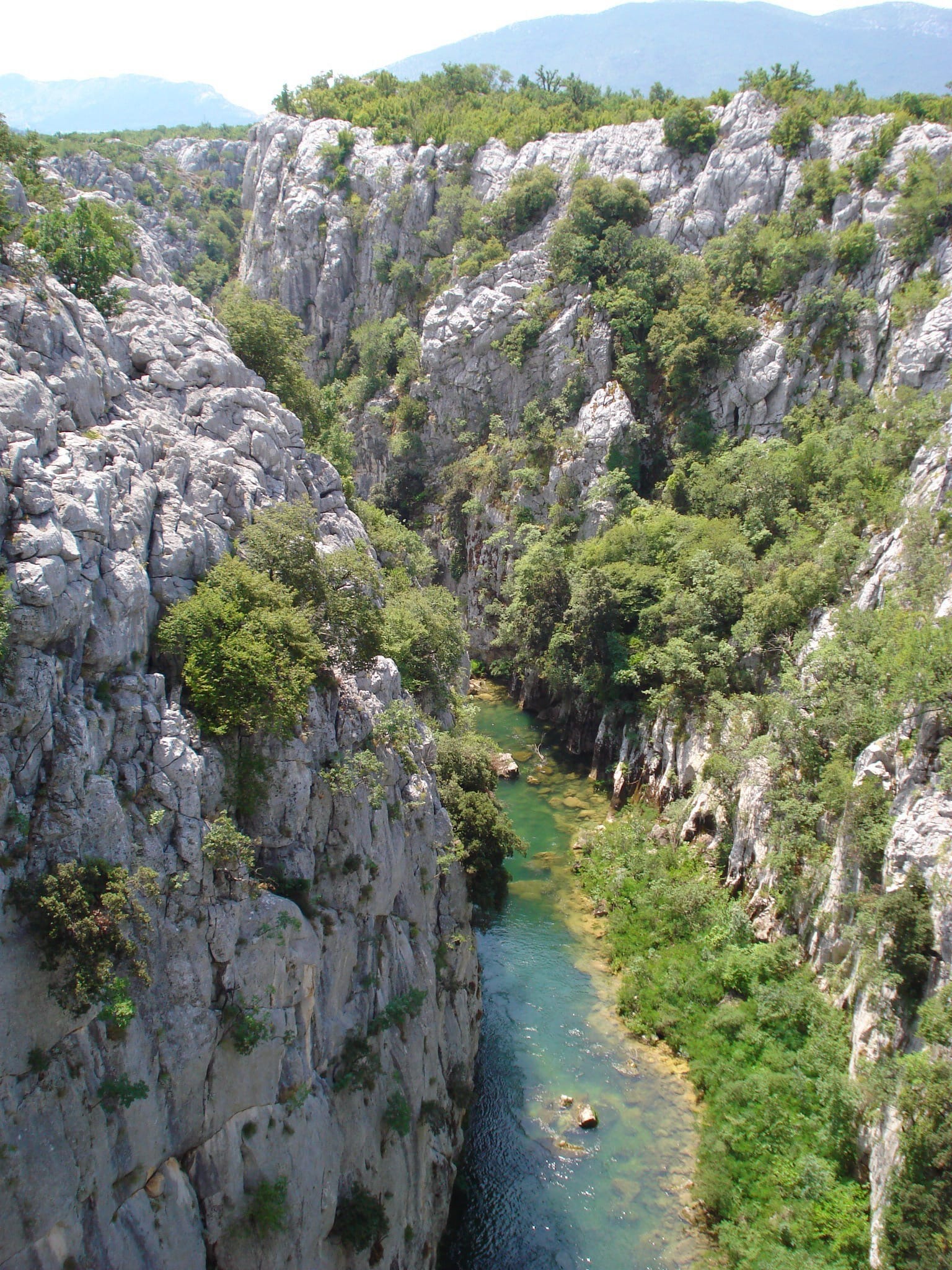
The Cetina River Canyon, known locally as Kanjon Cetine, is a roughly 20-kilometre stretch of gorge country running from the limestone highlands inland to the Adriatic coast at Omiš. The Cetina River itself is 101 kilometres long, rising from a karst spring at the foot of the Dinara massif — a source so deep (measured at over 150 metres) that its bottom has never been fully explored. By the time the river reaches this final canyon section, it has carved through the rock into something that barely resembles the Dalmatian coast an hour to the north.
The defining feature is scale. Cliff walls climb hundreds of metres on both sides, draped in Mediterranean scrub and the occasional fig tree pushing through limestone cracks. The river below runs in shades of blue-green that shift with cloud cover and season. This is not a polished attraction with cordoned viewpoints and gift shops. It is functioning wilderness within easy reach of a major city, and the contrast with Split's beach scene is more striking than most visitors expect.
ℹ️ Good to know
The canyon is accessible year-round, but organised rafting and kayaking operate approximately April 1 to October 1 with daily departures at 08:30 and 13:30 from Omiš. Outside those months, the gorge is best explored on foot.
Arriving and Orienting Yourself
Most visitors from Split take the D8 coastal road south through Omiš, a small town squeezed between the sea and the canyon mouth. The town is worth at least a glance: it was a notorious pirate stronghold through the medieval period, operating from the canyon as a base to raid passing Venetian trade ships. The fortress ruins above the town still frame the canyon entrance when viewed from the coast road.
The main staging point for canyon activities is Radmanove Mlinice, roughly 200 metres after the tunnel just past Omiš bridge. This is a picnic and dining area built around a cluster of old water mills, the oldest of which dates to the 16th century. The Radman family took ownership in the 19th century and the name stuck. Today the site has a restaurant shaded by plane trees, a stretch of pebble riverbank, and the start point for most guided rafting trips. It is genuinely pleasant to simply sit here and watch the water move, even if you do nothing more active. For visitors planning a full day in the area, the day trips from Split guide covers transport logistics and how to combine this stop with other inland destinations.
Public buses run between Split and Omiš regularly, making this accessible without a car. That said, some of the canyon's better walking paths and the approach to Gubavica Falls require transport beyond Omiš town, so a rental car or a guided tour gives you meaningfully more flexibility.
Tickets & tours
Hand-picked options from our booking partner. Prices are indicative; availability and final rates are confirmed when you complete your booking.
Cetina River basic canyoning adventure
From 50 €Instant confirmationFree cancellationExtreme canyoning on the river Cetina
From 67 €Instant confirmationFree cancellationCetina River extreme canyoning adventure
From 70 €Free cancellationCanyoning on the river Cetina
From 51 €Instant confirmationFree cancellation
Rafting the Canyon: What to Expect
The most popular way to experience Cetina Canyon is by raft, and for once the popularity is justified. The route covers the most dramatic section of the gorge, passing under cliff faces and through sections where the walls narrow and the sound of water amplifies. The river's gradient in this stretch is relatively gentle, which makes it suitable for complete beginners. Operators typically list the age range as 7 to 77, and the standard briefing takes about 20 minutes before launch.
A full rafting session runs approximately three to four hours. Groups can reach up to 80 people, divided into smaller rafts. If solitude is what you're after, the early morning departure at 08:30 tends to be quieter than the 13:30 run, which often fills with larger groups in peak summer. The water temperature in July and August is comfortable for swimming at rest stops; in May and early October it is noticeably colder and a wetsuit is worth requesting if one is offered.
Rafting costs approximately €40 per person as of 2026, though prices should be verified before booking. Water shoes are required (sandals with a back strap work), and operators will ask you not to bring loose valuables. Book at least one to five days in advance in July and August. Walk-ins at the Omiš departure point sometimes work in shoulder season.
💡 Local tip
Book the 08:30 departure if you can. Morning light hits the canyon walls from the east, the air is cooler, and the later group crowds haven't arrived yet. You'll also have the afternoon free to explore Omiš or head back up the coast.
Gubavica Falls and the Canyon on Foot
Gubavica Falls sits near Zadvarje with a drop of roughly 49 metres, where the Cetina drops in a single curtain into a green pool below. It is one of the more photogenic waterfalls in Dalmatia, and the overlook above the falls gives a view down the canyon that makes the scale of the place legible in a way that the riverbed view from a raft does not. The road to Zadvarje from the coast is steep and narrow in sections; allow more time than the distance suggests.
Walkers and hikers who skip the rafting can trace sections of the gorge on paths above the river. The terrain is natural karst: loose rock in places, uneven surfaces, and drops that are unfenced. This is not suitable for young children moving independently or for anyone with significant mobility limitations. Sturdy shoes with ankle support make a real difference. In summer, the canyon provides shade that the coast lacks, but carry water regardless.
Photography here rewards patience. The canyon interior is significantly darker than the sky above, which creates exposure challenges mid-morning. The most balanced light comes in the two hours after sunrise and the hour before sunset when direct light reaches the water surface. If you're building a broader itinerary around natural landscapes near Split, comparing this with Krka National Park is worthwhile: Krka is more developed and accessible, Cetina is rawer and less visited.
How the Canyon Changes Through the Day and Season
In June and September, the canyon operates at something close to its best. Temperatures are warm enough for water activities, the vegetation on the cliff faces is green rather than bleached, and the crowds are noticeably thinner than in high summer. July and August bring heat that makes the shaded canyon interior feel like a relief, but they also bring maximum visitor volumes, and the rafting departure points at Omiš can feel chaotic by late morning.
Winter visits are a different proposition. The rafting season closes and the canyon becomes the preserve of hikers and local fishermen. The river runs higher and faster after autumn rains, and the cliff walls pick up a damp, mossy texture that the summer version lacks. There are very few facilities open and no organised activities, but the silence is substantial.
⚠️ What to skip
After heavy rainfall, river levels can rise quickly and the walking paths close to the water become hazardous. Check local conditions if visiting in spring or after storms. The rafting operators will cancel departures when levels are unsafe — this is a sign to trust, not ignore.
Who Should Skip This, and Who Should Prioritise It
The canyon is not appropriate for visitors with significant mobility limitations. There are no wheelchair-accessible paths through the gorge, and even the Radmanove Mlinice picnic area involves uneven ground. Families with very young children can visit the restaurant and riverbank area without difficulty, but the active components require children to be at least school age and physically confident in or near water.
Visitors who come to Split primarily for its Roman history, the palazzo architecture of the old town, or its cafe culture will find Cetina a significant departure from that experience. It is not the kind of place you drift into between espressos. It requires at least a half day, transport planning, and some physical engagement. If that sounds like an interruption rather than a highlight, the time may be better spent at Diocletian's Palace or along the Riva promenade. For travellers who want to get out of the city and into terrain that has nothing to do with Roman emperors or beach bars, this canyon earns its place on the itinerary without much competition.
For families deciding how to balance the trip, the Split with kids guide has specific advice on age-appropriate canyon activities and how to combine them with more accessible stops nearby.
Insider Tips
- If you're driving from Split, pull over at the viewpoint just before the road drops into Omiš. The canyon mouth framed by the old pirate fortress is one of the better unannounced views on the Dalmatian coast.
- The Radmanove Mlinice restaurant serves fresh river trout. It's a reliable lunch option regardless of whether you're doing any activities, and the shaded terrace beside the water is genuinely cool even in August.
- Rafting operators sometimes offer combined rafting and zipline packages. The zipline runs above the canyon from a point near Omiš, and the view downward from the wire gives you a perspective on the gorge depth that neither the riverbed nor the clifftop walks can match.
- If you want photographs without other people in them, walk upstream from Radmanove Mlinice along the riverbank in the early morning, before the 08:30 rafting group launches. The pools here are quiet and the light is usable.
- Mobile signal drops in and out along the canyon floor. Download offline maps before you go if you're navigating independently, and make sure your accommodation or tour operator has your estimated return time.
Who Is Cetina River Canyon For?
- Active travellers wanting a full contrast to Split's urban coast
- Families with school-age children comfortable near moving water
- Photographers looking for canyon light and waterfall compositions
- Visitors on a second or third trip to Split who have already covered the main historical sites
- Anyone seeking Dalmatian nature without the infrastructure of a national park
Nearby Attractions
Combine your visit with:
- Archaeological Museum Split
Founded in 1820, the Archaeological Museum Split (Arheološki muzej Split) is widely regarded as the oldest museum institution in Croatia. Its collection of some 150,000 artifacts, spanning prehistoric through medieval periods, makes it the most complete record of ancient Dalmatia in existence. The arcaded garden alone, lined with Roman sarcophagi and stone inscriptions, is worth the ticket price.
- Blue Cave (Biševo)
The Blue Cave, or Modra špilja, is a flooded sea cave on Biševo island whose interior glows an otherworldly blue when sunlight enters through a submerged opening. Reachable only by small boat, it sits about 50 km southwest of Split and draws visitors from across the Dalmatian coast. The light effect is real — but timing, weather, and crowds determine whether the experience feels magical or rushed.
- Brač Island
Brač is the largest island in Dalmatia, covering around 395–396 km² and rising to about 778 metres at Vidova Gora, the highest peak among all Adriatic islands. Reachable by ferry from Split in under an hour, it delivers a full day of beach, landscape, and stone-village atmosphere without the crowds that descend on Hvar.
- Hvar Island
Hvar Island stretches about 68 kilometres along the Dalmatian coast, combining 2,400 years of layered history with some of Croatia's clearest water and a landscape still shaped by ancient Greek land divisions. It is reachable from Split by ferry in roughly two hours, making it a logical day trip or short stay from the city.