Krka National Park: The Complete Guide for Day-Trippers from Split
Krka National Park protects a dramatic stretch of the Krka River in central Dalmatia, built around seven waterfalls and 109 square kilometres of canyon, wetland, and karst terrain. It sits roughly 90 kilometres from Split and is one of the most popular nature day trips from the city. This guide covers what the experience actually feels like, the best time to go, and how to get there without the usual headaches.
Quick Facts
- Location
- Šibenik-Knin County, central Dalmatia; ~90 km from Split (about 1–1.5 hrs by road)
- Getting There
- Organized tour from Split, public bus to Skradin, or self-drive via A1/D33; boat transfer from Skradin to Skradinski Buk entrance included with some tickets
- Time Needed
- 3–5 hours on site; allow a full day including travel from Split
- Cost
- Seasonal pricing — verify current rates at npkrka.hr before visiting, as fees change each year
- Best for
- Nature lovers, families with older children, photographers, and anyone wanting a break from the coast
- Official website
- npkrka.hr/en_us
What Krka National Park Actually Is
Krka National Park was established in 1985, making it the seventh national park proclaimed in Croatia. It protects 109 square kilometres of terrain along the middle-lower course of the Krka River, one of Croatia's longest karst rivers, as it cuts through limestone gorges between the Dalmatian hinterland and the sea near Šibenik.
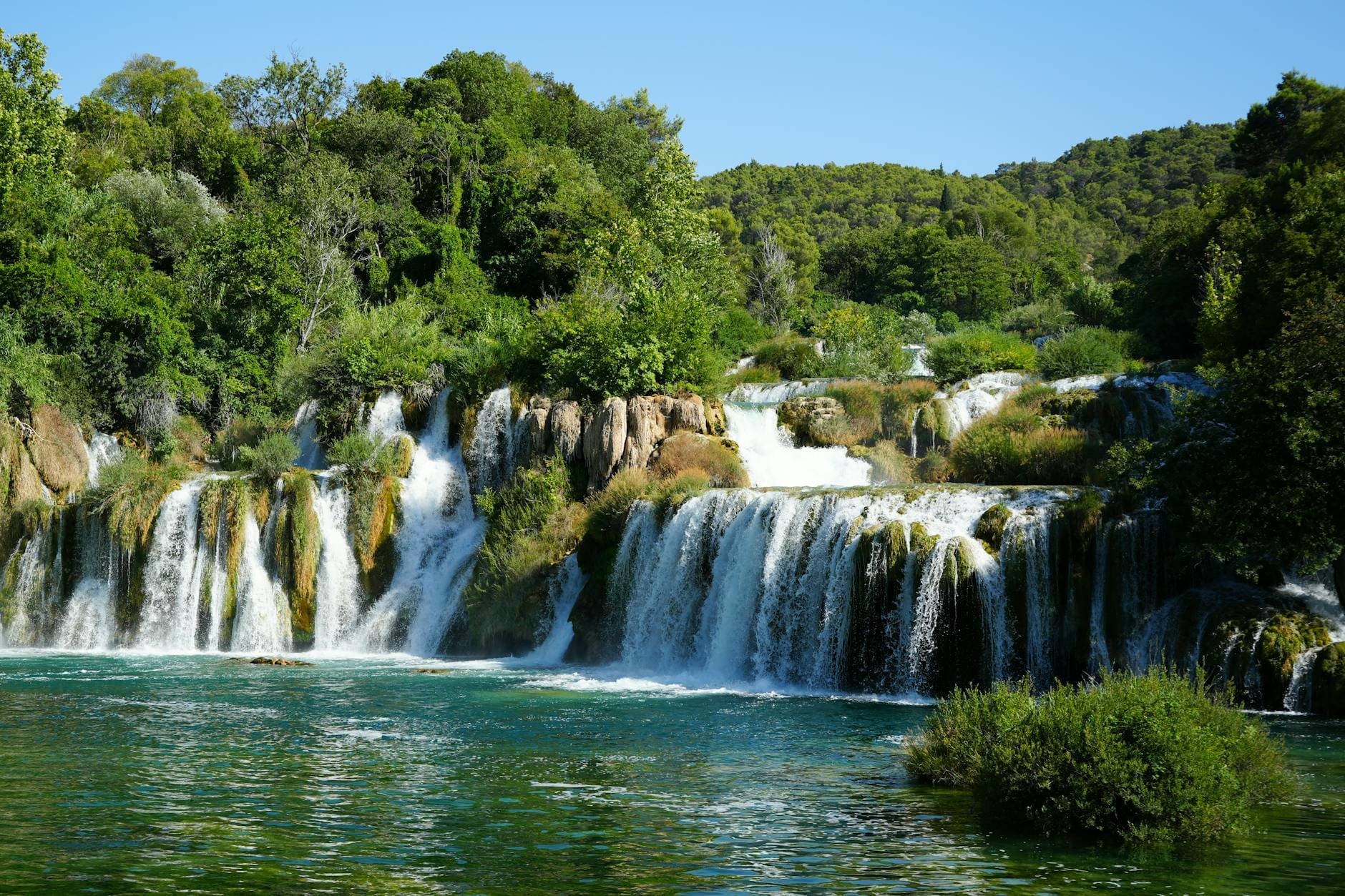
The park's defining feature is its seven waterfalls, which collectively drop 242 metres along the river's course. The largest and most visited, Skradinski Buk, is an 800-metre travertine cascade with a total height difference of about 47.7 metres between its first and last falls. The second major site, Roški Slap, stretches 650 metres and sits further upstream, typically requiring separate time and transport to reach. A third, Manojlovac Slap, is the tallest individual drop in the park, though less accessible for casual visitors.
The travertine formations at Skradinski Buk have taken thousands of years to build. They form when calcium carbonate in the river water precipitates around aquatic plants and moss, gradually solidifying into layered rock barriers that create the stepped cascade effect. The result is a landscape that looks almost constructed, though it is entirely geological.
ℹ️ Good to know
Swimming at Skradinski Buk is no longer permitted. This rule was introduced to protect the travertine ecosystem and is actively enforced. Do not plan your visit around a swim.
The Experience at Skradinski Buk: What You Will Find
Most visitors from Split come specifically for Skradinski Buk, and the standard loop around the falls takes roughly one hour at a relaxed pace. The boardwalk circuit threads along both banks of the river, crossing wooden bridges at several points, with the sound of falling water constant throughout. The air is noticeably cooler and more humid near the main cascade, even on a hot August afternoon, which is one of the things that makes the visit worthwhile after a hot drive.
The colour of the water is the detail that surprises most first-time visitors. The Krka runs an extraordinary turquoise-green, caused by the high mineral content of the karst river filtering through limestone. In morning light, when the sun is still at a low angle over the canyon walls, the pools beneath the falls reflect a shade of blue-green that photographs exceptionally well and looks somewhat unreal in person.
By midday in summer, the boardwalk becomes genuinely crowded. Tour groups from Split, Šibenik, and Zadar converge at roughly the same time, and the narrower sections of the walkway can feel congested. Arriving before 9 a.m. or after 4 p.m. gives you a noticeably quieter experience and better light for photography. Organized tours from Split typically arrive mid-morning, so independent travellers with their own transport have a meaningful advantage in timing.
💡 Local tip
Bring water shoes or sandals with straps. The boardwalk is solid, but the approach paths and some viewpoints involve wet stones and uneven ground. Flip-flops become a liability quickly.
Tickets & tours
Hand-picked options from our booking partner. Prices are indicative; availability and final rates are confirmed when you complete your booking.
Krka national park tour from Split
From 27 €Instant confirmationFree cancellationShared Day Trip to Krka Waterfalls from Split
From 36 €Instant confirmationFree cancellationKrka Waterfalls National Park, Šibenik and Primosten from Split
From 40 €Instant confirmationFree cancellationFull-day tour to Krka National Park in Croatia from Split
From 35 €Instant confirmationFree cancellation
Getting There from Split: Your Realistic Options
The park sits approximately 90 kilometres north of Split, and there are several practical ways to make the journey. Organized day tours from Split are the most popular choice for first-time visitors: they handle transport, park entry, and the boat transfer from Skradin to the falls entrance, which simplifies logistics considerably. For context on what a structured day trip looks like, the day trip to Krka guide covers itinerary options and operators worth considering.
Self-driving gives you control over timing and allows early arrival. The route from Split follows the A1 motorway north before cutting inland toward Šibenik; total drive time is roughly 1.5 hours depending on traffic. In peak summer, the car park at Skradin fills quickly, so arriving before 8:30 a.m. is advisable. From Skradin, a boat transfer carries visitors down the river to the Skradinski Buk entrance, which is part of the experience in itself.
Public buses operate between Split and Šibenik, from where local connections to Skradin are possible, though the logistics require more planning and flexibility than most day-trippers want to deal with. If you are travelling without a car, an organized tour or private transfer is the more reliable option.
Beyond Skradinski Buk: Roški Slap and the Rest of the Park
The majority of visitors see only Skradinski Buk and leave. That is a defensible choice given the time constraints of a day trip from Split, but it means missing a genuinely different landscape further upstream. Roški Slap is a wider, lower series of cascades set among islands; nearby, on the islet of Visovac between Roški Slap and Skradinski Buk, a Franciscan monastery has sat since the 15th century. The atmosphere there is quieter, more overgrown, and less polished than the main site.
The park also maintains an 8.5-kilometre Educational Trail with 176 metres of elevation gain, which passes through canyon viewpoints and gives a sense of the broader geography. For families with younger children or visitors with limited mobility, the flat boardwalk at Skradinski Buk is manageable, but the wider trail network requires reasonable fitness.
Visiting both major sites in a single day from Split is possible but tight. Most organized tours focus on one location. If you want to cover the park more thoroughly, consider basing yourself overnight in Šibenik and using that as a staging point.
When to Go: Season Matters More Here Than Almost Anywhere
The waterfalls are present year-round, but the experience changes dramatically by season. Spring, particularly April and May, brings higher water volume from snowmelt in the Dinaric Alps above, which makes the falls more powerful and the pools fuller. The vegetation around the boardwalk is green and lush, crowds are moderate, and temperatures on site are comfortable.
July and August are the peak months, when the park receives the bulk of its annual visitors. The waterfalls are still impressive, but water levels are lower than spring, the paths are congested, and heat makes the canyon walk tiring. The park does remain rewarding in summer, but the experience is harder work than the brochure implies.
September and early October represent the best overall balance: water levels recover after summer, crowds thin, light angles improve for photography, and temperatures drop to a comfortable range for walking. For travellers with flexibility on timing, this window is the one to aim for. The best time to visit Split guide covers seasonal patterns in more detail if you are still planning your trip dates.
⚠️ What to skip
Ticket prices at Krka change seasonally and have increased in recent years. Always check the current rates directly at npkrka.hr before your visit. Do not rely on prices listed on third-party booking sites or older travel articles.
Practical Notes: Photography, Accessibility, and What to Bring
Photography at Skradinski Buk works best early morning, when light filters into the canyon at a low angle and the boardwalk is relatively empty. Midday light is harsh, creates heavy shadows on the cascades, and the crowds make clean compositions difficult. A polarising filter is worth bringing if you shoot with a DSLR or mirrorless camera, as it reduces the glare from the water surface and allows the true colour of the pools to show through.
The main Skradinski Buk boardwalk loop is paved and flat enough for pushchairs and most mobility levels, though some sections have steps. The wider trail network and paths toward Roški Slap involve uneven terrain and are not suitable for wheelchairs. If accessibility is a concern, focus on Skradinski Buk and confirm current conditions with the park directly.
Bring sunscreen, a hat, and more water than you think you need. There are food and drink stalls near the main entrance, but prices reflect the captive audience. Wearing layers is sensible: the temperature near the falls drops noticeably compared to the surrounding hills. For the broader context of planning a day out from the city, the things to do in Split guide gives useful framing for how Krka fits into a wider itinerary.
Who Should Reconsider
Krka is not for everyone. Visitors who have already done Plitvice Lakes National Park may find Skradinski Buk underwhelming in comparison: Plitvice is larger, more varied, and generally considered the more spectacular of Croatia's two major waterfall parks. If you are choosing between them and can only do one, Plitvice is the stronger experience.
Travellers with very limited time in Split and a full city itinerary ahead of them should weigh the commitment carefully. A full day at Krka means a full day away from Split's old town, islands, and beaches. If the coastal experience is your priority, the island hopping options from Split or a visit to Plitvice Lakes National Park might better serve your interests depending on what you came to Croatia for.
That said, for anyone who has a day to spare and wants a complete change of landscape from the Adriatic coast, the drive north through Dalmatian countryside and the arrival at the falls delivers something that the city itself simply cannot.
Insider Tips
- Book an early-departure tour from Split or arrive by self-drive before 9 a.m. The difference in crowd density between 8:30 a.m. and 11 a.m. is dramatic in peak season.
- The boat ride from Skradin village to the Skradinski Buk entrance is included with some ticket types and is not just a transfer: the river approach through the canyon gives you a perspective of the landscape you cannot get on foot.
- Roški Slap, the second major waterfall site, lies near Visovac Lake, where a medieval Franciscan monastery stands on Visovac Island between the main cascades. Most tour groups never reach it. If you have your own transport and arrive early at Skradinski Buk, you can cover both sites in a single day.
- Pack a picnic rather than relying on the entrance-area food stalls. There are shaded spots near the water where eating is pleasant, and the quality and price of stall food does not justify the convenience.
- September is the park's best-kept secret month: water levels rise again after summer, temperatures are comfortable, and the tour groups from coastal resorts largely disappear. If your travel dates are flexible, aim for mid-September.
Who Is Krka National Park For?
- Nature photographers, especially those willing to arrive early for low-angle light on the cascades
- Families with children old enough to manage a one-hour walk on boardwalks
- Travellers combining Split and Šibenik who want a structured day between the two cities
- Anyone who finds the Adriatic coast too busy in peak season and wants a quieter, inland alternative
- First-time visitors to Croatia who want to see the karst landscape that defines the Dalmatian interior
Nearby Attractions
Combine your visit with:
- Archaeological Museum Split
Founded in 1820, the Archaeological Museum Split (Arheološki muzej Split) is widely regarded as the oldest museum institution in Croatia. Its collection of some 150,000 artifacts, spanning prehistoric through medieval periods, makes it the most complete record of ancient Dalmatia in existence. The arcaded garden alone, lined with Roman sarcophagi and stone inscriptions, is worth the ticket price.
- Blue Cave (Biševo)
The Blue Cave, or Modra špilja, is a flooded sea cave on Biševo island whose interior glows an otherworldly blue when sunlight enters through a submerged opening. Reachable only by small boat, it sits about 50 km southwest of Split and draws visitors from across the Dalmatian coast. The light effect is real — but timing, weather, and crowds determine whether the experience feels magical or rushed.
- Brač Island
Brač is the largest island in Dalmatia, covering around 395–396 km² and rising to about 778 metres at Vidova Gora, the highest peak among all Adriatic islands. Reachable by ferry from Split in under an hour, it delivers a full day of beach, landscape, and stone-village atmosphere without the crowds that descend on Hvar.
- Cetina River Canyon
The Cetina River Canyon carves through limestone karst southeast of Split, delivering sheer cliff walls, the 49-metre Gubavica Falls, and one of Dalmatia's most rewarding rafting routes. Whether you kayak the emerald water, walk the gorge paths, or simply lunch beside the historic Radmanove Mlinice mills, it is a compelling contrast to Split's coastal crowds.