Krka National Park from Split: The Complete Day Trip Guide
Krka National Park is the most practical major day trip from Split: under 90 minutes away, no ferry schedules, and waterfalls that justify the early alarm. This guide covers every transport option, the Lozovac vs. Skradin entrance debate, current swimming restrictions, and how to time your visit to avoid the worst of the summer crowds.
Plan and book this trip
Tools from our partner Travelpayouts help you compare flights and hotels. If you book through them, we may earn a commission at no extra cost to you.
Flights
Hotels map
TL;DR
- Krka National Park sits roughly 80 km northwest of Split, about 1 hour 15 minutes to 1.5 hours by road depending on your route and entrance.
- Two main entrances: Lozovac (better for self-drivers and guided tours) and Skradin (features a scenic boat ride upriver to Skradinski Buk).
- Swimming at Skradinski Buk has been restricted in recent years due to environmental protections — verify current rules at np-krka.hr before booking.
- June and September are the sweet spot for this Krka National Park day trip — good weather, lower crowds, and better light for photography.
- The park covers 109 sq km; on a standard day trip from Split you'll realistically cover the Skradinski Buk area. See our day trips from Split guide if you want to compare alternatives.
Why Krka Is the Smartest Day Trip from Split
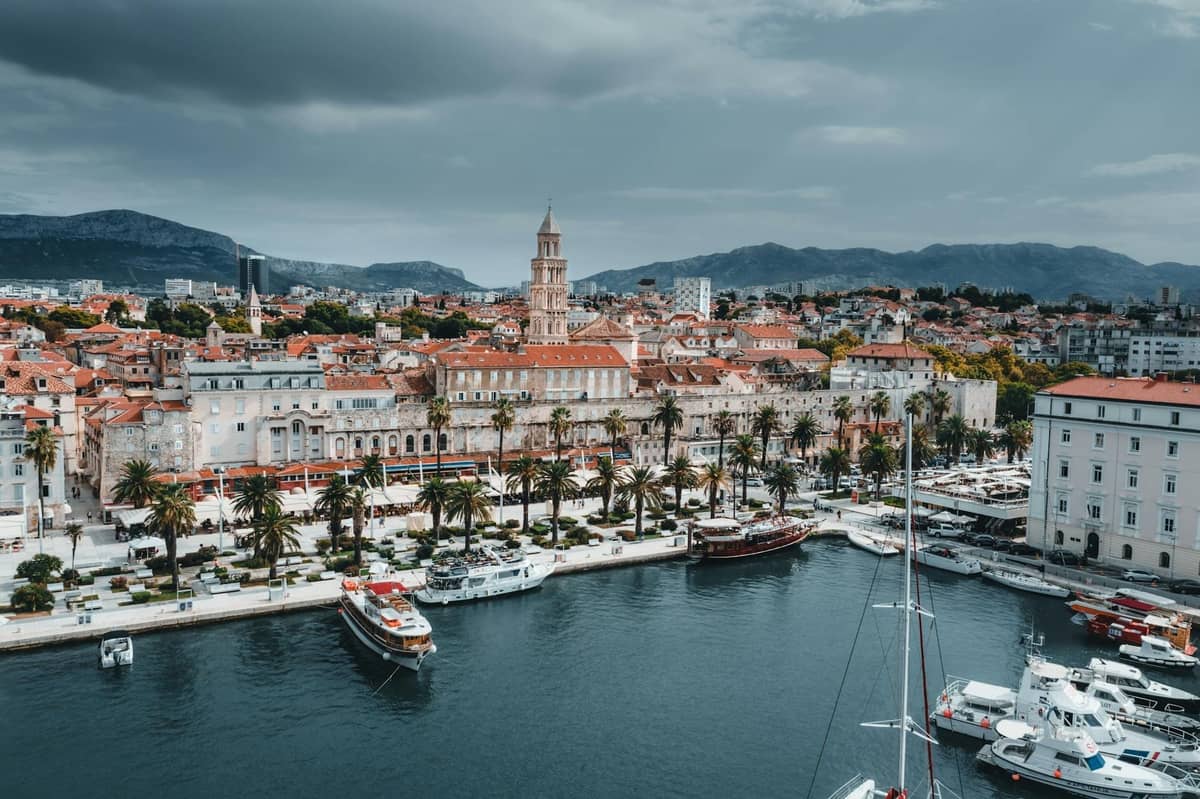
Split is positioned well for day trips, and you have plenty of options: islands, Roman ruins, other national parks. But Krka National Park has a combination of factors that makes it stand out as a day trip. The drive to the Lozovac entrance takes around 1 hour 15 minutes via the A1 motorway. Compare that to Plitvice Lakes, which is roughly 4.5 hours each way and leaves you genuinely rushed. Krka gives you a full 4-6 hours in the park without sacrificing half your day to travel.
Unlike the islands, there are no ferry timetables to plan around and no risk of missing the last boat back. The park itself covers 110 square kilometres (about 42 square miles) along the Krka River, which drops through a series of travertine barriers forming seven main waterfalls. It has been a protected national park since 1985 and is one of eight national parks in Croatia. The result is a river canyon, ancient forests, and one of the most photogenic monastery settings in the country, all reachable before lunch.
ℹ️ Good to know
Krka and Plitvice are often compared side by side. Plitvice is more dramatic in scale and photography potential; Krka is closer, easier to reach, and historically allowed swimming. For a single day out of Split, Krka wins on logistics. If you have two free days, do both.
Getting to Krka National Park from Split
You have three realistic options: a guided group tour, a public bus, or a self-drive. Each has genuine trade-offs depending on your travel style, budget, and how much flexibility you want.
- Guided Tour (Most Popular) Buses depart from central Split and reach Krka in roughly 90 minutes. Tours typically include park entry, a local guide, and sometimes an optional boat excursion inside the park. Prices generally range from around €40–€65 per person. In peak summer, this option has a real practical advantage: your transport is pre-arranged, parking is handled, and entry is often pre-booked. The trade-off is a fixed schedule, usually 3–4 hours at Skradinski Buk.
- Public Bus (Budget Option) Buses from Split Bus Station head toward Šibenik and stop near Skradin or with connections toward Lozovac. Journey time is approximately 1.5 hours. You will need a local shuttle or short walk to the park entrance from the bus stop. Check current timetables directly at the Split Bus Station or the carrier's website — schedules shift seasonally. This is the right choice if you want more time in the park and don't mind managing the logistics yourself.
- Self-Drive (Most Flexible) The drive to the Lozovac entrance takes about 1 hour 15 minutes via the A1 motorway. Car rental in Split is competitive and widely available. Driving gives you control over timing, which matters most if you want to arrive before 8:30 AM to secure parking. Parking fills fast in summer — arriving after 10 AM on a peak summer weekend means overflow areas and a long walk before you even reach the entrance.
⚠️ What to skip
In July and August, the main car parks at both Lozovac and Skradin fill by mid-morning. If you are driving independently, plan to leave Split no later than 7:30 AM. Arriving after 10 AM on a summer weekend means queues, full car parks, and crowded boardwalks at the falls.
Lozovac vs. Skradin: Which Entrance Should You Use
The entrance you choose shapes the entire experience, and most visitors don't think about this until they arrive. The two main entrances to the Skradinski Buk section are Lozovac (upper plateau) and Skradin (riverside town below), both at roughly comparable driving distances from Split.
Lozovac is the entrance most guided tours use. From the car park, a free park shuttle bus drops you near the entrance, and you then walk down through forests and wooden boardwalks for about 15–20 minutes to reach the waterfall system. The descent is gradual and straightforward, and the route is well-marked. It is efficient, and it suits tour groups that need to move a large number of people through the entry process quickly.
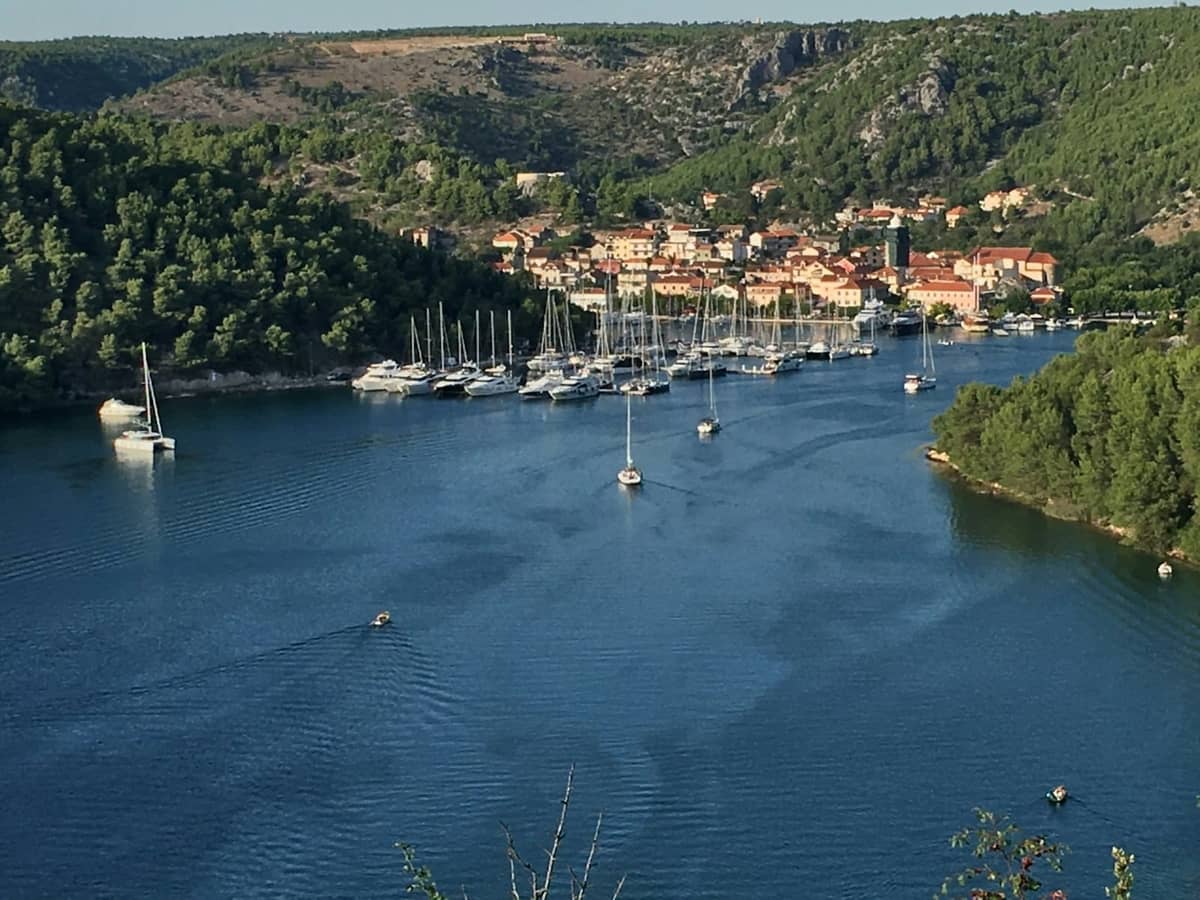
Skradin is the more cinematic option. You park or get dropped in the small riverside town of Skradin, then board a boat for a 25-minute journey upriver through the canyon, arriving directly at Skradinski Buk from the water. The approach through the canyon walls is genuinely dramatic and gives you a sense of the river's scale that the overland route doesn't. The downside: it adds cost, adds time, and the boats themselves crowd up in peak season. Skradin is the better choice for a first visit when you want the full experience. Lozovac is better for efficiency, repeat visitors, or anyone on a tight tour schedule.
💡 Local tip
If you enter via Lozovac and still want time on the water, ask about the Visovac Lake boat excursion inside the park. It gets you out onto the river and close to Visovac Monastery without committing to the full Skradin boat itinerary, and it is typically available as a paid add-on during the main season.
What to See Inside the Park
Be honest with yourself about what a day trip covers. The full park stretches for kilometres and contains additional waterfalls like Roški Slap plus the Burnum Roman archaeological site that the vast majority of day-trippers never reach. That is fine. Skradinski Buk alone justifies the trip. For context on how Krka fits into a broader itinerary, the 3 days in Split itinerary shows how to slot this alongside the city's own attractions.
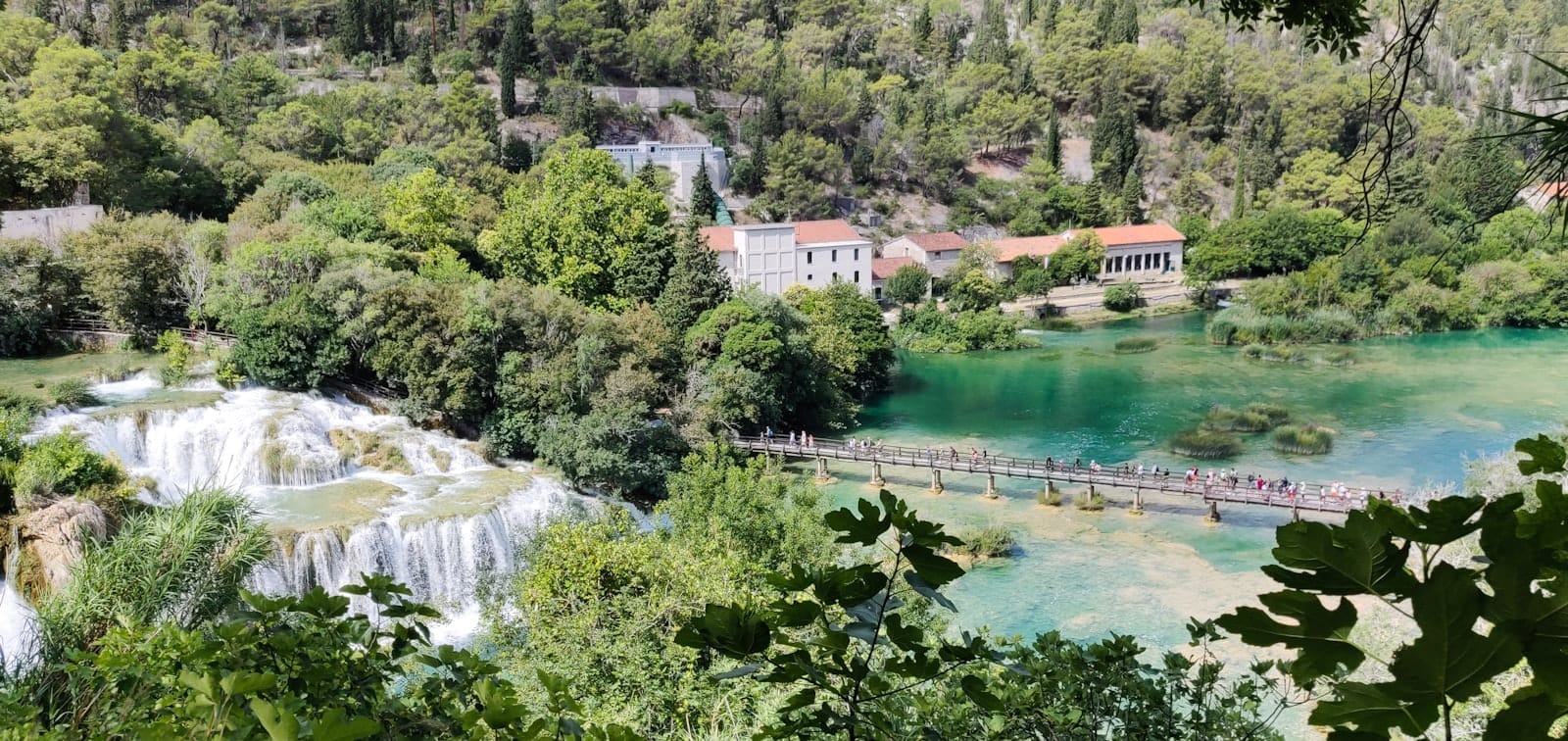
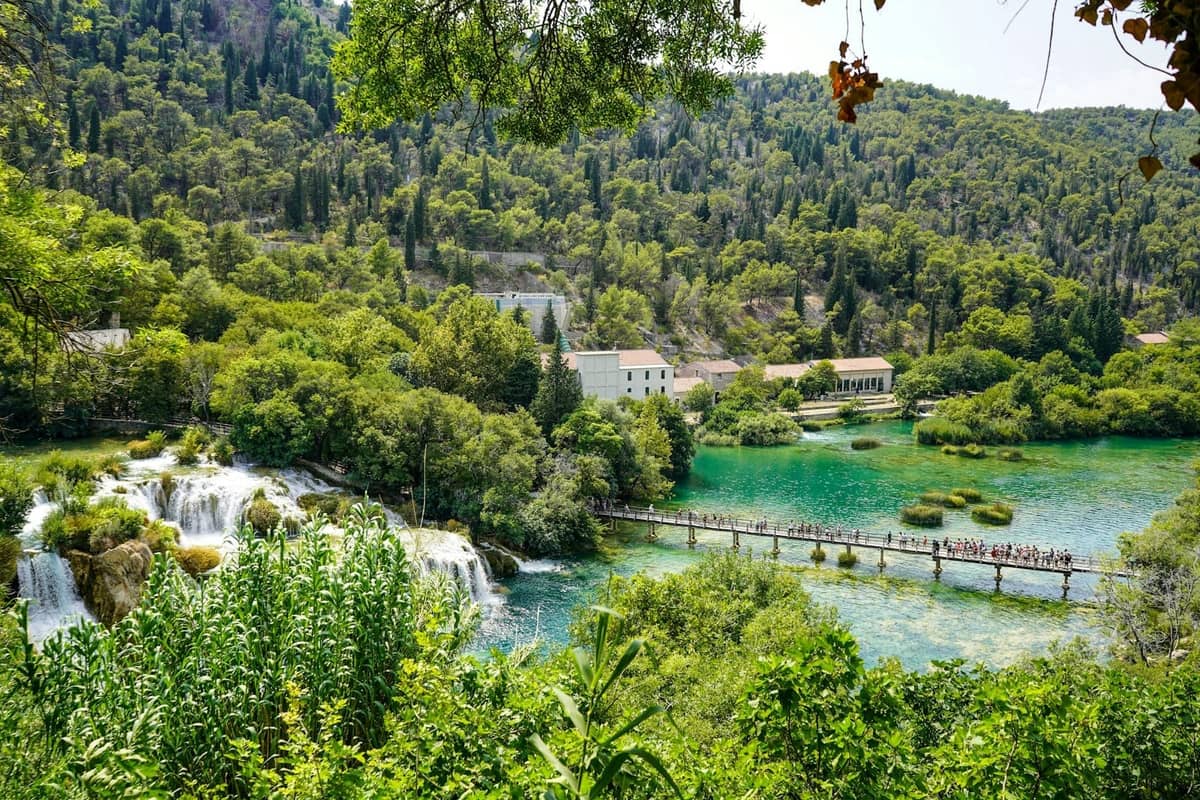
- Skradinski Buk The park's centrepiece and the reason most people make the trip. A series of 17 cascades drops 45.7 metres across a wide travertine formation. Wooden boardwalks wind around and through the falls, letting you get close to the water from multiple angles. Plan a minimum of 2 hours here, more if you want to explore the full circuit without feeling rushed.
- Wooden Boardwalk Circuit The main walking route around Skradinski Buk is approximately 3 km on flat wooden pathways, accessible for most fitness levels. The full loop takes 1–2 hours depending on stops. Vegetation has grown up around the falls over decades, and the boardwalks pass through it at water level, creating an immersive experience you don't get from viewpoint platforms.
- Visovac Monastery A Franciscan monastery founded in the 14th century, sitting on a small island in Visovac Lake upstream from Skradinski Buk. Most day-trippers see it from a viewpoint or short boat excursion. The setting — white stone walls surrounded by still water with forested hills behind — is one of the most-photographed spots in the park.
- Stinice Walking Trail An 8.5 km trail accessible from the Stinice entrance that takes 2.5–3 hours. This is for visitors who want something more active and substantially less crowded. It rarely features in tour itineraries but rewards independent travellers who seek it out.
Swimming, Crowds, and What Has Changed
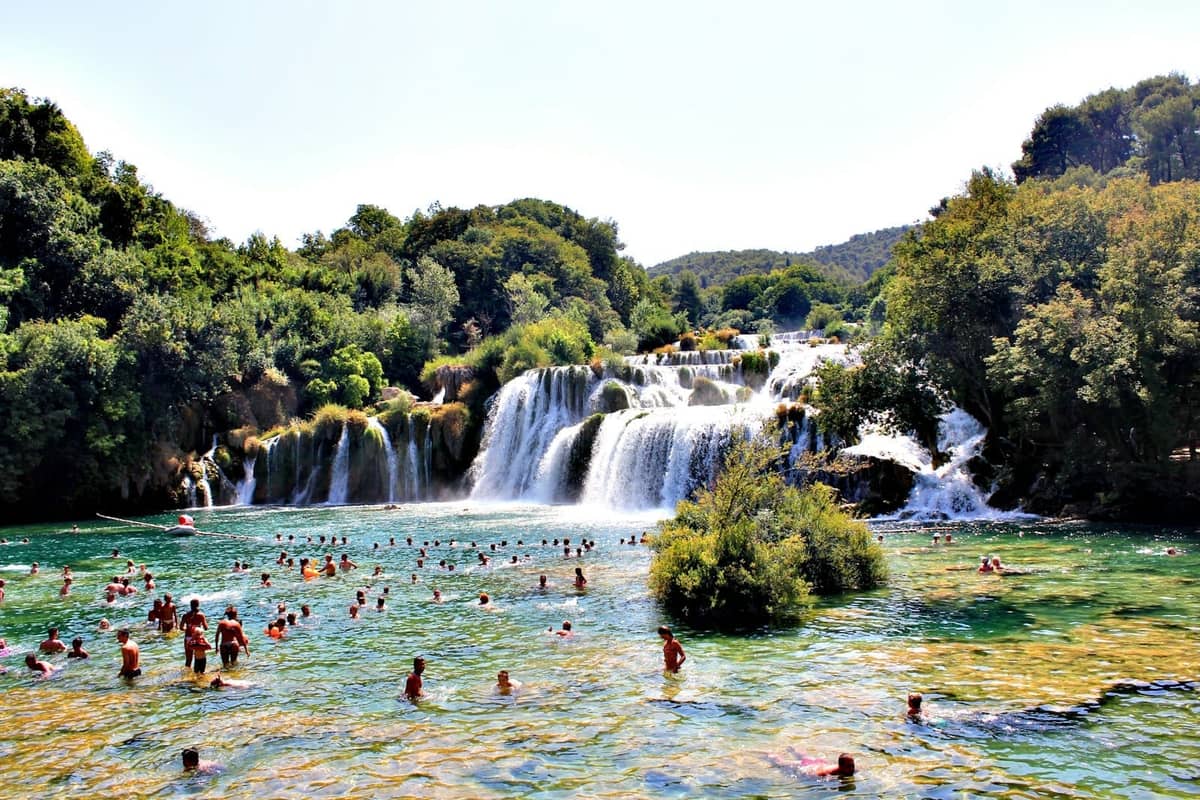
For years, swimming directly at Skradinski Buk was one of Krka's signature draws and featured heavily in travel photography. In recent seasons, the park authorities restricted swimming in the waterfall area, citing environmental protection concerns over the impact of sunscreen and human activity on the sensitive travertine formations. This is a significant change for anyone planning a visit based on older blog posts or social media images showing people in the water beneath the falls.
Always verify the current swimming rules at the official Krka National Park website (np-krka.hr) before booking. Designated swimming areas within the park may still be available depending on the season and current regulations. Do not assume swimming at the main falls is permitted unless you have checked directly with the park — the rules have changed before and can change again.
On crowd patterns: June and September offer the best balance of warm weather and manageable visitor numbers. May is also excellent if slightly cooler temperatures don't bother you. July and August, particularly on weekends, bring extreme crowding by mid-morning. The boardwalks narrow at key viewpoints, and the atmosphere shifts from peaceful to chaotic. If summer is your only window, a midweek visit combined with an early departure from Split are the two most effective strategies. Guided tours departing Split before 8 AM are worth prioritising. For broader seasonal advice, the best time to visit Split guide covers how weather and crowds affect the whole region.
Tickets, Timing, and What to Bring
Park entrance fees are set by Krka National Park administration and change annually. The fee structure typically uses peak pricing in July and August, with lower rates in shoulder and off-season months. Always verify current rates at np-krka.hr before visiting. When entering via Lozovac, the shuttle bus from the car park to the trailhead is included in the admission price. When entering via Skradin, the boat journey from Skradin to Skradinski Buk is normally included during the main season, but confirm this at the time of booking as policies can change.
For guided tours from Split, the listed price typically covers park entry, return transport, and a local guide. It does not always include food, drinks, or optional excursions inside the park such as the Visovac boat trip. Read inclusions carefully before booking. If you want to pair Krka with another stop on the return, the town of Trogir sits roughly 30 km from Split on the coastal road. Its UNESCO-listed medieval core adds an architectural counterpoint to the natural landscape and many guided tours already include this combination.
- Wear comfortable, non-slip footwear. The wooden boardwalks become slippery near spray zones and after rain.
- Bring a refillable water bottle. Cafes and food stalls inside the park are available but get crowded and expensive in peak season.
- Sun protection is essential in summer. Much of the main circuit around the lower falls is exposed to direct sun.
- Pack a lightweight waterproof layer if you plan to walk close to the falls or take a boat trip — spray is unavoidable near the cascades.
- Cash is useful for smaller purchases inside the park, though card payments are increasingly accepted at main facilities.
- Leave Split as early as possible, ideally by 7:30 AM in summer. Reaching the park before 9 AM makes a concrete difference to your experience.
✨ Pro tip
If you want more time in the park than a standard guided tour provides (typically 3–4 hours at Skradinski Buk), consider taking the public bus independently. You lose the guide and group convenience, but you gain the flexibility to explore the Stinice trail, linger at Visovac, or wait for the afternoon light when crowds thin slightly and the golden hour hits the falls.
Krka is one strong option in a broader set of excursions from the city. If you are planning multiple days in the region and weighing up alternatives like Plitvice Lakes from Split or island day trips, the complete day trips from Split guide breaks down all the major options with honest comparisons on travel time, cost, and effort.
FAQ
How long does it take to get from Split to Krka National Park?
By road, the Lozovac entrance is approximately 1 hour 15 minutes from central Split via the A1 motorway. Guided tours typically quote 90 minutes due to group pickup logistics. Public buses take around 1.5 hours including transfers. If you enter via Skradin, add a 25–30 minute boat journey on top of the road travel time.
Can you swim at Krka National Park?
Swimming at Skradinski Buk has been restricted in recent years due to environmental protection measures. There may be designated swimming areas within the park depending on the current season and regulations. Always check the official Krka National Park website (np-krka.hr) for up-to-date permissions before planning your visit around swimming.
Is a guided tour or independent travel better for the Krka day trip from Split?
Guided tours work best for first-time visitors who want convenience and are comfortable with a fixed 3–4 hour window at the park. In peak summer, tours also offer the practical advantages of pre-arranged parking and guaranteed entry. Independent travel by bus or car suits those who want more flexibility, a longer visit, or the ability to explore trails beyond Skradinski Buk.
What is the best time of year to visit Krka from Split?
June and September are the best months. Weather is warm, water levels are good, and crowds are significantly smaller than in July and August. May is also excellent for those comfortable with slightly cooler temperatures. Avoid peak summer weekends if at all possible — the boardwalks around Skradinski Buk become uncomfortably crowded and the experience suffers noticeably.
What is the difference between Krka and Plitvice Lakes National Park?
Both are Croatian national parks centred on waterfalls and river systems, but they differ significantly. Plitvice is larger, more dramatic in scale, and about 1.5 hours from Split each way. Krka is closer, easier to combine with other stops, and historically allowed swimming at the falls. Plitvice tends to produce more striking photographs; Krka offers a more relaxed pace with the added interest of Visovac Monastery. For a single day from Split, Krka is the more practical and time-efficient choice.