Island Hopping from Split: The Complete Guide to Croatia's Dalmatian Islands
Split is the undisputed hub for island hopping in Croatia, with direct ferry connections to Brač, Hvar, Vis, Korčula, Mljet, and beyond. This guide covers every practical detail: which islands are actually worth your time, how to book ferries before they sell out, the best seasonal windows, and how to build a realistic multi-island itinerary without wasting half your trip at port.
Plan and book this trip
Tools from our partner Travelpayouts help you compare flights and hotels. If you book through them, we may earn a commission at no extra cost to you.
Flights
Hotels map
TL;DR
- Split is the best base for island hopping in Dalmatia, with ferries to Brač, Hvar, Vis, Korčula, Mljet, and further south toward Dubrovnik.
- Book ferry tickets in advance on Ferryhopper or directly through Jadrolinija (jadrolinija.hr) and Krilo (krilo.hr). Jadrolinija opens bookings roughly 60 days ahead; popular summer sailings sell out weeks before departure.
- A realistic 7-day itinerary covers 3 to 4 islands. Rushing more than that means you spend most of your time at ports rather than on beaches or exploring towns.
- May and September offer the best balance of warm sea temperatures (around 20-23°C), nearly full ferry schedules, and significantly lower prices and crowds compared to July and August.
- Read the full best time to visit Split guide before locking in your travel dates.
Why Split Is the Ideal Island Hopping Base
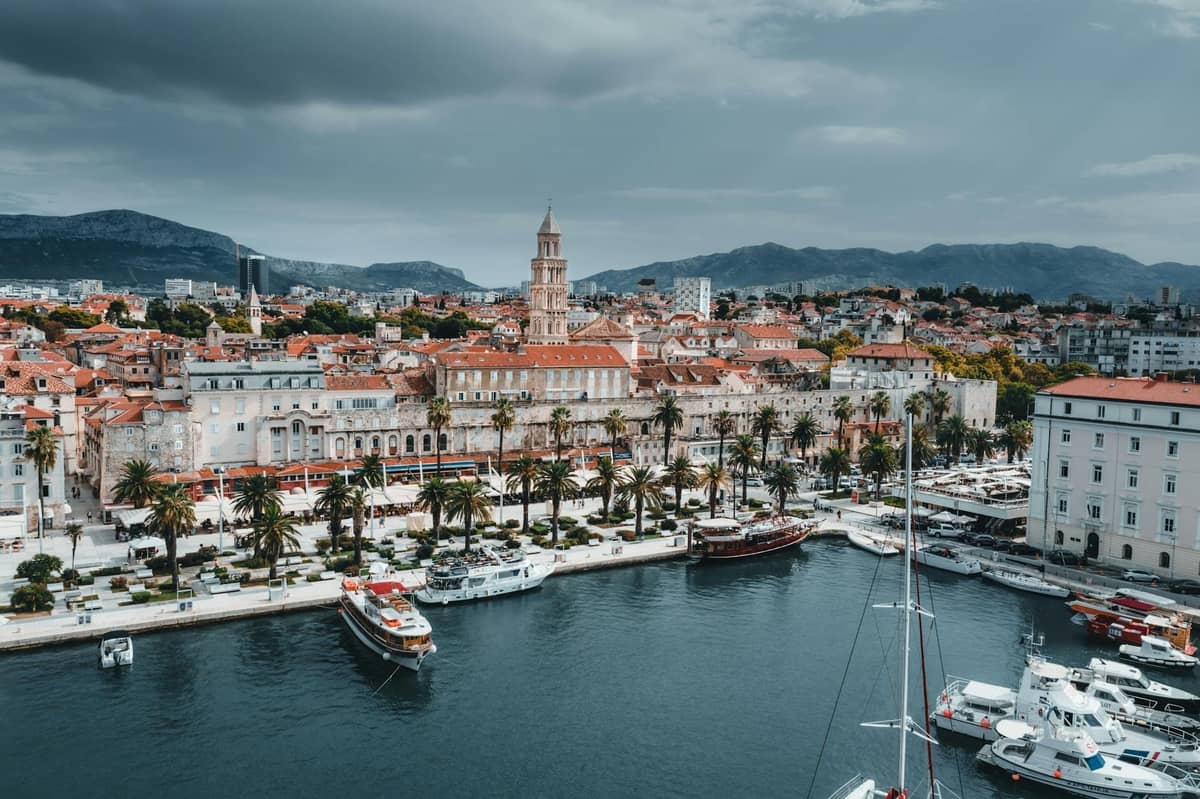
Croatia has over 1,000 islands, of which around 50 are permanently inhabited. The most visited ones sit within the central Dalmatian archipelago, directly accessible by ferry from Split's port. No other mainland city in Croatia offers this concentration of island connections at this frequency. Dubrovnik has the scenery but limited island access. Zadar works well for the northern Kvarner and Zadar archipelago. Split is the clear choice for anyone targeting Dalmatia's middle stretch, which is where the most interesting and varied islands cluster.
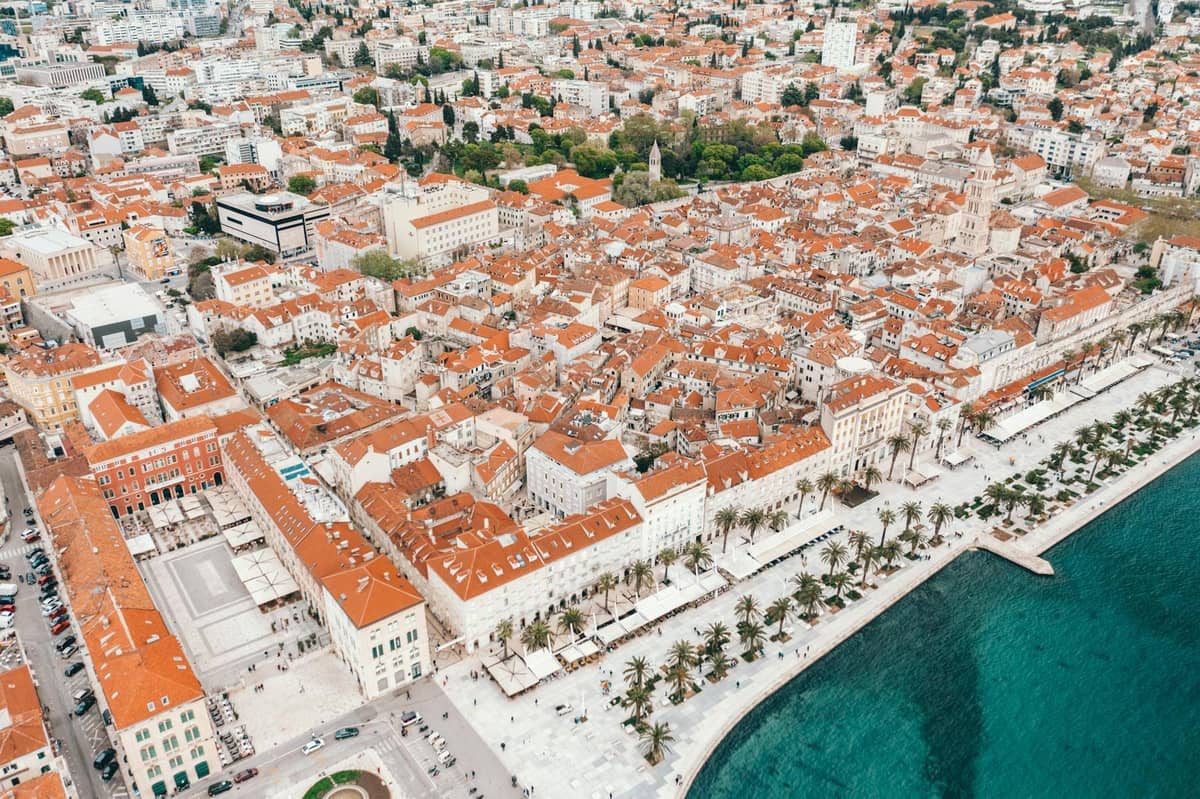
The city itself rewards at least a day before you start hopping. The Diocletian's Palace area is one of the most extraordinary Roman-era sites in Europe and a UNESCO World Heritage Site since 1979. The Riva promenade is where locals and visitors converge each evening, and it sits a short walk from the ferry terminal. Logistically, Split also handles international arrivals well, with direct flights from across Europe into Split Airport (SPU), making it a natural entry and exit point for a Croatian island circuit.
💡 Local tip
Split's ferry terminal (Split trajektna luka) is right on the waterfront, a short walk from the old town. Catamarans and fast ferries typically depart from a different quay than the slower car ferries. Check your departure gate when you arrive and give yourself at least 30 minutes before the scheduled departure time, particularly in high season when queues form quickly.
The Islands: An Honest Breakdown of What Each One Offers
Each island has a distinct character, and understanding those differences before you book accommodation saves genuine disappointment. Here is a direct breakdown of the main islands accessible from Split, ranked loosely from closest to furthest.
- Brač The closest major island and the one with the most diverse appeal. Bol, on the south coast, is home to Zlatni Rat (Golden Cape), Croatia's most photographed beach — a shingle spit that shifts shape with the currents. Afternoon winds make it excellent for windsurfing and kitesurfing. The north-coast town of Supetar is quieter and more local in feel, a solid overnight base if you want to avoid the beach crowds. Brač works well as a first stop or a well-paced day trip.
- Hvar Hvar Town gets called a party island constantly. The nightlife in July and August is real, but it coexists with a genuinely beautiful old town, a hilltop fortress with panoramic views, and the surrounding Pakleni Islands just offshore. Jelsa and Stari Grad, on the quieter eastern end of the island, feel like an entirely different place. Day-trippers from Split tend to arrive mid-afternoon, see the main square, and leave. One night minimum reveals what actually makes the island worth visiting.
- Vis The furthest island covered here and the most rewarding for independent travelers. Vis was closed to foreign tourists until 1989 due to a Yugoslav military base, which meant its infrastructure developed decades behind the others. That is exactly why it retains genuine character. Komiža on the west coast is a working fishing village. The Blue Cave (Modra špilja) on the nearby islet of Biševo is accessible on a boat tour from Komiža or Vis Town and justifies the logistics. Vis is not for people who need constant activity or nightlife.
- Korčula Often compared to a miniature Dubrovnik, Korčula Town sits on a small peninsula with a well-preserved medieval old town featuring a distinctive herringbone street layout designed to manage wind and shade. The island is also a significant wine-producing area, particularly known for Pošip and Grk white wines. Korčula is easy to pair with a route toward Dubrovnik if you are doing a one-way trip through Dalmatia.
- Mljet A longer journey from Split but one of the most unusual islands in Croatia. Mljet National Park covers the western third of the island and contains two saltwater lakes connected to the sea by a narrow channel. The park is best explored by bicycle or kayak. Mljet rewards slow travelers who prioritize nature over nightlife. Dining options outside the national park area are limited, so plan meals carefully if you are staying overnight.
Ferry Routes, Operators, and Journey Times
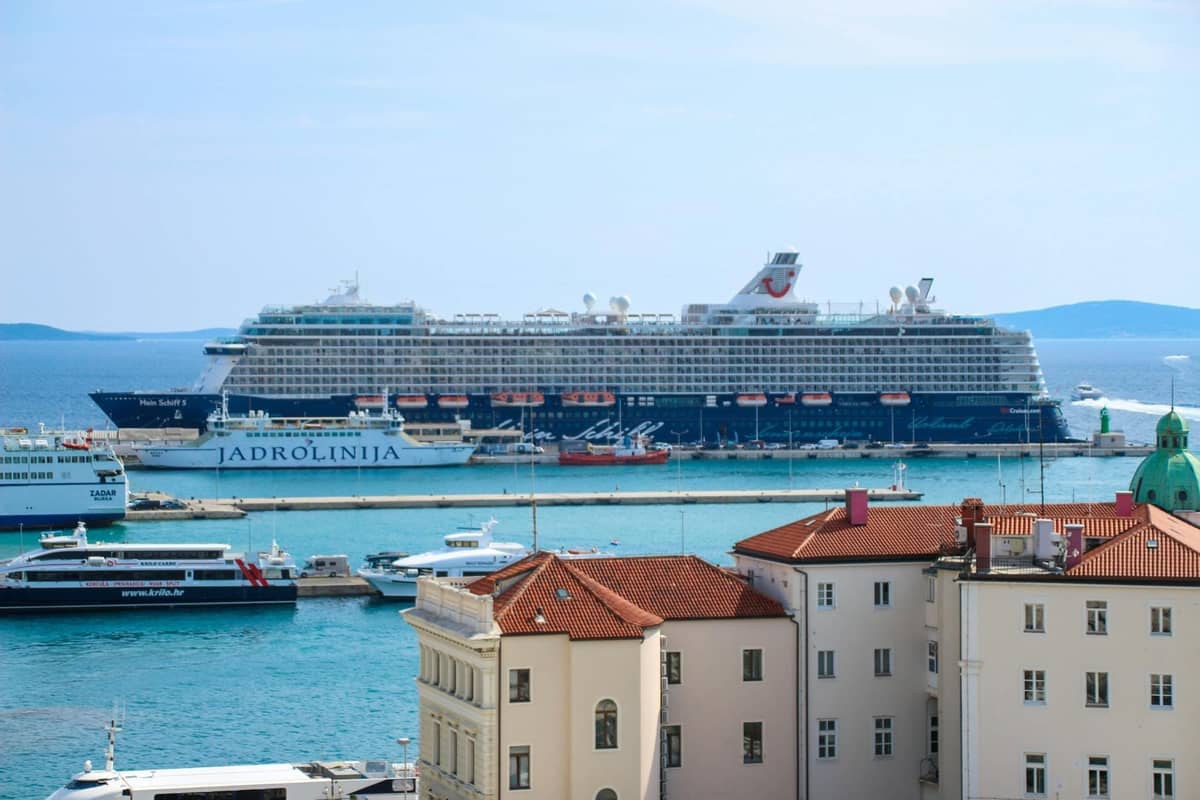
Two main operators dominate Dalmatian ferry traffic. Jadrolinija is the state-run fleet that operates both slow car ferries and fast catamarans across over 50 routes throughout the Adriatic. Krilo (part of Kapetan Luka) is a private catamaran operator running a reliable coastal route that links Split with multiple islands and continues south toward Dubrovnik. A third operator, TP Line, covers some additional connections. Schedules change seasonally, so always verify on the operator's official website or through Ferryhopper, which aggregates routes across all operators in one search.
- Split to Supetar (Brač), car ferry Approximately 50 minutes. Jadrolinija operates this route multiple times daily year-round. No advance booking required for foot passengers in low season, but in summer arrive at the port early.
- Split to Bol (Brač), catamaran Approximately 1 hour via Krilo, with an early morning departure around 8 a.m. Check for direct versus stopping services before buying.
- Split to Hvar Town, catamaran Approximately 1 hour on the fast catamaran. One of the most popular routes in Dalmatia. Both Jadrolinija and Krilo operate it. Sells out in July and August, often weeks ahead.
- Split to Vis Town, catamaran Approximately 2 hours 15 minutes. Fewer daily departures than Hvar, especially outside peak season. Always check return departure times before committing to accommodation.
- Bol (Brač) to Hvar Town, catamaran Approximately 45 minutes via Jadrolinija. A useful inter-island connection that lets you visit Brač and Hvar without returning to Split first.
- Hvar to Korčula, Krilo coastal route Approximately 1 hour 30 minutes to 2 hours depending on stops. Krilo's route connects Split, Milna (Brač), Hvar, Korčula, and in some seasons continues to Mljet and Dubrovnik, making a one-way Dalmatian coast trip straightforward.
- Korčula to Split, Jadrolinija Approximately 3 hours 30 minutes. The 9:40 a.m. departure is commonly cited for return trips. Verify current timetables before planning this leg.
⚠️ What to skip
Jadrolinija opens bookings approximately 60 days in advance. On popular summer routes, particularly Split-Hvar and the Krilo coastal catamaran, available seats fill within days of the booking window opening. Do not assume you can buy a ticket at the port on the morning you want to travel in July or August. Book both outbound and return legs together the moment your dates are confirmed.
How to Book: Platforms, Practical Steps, and What to Avoid
Ferryhopper (ferryhopper.com) is currently the most practical aggregator for Dalmatian routes. It pulls live schedules from Jadrolinija, Krilo, and TP Line in one place, lets you compare departure times and prices, and handles booking without switching between multiple operator websites. For Jadrolinija specifically, booking directly at jadrolinija.hr avoids any intermediary service fee. Krilo tickets are available at krilo.hr.
One detail that catches travelers off guard: not all tickets are available at the port window on the day of travel, and the ones that are may only be sold in limited quantities. Showing up on a peak-season morning hoping to buy a catamaran ticket to Hvar at the quay is a genuine gamble. The safer approach is to book online as soon as your travel dates are confirmed, then download the ticket. Ferry staff scan QR codes; a screenshot on your phone works fine.
✨ Pro tip
When planning a multi-island route, book each leg individually rather than assuming a single operator connects everything. The Krilo coastal route handles many inter-island connections efficiently, but some segments require switching to Jadrolinija. Map your entire route on Ferryhopper first, confirm the connections are realistic on your chosen dates, and only then commit to accommodation bookings on each island.
Seasonal Timing: When to Go and How the Experience Changes
The practical experience of island hopping from Split changes significantly depending on when you travel. June through August is peak season: the most ferry options, the widest accommodation selection, and the most crowds. Hvar Town in July becomes extremely congested, with accommodation prices roughly doubling compared to May or October. If your priority is beach time and a social atmosphere, peak season is workable, but set realistic expectations around ferry queues, sold-out departures, and premium pricing on everything from restaurant meals to sunbeds.
May and September are the best windows for most travelers. The Adriatic is warm enough to swim comfortably (sea temperatures around 20-23°C in May, remaining pleasant into October), ferry schedules are nearly as frequent as peak season, and accommodation costs drop significantly. Crowds on Hvar and Brač are manageable, and restaurants are operating without the July strain on service. The full best time to visit Split guide goes deeper on monthly trade-offs if you are still deciding on dates.
Low season (November through March) is a different proposition entirely. Vis and Korčula have severely reduced ferry schedules, and most restaurants and accommodation options close for winter. Hvar Town retains some year-round services, and Brač remains accessible via the car ferry connection, but island hopping as most visitors imagine it simply does not function in winter. That is not a criticism of traveling in the off-season; it is the reality of seasonal Dalmatian infrastructure.
Building Your Itinerary: Realistic Frameworks for Every Trip Length
The most common planning mistake is trying to cover too many islands in too short a time. Ferries run on fixed schedules, and a missed connection can collapse an entire day's plan. Build buffer time, particularly if you are traveling with luggage, with children, or during high season when port congestion adds delays.
For a 7-day trip based in Split, three to four islands is a realistic target. A solid framework: arrive in Split and spend the first evening on the Riva. Day 2, cross to Brač and base yourself in Bol for Zlatni Rat and the beach. Day 3, take the afternoon catamaran to Hvar Town. Spend two nights on Hvar, using the second full day to rent a small boat or kayak to the Pakleni Islands, or join a tour to the Blue Cave on Biševo. Day 5, take the Krilo catamaran to Vis Town or Korčula. Day 6 on the island you chose, then return to Split on Day 7 with sufficient buffer before any flights. This framework works; do not compress it.
- Do not plan a ferry connection within 2 hours of a flight departure — port delays are common and the stress is not worth it.
- Keep your luggage compact and soft-sided. Rolling suitcases on island cobblestones are impractical; a backpack or duffel bag makes ferry boarding and narrow streets significantly easier.
- Check whether your accommodation on each island is in the port town or requires a bus or taxi after arrival. This affects logistics more than most people anticipate.
- Confirm return ferry times before booking accommodation. Some islands have only one or two daily departures back to Split, particularly outside July and August.
- If you are doing a one-way trip ending in Dubrovnik, the Krilo coastal catamaran covers Split-Hvar-Korčula-Dubrovnik efficiently, removing the need to backtrack.
For shorter trips, single-island day trips from Split are genuinely feasible for Brač and Hvar. Boat tours from Split handle the logistics for you and often combine multiple stops in one day. These work well if you want a sampler without coordinating your own ferry itinerary. For deeper exploration of Vis or Mljet, you need at least one overnight stay to do the island justice. Vis particularly suffers from day-trip treatment: the journey takes over two hours each way, leaving only a few hours on the island itself.
FAQ
Which island is easiest to visit as a day trip from Split?
Brač is the most accessible day trip due to the frequent car ferry to Supetar (about 50 minutes) and the Krilo catamaran to Bol (about 1 hour). Hvar is also doable as a day trip but benefits from an overnight stay — most of what makes it interesting is missed when you arrive in the afternoon and leave by early evening. Vis is technically possible as a day trip in high season but the 2-hour-15-minute journey each way leaves you only a few hours on the island, which is not enough to appreciate it properly.
Do I need to book ferry tickets in advance for island hopping from Split?
Yes, particularly for travel between June and August. Catamaran routes like Split-Hvar and the Krilo coastal service sell out days or weeks ahead during peak season. Jadrolinija opens seasonal bookings approximately 60 days in advance, and popular departures fill quickly. Use Ferryhopper to search across operators, or book directly at jadrolinija.hr or krilo.hr. Slow car ferries to Brač (Supetar) and Hvar (Stari Grad) have more capacity and are less likely to sell out, but advance booking still provides peace of mind.
What is the best island hopping route from Split?
The most popular circuit is Split-Brač-Hvar-Vis or Split-Brač-Hvar-Korčula. For a one-way trip ending in Dubrovnik, the Krilo catamaran covers Split-Hvar-Korčula-Dubrovnik efficiently. The right route depends on your priorities: beaches (Brač, Hvar), authenticity and fewer crowds (Vis), wine and medieval architecture (Korčula), or nature and national park access (Mljet).
Is it better to island hop independently or join an organized tour?
Independent travel gives you full flexibility over your pace and schedule and is generally cheaper overall. Organized boat tours from Split work well if you want to cover multiple spots in a single day without managing ferry schedules — particularly useful for routes like the Blue Cave on Biševo or a multi-island day tour. For multi-day itineraries, doing it yourself with Jadrolinija and Krilo gives you far more control over your time on each island.
Can I bring a rental car on the ferry to the islands?
Yes, on Jadrolinija car ferry routes to Brač (Supetar), Hvar (Stari Grad), Vis, and some other islands. However, bringing a rental car to the islands adds significant ferry costs and is largely unnecessary — island towns are walkable and local taxis, scooters, or bicycles handle everything else. If you are island hopping for more than a couple of days, leave the car in Split and travel light.