Archaeological Museum Split: Croatia's Oldest Museum and What It Actually Contains
Founded in 1820, the Archaeological Museum Split (Arheološki muzej Split) is widely regarded as the oldest museum institution in Croatia. Its collection of some 150,000 artifacts, spanning prehistoric through medieval periods, makes it the most complete record of ancient Dalmatia in existence. The arcaded garden alone, lined with Roman sarcophagi and stone inscriptions, is worth the ticket price.
Quick Facts
- Location
- Ulica Zrinsko-Frankopanska 25, Split — about 10 minutes on foot from Diocletian's Palace
- Getting There
- Walkable from the old town; also reachable by local city bus. No tram line.
- Time Needed
- 1.5 to 2.5 hours for a thorough visit; 45 minutes if you focus on highlights
- Cost
- Adults €8, concessions €4. Combined ticket with Salona (7-day validity): €10/€5. Verify current prices at armus.hr.
- Best for
- Roman history enthusiasts, archaeology buffs, travelers seeking a cool indoor break, anyone visiting Salona on the same trip
- Official website
- www.armus.hr/en
Why This Museum Earns More Attention Than It Gets
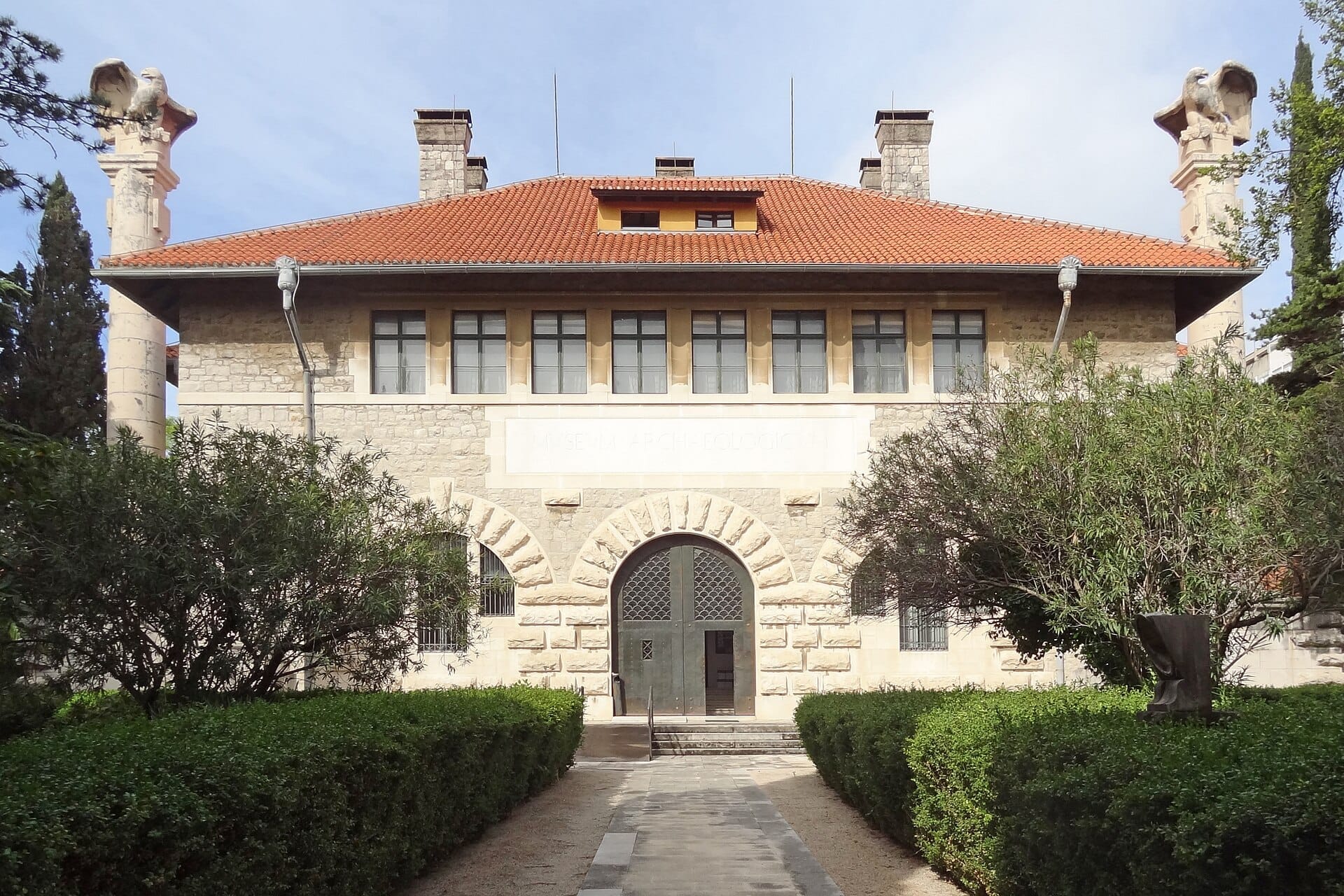
The Archaeological Museum Split is routinely overshadowed by the spectacle of Diocletian's Palace a short walk to the south. That is a genuine oversight. Founded in 1820 by decree of the Dalmatian government, it predates Croatian independence by more than 170 years and holds the single largest and most systematic collection of ancient Dalmatian artifacts on the planet. Roughly 150,000 objects have been catalogued here, from prehistoric burial goods to Greco-Illyrian ceramics, Roman funerary monuments, early Christian mosaics, and Byzantine-era jewelry. The current Neo-Romantic building, designed in collaboration with the archaeologist Frane Bulić and completed between 1912 and 1914, gives the institution an air of serious scholarship that rewards visitors who treat it as more than a quick detour.
To be direct about expectations: this is not a flashy, immersive museum. The display cases are traditional, the lighting is functional rather than theatrical, and most interpretive panels remain brief. What it offers instead is density and authenticity. Almost everything here came out of the ground within 30 kilometers of where you are standing.
💡 Local tip
Buy the combined ticket for Salona (€10 adults, valid 7 days) if you plan to visit the Roman ruins at Solin. It saves money and the two sites form a logical pair — the museum holds what archaeologists excavated from Salona over two centuries.
The Garden: Start Here Before Going Inside
Most visitors walk straight past the arcaded courtyard garden and head directly into the building. That is the wrong order. The garden is arranged with Roman and early medieval stone monuments: sarcophagi, inscribed funerary steles, altar fragments, and architectural elements salvaged from Salona and other Dalmatian sites. Walking among them in the open air, with the soft sound of city traffic filtering through from the street, gives you a sense of scale that no indoor case replicates. Some of the sarcophagi date to the 2nd and 3rd centuries CE and still carry readable Latin inscriptions.
In the morning hours, light enters the arcade at a low angle and catches the carved relief work on the stone surfaces in a way that afternoon flat-light does not replicate. If photography matters to you, arriving at opening time (9:00 AM) and spending the first 20 minutes in the garden produces noticeably better results than mid-afternoon visits.
Tickets & tours
Hand-picked options from our booking partner. Prices are indicative; availability and final rates are confirmed when you complete your booking.
Blue Cave and Hvar 5 islands tour from Split
From 145 €Instant confirmationFree cancellationKrka national park tour from Split
From 27 €Instant confirmationFree cancellationAll-inclusive Blue Lagoon tour from Split with three islands visit
From 68 €Instant confirmationFree cancellationGuided kayaking tour with snorkeling stops from Split
From 50 €Instant confirmationFree cancellation
What the Collection Actually Contains
The permanent collection is organized roughly chronologically across two floors. The ground floor covers prehistoric and proto-historic material: Neolithic and Bronze Age ceramics, Illyrian metalwork, and early Greek colonial pottery recovered from sites along the Dalmatian coast. The Hellenistic and Roman sections follow, and this is where the collection reaches its peak density. Expect terracotta oil lamps by the dozens, glass unguentaria (perfume bottles), bronze fibulae, coins spanning four centuries of Roman rule, and a substantial number of sculptural fragments.
The early Christian and late antique material is particularly significant in the European context. Salona, the ruined Roman city now known as Solin just outside Split, was one of the most important early Christian communities in the Adriatic. The museum holds mosaic panels, reliquary objects, inscriptions naming early martyrs, and architectural stonework from Salona's basilicas. For anyone visiting the actual ruins at Solin, spending time with this material first turns a confusing field of stone foundations into something legible.
The numismatic collection is one of the larger coin holdings in the region and includes pieces from Greek colonial mints through to Venetian-era coinage. It is not always fully displayed, so check the current exhibition schedule on the museum's website. If Salona's history draws you in, the page on Salona Roman ruins provides useful context for planning.
Historical Context: Why This Collection Exists
The museum's origin traces directly to Emperor Francis I of Austria, who visited Dalmatia in 1818 and recognized that ancient artifacts were being dispersed, sold, or lost at an accelerating rate. The Dalmatian government in Zadar responded with a founding decree in 1820, making this the oldest museum institution in Croatia. The collection was initially housed in various buildings in Split before the current purpose-built structure on Ulica Zrinsko-Frankopanska was completed in 1914. The museum relocated to its present address in 1922.
Frane Bulić, the Croatian archaeologist who oversaw excavations at Salona for decades, was central to both the building's design and the systematic expansion of its holdings. His work defined what is now known about Roman Salona, and a significant portion of what fills these cases passed through his excavations. The museum is, in a real sense, the intellectual legacy of one unusually dedicated scholar working across the late 19th and early 20th centuries.
Understanding Salona also helps frame Diocletian's Palace itself. Diocletian retired to Split after abdicating in 305 CE, building his retirement complex on the coast near his hometown of Salona. The two sites are inseparable historically, and the museum bridges them.
Practical Walkthrough: How to Use Your Time
Allow 90 minutes minimum for a visit that covers both the garden and the main floors without rushing. Two and a half hours gives you time to read inscriptions, study the coin cases, and explore the upper floor thoroughly. The building is two stories; ground floor exhibitions cover prehistoric through early Roman periods, while the upper floor continues into late Roman, early Christian, and early medieval material.
The museum is open Monday through Saturday, 9:00 AM to 2:00 PM and then 3:00 PM to 8:00 PM. It is closed on Sundays. Hours can shift seasonally, so confirming on the official website before visiting is worthwhile, particularly in winter or during Croatian public holidays. The midday closure between 2:00 and 3:00 PM catches visitors off guard regularly.
⚠️ What to skip
The museum closes between 2:00 PM and 3:00 PM daily. Arriving at 1:45 PM means you will be asked to leave within 15 minutes. Plan accordingly and aim for either a morning slot (arrive by 10:00 AM) or an afternoon slot (arrive at 3:30 PM or later).
The building is not air-conditioned in the conventional sense, but thick walls and high ceilings keep interior temperatures noticeably cooler than the streets outside during summer afternoons. On a 35-degree July day, spending two hours inside can feel almost refreshing. Bring water regardless.
If you are walking here from the old town, the route takes you north along the city blocks above the palace walls, past the Green Market at Pazar. The Pazar market is worth a 10-minute detour in the morning before museum opening.
Photography, Accessibility, and Who Might Skip This
Photography is generally permitted in the permanent collection without flash. The garden is fully photographable and the stone monuments tolerate natural light well. Interior cases involve reflective glass that makes flash photography counterproductive regardless of permission.
The building has two floors and no information in publicly available sources confirms elevator access. Visitors with mobility limitations should contact the museum directly via the official website before visiting, as the upper floor may not be wheelchair accessible.
Travelers with no prior interest in Roman or early medieval history are likely to find the experience underwhelming. The collection is presented in a scholarly format without interactive elements, audio guides, or theatrical staging. Children under 10 will almost certainly be bored within 30 minutes unless they have a specific interest in ancient objects. For families with young children, the time is better spent at outdoor sites. That said, teenagers with a history background or any adult who has already visited Diocletian's Palace and wants to understand what came before it will find the museum genuinely rewarding.
Travelers doing a broader itinerary can pair this museum with a day trip to Solin to see the ruins in person. The Salona Roman ruins are easily reachable from Split in half a day, and the combined ticket makes the pairing financially sensible. For broader trip planning, the 3 days in Split itinerary shows how to fit the museum into a short visit.
Insider Tips
- The morning light in the arcaded garden between 9:00 and 10:30 AM hits the carved stone surfaces at an angle that reveals relief detail invisible later in the day. If stone monuments interest you photographically, this timing is not optional.
- Ask staff about temporary or rotating exhibitions when you arrive. The permanent collection is the core, but the museum periodically displays objects from storage that do not appear in the standard gallery layout.
- The combined Salona ticket (€10 adults, 7-day validity) is almost always worth buying if there is any chance you will visit Solin. Even if you arrive undecided, buy it at the museum and you preserve the option.
- The museum's interior stays noticeably cool during summer. If you are planning a day with multiple outdoor sites, slotting this visit in during peak midday heat (12:00 to 3:00 PM) makes thermal sense — but account for the midday closure between 2:00 and 3:00 PM.
- The numismatic (coin) collection is one of the more specialized holdings in the Adriatic region. If ancient coinage interests you, explicitly ask staff which cases are currently accessible, as not all are always on display.
Who Is Archaeological Museum Split For?
- Roman history and archaeology enthusiasts who want primary-source material, not reconstructions
- Visitors planning to continue to Salona who want interpretive context before seeing the ruins
- Travelers seeking a cool indoor retreat during peak summer heat
- Anyone who has already toured Diocletian's Palace and wants the deeper historical framework behind it
- Slow travelers with more than two days in Split who have already covered the obvious outdoor sites
Nearby Attractions
Combine your visit with:
- Blue Cave (Biševo)
The Blue Cave, or Modra špilja, is a flooded sea cave on Biševo island whose interior glows an otherworldly blue when sunlight enters through a submerged opening. Reachable only by small boat, it sits about 50 km southwest of Split and draws visitors from across the Dalmatian coast. The light effect is real — but timing, weather, and crowds determine whether the experience feels magical or rushed.
- Brač Island
Brač is the largest island in Dalmatia, covering around 395–396 km² and rising to about 778 metres at Vidova Gora, the highest peak among all Adriatic islands. Reachable by ferry from Split in under an hour, it delivers a full day of beach, landscape, and stone-village atmosphere without the crowds that descend on Hvar.
- Cetina River Canyon
The Cetina River Canyon carves through limestone karst southeast of Split, delivering sheer cliff walls, the 49-metre Gubavica Falls, and one of Dalmatia's most rewarding rafting routes. Whether you kayak the emerald water, walk the gorge paths, or simply lunch beside the historic Radmanove Mlinice mills, it is a compelling contrast to Split's coastal crowds.
- Hvar Island
Hvar Island stretches about 68 kilometres along the Dalmatian coast, combining 2,400 years of layered history with some of Croatia's clearest water and a landscape still shaped by ancient Greek land divisions. It is reachable from Split by ferry in roughly two hours, making it a logical day trip or short stay from the city.