Meštrović Gallery: Split's Most Underrated Art Destination
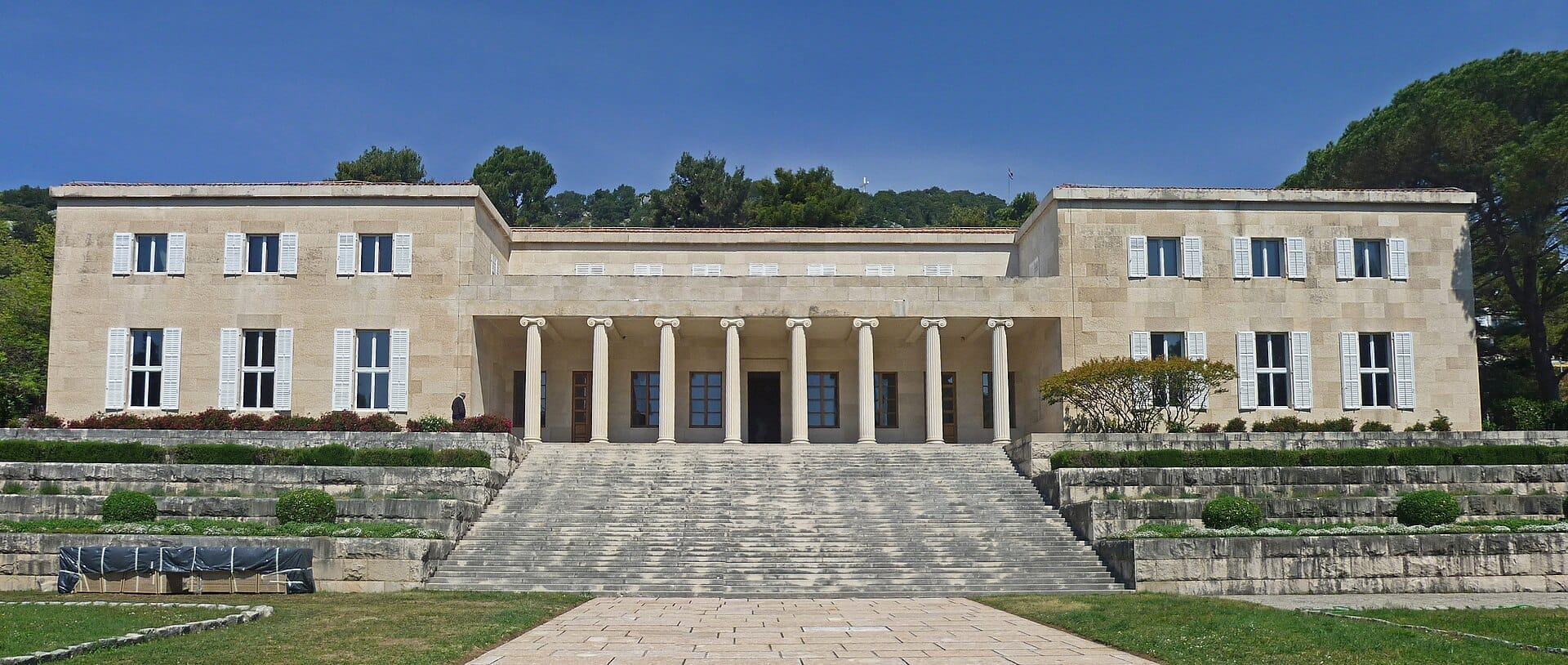
Perched on the southern slopes of Marjan Hill, the Meštrović Gallery occupies the neoclassical villa Ivan Meštrović designed as his home, studio, and legacy. With nearly 200 sculptures in marble, bronze, and wood, plus a terraced Mediterranean garden overlooking the Adriatic, it rewards visitors who make the short walk from the Riva.
Quick Facts
- Location
- Šetalište Ivana Meštrovića 46, 21000 Split, Croatia
- Getting There
- ~15–20-min walk from the Riva promenade; city bus lines 7, 8, 12 and 21 serve the area
- Time Needed
- 1.5 to 2.5 hours
- Cost
- Paid entry; combined ticket includes Kaštilac chapel. Verify current price at mestrovic.hr
- Best for
- Art lovers, architecture enthusiasts, travellers seeking quiet away from the palace crowds
- Official website
- mestrovic.hr/en/gallery-mestrovic
What the Meštrović Gallery Actually Is
The Galerija Meštrović, or Ivan Meštrović Gallery, is one of the most important sculpture museums in Croatia. It sits in a neoclassical villa originally built as a private residence on the southern slopes of Marjan Hill, facing the open sea. Ivan Meštrović (1883–1962) is widely considered Croatia's greatest sculptor and one of the defining figurative artists of the twentieth century. This was the house he designed himself, built between 1931 and 1939, intended from the start as both a private residence and an exhibition space. When he donated it to the state in 1952, he transferred 132 works with it. The collection includes more than 200 sculptures in marble, bronze, stone and wood, alongside over 900 drawings and a substantial archive of architectural plans.
The building itself is part of the experience. Meštrović trained as an architect as well as a sculptor, and the villa reflects that dual sensibility: wide colonnaded terraces, high-ceilinged interior halls designed to handle monumental work, and a garden structured to frame sculptures against sea views rather than simply display them. This is not a conventional museum where someone else's collection was moved into a generic space after the fact. The entire compound was conceived as a single artistic statement.
ℹ️ Good to know
The combined admission ticket covers both the Meštrović Gallery and the nearby Crikvine–Kaštilac, a 16th-century fortified complex Meštrović decorated with a cycle of wood-relief panels depicting the life of Christ. Kaštilac is a short distance along the same coastal path and is worth the extra thirty minutes.
The Collection: What You Will Actually See
The ground floor halls contain the largest and most powerful pieces. Works like Suffering Woman and Job are representative of Meštrović's recurring themes: grief, endurance, the human body under strain. His figures are not idealized in the classical sense; they carry weight and tension in the musculature that reads as psychological rather than purely aesthetic. Standing in front of Job, the contorted posture communicates something that a painting of the same subject rarely achieves. The scale helps. Several works are well over life-size, and the rooms were built to hold them without crowding.
The upper floors shift in tone. Smaller bronze pieces, portrait busts, and preparatory models give a clearer sense of Meštrović's process. The drawings collection (over 900 works, according to the museum) is not always on full display, but what is shown reveals how extensively he worked out compositions on paper before committing to stone or metal. For visitors with an art-historical interest, this part of the collection is often the most rewarding and the least crowded.
The garden deserves more time than most visitors give it. Bronze figures are positioned along the terraces with the Adriatic below them, and the light on polished bronze shifts noticeably between midmorning and late afternoon. In summer, the garden catches a sea breeze that the interior does not, which matters in July and August.
Tickets & tours
Hand-picked options from our booking partner. Prices are indicative; availability and final rates are confirmed when you complete your booking.
Blue Cave and Hvar 5 islands tour from Split
From 145 €Instant confirmationFree cancellationKrka national park tour from Split
From 27 €Instant confirmationFree cancellationAll-inclusive Blue Lagoon tour from Split with three islands visit
From 68 €Instant confirmationFree cancellationGuided kayaking tour with snorkeling stops from Split
From 50 €Instant confirmationFree cancellation
How the Visit Changes by Time of Day
Morning visits, particularly before 10:30, are noticeably quieter. The light through the large south-facing windows reaches the interior halls at a low angle that emphasizes surface texture on the marble works in a way that midday overhead light does not. This is when the gallery feels closest to its original function as a working studio rather than a tourist attraction.
By early afternoon in peak season (June through August), organized groups begin to arrive and the ground floor can feel congested around the major pieces. If you are arriving then, start with the upper floors or the garden and work backward. The terrace garden is almost always less crowded than the interior, even when the building is busy.
💡 Local tip
Photography inside is generally permitted without flash. The garden terraces offer the best light for photographing bronze sculptures in the late afternoon, when the sun drops toward the sea. Bring a lens that handles moderate contrast well if you are shooting in summer midday.
Late afternoon visits have a particular quality in shoulder season (May, September, October). The crowds thin out by around 4pm, the light on the exterior facade goes warm, and the garden becomes the most pleasant place in that part of Split to simply sit. Evenings are not possible here; the gallery closes before dark.
Getting There and the Walk from the Riva
The gallery is roughly a 20-minute walk from the Riva promenade. The route follows the seafront road that runs along the base of Marjan Hill westward, passing several residential blocks and the edge of the park. It is a flat walk on a paved path with sea views for most of the distance. There is no difficult terrain, but the surface is occasionally uneven in sections, and the final approach to the villa involves steps at the entrance gate. Visitors with limited mobility should check directly with the gallery before visiting, as the historic building has constraints that a purpose-built modern museum would not.
City buses connect the area, and the surrounding Marjan neighborhood is easy to combine with a broader half-day walk along the hill's lower paths. Taxis and ride-hailing apps operate in Split and can drop you at the gate. Parking is available nearby if you are arriving by car, though street spaces fill early on summer mornings.
⚠️ What to skip
Opening hours vary by season, and the gallery has been subject to periodic closures for renovations or events. Always verify current hours at mestrovic.hr before making the walk, particularly outside of peak tourist season (October through April).
Historical and Cultural Context
Ivan Meštrović was born in 1883 in a village in Dalmatia and trained first in Split, then Vienna under figures in the Secession movement, before establishing an international reputation in Paris and London. By the time he designed this villa, he was recognized across Europe and the United States. Auguste Rodin, who saw Meštrović's work at the 1911 Rome exhibition, is reported to have called him the greatest phenomenon among sculptors. The villa in Split was conceived at the height of his powers, at a moment when he was also working on major public commissions across Yugoslavia.
The donation of the property and 132 works to Yugoslavia in 1952 was a complex gesture, made while Meštrović was living in the United States (he became an American citizen in 1954). He never returned to live in Croatia. The gallery operates today under the Ivan Meštrović Museums institution, which also administers the Kaštilac chapel and the Meštrović Atelier in Zagreb. Understanding that this building was designed by its subject, to house work by its subject, on land chosen by its subject, gives the visit a coherence that most monographic museums cannot match.
For visitors already exploring Split's layered cultural history, the gallery offers a sharp counterpoint to the ancient material inside Diocletian's Palace. Where the palace grounds are dense with crowds and commercial activity, the gallery is deliberately calm, with a quietude that feels deliberate rather than neglected.
Who This Is For, and Who Might Skip It
Visitors with a genuine interest in twentieth-century sculpture, figurative art, or architectural history will find this one of the most satisfying stops in Split. The collection is deep enough to reward close attention and well-contextualised enough that you do not need prior knowledge of Meštrović to leave with a clear sense of who he was and why the work matters.
Visitors primarily interested in Roman history, beaches, or nightlife may find the gallery falls outside their priorities, and that is a fair call. The walk from the city center takes time, and Split has no shortage of alternatives. Families with very young children should know that the interiors contain fragile works at low heights and that the garden has unfenced drops near some terrace edges. It is manageable with children who follow instruction, but it is not a casual space.
If your Split trip is heavy on ancient history, consider pairing the gallery with a broader overview of Split's main attractions to balance the itinerary. The gallery fits naturally into a Marjan-focused half-day that might also include the hill's walking paths and the coastal views from Kaštilac.
Insider Tips
- The combined ticket covering both the gallery and Kaštilac chapel is the only sensible option. The chapel's wooden relief cycle is extraordinary and the setting, above a small cove on the Marjan coast, is unlike anything else in Split. Do not skip it to save time.
- If you want the ground-floor halls essentially to yourself, arrive right when the gallery opens. The large sculpture rooms have an entirely different quality when empty: quieter, more meditative, and better for photography.
- The garden benches on the lower terrace face directly out to sea. In shoulder season this is one of the most peaceful places in the city to sit for twenty minutes without anything competing for your attention.
- Meštrović designed the interior proportions specifically around the scale of his largest works. Stand at the far end of the main hall and look back toward the entrance to get a sense of how deliberately the architecture frames the sculpture rather than simply containing it.
- The gallery shop carries a small selection of well-produced catalogue publications that are not widely available elsewhere. If you have any interest in Meštrović's drawing practice, the catalogue covering the works on paper is worth buying here rather than trying to source it later.
Who Is Meštrović Gallery For?
- Art and sculpture enthusiasts looking for something beyond the obvious Roman sites
- Architecture-minded travellers interested in how a building and its contents were conceived as a unified project
- Visitors seeking a genuinely quiet cultural experience away from the Diocletian's Palace crowds
- Photographers who want strong subjects in excellent natural light, particularly in the garden
- Travellers on a longer stay in Split who have covered the main historic core and want to go deeper
Nearby Attractions
Other things to see while in Marjan Hill & Peninsula:
- Marjan Hill & Forest Park
Marjan Forest Park (Park šuma Marjan) is a protected peninsula of pine, Mediterranean scrub, and limestone cliffs rising 178 metres above Split's western edge. Free to enter and open around the clock, it offers panoramic viewpoints, quiet hiking trails, small rocky beaches, and medieval chapels — all within walking distance of Diocletian's Palace.
- Poljud Stadium
Designed by Croatian architect Boris Magaš and opened in 1979, Poljud Stadium is the home of HNK Hajduk Split and one of the most architecturally distinctive sports venues in southeastern Europe. Its sweeping seashell-shaped roof, officially protected cultural heritage status, and passionate local fan culture make it a serious point of interest even for visitors with no particular interest in football.
- Sustipan
Sustipan is a small peninsula jutting into Split harbor that delivers some of the city's best sunset views, complete silence during off-hours, and layers of history stretching from a medieval Benedictine monastery to a 19th-century cemetery. Entry is free, the walk from the old town takes about ten minutes, and it remains a quiet escape close to the city center.