Getting Around Split: Transport Guide & Airport Transfers
Everything you need to know about getting around Split, Croatia — from Split Airport (SPU) to the city center, navigating the Old Town on foot, catching ferries to the islands, and reaching national parks by bus. Practical costs, seasonal warnings, and zero fluff.
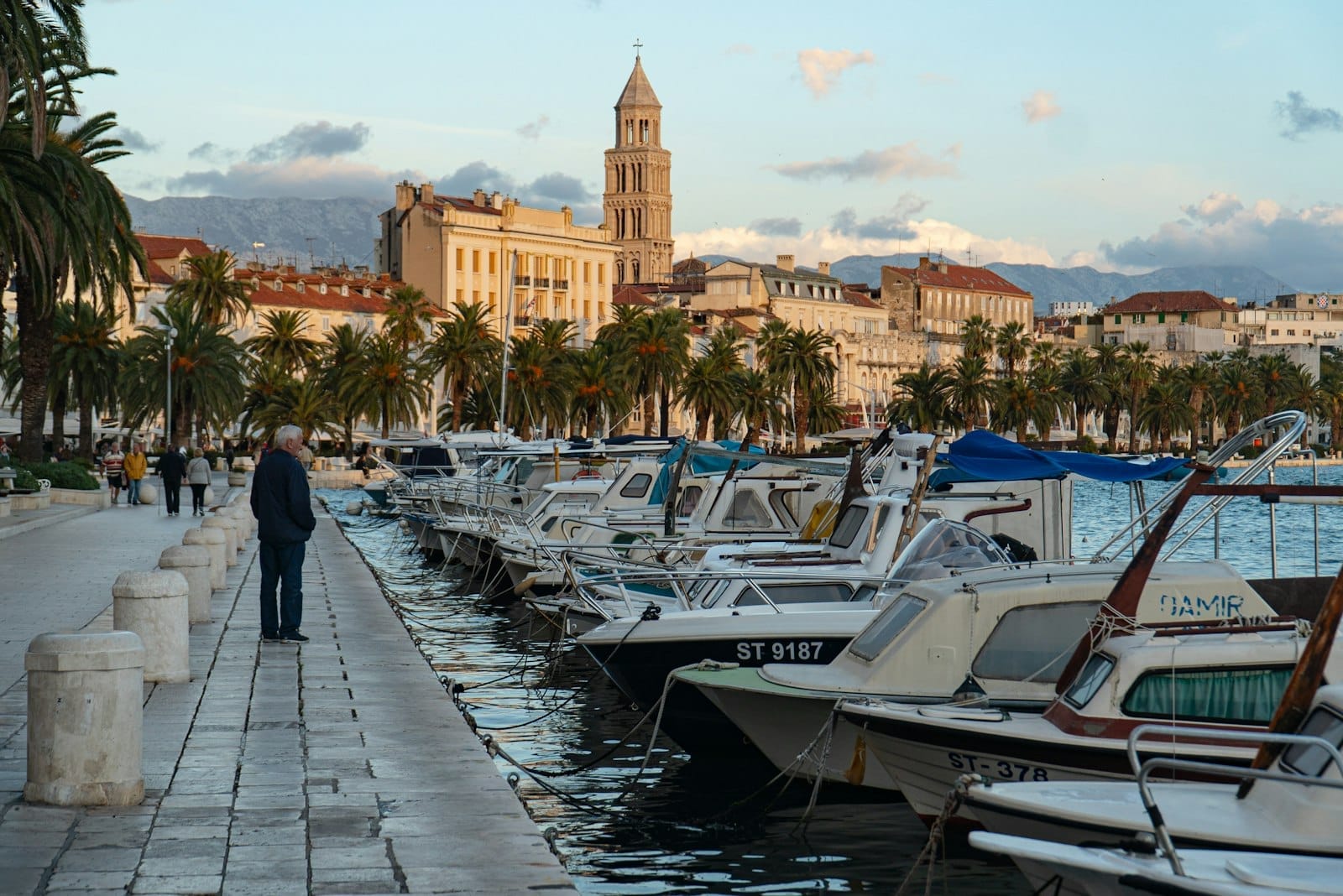
Plan and book this trip
Tools from our partner Travelpayouts help you compare flights and hotels. If you book through them, we may earn a commission at no extra cost to you.
Flights
Hotels map
TL;DR
- Split Airport (SPU) is about 23 km from the city center; the shuttle bus costs €9, departs outside arrivals, and drops you directly at the main bus station beside the ferry port.
- City buses (Lines 37/38) cost around €3 from the airport but stop at Sukoišan, roughly 1 km short of the Old Town — not the main bus station.
- The Diocletian's Palace area and the Riva are best explored on foot — nearly every key sight is within a 15-minute walk.
- Bolt is the most reliable rideshare app in Split; airport pickups are on the main road outside the terminal, not at the arrivals hall.
- For day trips to Krka National Park or island ferries to Hvar and Brač, Split's ferry terminal and bus station are co-located just east of the Old Town.
Split Airport (SPU): What to Know Before You Land
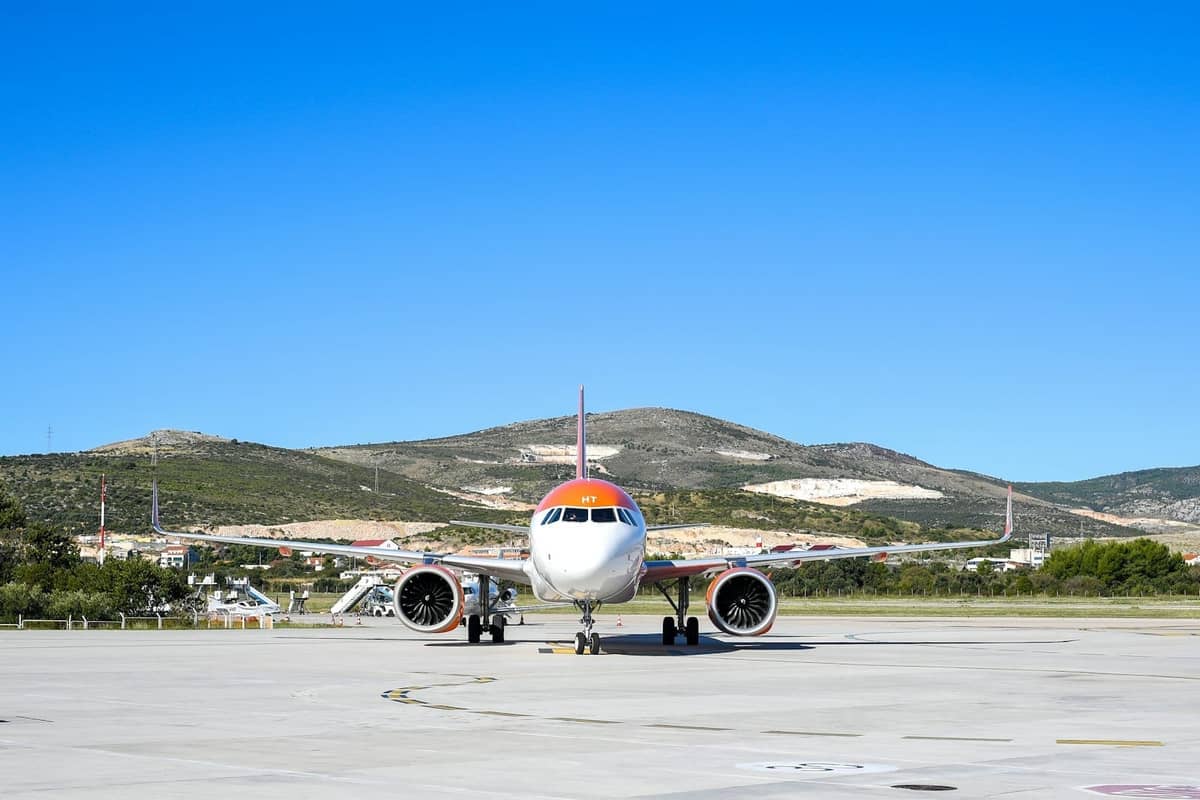
Split Airport (IATA: SPU), officially Resnik Airport, sits about 23 km northwest of the city center near Kaštela. The drive takes 30 to 60 minutes depending on traffic. In July and August, the coastal approach road backs up significantly during peak afternoon hours, so factor that in if you have a ferry connection to make. The airport is one of Croatia's busiest from June through September, handling a large volume of direct flights from across Europe. Outside that window, frequency drops sharply — some routes operate only a few times per week in October and barely at all in January. Always verify your connection options when traveling outside the summer peak.
ℹ️ Good to know
The terminal at SPU is compact and easy to navigate. Arrivals, ground transport options, and car rental desks are all within a short walk of each other. There is no complex multi-terminal setup to worry about — exit arrivals and your transport options are immediately in front of you.
Airport to City Center: All Your Options Compared
There are four realistic ways to get from Split Airport to the city center: the shuttle bus, public city buses, a taxi or rideshare, or a pre-booked private transfer. Each involves a genuine trade-off between cost, convenience, and effort. Here is what each option actually involves, without the brochure spin.
- Shuttle Bus (Planatus) — Best Overall for Most Travelers Departs from outside the arrivals terminal and goes directly to Split's main bus station, which sits beside the ferry port — a short walk from Diocletian's Palace. Cost: €9 one-way, paid on board or via the Planatus website. In summer (June–September), buses run roughly every 30 minutes between 8am and 8pm, with evening departures timed around incoming flights. Outside summer, the schedule thins out considerably. This is the smoothest option for most travelers with normal luggage, and the price-to-convenience ratio is hard to beat.
- City Buses (Lines 37, 38, and 2) — Cheapest Option The stop is on the main road outside the airport, not at the terminal itself. Line 37 (Trogir–Split Sukoišan) runs approximately every 20 minutes on weekdays and Saturdays from 6am to 10pm and costs around €3. The catch: it terminates at Sukoišan, roughly 1 km from the Old Town. You can walk (10–15 minutes flat) or connect to buses 2, 9, 10, or 15 onward. Line 2 runs less frequently but goes directly to Pazar market, about 100 meters from the Old Town. Best for budget-conscious travelers without large bags and no tight onward connection.
- Taxi — Fastest Door-to-Door Licensed taxis wait at the terminal exit. Expect to pay €30–55 to the city center, with the journey taking around 30 minutes in normal traffic. Metered taxis are regulated — always confirm the meter is running before you move. The most practical choice when traveling with a group, carrying heavy luggage, or arriving on a late-night flight.
- Bolt / Uber / Wizi — Best Value Rideshare (with caveats) These apps work in Split but require you to walk to the main road pickup point outside the terminal perimeter. Base fares for a standard car start around €27 to the city center. Bolt tends to have the most drivers available. Surge pricing in summer is real — during Ultra Europe festival weeks and peak August weekends, app fares can double or more. If the app price looks unreasonable, a metered taxi from the rank is often the smarter call.
- Private Transfer — Best for Groups or Onward Island Travel Pre-booked private transfers offer fixed pricing and door-to-door service. They can take you directly to Split center, to the ferry port for Hvar or Brač, or even all the way to Dubrovnik. Particularly worth considering if you are traveling with children, a lot of luggage, or need to connect directly to another destination without juggling multiple transport legs.
⚠️ What to skip
City buses do NOT depart from the airport terminal building. The stop is a short walk to the main road outside. And Lines 37 and 38 terminate at Sukoišan — not at Split's main bus station. If you arrive at night with luggage and a hotel in the Old Town, the €6 premium for the shuttle bus is absolutely worth it.
Getting Around the City: On Foot, By Bus, and By Bike
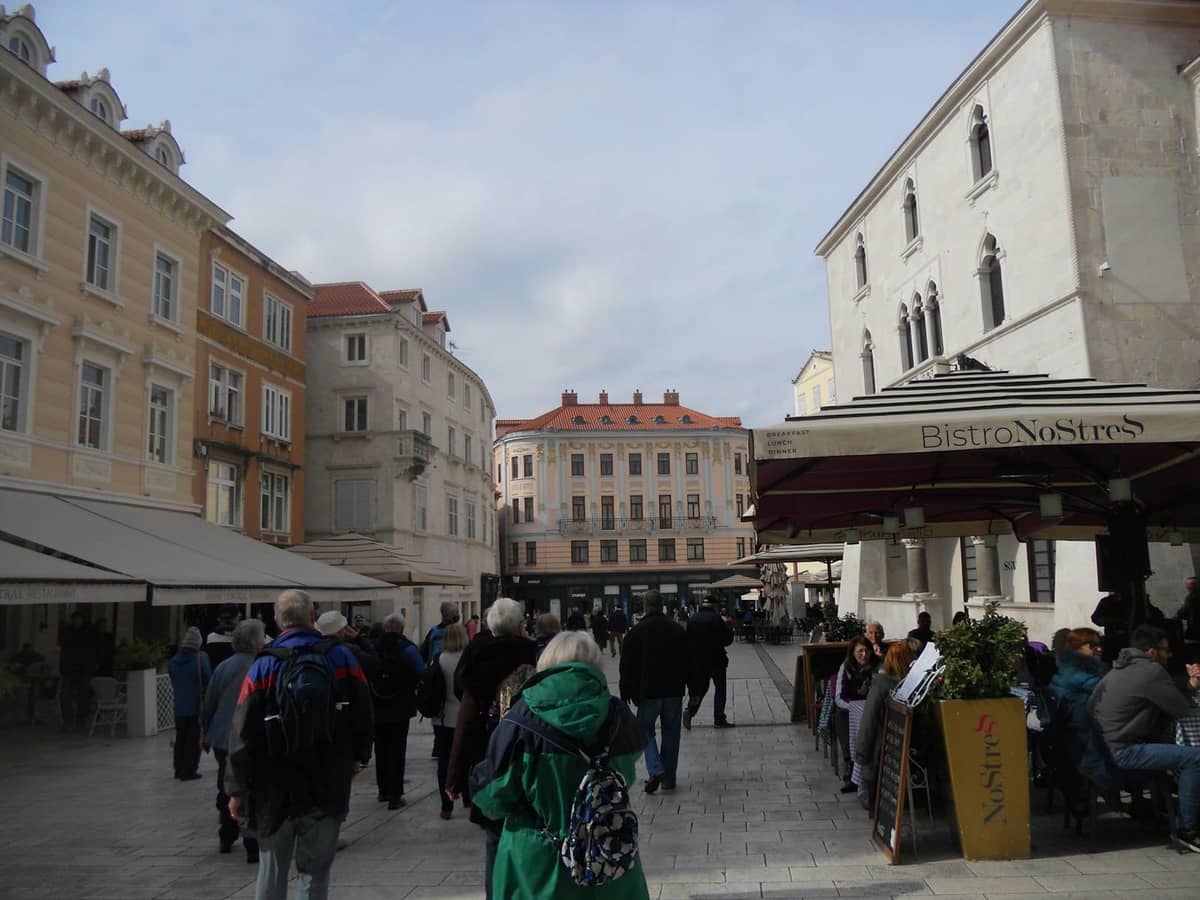
The good news for visitors staying centrally: Split is genuinely compact on foot. Diocletian's Palace occupies a 215-by-180-meter footprint right in the city center, and the Riva promenade runs along its southern face. From there, the ferry terminal, bus station, and most hotels are within a 10-to-20-minute walk. For the vast majority of city-center stays, you will simply not need public transport during the day.
Where city buses become genuinely useful is for reaching neighborhoods beyond the immediate center. Promet Split operates the urban bus network across numbered lines that are reasonably logical once you have the map. Tickets cost around €1.50–2.00 depending on whether you buy them at a Promet kiosk (cheaper) or from the driver (more expensive). Buses run frequently on major routes during the day, with reduced service after 10pm. The network covers Bačvice, Žnjan, Meje, and the northern suburbs, as well as longer-range routes toward Trogir and the airport road.
💡 Local tip
Buy bus tickets at a Promet kiosk before boarding — they cost less than driver-purchased tickets. Validate your ticket immediately when you board. Inspectors do check, particularly on tourist-heavy routes in summer.
For reaching Marjan Hill, the forested peninsula west of the Old Town, walking is the default option — the main entrance is about 15 minutes on foot from the Palace. The hill has well-marked walking and cycling paths, and bike rentals are available near the Riva for those who want to cover more ground. For Bačvice Beach, it is a flat 10-minute walk east from the city center, so buses are rarely necessary unless you are staying far from the core. Žnjan Beach, further east, is a different story — you will want bus Line 9 or 11 from the center to avoid a 40-minute walk in the heat.
Taxis and Rideshare in Split: What Actually Works
Taxis in Split are metered and widely available, though supply tightens noticeably on summer evenings and after major events. The main taxi ranks are near the bus station and along the Riva. For short hops within the city center, expect to pay around €5–10. For longer city journeys, always confirm the meter is running before departure — or agree on a fixed price upfront.
Bolt is the dominant rideshare app in Split and generally reliable throughout the day. Uber operates here as well, though driver availability can be inconsistent outside peak hours. Wizi is a Croatian-based option worth having installed as a backup. All three apps require a pickup point confirmed via the map — drivers do not always stop exactly at your pin, so be ready to walk 50–100 meters to the car. During Ultra Europe festival weeks and peak August weekends, app fares can surge dramatically. If the price shown looks absurd, a metered taxi is the more rational choice.
✨ Pro tip
During peak summer nights, rideshare wait times in Split can exceed 20 minutes and fares spike hard during events. If you are heading out at 11pm on a Saturday in August, either pre-book a taxi through a local company or walk to the nearest taxi rank on the Riva. Planning saves real money here.
Ferry, Bus, and Train: Getting Out of Split
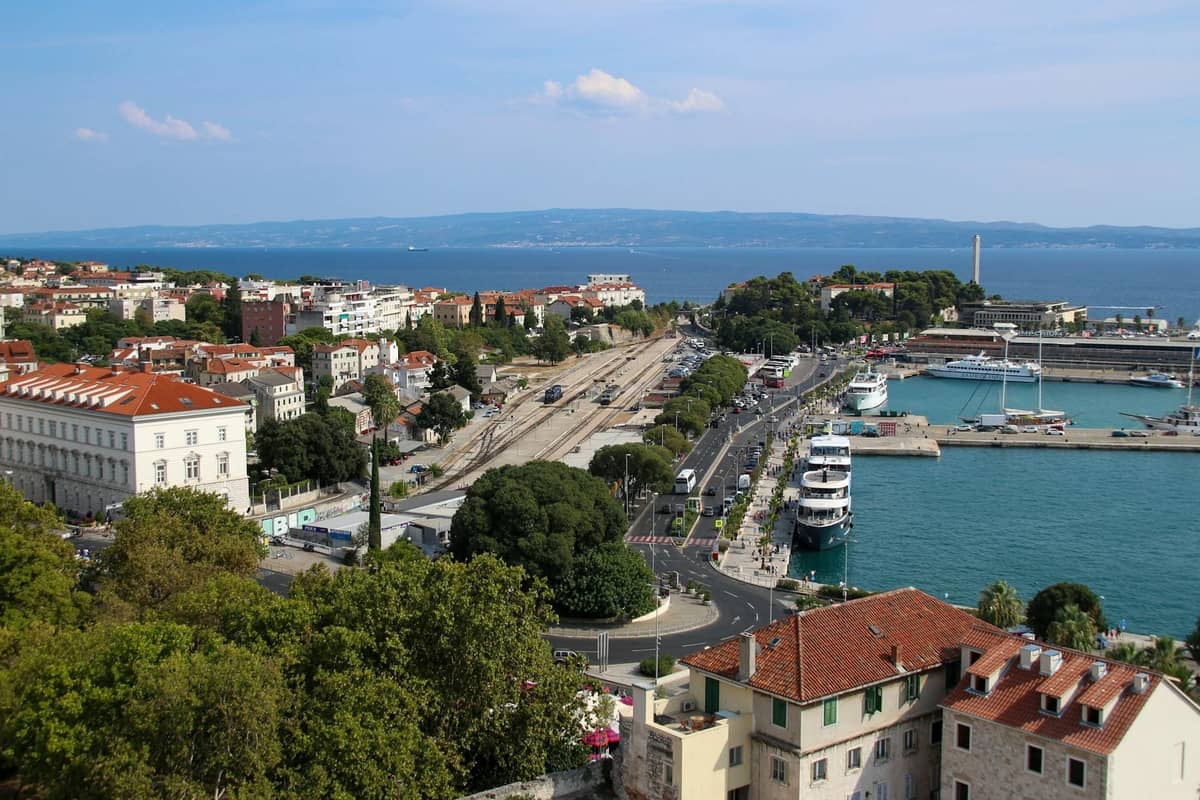
Split is one of the best-connected cities on the Adriatic, and that connectivity is a genuine asset if you are using it as a base for Croatia. The ferry port and main bus station sit side by side just east of the Old Town, making onward connections straightforward to manage. Ferries depart to Hvar Island, Brač, and further destinations including Vis, Korčula, and Dubrovnik. The Jadrolinija catamaran to Hvar Town takes about one hour; the car ferry to Supetar on Brač takes around 50 minutes and runs very frequently in summer.
Bus services cover the entire Dalmatian coast comprehensively. Dubrovnik is served several times daily at around 4–5 hours each way. National park day trips to Krka are straightforward by bus from the main station (around 1.5 hours to Šibenik, then onward). Plitvice Lakes is reachable by bus but at 2.5–3 hours each way, an organized tour often makes more logistical sense for a day trip. Split also has a train connection to Zagreb, though at 6–8 hours it is mainly useful for overnight travel, not day trips.
For multi-island itineraries, plan routes in advance using the Jadrolinija website or the Krilo fast ferry schedule. Timetables change seasonally and popular departures fill up in peak season. See the island hopping from Split guide for a full breakdown of realistic routes and timings.
- Catamaran to Hvar Town (Jadrolinija/Krilo): approx. 1 hour, multiple daily departures in summer — book ahead in August
- Car ferry to Supetar, Brač: approx. 50 minutes, very frequent in summer, walk-on passengers rarely need to book
- Bus to Dubrovnik: approx. 4.5–5.5 hours, multiple daily departures from the main bus station
- Bus to Trogir: approx. 30–40 minutes via Line 37 — also accessible from the airport road
- Bus to Šibenik (gateway to Krka): around 1.5–2 hours from the main bus station
- Train to Zagreb: 6–8 hours, overnight option available — not a practical day-trip route
Seasonal Patterns and Common Mistakes
Transport in Split runs on a two-speed system tied firmly to the tourist calendar. From late June to early September, nearly everything operates at maximum frequency: the airport shuttle runs every 30 minutes, ferries have multiple daily sailings, and city buses increase their service. Outside that window, particularly from October through April, services thin out considerably. The airport shuttle may run only a handful of times per day, and some ferry routes stop entirely for the winter. If you are visiting in shoulder season, build in extra time for connections and verify current timetables directly rather than relying on summer schedules you find cached online.
The most common mistake first-time visitors make is assuming the city bus departs from the terminal building — it does not. The second is assuming all buses to the city terminate at the main bus station; Lines 37 and 38 drop you at Sukoišan instead. Both issues are completely manageable once you know about them, but discovering them with luggage at 11pm is genuinely frustrating. For most arrivals, the shuttle bus is simply the lowest-friction option. For the return journey to the airport, confirm your outbound shuttle departure time the day before — the city-to-airport schedule has fewer fixed slots than the arrivals service. If you want to combine the cheapest transport options across your whole trip, the Split on a budget guide has a full breakdown worth reading before you book.
FAQ
How far is Split Airport from the city center?
Split Airport (SPU) is approximately 23 km from the city center near Kaštela. The journey takes 30 to 60 minutes by road depending on the time of day. Traffic on the coastal approach can be heavy in July and August, particularly on weekend afternoons.
What is the cheapest way to get from Split Airport to the city?
The city bus (Line 37 or 2) is the cheapest at around €3, but requires a short walk to the main road stop outside the terminal. Lines 37 and 38 also terminate at Sukoišan, about 1 km from the Old Town, not at the main bus station. The shuttle bus costs €9 and goes directly to the bus station beside the ferry port. For most travelers, the convenience gap makes the shuttle the better choice.
Do Uber and Bolt work in Split?
Yes, both Bolt and Uber operate in Split. Bolt generally has more drivers available. At the airport, pickup is on the main road outside the terminal perimeter, not at the arrivals hall itself. During peak summer weeks and events like Ultra Europe festival, surge pricing applies and wait times can stretch beyond 20 minutes.
Is Split walkable, or do you need public transport?
For the central area, Split is highly walkable. Diocletian's Palace, the Riva promenade, Bačvice Beach, and the entrance to Marjan Hill are all reachable on foot from most city-center accommodation. Public buses are useful for Žnjan Beach, the outer suburbs, or if your hotel is far from the core.
How do I get from Split to Hvar or other islands?
Ferries and catamarans depart from the ferry terminal directly beside the main bus station, just east of the Old Town. The Jadrolinija catamaran to Hvar Town takes around one hour. In summer there are multiple departures daily, but they fill up quickly on peak days — arriving early or booking in advance is strongly advisable for August travel.