Split in Summer: What to Expect in July & August
July and August are the most intense months to visit Split, Croatia. Scorching heat, Adriatic waters at their warmest, packed beaches, major festivals, and ferry connections firing on all cylinders. This guide breaks down exactly what to expect and how to make the most of it.
Plan and book this trip
Tools from our partner Travelpayouts help you compare flights and hotels. If you book through them, we may earn a commission at no extra cost to you.
Flights
Hotels map
TL;DR
- July and August bring daytime highs often in the mid-to-high 80s°F (around 30°C), virtually no rain, and Adriatic sea temperatures peaking at around 77°F (25°C) in August.
- August is the busiest month in Split by a significant margin. Book accommodation at least 2–3 months ahead, and 4–6 months ahead if your visit coincides with Ultra Europe.
- July is marginally calmer and hosts the Split Summer Festival and Ultra Europe. Browse our things to do in Split guide for a full breakdown of year-round activity ideas.
- Restructure your day around the heat: sightsee before 10 AM, beach or shade from 11 AM to 4 PM, then back out in the evening when the city genuinely comes alive.
- If peak-season crowds and prices aren't your thing, our best time to visit Split guide makes a strong case for late May, June, or September.
Summer Weather in Split: July vs August
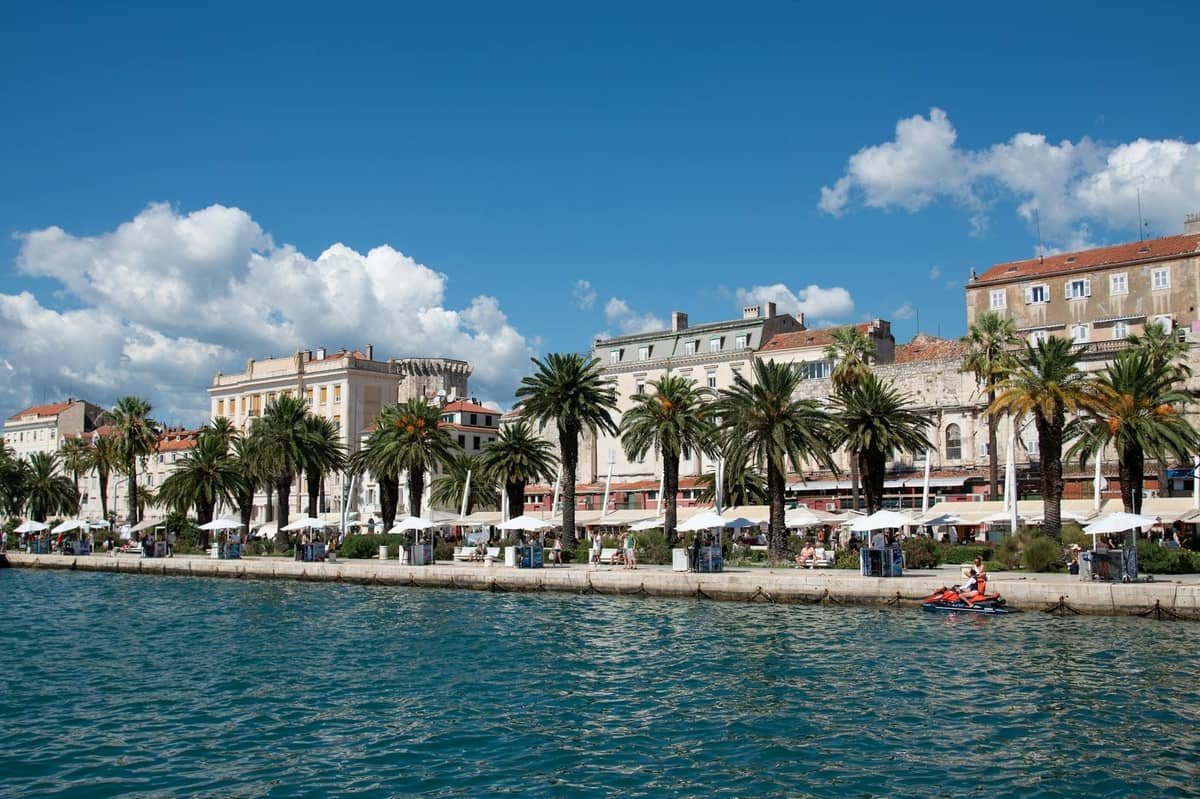
Split sits on a peninsula on the eastern Adriatic coast with a textbook Mediterranean climate: hot, dry summers and mild, wet winters. By July, the city is operating at full intensity. Daytime highs typically land between 82–88°F (28–31°C), with overnight lows around 70–73°F (21–23°C). Rainfall is almost non-existent. You might see one or two brief afternoon thunderstorms across the entire month, but they rarely last long enough to disrupt plans.
August pushes temperatures slightly higher. Daytime peaks regularly reach around 86–90°F (30–32°C) and occasional heatwaves can drive readings above 95°F (35°C) for several consecutive days. The upside is that the Adriatic Sea hits its annual warmest point in August, around 77°F (25°C), making it exceptionally inviting for swimming without any thermal shock. The trade-off is that every other European on summer holiday seems to have had the same idea about where to spend August.
- Sunshine hours Both July and August deliver 10–12 hours of sunshine daily, with 14+ hours of total daylight. In early August, sunset falls around 8 PM, shifting to closer to 7:30 PM by the month's end.
- UV index UV levels are consistently very high throughout both months. SPF 50 sunscreen, a wide-brimmed hat, and UV-protective sunglasses are practical necessities, not optional extras.
- Humidity and the maestral wind Humidity is moderate for a Mediterranean destination. The maestral, the local afternoon sea breeze, typically picks up between 1 PM and 5 PM, providing genuine relief during the hottest hours of the day.
- Rain probability Both months are among the driest of the year. If you're planning outdoor activities, day trips, or boat excursions, rain cancellations are rarely a concern.
⚠️ What to skip
Heatwaves hit Split harder than you'd expect. The limestone and marble surfaces inside Diocletian's Palace absorb heat aggressively and radiate it back at street level long after air temperatures peak. During multi-day heatwaves above 95°F (35°C), the narrow lanes of the old town become genuinely uncomfortable between 11 AM and 5 PM. Schedule major sightseeing before 10 AM or after 6 PM, carry a refillable water bottle at all times, and know where your nearest shaded cafe is.
Crowds, Prices, and What Peak Season Actually Feels Like
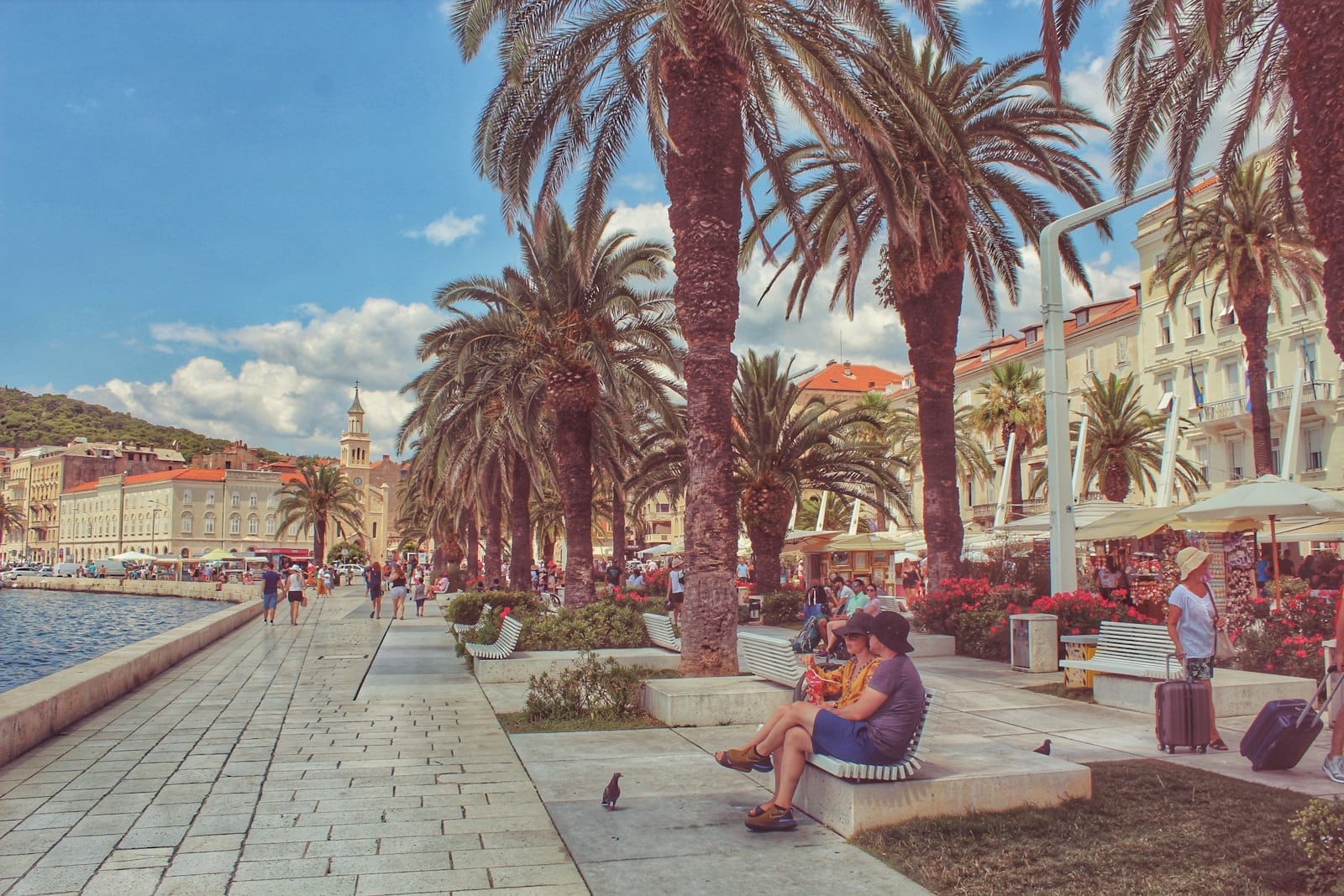
There is no sugarcoating this: Split in July and August is extremely crowded. The city draws around a million visitors annually, and the bulk arrive in these two months. The narrow lanes inside Diocletian's Palace, which are already tight on a quiet morning, become genuinely difficult to navigate comfortably between 10 AM and 6 PM. The Riva promenade fills from mid-morning onwards. Bacvice Beach operates at or beyond capacity on most afternoons.
August is noticeably busier than July. If you're arriving specifically for Ultra Europe, a major EDM festival held at Park Mladeži in early-to-mid July, factor that into every logistical decision. Hotel and apartment prices during Ultra week spike sharply, availability near the city center collapses quickly, and the city's entire nightlife ecosystem shifts gear. Book early or expect significant compromises.
Accommodation, restaurant prices, and boat tour rates all run at their annual peak in summer. Strategic choices offset some of the premium: staying just outside the old town walls, eating where locals eat, shopping at the Pazar market rather than tourist-facing shops, and booking island ferries and excursions well in advance rather than on the day.
💡 Local tip
Book accommodation for July and especially August at least 2–3 months ahead. For Ultra Europe festival dates, 4–6 months in advance is reasonable, not excessive. Short-term rental availability near the center disappears fast around major weekends. If you're flexible on location, properties in Spinut, Meje, or along the Bacvice end of the coast offer good value and short transit times to the old town.
What to Do in Split During Summer
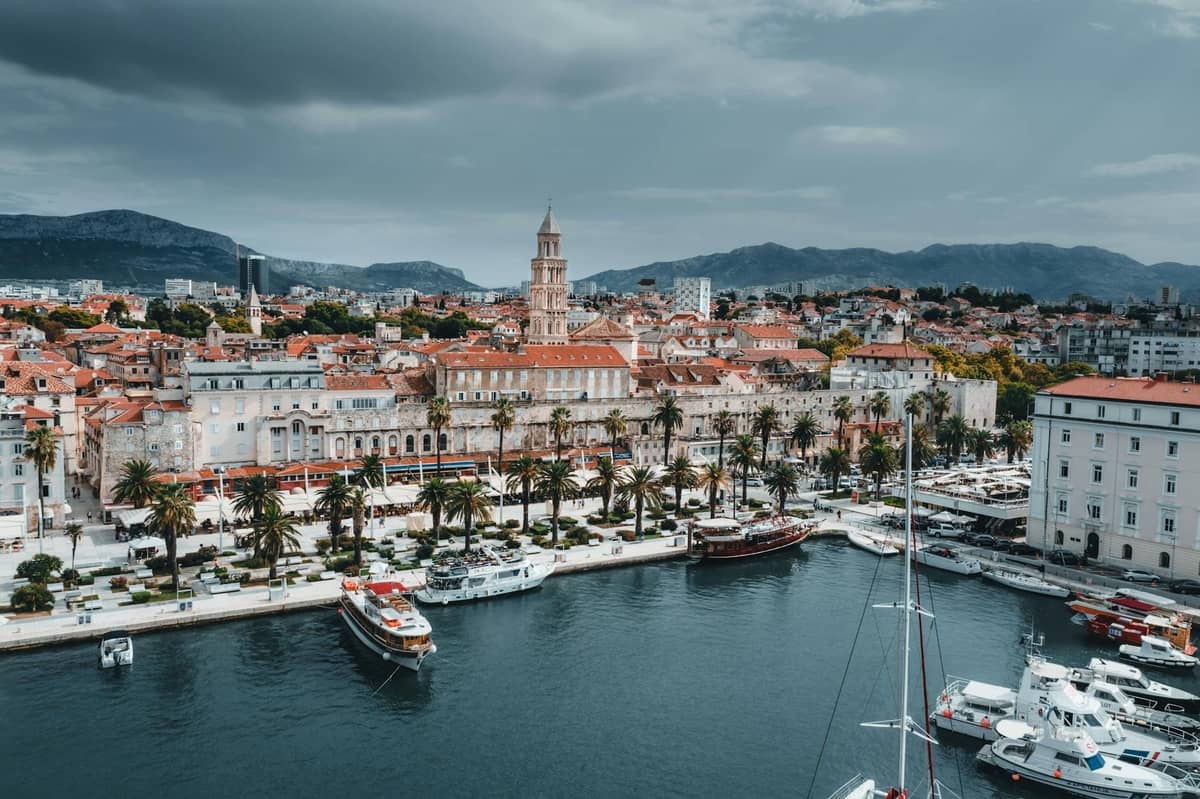
The summer cultural calendar in Split is genuinely strong. The Split Summer Festival typically runs from early-to-mid July through mid-August, filling the city's outdoor venues — including the Peristyle square inside Diocletian's Palace — with opera, theater, and classical music. Watching an opera performed in a Roman imperial courtyard that is nearly 1,700 years old is one of those experiences that remains hard to replicate anywhere else in Europe. Verify the current year's program and book tickets directly through the festival website as performances sell out.
Beaches deserve serious attention and planning. Bacvice Beach is closest to the center and famous as the home of picigin, a traditional Dalmatian ball game played in ankle-deep water. It is enjoyable and genuinely worth seeing, but it is also consistently overcrowded by afternoon in summer. For more space, Znjan Beach to the east offers a larger pebble-and-concrete shoreline with better facilities and somewhat more breathing room. The ultimate answer to beach crowds is getting on a ferry to the islands.
- Marjan Hill The forested hill overlooking the city provides shade, panoramic views over the Adriatic and the islands, and a real escape from the heat and crowds below. Go at sunrise or in the early evening. The marked trails are well-maintained and accessible to most fitness levels.
- Cathedral of Saint Domnius Built inside Diocletian's mausoleum, this is one of the oldest Catholic cathedrals in continuous use in the world. Arrive at opening time to avoid queues. The bell tower climb delivers one of the best elevated views in the city, looking directly down into the palace complex.
- Ultra Europe Festival Held annually at Park Mladeži in early-to-mid July. One of Europe's largest EDM festivals, drawing tens of thousands of international visitors. If this is your primary reason for visiting Split, build the entire trip around festival logistics: accommodation, transport, and the satellite beach and boat events that run alongside it.
- Evening on the Riva Split's waterfront promenade comes alive after sunset when temperatures drop and the city exhales. This is where locals and visitors genuinely mix. A coffee or beer at a terrace cafe here, watching ferries cross the harbor in the fading light, costs little and captures something real about how Split actually functions.
- Diocletian's Cellars The subterranean vaults beneath the palace are consistently cooler than street level, making them one of the most comfortable sightseeing options during the hottest hours of the day. They also provide a direct sense of the palace's original scale and engineering.
Day Trips and Getting Out of the City
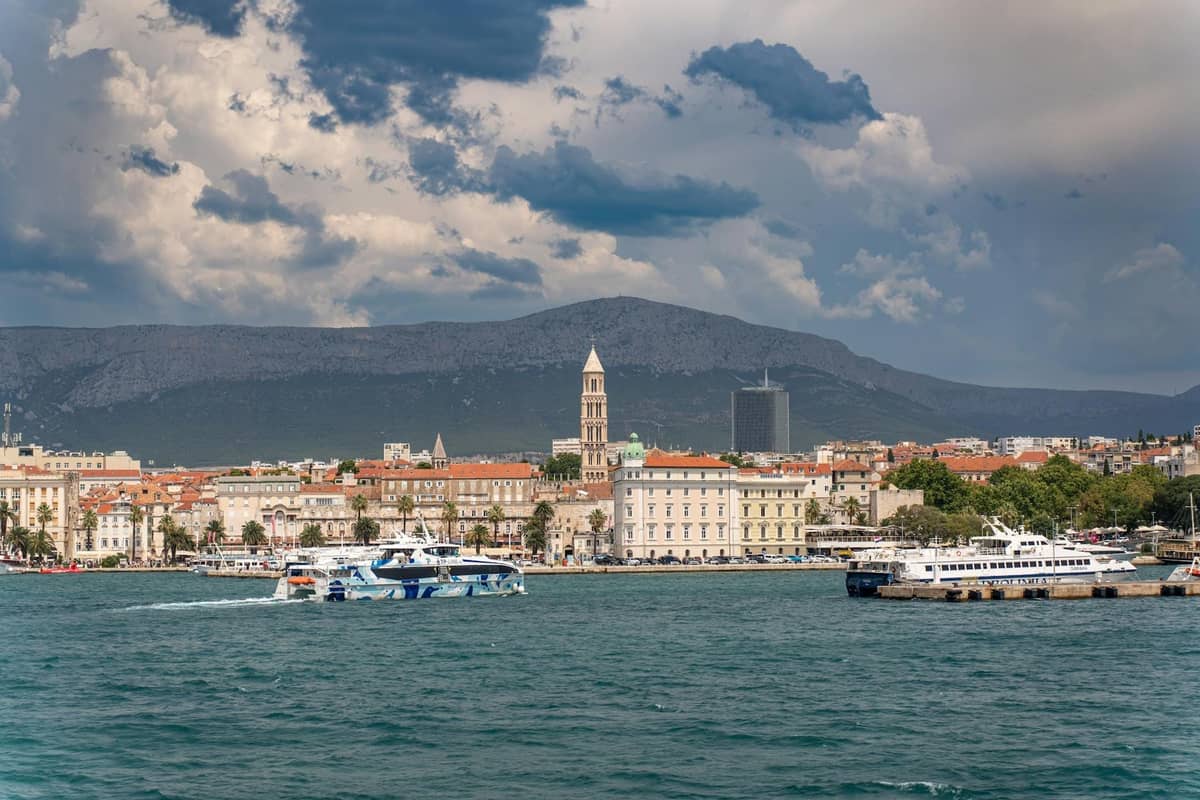
Split's greatest summer strength is its role as a transport hub for the central Dalmatian coast. From the main ferry terminal, you can reach Hvar Island in as little as one hour by fast catamaran, Brač in 50 minutes by car ferry, and the more remote Vis Island in around 2.5 hours. All three offer a markedly different pace from the packed city center, and summer ferry frequencies run at their annual peak, making spontaneous island visits feasible on most days.
Inland, Krka National Park is around 75–90 minutes by bus or car from Split. Its waterfalls and river pools draw big crowds in summer, but arriving at opening time keeps it manageable. For a half-day option closer to the city, Klis Fortress sits just 13 km north of Split, accessible by local bus in under 30 minutes. It offers dramatic panoramic views over the coastline and the Dalmatian hinterland, and it is far less visited than its quality warrants. Game of Thrones fans will recognize it immediately as Meereen.
✨ Pro tip
For island-hopping in summer, buy car ferry tickets online through Jadrolinija at least several days ahead to secure vehicle spots. Foot passenger tickets are usually available on the day, but popular catamaran routes to Hvar sell out during peak weeks in August. Boat tour operators based in the harbor also run excursions to the Blue Cave on Biševo island, and these book up weeks in advance during August. If it's on your list, don't leave it until you arrive.
Practical Tips for Visiting Split in Summer
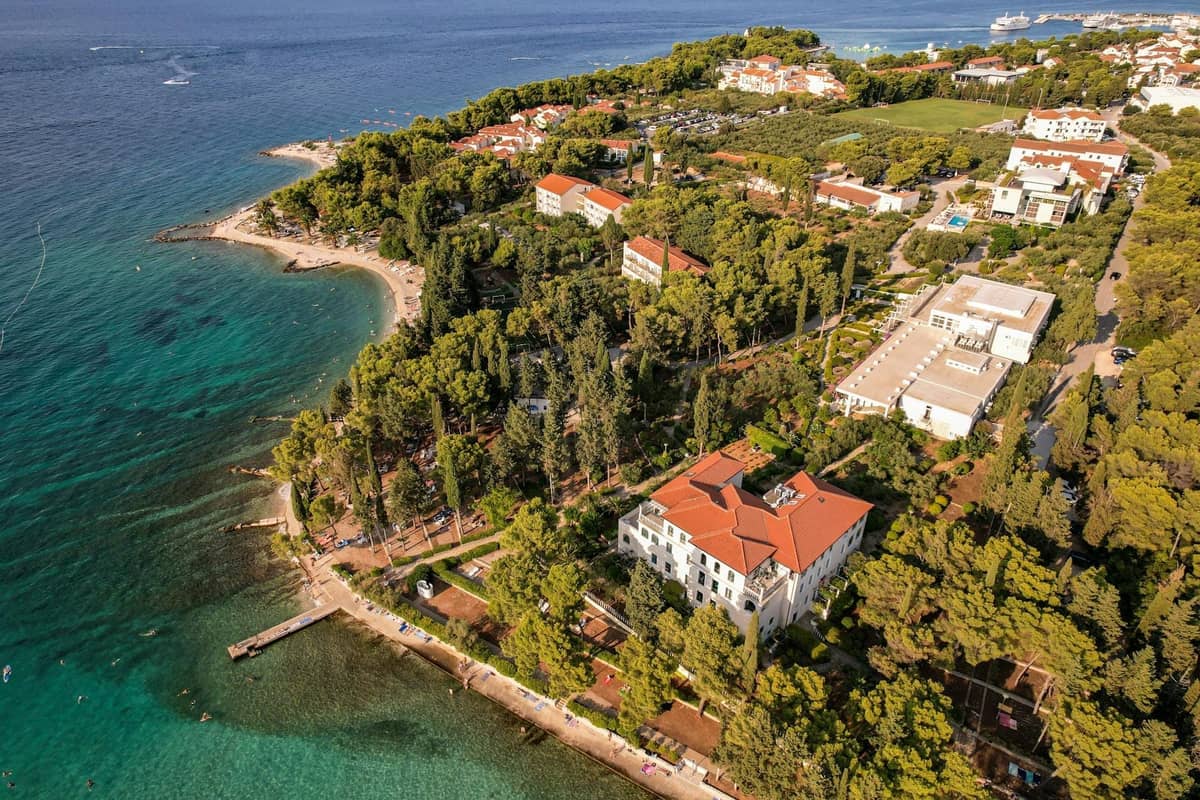
Adjusting your daily rhythm to the heat makes a significant practical difference. The window from roughly 11 AM to 4 PM is when stone surfaces inside the old town radiate heat most aggressively. Use that time for beaches, museum visits, a long lunch in a shaded konoba, or a rest at your accommodation. Front-load sightseeing: the palace interior, the cathedral, and the Pazar market are all vastly more pleasant before 9:30 AM, both for temperature and crowd management.
Dress code is worth noting in advance. The Cathedral of Saint Domnius and other active religious sites require covered shoulders and knees to enter. Lightweight linen or cotton clothing solves both the heat problem and the dress code requirement simultaneously. For evenings, Split dresses up more than many coastal cities: the nightlife scene runs from around 10 PM well into the early hours, and nicer bars and clubs apply informal dress standards. Walking around in beachwear after dark in the old town marks you as a tourist in the least flattering way.
- Tap water in Split is safe to drink. Carry a refillable bottle to cut plastic waste and stay hydrated without constant purchases.
- Croatia uses the Euro (EUR). Card payments are widely accepted in tourist areas, but carry some cash for Pazar market vendors and smaller konobas that still prefer it.
- English is spoken fluently across tourist areas. A few Croatian words go a long way: hvala (thank you), molim (please), and oprostite (excuse me).
- Pazar Market, just outside the eastern palace walls near the Golden Gate, is the best place to buy local produce, olive oil, figs, and lavender products. Go before 9 AM for the widest selection and coolest temperatures.
- The emergency number across Croatia is 112. Tourist police have a visible presence in the old town during peak season.
- Sunscreen and after-sun lotion are available locally but significantly more expensive in tourist-area pharmacies and shops than at home. Bring your own supply.
If this is your first visit to Split, a structured orientation on day one pays dividends. A walking tour of Split in the early morning covers the palace complex, the Peristyle, the four main gates, and the Riva efficiently before the worst heat arrives and before tour groups clog the narrow streets. Most organized morning tours depart at 9 AM or 10 AM for exactly this reason. For a fuller itinerary framework across several days, the 3 days in Split guide structures the key sights, beaches, and day trips into a logical sequence.
FAQ
Is Split too crowded in August?
It depends on your tolerance for peak-season tourism. August is genuinely the busiest month: beaches operate at capacity, the old town lanes are congested from mid-morning to evening, and accommodation prices are at their annual high. That said, the city is large enough that quieter pockets exist. Early mornings, Marjan Hill, the eastern beaches like Znjan, and the back streets of neighborhoods outside the palace walls all offer more breathing room. If crowds are a significant concern, late June or early September deliver comparable weather with noticeably fewer people and lower prices.
What is the sea temperature in Split in July and August?
The Adriatic Sea around Split reaches approximately 75°F (24°C) in July and peaks at around 77°F (25°C) in August. These are among the warmest sea temperatures in Croatia and make both months excellent for swimming, snorkeling, and water sports without a wetsuit. The consistently warm water is one of summer's genuine advantages over shoulder season visits.
What events happen in Split in summer?
The two headline events are Ultra Europe, an international EDM festival held at Park Mladeži in early-to-mid July, and the Split Summer Festival, which runs mid-July through mid-August and features opera, theater, and classical music in historic outdoor venues including the Roman Peristyle inside Diocletian's Palace. Always verify exact dates for the current year before booking travel around specific events, as scheduling can shift.
How hot does Split get in July and August?
Daytime highs typically range from 86–91°F (30–33°C), with occasional heatwaves pushing above 95°F (35°C). Nights cool to around 69–75°F (21–24°C). The hottest part of the day runs from roughly 11 AM to 4 PM. The maestral, a local afternoon sea breeze, provides meaningful relief and is one reason Split's summer heat feels more tolerable than inland Croatian cities at similar temperatures.
Is it worth visiting Split in summer despite the crowds?
For most travelers, yes. Summer is when Split operates at full capacity in the best sense: beach conditions are ideal, ferry connections to the islands run at peak frequency, the cultural calendar is packed, and the evening atmosphere on the Riva is genuinely enjoyable. The crowds and prices are real trade-offs, but they don't undermine the trip — they just require more advance planning and realistic expectations about midday sightseeing. Travelers who struggle with heat or noise in confined spaces may genuinely prefer shoulder season.