Žnjan Beach: Split's Biggest City Beach, Fully Rebuilt for 2026
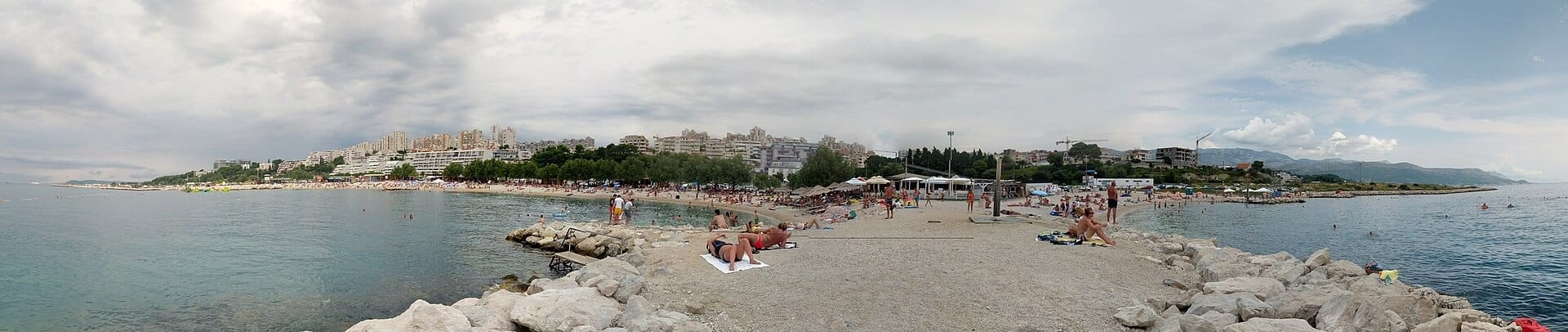
Stretching over 2 kilometres along Split's eastern coastline, Žnjan Beach is the city's most comprehensively equipped public beach. Freshly reopened after a €45.5 million renovation completed in June 2026, it offers pebble swimming areas, shaded green space, restaurants, playgrounds, and genuine accessibility features that most Croatian beaches still lack.
Quick Facts
- Location
- Eastern Split, approx. 4 km from Diocletian's Palace
- Getting There
- Bus lines 8 and 15; taxi/Uber approx. €6–9 from Old Town; underground parking (530 spaces) plus outdoor parking
- Time Needed
- 2–4 hours for a beach visit; full afternoon if dining
- Cost
- Free beach entry; restaurants and sun lounger rentals priced separately
- Best for
- Families, locals seeking facilities, swimmers wanting lifeguard cover
- Official website
- znjan.com/en
What Žnjan Actually Is
Žnjan Beach is not a quaint cove or a postcard cliff-side strip. It is a 2-kilometre public beach complex on the eastern edge of Split, purpose-built for the city's own residents and now freshly overhauled for a new generation of visitors. The grand reopening took place on 21 June 2026, following a renovation that cost €45.77 million, took 16 months, and transformed a tired 1990s-era seafront into one of the most fully-equipped urban beaches on the Adriatic.
The beach sits approximately 4 km east of Diocletian's Palace. You are well outside the tourist bubble here. The crowd at Žnjan is Split itself: families with pushchairs, teenagers on the trampolines, older residents walking the promenade at dusk, local couples at the pavilion restaurants. If you want to understand the city beyond its Roman core, this is one of the more honest places to do it.
ℹ️ Good to know
Žnjan officially reopened on 21 June 2026 after renovation. Some services and facilities may still be establishing their seasonal routines. Check znjan.com/en/ for current opening status before visiting.
The Renovation: What Changed in 2026
The original Žnjan plateau was created in 1998, when the land was cleared and levelled following Pope John Paul II's visit to Split that year. For over two decades the beach functioned as a busy but gradually ageing facility. By the time renovation was announced in late 2022, a 250-million-kuna budget (about €33 million) had been approved. Work began on 2 February 2024, with the first phase reopening in May 2026 and the full site opening weeks later on 21 June 2026.
The redesign was led by architect Ante Kuzmanić and constructed by Lavčević d.d. The results are substantial: 11 pavilion restaurants and bars, approximately 48,000 square metres of green space containing 730 trees, an amphitheatre, showers, changing cabins, toilets, lifeguard posts, children's playgrounds, trampolines, and bouncy castles. The underground garage now holds 530 vehicles, with a further 450 outdoor spaces. For a city beach, the infrastructure is genuinely impressive.
The feature that stands out most from an accessibility standpoint is the hydraulic sea-access elevator, which allows wheelchair users and people with limited mobility to enter the water independently. Most Croatian beaches offer no such provision. Žnjan is an exception.
Tickets & tours
Hand-picked options from our booking partner. Prices are indicative; availability and final rates are confirmed when you complete your booking.
Blue Cave and Hvar 5 islands tour from Split
From 145 €Instant confirmationFree cancellationKrka national park tour from Split
From 27 €Instant confirmationFree cancellationAll-inclusive Blue Lagoon tour from Split with three islands visit
From 68 €Instant confirmationFree cancellationGuided kayaking tour with snorkeling stops from Split
From 50 €Instant confirmationFree cancellation
The Beach Itself: Surface, Water, and Conditions
The shore is pebble throughout. This is typical of Dalmatia's better-maintained beaches: pebble stays cleaner than sand, the water clarity is usually excellent, and the seabed drops away gradually. Water shoes are not essential but will make entry and exit more comfortable, particularly for children. The beach faces west and south, which means afternoon sun lands directly on the water and the light in the late afternoon turns gold across the surface.
Swimming season runs June through September. Outside those months the water temperature drops significantly and the restaurants along the promenade wind down, though the promenade itself remains pleasant for walking through April and October. Lifeguards are present during the core summer season; their exact hours should be verified on-site or via the official website.
💡 Local tip
Arrive before 10am or after 5pm in July and August. Midday in high season, the beach is packed with both tourists and locals, and finding a decent stretch of pebble becomes genuinely difficult.
How the Experience Changes Through the Day
Early morning at Žnjan has a different character entirely from the midday rush. The promenade fills with joggers and cyclists well before 8am. The green space smells of pine and salt air. A few serious swimmers are already in the water. The 730 trees along the esplanade provide real shade even in midsummer, which is rarer than it sounds along this coast.
By mid-morning the families arrive, and by noon the beach is operating at full capacity. Children fill the playground areas and the inflatable trampolines at the water's edge. The 11 pavilion restaurants cycle through beach crowds all afternoon, serving grilled fish, cold beer, and the kind of simple Dalmatian food that tastes best eaten in wet swimwear.
Evenings are worth staying for. The amphitheatre with its steel dome hosts summer events, particularly during the warmer months when the beach promenade becomes an evening social circuit. The restaurants transition into dinner service and the crowd shifts from families with children to couples and groups of locals. It is a genuinely pleasant place to be at 8pm when the heat has finally dropped.
Getting There and Getting Around
Bus lines 8 and 15 connect Žnjan to central Split and the area around Diocletian's Palace. The journey takes roughly 15 to 20 minutes depending on traffic. A taxi or Uber from the Old Town runs approximately €6–9 and is the most direct option if you are carrying beach bags and gear. The underground parking garage (530 spaces) plus outdoor overflow (451 spaces) means driving is genuinely viable, which is not true of most Split beaches. Cyclists have dedicated access routes.
Žnjan sits within the broader eastern Split neighbourhood covered in the Bačvice and East Split area. If you are already at Bačvice Beach or exploring along the coastal path eastward, Žnjan is a logical continuation of the same shoreline walk, though at 4 km from the Old Town it represents a real commitment on foot in summer heat.
Families, Accessibility, and Who This Beach Suits
Žnjan is genuinely one of the better family beaches in the Split area. The combination of lifeguard cover, playgrounds, trampolines, changing facilities, and multiple food options means you can arrive with young children and spend a full day without logistical stress. The green space provides real shade for those who cannot spend hours in direct sun.
The hydraulic sea-access elevator is notable enough to warrant emphasis. For travellers with mobility impairments, or for elderly visitors who want to swim but cannot manage steep rocky entry points, Žnjan offers a practical solution that is rare on this coastline. It is worth confirming the elevator is operational before your visit, particularly early in the season.
Travellers seeking a quieter, more scenic beach experience may prefer to look further afield. For context on what the Split beach scene looks like more broadly, the best beaches in Split guide covers the full range of options from central Bačvice to the more secluded spots on the islands.
⚠️ What to skip
Žnjan is not a quiet escape. In July and August, the beach is heavily used by Split residents and tourists alike. If you are looking for solitude or a scenic, undeveloped cove, this is the wrong choice.
Nearby Attractions and Day Structure
If you are making a day of the eastern Split waterfront, Bačvice Beach is the logical first stop, sitting closer to the city centre along the same coastal stretch. It is smaller and more famous, but also more crowded. Žnjan makes a good second act for those who want to continue along the coast.
The broader Dalmatian beach context is worth considering: if your trip allows for a day on the water, island hopping from Split will reach beaches of a different character altogether. The islands of Brač and Hvar, for instance, offer longer stretches, clearer water, and fewer crowds outside of peak season. Žnjan is the city's best public beach infrastructure. It is not, however, the best beach within an hour of Split.
Insider Tips
- The green promenade is one of the few shaded coastal walks in Split. Even if you don't swim, the 2 km walking circuit through 730 trees is worth doing in the early morning before the beach fills up.
- Bus lines 8 and 15 run directly here from the city centre, but they fill up fast on hot summer days. Try to travel before 9am or take a rideshare to avoid a standing-room-only bus ride in 35-degree heat.
- The amphitheatre with the steel dome hosts seasonal events. Check the official Žnjan website closer to your visit for any evening concerts or community events scheduled during your stay.
- The hydraulic sea-access elevator makes Žnjan one of the only beaches in Split genuinely usable for travellers with mobility limitations. Call ahead or check online to confirm it is operational before making a trip specifically for this reason.
- Weekday mornings in late June or early September offer the best balance of warm water, reasonable crowds, and functioning facilities. The beach is quieter but the infrastructure is all open.
Who Is Žnjan Beach For?
- Families with young children who need facilities, shade, and lifeguard supervision
- Travellers with mobility impairments seeking sea access via the hydraulic elevator
- Visitors wanting to experience Split's city beach culture alongside locals rather than tourists
- Those who prefer a structured beach day with restaurant options rather than a remote cove
- Cyclists and joggers looking for a flat, scenic seafront route in the eastern part of the city
Nearby Attractions
Other things to see while in Bačvice & East Split:
- Bačvice Beach
Bačvice is Split's most famous beach, a compact crescent of sand with shallow turquoise water just minutes from the Old Town. Known for the traditional ball game picigin, Blue Flag water quality, and a strong nightlife scene, it draws everyone from early-morning swimmers to late-night revelers.