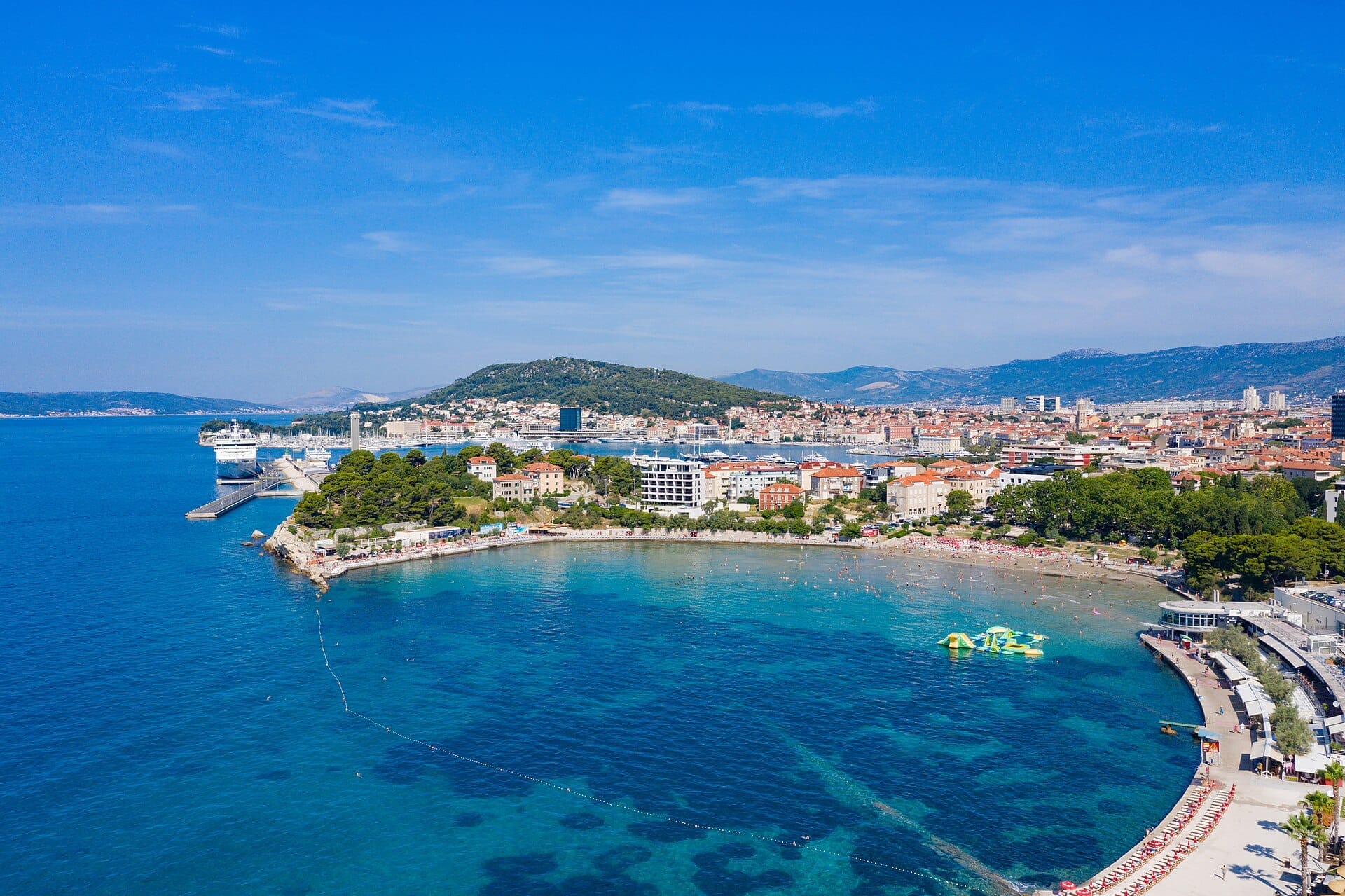
Bačvice sits on Split's south-eastern waterfront, just ten minutes from Diocletian's Palace but with its own distinct identity built around Croatia's most famous sandy beach, a lively promenade, and some of the city's best-known clubs. It's the neighborhood that shows you how Split actually lives when it's not performing for tourists.
Bačvice is the part of Split where the city meets the sea on its own terms. The beach is real sand in a city of pebble and concrete, the sport played in its shallows is found nowhere else on earth, and the nightlife carved into the hillside above the bay runs later than anywhere in the historic center. It's close enough to the Old Town to walk there for dinner and back before midnight, but far enough that you'll sleep through the morning without tour groups under your window.
Orientation: Where Bačvice Fits in Split
Bačvice sits roughly 800 meters southeast of Split's historic core, separated from the Old Town by the main bus and ferry terminal zone along Obala Kneza Domagoja. From the Riva promenade, the walk takes around ten minutes: follow the coastal path east past the ferry port, cross under the railway overpass via the pedestrian passage, and the beach opens in a shallow, pale-stoned bay directly ahead. It is a deceptively short distance that still manages to feel like a different city.
The broader East Split district extends from Bačvice further along the coast through Firule and Trstenik, eventually reaching Žnjan several kilometers to the east. This is not a compact tourist zone with sharp edges — it is a gradient. The closer you stay to the Bačvice bay, the more you feel the beach-and-nightlife energy. Move a few streets inland or continue east and the city becomes residential quickly: apartment blocks dating from various decades of the 20th century, local cafés where nobody speaks English unless you ask, a supermarket on every other corner, and almost no souvenir shops. The neighborhood of Bol, just inland from Bačvice, is a good example of how fast the tourist layer peels away.
Bačvice's position makes it one of the most practical bases in Split. You are genuinely close to Diocletian's Palace and the historic core, yet far enough from the palace lanes to sleep through the night without tour groups and bar noise below your window. Marjan Hill is reachable on foot or by a short bus ride to the west, and the ferry and bus terminals sit between you and the Old Town, keeping day-trip logistics straightforward. That combination of proximity and separation is what makes the neighborhood work as a base.
Character & Atmosphere
Early mornings at Bačvice are genuinely peaceful in a way that surprises visitors who arrive expecting a party beach at all hours. By 7am, the water is calm and a pale greenish-blue, and the people in it are mostly locals: older residents doing their daily swim, young men playing picigin in the ankle-deep shallows close to shore. Picigin is worth stopping for. It is a sport unique to Split, played in very shallow water by teams trying to prevent a small ball from touching the surface through increasingly acrobatic dives and flicks. It looks chaotic until you realize it requires real athleticism, spatial awareness, and years of practice. The Croatian Picigin Championship typically takes place at Bačvice in late spring or early summer, drawing spectators and filling the bay with a completely different energy than a regular beach day.
By mid-morning in July and August, the beach fills quickly. Families claim the shaded areas near the promenade wall, younger crowds spread across the open sand, and the beach bar terraces start filling with people who came for coffee and are in no hurry to leave. The shallow gradient of the bay, which stays only waist-deep well beyond where you'd expect, makes this one of the safest swimming spots in the city for children. That safety profile partly explains why Bačvice draws a broader cross-section of Split's population than a typical resort beach.
Afternoon brings a shift in light and rhythm. The sun angles lower to the west, and the stone buildings along the promenade catch a warm orange glow around 5pm. The crowd at the beach bars peaks and stays consistent through early evening. After midnight, the clubs built into the hillside above the beach become the dominant sound: bass audible from the promenade, queues forming outside on weekends from late June through August. This is not a neighborhood that apologizes for its noise.
⚠️ What to skip
Bačvice in high season (late June through August) is genuinely loud after midnight. The clubs above the beach promenade run until 4am or later on weekends. If you are a light sleeper, choose accommodation on the inland side of the main road above the promenade rather than directly overlooking the bay. A single street's distance makes a real difference.
Outside summer, the atmosphere shifts completely and becomes arguably more interesting. September and October bring warm water and far smaller crowds, with sea temperatures remaining swimmable well into autumn. The beach bars thin out, the clubs close by late October, and the bay returns to its off-season character: dog walkers in the early morning, a few hardy swimmers at noon, couples and elderly residents on the promenade at dusk. The promenade cafés stay open year-round and in winter become places where locals sit in coats drinking coffee and watching the ferries move in and out of the harbor. That version of Bačvice is worth knowing about.
What to See & Do
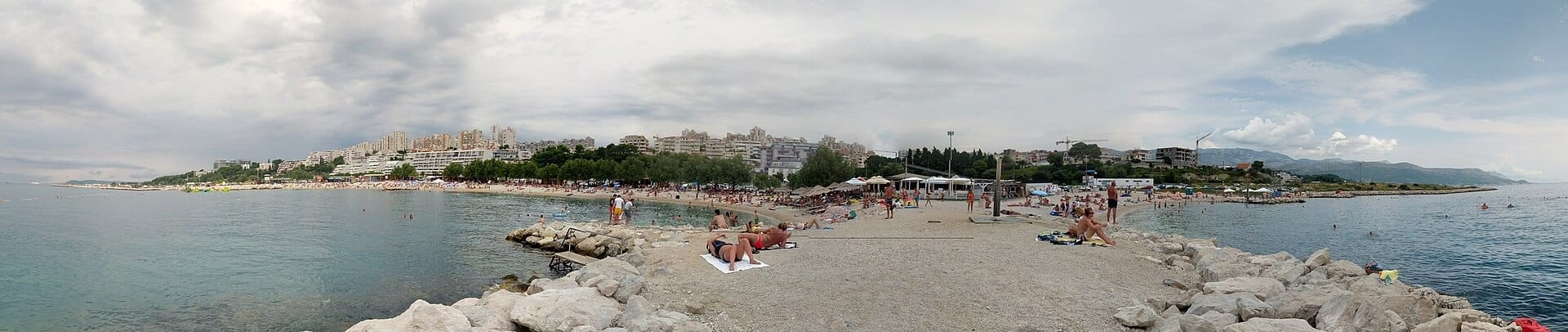
Bačvice Beach is the primary draw and deserves its reputation. Sand beaches are unusual on a Croatian coastline dominated by pebble and polished concrete, and the sand here is fine and pale. The bay is protected enough that swimming conditions are manageable on most days when the open Adriatic is rough, and the very shallow water means the sea temperature warms earlier in the season and holds longer into autumn than deeper beaches. Facilities are well-developed: showers, changing rooms, sun lounger and umbrella rental, and beach bars with full food and drink menus.
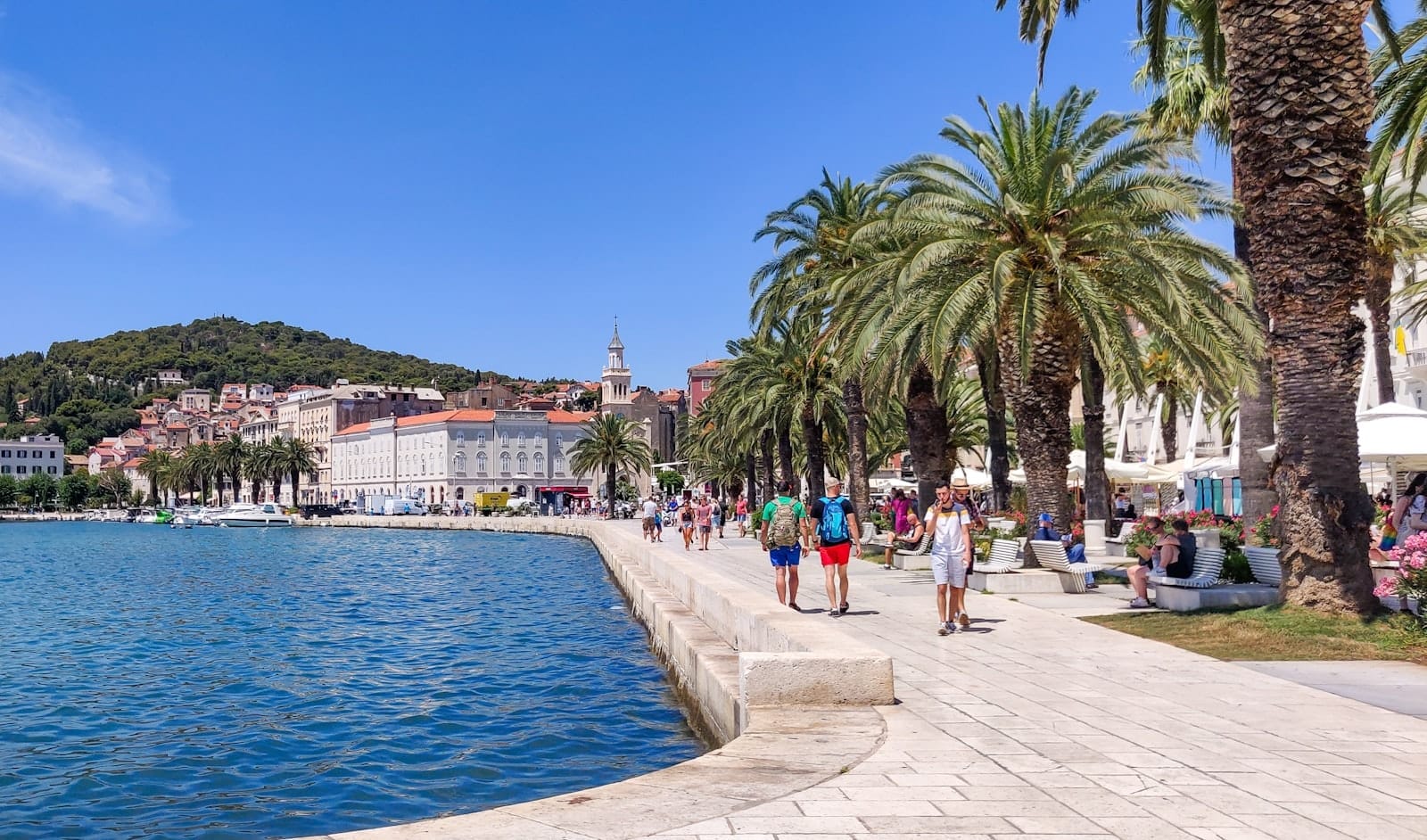
The promenade connecting Bačvice back toward the city center rewards a slow walk at any hour. You pass the edge of the ferry terminal and get open views across to the island of Čiovo and, on clear days, further islands in the distance. The walk arrives naturally at the Riva without requiring any inland detour. In the evening, this coastal route is the most pleasant way to reach the Old Town on foot, especially when the harbor lights reflect off the water and the Riva fills with people who are in no particular hurry.
East of Bačvice, the coast road continues through quieter residential areas toward Žnjan Beach, which offers a longer, cleaner stretch of shingle with noticeably less crowding at peak summer. It is a 20-minute walk or a short bus ride from Bačvice and is the preferred choice for locals who want more space. The intermediate beaches of Firule and Trstenik, between Bačvice and Žnjan, are even less visited and worth knowing about if you are staying in the area for more than a day or two.
ℹ️ Good to know
The shallow water at Bačvice makes it one of the best beaches in Split for young children. The bay is well-serviced with showers, changing rooms, and sun lounger rental. Arrive before 10am in July and August to claim a good position without fighting the midday crowds.
Watch or photograph a picigin game in the morning shallows — it starts spontaneously around 8–9am on most summer days
Walk the coastal promenade west to the Riva at golden hour for the best light on the harbor
Continue east along the coast road to Firule or Žnjan for a quieter swim away from the main beach crowds
Spend an evening at the beach bar terraces above the bay, which have some of the best water views in the city
Use the neighborhood as a base for day trips: the ferry terminal is a 10-minute walk
Eating & Drinking
The Bačvice promenade has a concentration of beach bars and café terraces that are heavy on atmosphere and inconsistent on food quality. For a cold drink, an Aperol spritz, or a plate of grilled calamari with a view of the water, these spots deliver exactly what they promise. For a serious meal — fresh fish prepared with care, well-sourced Dalmatian wine, the kind of pašticada or black risotto that actually justifies the price — you are better served walking a few streets inland or heading toward the Old Town's side streets.
The streets between Bačvice and the city center, particularly the area around Ulica Slobode and the blocks south of the bus terminal, have a mix of local konobas and sandwich spots that serve residents more than tourists. Prices reflect that reality: a two-course lunch with a drink at a neighborhood konoba will cost noticeably less than the same meal on the Riva. These spots are worth finding. For a full breakdown of what to order and which Dalmatian dishes to prioritize, the what to eat in Split guide covers the regional staples worth knowing about.
Coffee culture around Bačvice follows the same rhythm as the rest of Split: a long, slow espresso or macchiato is a social ritual, not a caffeine delivery mechanism. The terrace cafés along the promenade open from around 7am and stay busy until the afternoon beach bar crowd takes over. Through the summer months, ice cream vendors and pastry spots operate on the beach-adjacent streets, and the quality is generally good — Dalmatian ice cream has a legitimate tradition behind it.
For nightlife, Bačvice has some of Split's most established clubs, built into the hillside above the beach and accessible from the promenade. These venues run commercial dance, pop, and electronic music programs, with peak nights on Friday and Saturday from late June through early September. Cover charges apply at most venues during summer, and the crowd is mixed: locals and tourists in roughly equal numbers in peak season, more locally skewed in September and October. For a full picture of where the city drinks and dances across all districts, the Split nightlife guide maps the full landscape from early evening bars to late-night clubs.
Getting There & Around
From the Old Town and the Riva, Bačvice is roughly a 10 to 15-minute walk along the coast. Follow the waterfront east, pass the ferry terminal buildings on Obala Kneza Domagoja, cross under the railway overpass via the pedestrian passage, and the beach promenade is directly ahead. There is no reason to take a bus for this journey unless you are carrying heavy bags or the summer heat makes the walk feel unreasonable. The route is flat, paved, and straightforward with the sea on your right the entire way.
Split's city bus network connects Bačvice to the wider city efficiently. Buses running along the coastal road link the area to the city bus hub near the ferry terminal, from where routes spread toward Marjan to the west and Trstenik, Žnjan, and Split's outer neighborhoods to the east. Bus tickets are purchased at kiosks or from the driver. For a complete breakdown of how to navigate the city by bus, taxi, and on foot, getting around Split covers all transport modes with practical detail.
Split Airport sits approximately 23 to 25 kilometers from the city, connected by regular shuttle buses that drop passengers near the ferry terminal. From that drop-off point, Bačvice is a short walk or a quick taxi ride. Taxi stands are located near the Riva, and ride-hailing apps operate in Split. Fares from the airport to the Bačvice area typically range from 30 to 45 EUR depending on the service and time of day — verify current rates before traveling as prices fluctuate.
On foot, the neighborhood connects naturally in both directions. Walking west along the coast brings you to the Old Town in 10 minutes and, continuing further around the western side of the peninsula, eventually to the base of Marjan Hill, though that full walk is closer to 25 to 30 minutes from Bačvice. Heading east from the bay along the coast road opens up the quieter residential beaches of Firule and Trstenik and, further on, Žnjan.
💡 Local tip
The pedestrian coastal path between Bačvice and the Riva runs past the active ferry terminal and can be disrupted by large ferry arrivals. At peak embarkation times — typically morning crossings to Hvar, Vis, and Brač — the area fills with passengers and luggage. Give yourself a few extra minutes when walking through in the morning, especially if you are catching a ferry yourself.
Where to Stay
Bačvice is a legitimate alternative to staying inside or immediately around Diocletian's Palace. You trade the Old Town experience of sleeping within Roman walls for more space, lower prices, and direct beach access. For travelers whose priority is the sea and who are happy to treat the historic core as a ten-minute evening walk rather than their front door, that trade-off makes clear sense. The where to stay in Split guide lays out the full range of neighborhood options with honest comparisons across budget levels.
The best accommodation positioning in the Bačvice area is on the inland side of the main road that runs above the promenade. You are still close enough to reach the sand in two minutes on foot, but far enough to reduce the late-night noise impact significantly. Apartments directly facing the bay will have sea views but will also have club noise on summer nights. The choice depends entirely on your schedule: if you are staying out late yourself, a beachfront position makes sense. If you want early mornings and the ability to sleep before 3am on a Saturday, go one or two streets back.
The broader East Split area beyond Bačvice, particularly the Firule and Zvončac neighborhoods, offers apartment rentals in quieter residential streets where prices are lower and you will be among local residents rather than other tourists. The trade-off is a slightly longer walk to the main sights: 15 to 20 minutes to the Old Town rather than 10. For longer stays or travelers who prioritize quiet over centrality, these neighborhoods are worth considering seriously.
Families tend to do particularly well based near Bačvice. The shallow beach, the flat promenade for evening strolls with small children, the proximity to the city center, and the availability of larger apartment rentals all point in the same direction. The Split with kids guide covers family-specific logistics across the city, including which beaches and activities work best with different ages.
Day Trips and Getting Further Afield
Staying in the Bačvice area does not limit your range at all. The ferry terminal is a 10-minute walk, which means island day trips to Hvar Island or Brač Island are straightforward morning departures that require no taxi or bus to reach the port. The bus terminal is equally close, connecting you to routes running north and south along the Dalmatian coast and into the Croatian interior.
For travelers who want to see more of Croatia beyond the islands, the proximity to the bus station makes Bačvice a convenient staging point. Day trips to Krka National Park run regularly from Split's center and take around an hour each way. Longer excursions to Plitvice Lakes are possible but require an early start. Both destinations have organized tours departing from near the ferry terminal, reachable in minutes from Bačvice on foot.
TL;DR
Bačvice is Split's best base if you want beach access, reasonable prices, and the Old Town within walking distance — all at the same time.
The neighborhood is genuinely different by time of day: quiet and local in the early morning, crowded and summery by midday, and loud until 4am on weekends in July and August.
Noise from the hillside clubs is real and unavoidable if you stay close to the bay in peak season. One street back from the waterfront makes a significant difference.
Best suited for beach-focused travelers, families with young children, nightlife seekers, and anyone who wants a practical base close to the ferry terminal for island or regional day trips.
September and October offer the best of both worlds: warm sea, far fewer crowds, and a version of Bačvice that feels much closer to how locals actually use the neighborhood.
Three days in Split is enough to cover the Roman palace that doubles as a living neighborhood, hike the forested hill above the city, and reach one of Croatia's best day trip destinations. This guide gives you a realistic, sequenced plan with specific timings, honest cost breakdowns, and clear advice on when to go and what to avoid.
Split sits on one of the most beach-rich stretches of the Adriatic, with options ranging from sandy city bays to remote island coves. This guide covers the best beaches in Split itself, plus the top island and coastal spots reachable on a day trip.
Split rewards travelers differently depending on when they arrive. This guide breaks down every season, from the shoulder-season sweet spots of June and September to the realities of peak summer and the quiet appeal of winter, so you can choose the right time for your trip.
Split sits at the centre of some of the most spectacular island waters in the Mediterranean. Whether you want to float inside a glowing sea cave, swim at a legendary beach, or explore a remote island with excellent local wine, this guide covers every boat tour worth booking from Split's piers.
Split is one of the best-positioned cities in the Mediterranean for day trips. Within two hours you can reach cascading national park waterfalls, medieval island towns, ancient Roman ruins, and secluded Adriatic beaches. This guide covers the top destinations worth leaving the city for, with practical advice on getting there.
Krka National Park is the most practical major day trip from Split: under 90 minutes away, no ferry schedules, and waterfalls that justify the early alarm. This guide covers every transport option, the Lozovac vs. Skradin entrance debate, current swimming restrictions, and how to time your visit to avoid the worst of the summer crowds.
Plitvice Lakes is one of the most dramatic natural landscapes in Europe, and it's doable as a day trip from Split if you plan correctly. This guide covers every transport option, the true cost breakdown, seasonal timing, and what separates a good tour from a rushed one.
Split rewards the budget-conscious traveller generously. Most of the city's greatest attractions cost nothing at all, from wandering a 1,700-year-old Roman palace to hiking a forested hill above the Adriatic. Here are 12 genuinely free things to do in Split.
Split and Klis stood in for the slave city of Meereen in seasons 4 and 5 of Game of Thrones. This guide breaks down every filming location, what each site looks like in real life versus on screen, and how to plan an efficient half-day covering both.
Everything you need to know about getting around Split, Croatia — from Split Airport (SPU) to the city center, navigating the Old Town on foot, catching ferries to the islands, and reaching national parks by bus. Practical costs, seasonal warnings, and zero fluff.
Hajduk Split is more than a football club — it is the heartbeat of Dalmatia. This guide covers everything you need to attend a match at Poljud: ticket prices, booking platforms, stand selection, matchday logistics, and how to fit a fixture into your Split itinerary.
Split rewards those who wander past Diocletian's Palace. From a cliff-edge sunset terrace to Roman ruins swallowed by meadows, these are the places locals love and guidebooks overlook.
Split is Croatia's second-largest city and one of the Mediterranean's most compelling destinations. But is it worth visiting, and for how long? This guide cuts through the hype with specific advice on timing, realistic expectations, and what the city does better than anywhere else in the Adriatic.
Split is the undisputed hub for island hopping in Croatia, with direct ferry connections to Brač, Hvar, Vis, Korčula, Mljet, and beyond. This guide covers every practical detail: which islands are actually worth your time, how to book ferries before they sell out, the best seasonal windows, and how to build a realistic multi-island itinerary without wasting half your trip at port.
Split, Croatia rewards couples who look past the ferry crowds and party reputation. A 1,700-year-old Roman palace you can wander at dusk, a pine-forested hill with island views, and ferry access to Hvar within an hour — this guide covers how to experience the best of Split as a couple, including when to go, where to eat, and which day trips are actually worth your time.
July and August are the most intense months to visit Split, Croatia. Scorching heat, Adriatic waters at their warmest, packed beaches, major festivals, and ferry connections firing on all cylinders. This guide breaks down exactly what to expect and how to make the most of it.
Split, Croatia in winter is a genuinely different destination from its summer self. Fewer crowds, lower prices, and the same UNESCO-listed palace walls — but with real trade-offs around island access, restaurant closures, and unpredictable rain. This guide gives you the full picture.
Split, Croatia runs on a late-night schedule that catches most visitors off guard. This guide breaks down how the evening actually works, from afternoon beach clubs to Old Town bars, rooftop cocktails, and the boat parties that define summer nights on the Adriatic.
Split, Croatia is one of the Mediterranean's most rewarding cities for budget-conscious travelers. This guide breaks down real daily costs, the best free attractions, where to eat without the tourist markup, and exactly when to visit to cut accommodation costs by up to 50%.
Split, Croatia is genuinely safe for most travelers, but that doesn't mean risk-free. This guide covers the real threats, from pickpockets in Diocletian's Palace to overcharging scams, so you can visit confidently and without unnecessary worry.
Three realistic ways to travel from Split to Dubrovnik, each with different trade-offs. This guide breaks down ferry schedules, bus operators, driving logistics, and seasonal factors so you can book the right option for your trip.
Everything you need to know about the Split to Hvar ferry crossing: which operators run the route, how long it takes, what tickets cost, and how schedules shift dramatically between summer and winter. Includes booking tips and common mistakes to avoid.
Split's old town is one of Europe's most remarkable urban spaces, where a 4th-century Roman emperor's retirement palace became a living city. This self-guided walking tour covers the full route, key landmarks, practical timing, and honest advice on what's worth your time.
Split, Croatia is one of the Adriatic's most rewarding family destinations, blending a UNESCO Roman palace, sandy-bottom beaches, and easy island day trips into a trip that works for all ages. This guide covers the best family attractions, seasonal planning, day trip logistics, and honest tips on what to skip.
Split is one of the Mediterranean's most layered cities: a Roman palace you can sleep inside, a hill park above a working harbor, and ferry connections to some of Croatia's finest islands. This guide covers the best things to do in Split, from UNESCO-listed history to practical day-trip logistics, with honest advice on what to skip.
Ultra Europe is one of Europe's biggest electronic music festivals, held every July in Split, Croatia. This guide covers dates, tickets, the venue, what to expect from Destination Ultra island events, and practical tips for first-timers.
Dalmatian cuisine is one of the most distinct regional food cultures in Croatia — built on olive oil, fresh seafood, and slow-cooked meat dishes with roots going back centuries. This guide breaks down exactly what to eat in Split, dish by dish, with context on ingredients, seasonality, and where to find the real thing.
Not all of Split's neighborhoods are created equal. This guide breaks down the four main areas where visitors stay, who each one suits, what to expect on price, and what nobody warns you about before you book.