Watching Hajduk Split: How to Attend a Match at Poljud Stadium
Hajduk Split is more than a football club — it is the heartbeat of Dalmatia. This guide covers everything you need to attend a match at Poljud: ticket prices, booking platforms, stand selection, matchday logistics, and how to fit a fixture into your Split itinerary.
Plan and book this trip
Tools from our partner Travelpayouts help you compare flights and hotels. If you book through them, we may earn a commission at no extra cost to you.
Flights
Hotels map
TL;DR
- Tickets for most domestic SuperSport HNL home matches cost €10–€30 and are available to anyone via Poljud Stadium's official platform at hajduk.mojekarte.hr — no membership needed.
- The Eternal Derby against Dinamo Zagreb is the standout fixture, but official tickets are typically restricted to registered Hajduk members. Plan well ahead if this match falls during your stay.
- Poljud holds around 30,000 spectators and sits roughly 2 km northwest of the Old Town — a 25–30 minute walk along the waterfront or a short taxi ride.
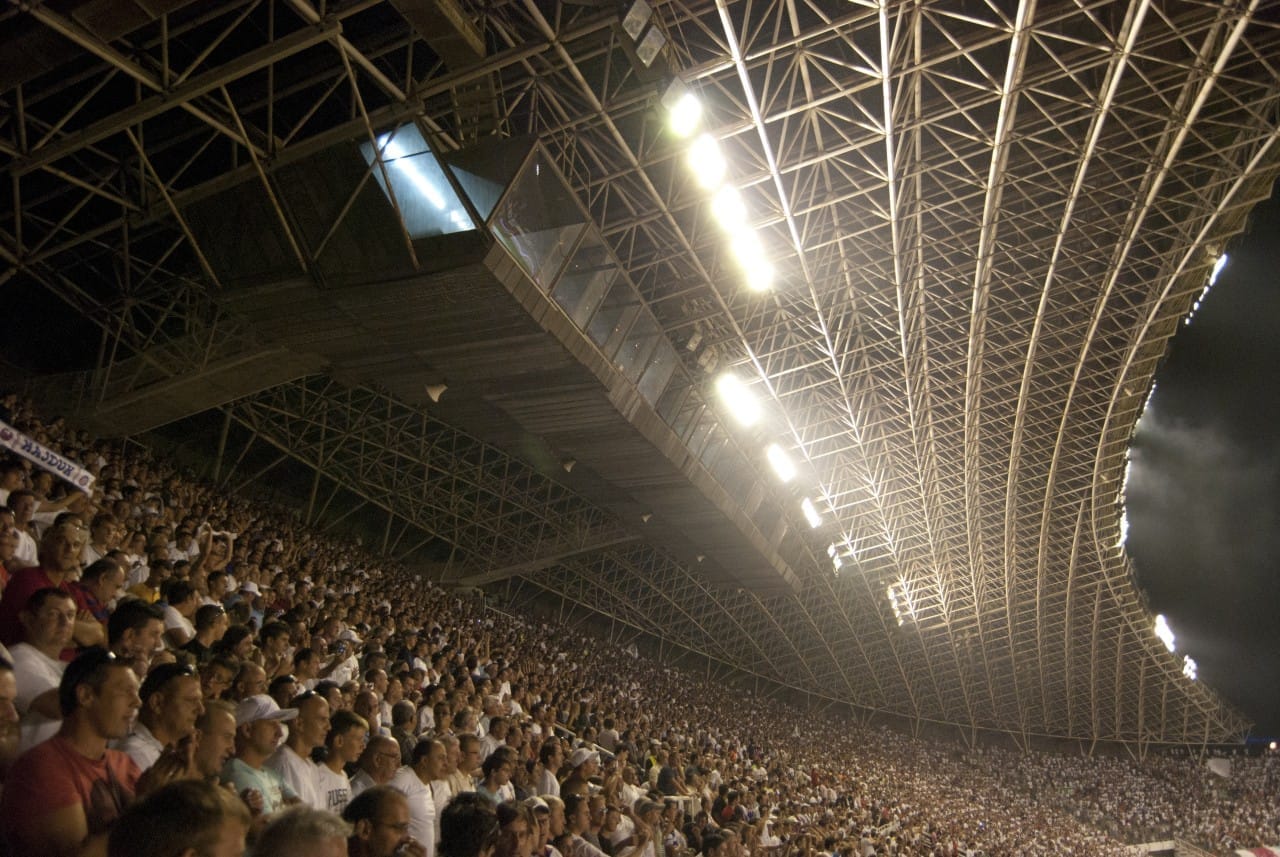
- UEFA Conference League qualifying matches in July and August offer the best atmosphere-to-accessibility ratio: big crowd energy, Torcida tifo displays, and no membership required.
- Avoid the Sjever (North Stand) for your first visit — that is Torcida's territory, involving standing, flares, and a high-intensity environment that takes some acclimatisation.
Why Hajduk Split Is More Than a Football Club
Founded in Prague in 1911 by Croatian students who named it after the Hajduk folk rebels, HNK Hajduk Split has spent over a century accumulating the kind of identity that goes far beyond sport. In a city of roughly 160,000 people, the club draws passionate support from across Croatia, plus a large diaspora following in Australia, Germany, and North America. The blue and white shirt is ubiquitous on the streets of Split in a way that no other symbol — civic or otherwise — quite matches.
The rivalry with Dinamo Zagreb, known as the 'Eternal Derby' (Vječni Derbi), carries decades of social and political weight. Hajduk is seen as the club of Dalmatia and the coast; Dinamo as the club of the capital and, historically, the establishment. This division has deep roots that predate Croatian independence in 1991, and it still charges every encounter between the two clubs with an intensity that has no real equivalent in most Western European leagues. For context on what Split looks like as a travel destination beyond football, the full Split guide covers the city's broader appeal.
Torcida, founded in Split in 1950, is widely recognised as the oldest organised supporter group in Europe, predating even Italy's famous ultra groups. They occupy the Sjever (North Stand) at Poljud, coordinating choreographies, tifo displays, and near-constant chanting throughout the 90 minutes. Even for visitors with no particular interest in Croatian football, watching a packed Torcida section in full voice is a genuinely compelling cultural experience.
Poljud Stadium: Architecture, Layout, and Getting There
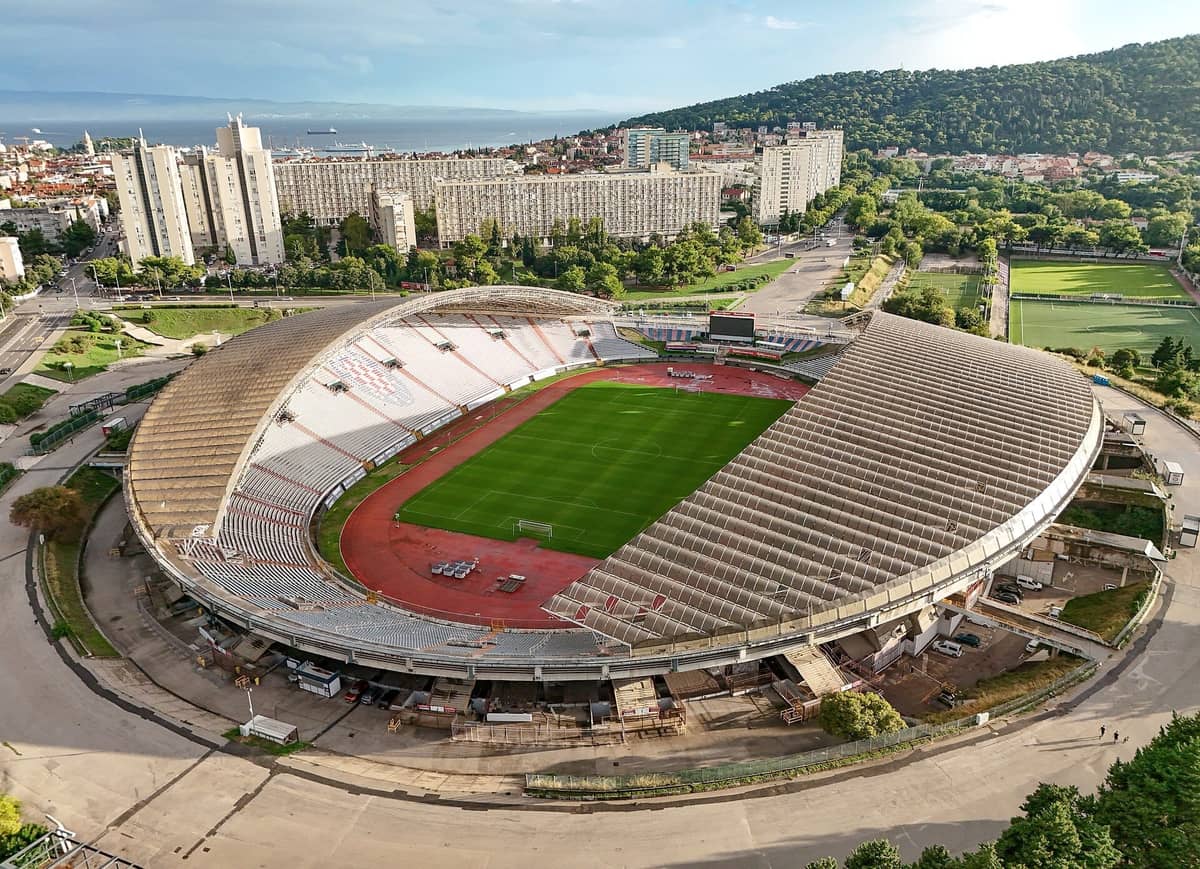
Stadion Poljud was built for the 1979 Mediterranean Games and designed by Croatian architect Boris Magaš. Its sweeping, shell-like concrete roof makes it one of the most architecturally distinctive football grounds in Southeast Europe — the kind of structure that looks like it belongs in a mid-century modernist portfolio as much as a sports complex. Capacity sits at approximately 35,000, making it one of the largest grounds in the region. It has hosted UEFA Europa League and Champions League qualifying fixtures as well as Croatian national team matches.
- Sjever (North Stand) Torcida ultras. Standing throughout, loud and unrelenting. Not recommended for first-timers or families with young children.
- Zapad (West Stand) Main seated section with the best sightlines. Zapad Premium is the most comfortable area, with better facilities. Recommended for most visitors.
- Istok (East Stand) Seated section opposite Zapad. Good atmosphere without the ultra intensity. Often slightly cheaper than Zapad.
- Jug (South Stand) General seating, often used for families and more casual fans. Away supporters, when permitted, are allocated here or in a designated corner.
The ground sits in the Poljud neighbourhood, about 2 km northwest of Diocletian's Palace. Walking from the Riva takes 25–30 minutes, partly along the waterfront and then inland toward Poljud (the Meštrović Gallery is further west along the Marjan coast). City buses run to the stadium on matchdays. A taxi or ride-hailing app from the Old Town covers the distance quickly and cheaply. Driving is not practical — parking near the stadium fills up well before kickoff.
💡 Local tip
Walk part of the way toward Poljud along the coastal path and Marjan slopes for the views, then cut inland toward the stadium rather than taking only the most direct urban streets. It takes marginally longer but avoids the narrow streets that bottleneck badly in the hour before kickoff. The walk itself, with views across the bay toward Kaštela, is worth the extra few minutes.
Tickets: Prices, Where to Buy, and When You Need a Membership
The official ticketing platform is hajduk.mojekarte.hr, which operates in English and accepts international cards. For the vast majority of domestic home fixtures, no membership or prior registration is required. Recent standard domestic match pricing has run from around €8–€10 for cheaper areas to approximately €25–€30 for the best seated positions in the Zapad (West Stand). European competition home fixtures — Conference League or Europa League qualifying rounds — are priced higher, typically in the €20–€50 range depending on the round and opponent. All prices should be verified closer to match date, as they fluctuate with demand.
Season tickets typically cover all home SuperSport HNL fixtures, most UEFA Conference League home matches including qualifying rounds, and Croatian Cup matches except the final. Recent seasons have seen prices start from around €200–€220 for standard positions and reach roughly €500–€600 for Zapad Premium. For a visitor planning to attend multiple matches over a longer stay, the per-match savings are significant. For everyone else, single-match tickets bought a few days before the game work fine for most fixtures.
⚠️ What to skip
For the Eternal Derby against Dinamo Zagreb, official tickets are generally only available to registered Hajduk members. Third-party resale platforms like StubHub and Biletwise do list derby tickets, but prices inflate considerably and counterfeit risk is real. If the derby falls during your trip and you are not a member, factor this in as early as possible — ideally months ahead.
For regular league matches that are not sell-outs, buying directly from the official site a few days before the game is straightforward and saves money compared to resale platforms. Physical ticket sales are available at the Hajduk Split club shop and select kiosks in the city centre, though online remains the most reliable option for checking availability in advance. Third-party platforms including AwayDay.io list tickets for most fixtures with transparent pricing, which is useful for comparing availability across sections.
✨ Pro tip
If your visit overlaps with a UEFA Conference League or Europa League qualifying match, prioritise those fixtures. The stakes are high, the ground fills up, Torcida produces their most elaborate tifo displays, and tickets remain accessible without membership. These matches fall in July and August — which conveniently aligns with peak tourist season in Split.
Matchday Atmosphere and What to Expect Inside Poljud
Croatian football culture has a rawness that most Western European leagues have regulated away over the past two decades. Flares are common in the Torcida section. Chanting is loud, continuous, and politically charged during derbies. If your reference point is a Premier League or Bundesliga match, Poljud during a meaningful fixture will feel noticeably different — more visceral, less sanitised. For many visitors, that contrast is exactly what makes it worth attending.
For a first visit, the Zapad (West Stand) or Istok (East Stand) seated sections provide the best overall experience. You get a clear view of the Torcida choreographies unfolding across the ground, the atmosphere carries across the whole stadium for important matches, and the environment is stewarded without being sterile. The Riva promenade fills with fans in Hajduk's white and blue colours in the two hours before kickoff — it functions as an informal gathering point before supporters make their way to the ground.
- Arrive at least 45 minutes before kickoff for sell-out or high-profile matches. Security queues at the main gates move slowly.
- Bring your ticket (printed or on phone) and a valid photo ID. Checks are stricter for European fixtures.
- Bags larger than a small backpack may not be allowed inside. Travel light on matchday.
- Alcohol is sold inside the ground at seated sections, but policies vary by fixture — check current rules before assuming.
- English is spoken by most stewards and club staff. Ask for help finding your section without hesitation.
- Post-match crowds around the main exits are dense. If you are in no rush, staying seated for 10–15 minutes after the final whistle avoids the worst of the congestion.
When to Go: The Fixture Calendar and Seasonal Factors
The SuperSport HNL runs from late July or early August through May, with a winter break typically from mid‑December to mid‑ or late‑February. Summer visitors — who make up the bulk of Split's tourist traffic — benefit from the season's opening weeks aligning with their trip. July and August fixtures, particularly European qualifying rounds, are the most atmospheric and easiest to access without membership.
Matches in October, November, and March through May offer a very different experience: smaller crowds for mid-table fixtures, lower prices, and minimal advance planning required. The trade-off is that atmosphere depends heavily on the opponent and Hajduk's league position. A side fighting for the title in April will fill Poljud regardless of the opposition. A comfortable mid-season match against a smaller club in October may draw only around 8,000–12,000 fans. For guidance on fitting a match into a wider itinerary, the 3-day Split itinerary shows how to structure your time across the main attractions and a fixture.
Summer in Split is intense in every sense — heat, crowds, prices, and footballing stakes. If you are planning around the football specifically rather than treating it as a bonus, the Split in summer guide covers the practical realities of visiting during peak season, including how quickly accommodation fills around major events.
Building Your Day Around a Hajduk Match
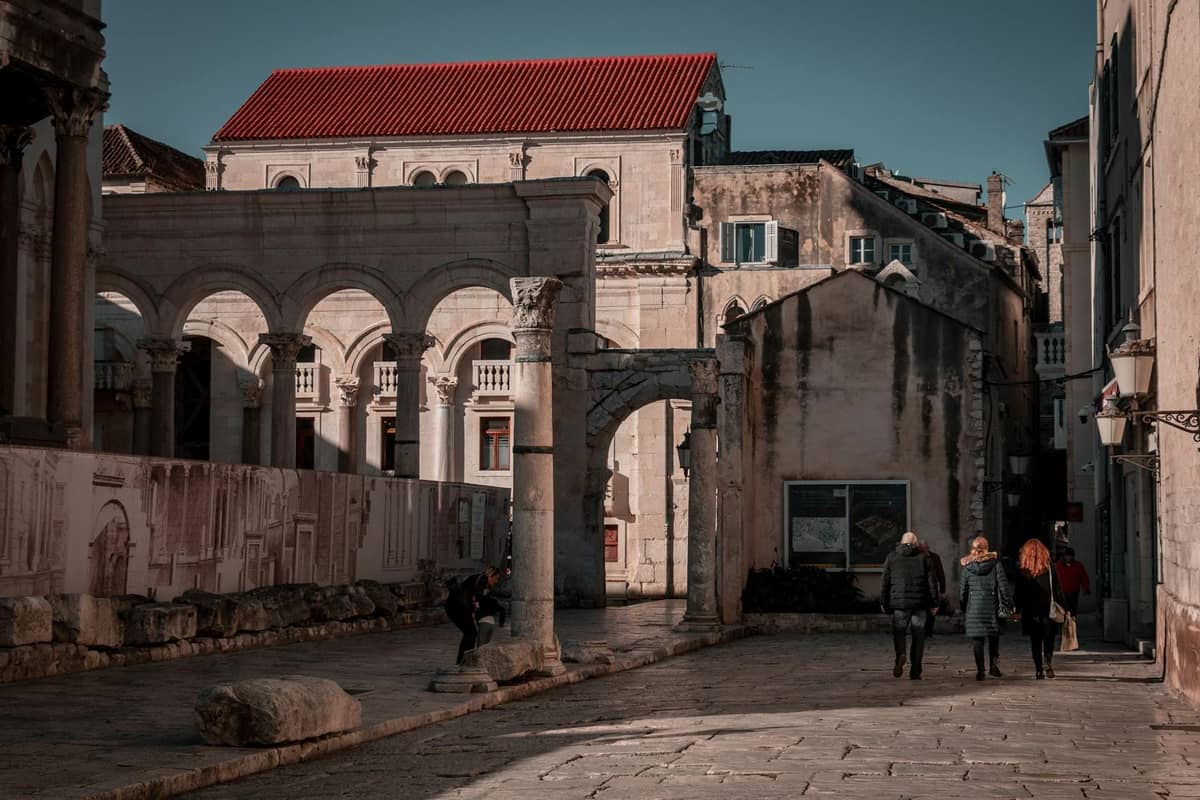
Most Hajduk fixtures kick off in the afternoon or evening, leaving the morning wide open. The logical pairing on matchday is a morning inside Diocletian's Palace — the cathedral, the cellars, the labyrinth of streets that have been continuously inhabited for 1,700 years — followed by lunch in the Old Town, and then a walk or taxi to Poljud for the match. Evening fixtures in summer work particularly well because the Dalmatian heat has dropped substantially by kickoff, making the open-air stadium comfortable.
Poljud is also within reasonable walking distance of Marjan Hill and the Meštrović Gallery, so a matchday itinerary that starts with a morning hike on Marjan, moves through the gallery, and ends at the stadium is entirely manageable. For accommodation, staying near the Riva or in the Old Town puts you within easy reach of both the sightseeing highlights and the stadium. The where to stay in Split guide breaks down the neighbourhoods and price ranges in detail.
If you are combining a day trip with an evening fixture, be careful with timing. Split is well-connected for excursions to nearby destinations like Krka National Park or Trogir, but return buses and ferries have fixed schedules and crowded peaks. Missing the last connection back to the city before a match is a genuine risk in summer — check return times before booking.
ℹ️ Good to know
The Hajduk Split club shop near the stadium sells official merchandise year-round, not just on matchdays. If you want a replica shirt or a commemorative scarf without the matchday crowds, visiting on a non-fixture day is much easier. The shop also carries historical and collector items not available through the online store.
FAQ
Do I need a Hajduk membership to buy tickets?
For most domestic SuperSport HNL home matches, no membership is required. Tickets are open to the general public via hajduk.mojekarte.hr. However, for high-demand fixtures — especially the Eternal Derby against Dinamo Zagreb — official ticket access is typically restricted to registered Hajduk members. Third-party resale platforms can fill the gap but come with mark-ups and authenticity risks.
How much do Hajduk Split tickets cost?
Domestic home matches range from around €10 for cheaper sections to approximately €30 for the best seated positions in the Zapad (West Stand). European competition fixtures are priced higher, typically €20–€50 depending on the round. Derby and sell-out matches command significant premiums on resale platforms. All prices are subject to change — verify on hajduk.mojekarte.hr before your trip.
Is Poljud Stadium safe for tourists and families?
Yes, for the vast majority of fixtures. The seated sections in Zapad, Istok, and most of Jug are well-stewarded and genuinely family-friendly. The Sjever (North Stand) where Torcida operates involves standing throughout, regular flare use, and a high-intensity environment that is not appropriate for young children or visitors unfamiliar with ultra supporter culture. Derbies require additional caution regardless of which section you are in.
How do I get from Split's Old Town to Poljud Stadium?
Poljud is approximately 2 km northwest of Diocletian's Palace. Walking takes 25–30 minutes, partly along the waterfront. City buses operate to the stadium on matchdays. A taxi or ride-hailing app from the Old Town covers the distance quickly for just a few euros. Driving is not recommended — parking near the ground fills up well before kickoff.
What is the best type of Hajduk match to attend as a first-time visitor?
A UEFA Conference League or Europa League home qualifying fixture in July or August offers the best combination of atmosphere and accessibility. These matches draw large, energised crowds, include major Torcida tifo productions, and do not require membership to attend. The Eternal Derby against Dinamo Zagreb is the ultimate experience but demands significantly more planning and is much harder to access as a visitor without an existing Hajduk membership.