Romantic Split: A Couple's Guide to the City
Split, Croatia rewards couples who look past the ferry crowds and party reputation. A 1,700-year-old Roman palace you can wander at dusk, a pine-forested hill with island views, and ferry access to Hvar within an hour — this guide covers how to experience the best of Split as a couple, including when to go, where to eat, and which day trips are actually worth your time.
Plan and book this trip
Tools from our partner Travelpayouts help you compare flights and hotels. If you book through them, we may earn a commission at no extra cost to you.
Flights
Hotels map
TL;DR
- The romantic core of Split Croatia is Diocletian's Palace — a working neighbourhood inside a Roman ruin where 2,500 people live among candlelit alleys and baroque courtyards. Go early morning or after 8pm to experience it without crowds.
- May, June, September, and October are the best months for couples: warm weather, manageable crowds, and lower accommodation prices than peak summer.
- A day trip to Hvar Island by fast catamaran (around 60 minutes each way) is one of the most reliably scenic add-ons from Split — book the ferry ahead in July and August.
- Marjan Hill, a 300-hectare pine forest park 15 minutes' walk from the old town, is the most underused romantic spot in the city — bring a picnic and stay for sunset.
- Skip restaurants directly on Peristil Square. Better food at lower prices is two streets away in the old town lanes.
Why Split Works for Couples
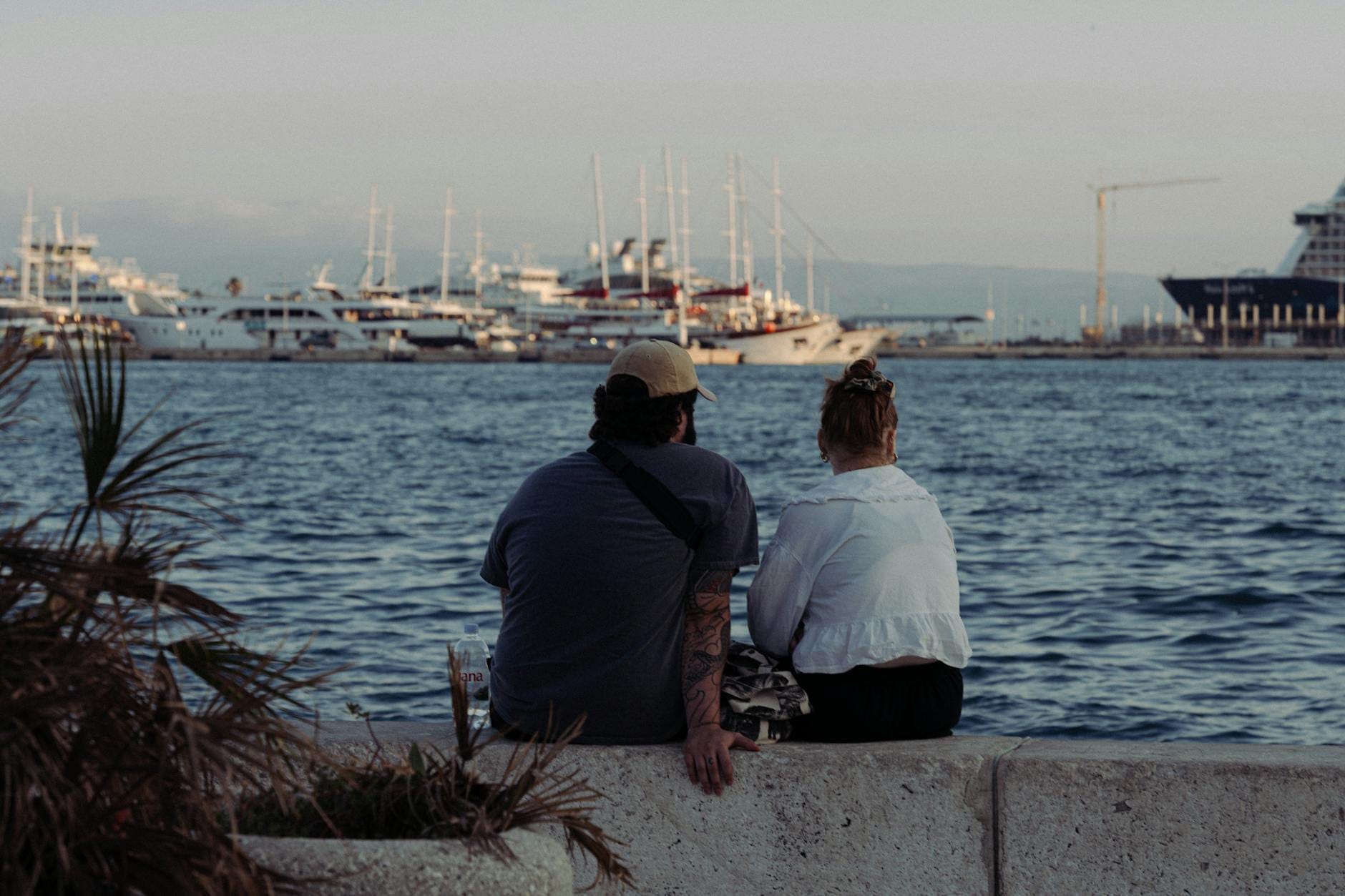
Split has a reputation as a party gateway to the Dalmatian islands, and that reputation is earned. But it tells only half the story. Beneath the summer ferry crowds is a city with nearly 1,700 years of layered history, a genuinely walkable core, excellent seafood and Dalmatian wine, and enough cultural depth to fill several days without touching a beach. For couples, this layering is the whole point: you can spend a morning inside a Roman emperor's converted mausoleum, have lunch at a konoba in a medieval lane, and end the evening watching the sun drop behind the islands from a hillside of Mediterranean pine.
Split is also compact in a way that removes logistical friction. The old town, the Riva promenade, and the base of Marjan Hill are all within 15 minutes of each other on foot. That ease — combined with Dalmatian food culture, warm evenings, and the specific quality of light on the Adriatic in late afternoon — creates ideal conditions for a very good trip without much planning.
ℹ️ Good to know
Split is Croatia's second-largest city with around 167,000 residents (2011 census). It functions as a real, working city year-round, not just a seasonal resort. That gives it an authenticity many purely tourist destinations lack — though it does mean July and August bring serious crowds to the old town, and the atmosphere can tip from romantic to chaotic.
The Romantic Core: Diocletian's Palace and Old Town
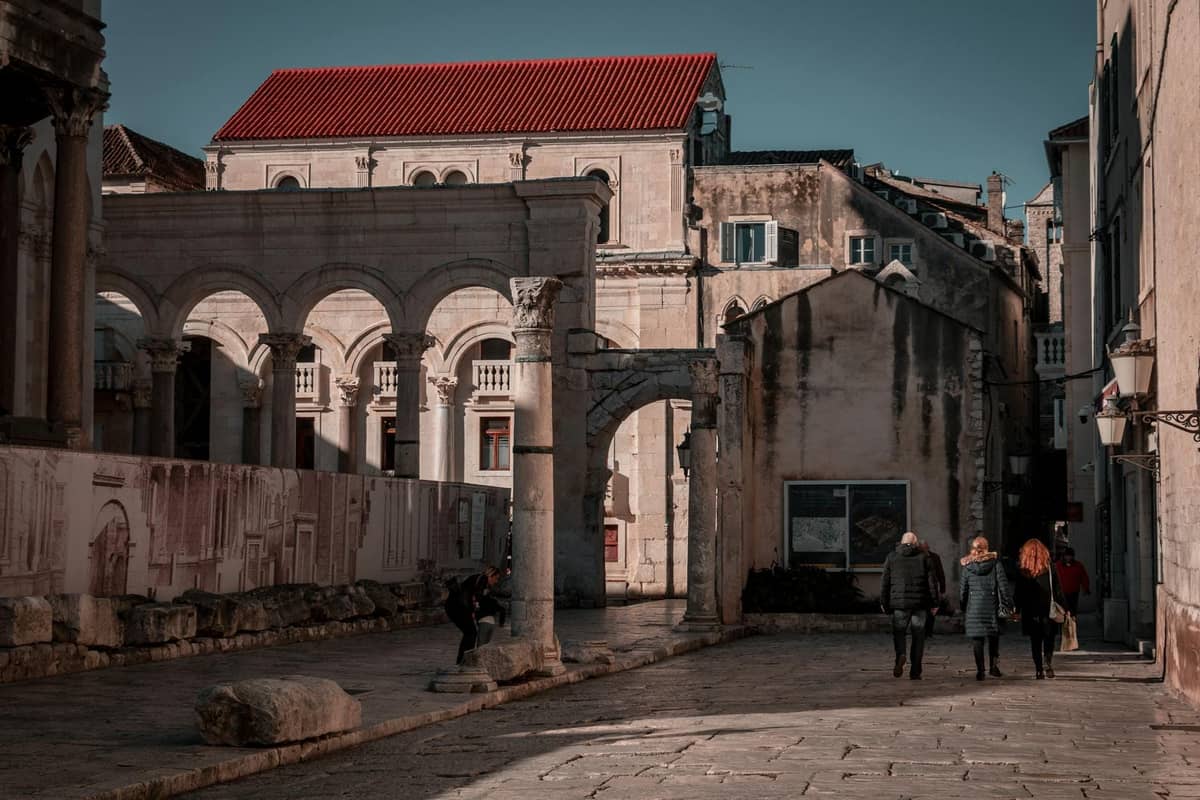
The most important thing to understand about Diocletian's Palace is that it is not a museum. It is a neighbourhood. Around 2,500 people live inside its walls. Restaurants, bars, apartments, and boutiques occupy spaces that Roman soldiers once patrolled. The UNESCO-listed complex spans roughly 215 by 180 metres and contains scores of buildings constructed across different centuries. Walking through it in the early morning or late evening — before the tour groups arrive or after they leave — is quietly extraordinary, and it costs nothing.
For couples, the best approach is to stop navigating and start wandering. The alleys west of the Cathedral of Saint Domnius are narrower, less photographed, and more atmospheric than the main Peristil courtyard. The cathedral itself — converted from Diocletian's octagonal mausoleum in the 7th century (consecrated in the 7th century) — is worth the entry fee to climb the bell tower for rooftop views over the terracotta cityscape and the Adriatic beyond. Go at golden hour if you can.
- Peristil Square at dusk The main courtyard of the palace fills with locals in the early evening. Grab a drink from one of the surrounding bars and watch the light change on the Roman columns. Musicians sometimes perform here spontaneously. One of the better free experiences in the city.
- Diocletian's Cellars (Podrumi) The underground vaults beneath the palace are genuinely atmospheric — vaulted ceilings, dim lighting, and fewer crowds than the streets above. They provided the set for Game of Thrones dragon pit scenes. On a hot day, they are also noticeably cooler than outside.
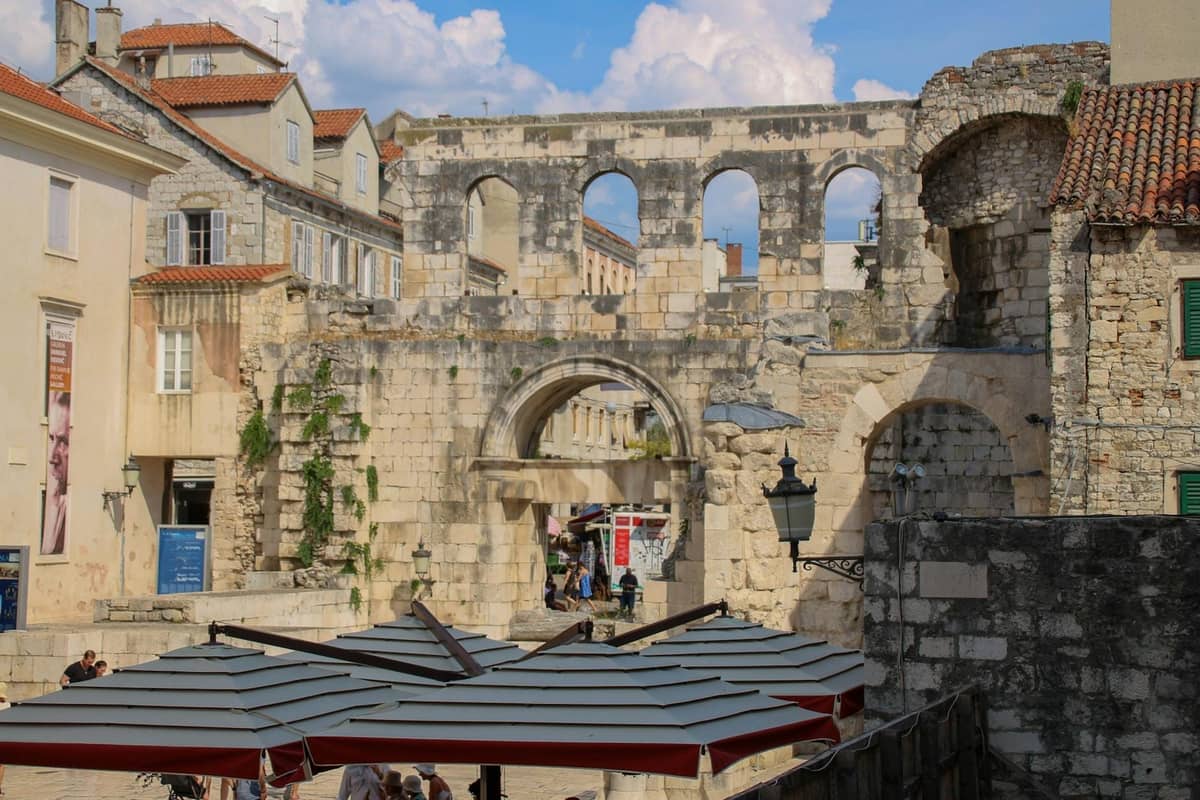
- Golden Gate (Zlatna Vrata) The best-preserved of the four palace gates, on the north side. Worth pausing here for the scale and detail of the original Roman stonework. The Gregorius of Nin statue just outside is a local landmark — rubbing the toe is said to bring good luck.
- Vestibul dome A roofless circular antechamber just inside the south entrance. At midday, light pours through the open ceiling onto the ancient stone walls. No entry fee, and often quieter than the surrounding lanes.
⚠️ What to skip
Restaurants directly on Peristil Square charge premium prices for the address. The food rarely justifies the markup. Walk two or three streets deeper into the old town and you will find better quality at noticeably lower prices. The same applies to coffee and drinks on the main tourist drag facing the Riva.
The Riva and the Art of the Evening Walk
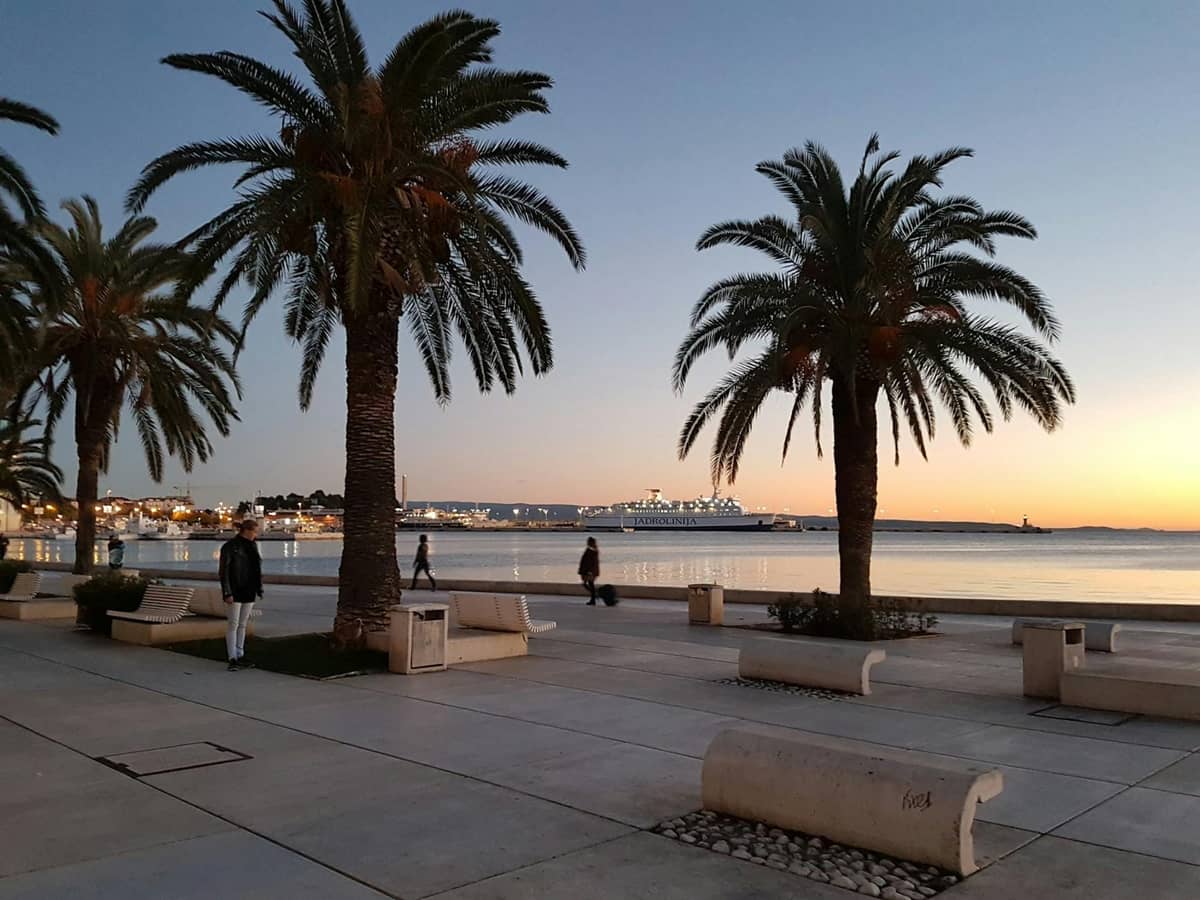
The Riva promenade runs along the southern edge of Diocletian's Palace, facing the harbour and the Brač channel. Palm trees line the wide pedestrian strip, café terraces face the water, and on warm evenings the whole city seems to drift here between 6pm and 9pm. Locals often refer to it as the city's living room, which is accurate: it is where people go to see and be seen, to have an aperitivo, and to let the evening start slowly. For couples, it works best as a starting point rather than a destination.
During peak summer, the Riva can feel performative — dense with tourists and slightly impersonal. The real pleasure is beginning an evening here with a drink, watching boats move in and out of the harbour, then drifting into the old town lanes as the light fades. Street performers appear most evenings in summer. Live music from surrounding bars carries out regularly during the Split Summer Festival, which runs approximately mid-July to mid-August across old town venues including Peristil, the Croatian National Theatre, and various outdoor stages. Verify the current programme on the official Split Tourist Board website before visiting.
Marjan Hill: The Best Spot Most Visitors Miss
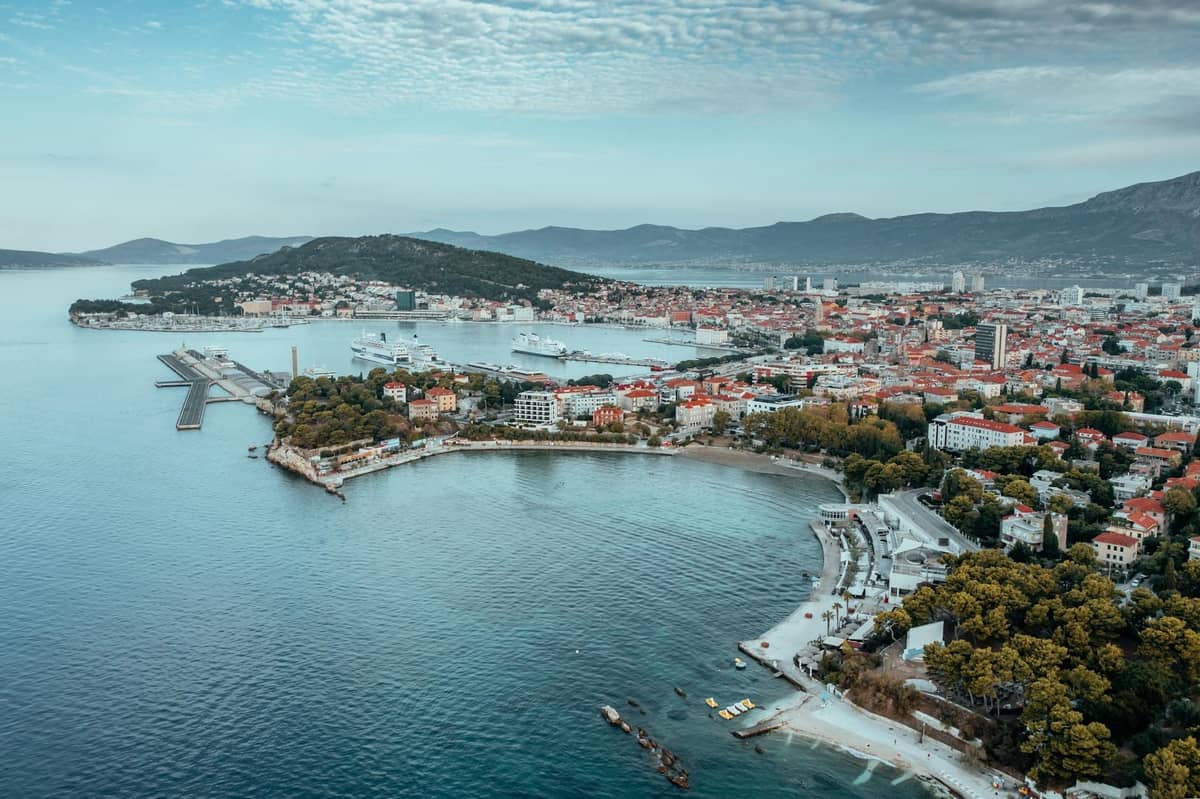
Marjan Hill is the forested peninsula rising west of the old town, and it is consistently underused by visitors who do not know it exists. The park covers around 300 hectares of Mediterranean pine and cypress, with marked walking and cycling trails, several small chapels cut into the cliff face, panoramic lookouts over the city and islands, and near-total quiet within ten minutes of the city centre.
The climb to the main viewpoint at Telegrin (178 metres) takes around 30 to 40 minutes from the old town. On a clear day, you can see Brač, Hvar, Šolta, and on exceptional days, Vis. Sunrise and sunset are both outstanding from the upper paths. For a longer outing, the trail continues to Sustipan — a small cemetery-turned-park at the western tip of the peninsula, and one of the quieter, more atmospheric spots in Split for couples who want a view without company.
✨ Pro tip
Pack a picnic from the Pazar market — the open-air produce market just east of the palace walls — and carry it up to one of the Marjan lookouts. Local cheese, prosciutto, bread, and a bottle of Dalmatian pošip or grk white wine from a market stall costs very little and beats any restaurant terrace for atmosphere. The market runs every morning, typically daily, though individual stalls may close on Sundays or off-season.
Day Trips Built for Two
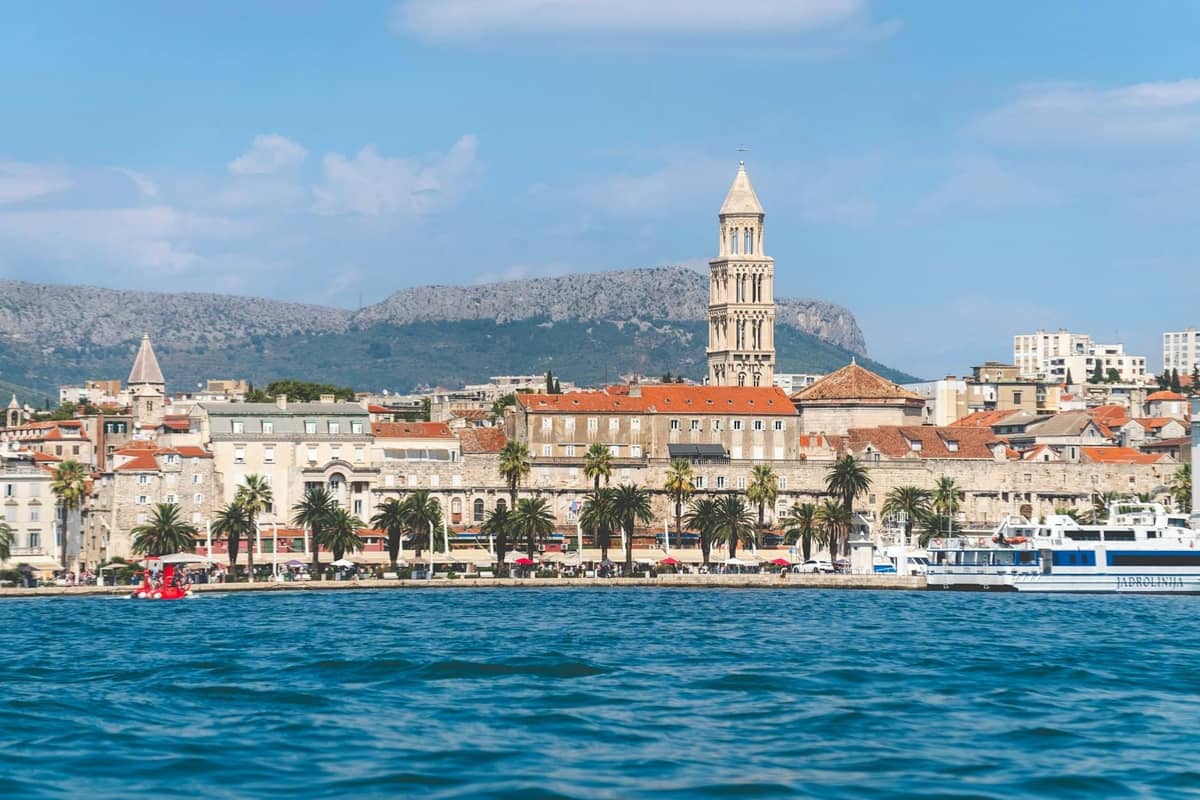
Split's position as the main ferry hub of the central Dalmatian coast is one of its greatest advantages for couples. Within a two-hour radius by boat or bus, you can reach medieval island towns, national parks with turquoise canyon pools, and some of the most photographed coastline in the Adriatic. At minimum, budget one full day for a day trip from Split — you will not regret it.
- Hvar Island (best overall for couples) The fast catamaran from Split to Hvar Town takes around 60 minutes (Jadrolinija operates several daily departures; fares vary seasonally — verify current prices at jadrolinija.hr before travel). Hvar Town has a Venetian loggia, a hilltop fortress with views over the Pakleni islands, and lavender fields inland. It has a nightlife reputation, but the daytime atmosphere is genuinely scenic. Go on a weekday if possible. Return ferries run through the evening, so you can stay for dinner.
- Trogir (best for history) A UNESCO-listed medieval island city 27 kilometres west of Split, reachable by bus in under 45 minutes for just a few euros. Its old town is smaller and often quieter than Split's, with an intimate cathedral square and good seafood restaurants along the waterfront. A solid half-day option that pairs well with a Split evening.
- Krka National Park (best for nature) Around 90 minutes by bus or organised tour. Krka offers a river canyon setting with cascading waterfalls and clear pools. Best visited in May, June, or September when crowds are lighter. Note that swimming restrictions near the main Skradinski Buk falls have changed in recent years — verify current rules at np-krka.hr before you go.
If budget allows, a private boat charter around the islands of Šolta, Brač, or out toward the Blue Cave on Biševo is one of the more memorable things you can do as a couple from Split. Boat tours from Split range from budget group excursions to private skippered charters. Private half-day charters typically start around €350 to €500 depending on the boat and season — split between two people, it is expensive but hard to beat as an experience.
When to Visit Split as a Couple
The honest answer on timing: avoid the second half of July and all of August unless you are specifically coming for the Split Summer Festival or another scheduled event. The old town becomes genuinely difficult to navigate in peak season, accommodation prices are at their highest, and the atmosphere shifts from residential city to tourist transit hub. The best time to visit Split for couples is May, June, or September — that is not a qualified opinion, it is the consistent consensus among people who know the city well.
May brings warm days averaging around 20°C, the sea warming toward swimmable by late in the month, and music events such as the Split Spring or other festivals with local and international performances across several venues. The city still has a genuine local rhythm in May — restaurants are fully open, queues are short, and accommodation is significantly cheaper than in August. September pulls back the summer crowds while keeping warm water and long evenings. October is underrated: pleasant temperatures, near-empty beaches, and accommodation prices drop sharply.
Winter in Split is genuinely mild by northern European standards, and the winter atmosphere in Split has real appeal for couples who want the city to themselves. Advent markets appear in December with local food stalls and mulled wine. Diocletian's Palace without crowds is a completely different experience. Some island ferries run reduced schedules and a handful of restaurants close for the season, but the core of the city remains very much open and very much alive.
- May and June: warm weather, festivals, manageable crowds, sea swimming from mid-May onward — best overall for couples
- July and August: peak crowds and prices; Split Summer Festival (mid-July to mid-August) adds evening concerts and performances across old town venues, which partially compensates
- September and October: ideal balance of weather, near-empty beaches, lower prices, and the best evening light of the year
- November to March: quiet, cheaper, genuinely local feel; some ferry routes and restaurants operate on reduced schedules, but the palace is yours
⚠️ What to skip
If your travel dates fall in early July, check whether Ultra Europe is running. The festival draws tens of thousands of visitors and effectively fills the city and surrounding area. Accommodation prices spike across all categories and rooms in the old town can be impossible to find without three to four months' advance booking.
FAQ
Is Split, Croatia good for a romantic trip?
Yes, genuinely. The combination of a walkable Roman old town, waterfront dining, easy ferry access to islands like Hvar, and a Mediterranean pace makes Split well-suited for couples. It works best in the shoulder seasons — May, June, and September — when the city is at its most atmospheric and least crowded. Summer is doable but requires more patience and earlier planning.
What is the most romantic area to stay in Split?
Inside or immediately adjacent to Diocletian's Palace for atmosphere, though rooms can be small and noise from the old town carries late into the night on weekends. The Manuš neighbourhood just north of the palace offers good access with slightly more quiet. If you prioritise sleep, read noise-specific reviews carefully before booking anything in the palace walls.
How far is Hvar from Split and is it worth a day trip for couples?
Hvar Town is around 60 minutes from Split by fast catamaran ferry. It is worth the trip. The town is compact and scenic, with a hilltop fortress overlooking the harbour and the Pakleni islands. Go on a weekday if possible — weekends in summer bring significant crowds. Return ferries run through the evening, so you can stay for dinner and catch a later boat back.
What is the weather like in Split, Croatia in May?
May is one of the better months to visit Split as a couple. Temperatures typically sit between 15°C and 22°C, with low rainfall and increasing sunshine. The sea is still cool for some swimmers early in the month but warms through May. The city has a pre-season energy with everything open but tourist numbers still manageable. Major music events like the Split Festival usually run in summer (often July) rather than May — check current dates on the official Split Tourist Board website.
Are there free romantic things to do in Split?
Several. Wandering Diocletian's Palace costs nothing. The Vestibul courtyard with its open dome is free to enter. Marjan Hill is free to access and offers some of the best views in the city. The Riva promenade at sunset costs only a drink. The Pazar market is free to browse. Much of what makes Split romantic — its architecture, its light, and its pace — requires no entry fee at all.