Split to Hvar: Ferry Times, Tickets & How to Get There
Everything you need to know about the Split to Hvar ferry crossing: which operators run the route, how long it takes, what tickets cost, and how schedules shift dramatically between summer and winter. Includes booking tips and common mistakes to avoid.
Plan and book this trip
Tools from our partner Travelpayouts help you compare flights and hotels. If you book through them, we may earn a commission at no extra cost to you.
Flights
Hotels map
TL;DR
- High-speed catamarans cover the Split to Hvar route in 50-75 minutes, operated by Krilo, TP Line, and Jadrolinija.
- Fares range from around €6 to €26 per adult foot passenger, depending on the operator and time of year.
- In peak summer (June-September), expect 10-17+ daily departures. Winter drops to just 2 per day.
- Not all ferries go to Hvar Town — some serve Stari Grad, which is 20km away. Always check your destination before booking. See Hvar Island for what awaits you on the other side.
- Book ahead for summer travel — peak season departures sell out fast, especially on weekends.
The Route at a Glance
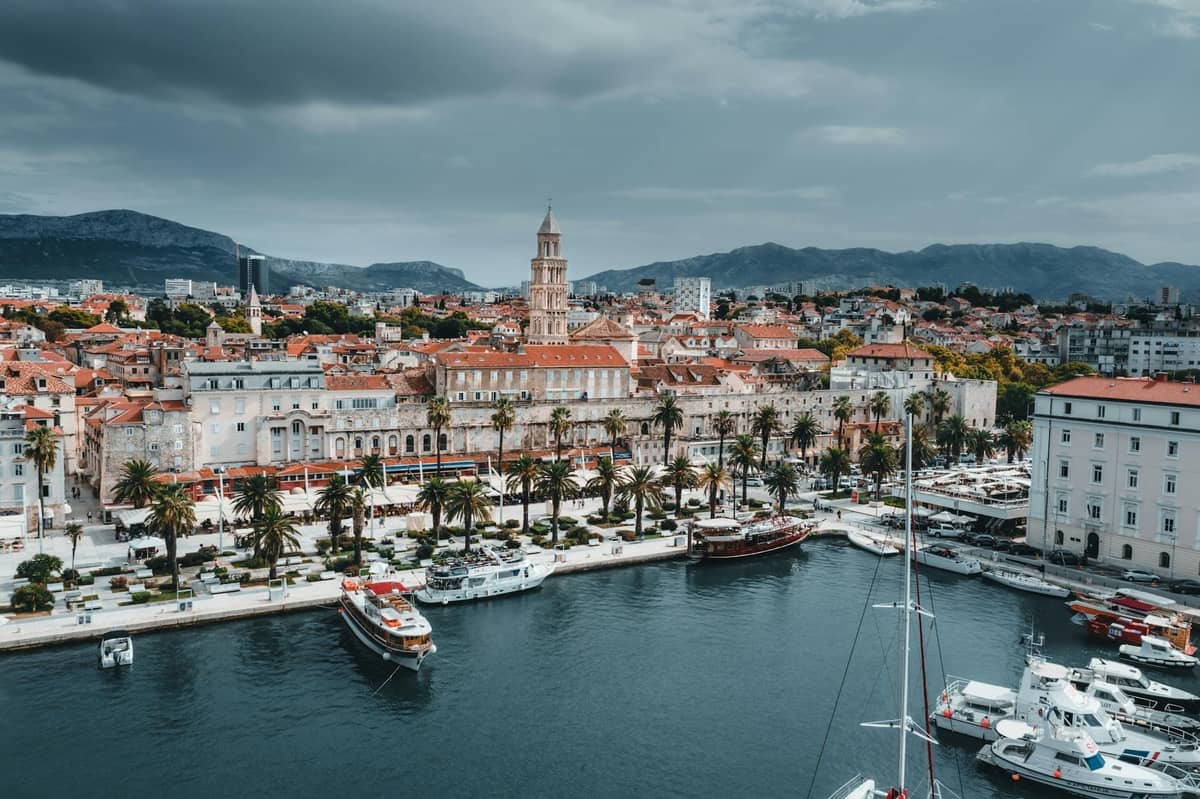
The Split to Hvar crossing is one of the busiest ferry routes on the Croatian coast, and for good reason: Hvar Island is consistently ranked among Croatia's most-visited destinations. The crossing itself is short — most catamarans take 55 minutes to just over an hour — and departures leave from Split's main ferry terminal on the Riva promenade, right in the heart of the city.
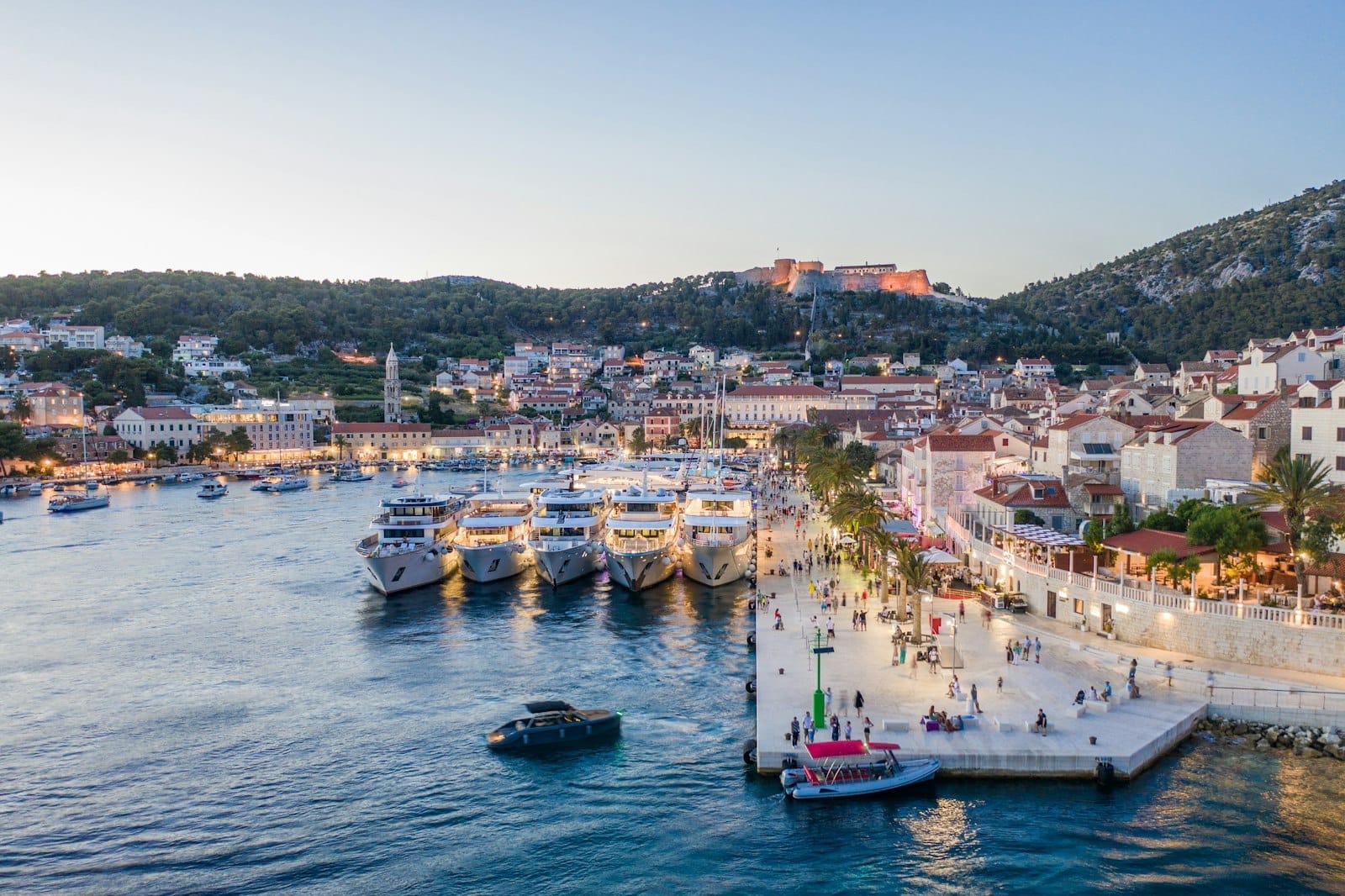
There are two distinct port destinations on Hvar: Hvar Town and Stari Grad. Hvar Town is the tourist hub, with the fortress, the main square, the bars, and most of the accommodation. Stari Grad is a quieter, older settlement on the north side of the island, about 20km by road from Hvar Town. If you book the wrong one, you'll need to arrange a taxi or local bus at your own expense. Double-check your ticket before you pay.
⚠️ What to skip
Jadrolinija car ferries from Split typically go to Stari Grad, not Hvar Town. If you're a foot passenger wanting to arrive directly in Hvar Town, book a Krilo or TP Line catamaran instead.
Ferry Operators and Schedules
Three main operators run this route: Krilo (operated by Kapetan Luka), TP Line, and Jadrolinija. Each has a different fleet, schedule structure, and pricing logic. Here's how they compare in practice.
- Krilo (Kapetan Luka) The most popular choice for foot passengers heading to Hvar Town. Fast catamarans, comfortable seating, and multiple daily departures in summer. Journey time around 55-60 minutes. Tickets can be bought online or at the terminal kiosk.
- TP Line Runs a competing catamaran service with similar journey times (around 1 hour to 1 hour 20 minutes depending on the sailing). Schedules vary by day of the week, so check specifically for your travel date. Slightly fewer departures than Krilo in peak season.
- Jadrolinija Croatia's national ferry line. Runs a slower car ferry service to Stari Grad (not Hvar Town) and a limited catamaran service to Hvar Town. The car ferry is useful if you're bringing a vehicle, but foot passengers are usually better served by Krilo or TP Line.
Sample departure times (based on peak season data — always verify current schedules before travel): Krilo typically starts around 08:00 and runs multiple departures through to early evening. TP Line has sailings from approximately 08:15, with additional crossings mid-morning and midday. Jadrolinija's catamaran runs fewer daily crossings to Hvar Town, often limited to two or three per day even in summer.
ℹ️ Good to know
Schedules are not fixed year-round. The timetables on operator websites are updated seasonally — sometimes monthly in peak season. Always check the live schedule within a week of your travel date rather than relying on screenshots or third-party articles.
Seasonal Frequency: What to Expect Month by Month

The frequency difference between summer and winter on this route is dramatic, and it catches a lot of travelers off guard. Getting to Hvar in August and getting there in February are two completely different logistical challenges.
- Peak Season (June to September) Anywhere from 10 to 17+ daily departures across all operators combined. This is when the route is easy, almost on-demand. The challenge is crowds, not availability — boats sell out, especially on Friday evenings and Saturday mornings.
- Shoulder Season (May and October) Up to 6 daily departures. Enough flexibility for most travelers, but you'll want to check the schedule before arriving at the terminal expecting a quick crossing.
- Winter (November to April) As few as 2 daily catamaran departures. Schedules may be reduced further in January and February. If you're traveling to Hvar in winter, plan around ferry times — the ferry does not plan around you.
For travelers visiting outside summer, it's worth reading Split in winter to understand what island access looks like during low season, and whether the reduced connections will affect your plans. If Hvar is just one part of a broader trip, island hopping from Split covers how to combine multiple island crossings efficiently.
Ticket Prices and Where to Book
Adult foot passenger fares currently range from around €5.84 to €26, depending on the operator, time of year, and how far in advance you book. Krilo tends to price at the higher end of the range during peak season, while Jadrolinija's catamaran fares are generally lower. Children's fares are typically discounted by 50% on most operators.
You can book directly through operator websites (jadrolinija.hr, krilo.hr), or use aggregator platforms like Ferryhopper, Direct Ferries, or FerryCroatia to compare options in one place. Aggregators charge the same price as direct booking in most cases, but some apply small service fees. For flexibility, booking direct with the operator is marginally preferable. Tickets can also be purchased at the Split ferry terminal on the day, though in July and August, peak morning departures often sell out 1-2 days in advance.
✨ Pro tip
If you're traveling on a Saturday in July or August, book at least 2-3 days ahead. The Friday evening and Saturday morning crossings fill with weekenders coming from Split, Zagreb, and across Europe. Buying on the day in high summer is a gamble.
Practical Logistics: Getting to the Terminal and Arriving in Hvar
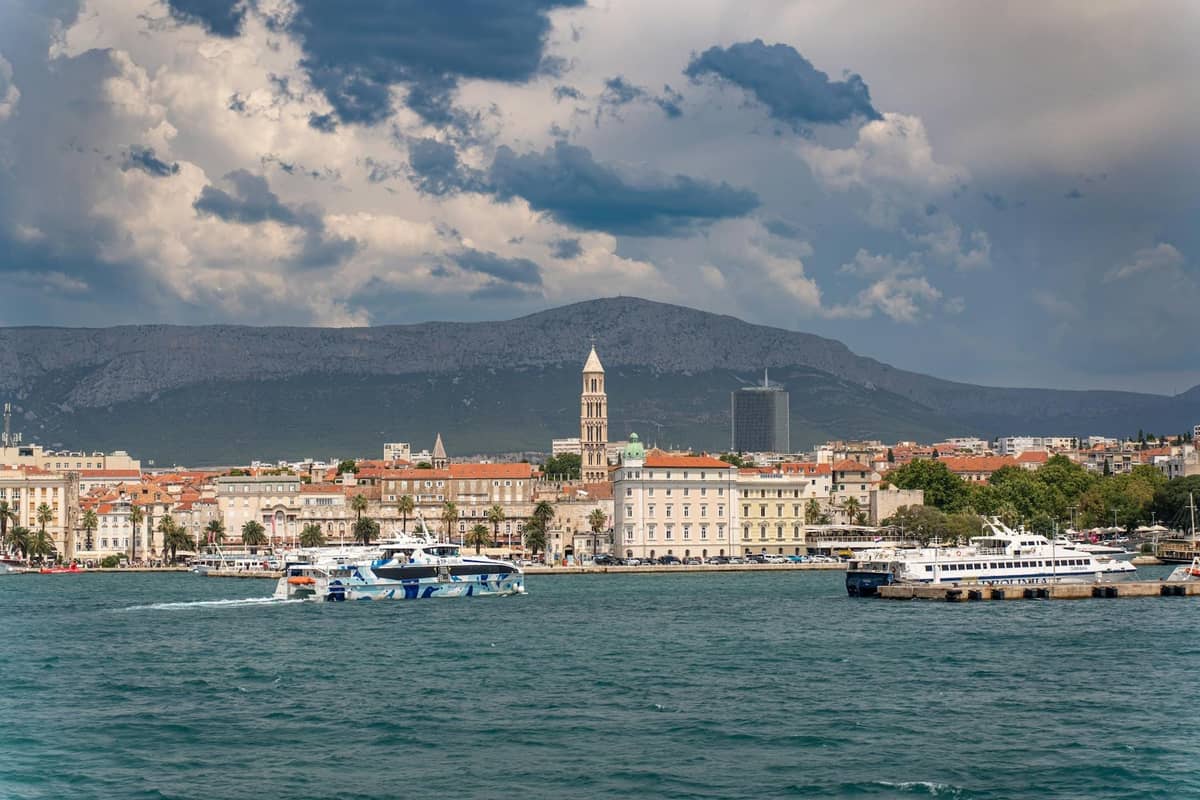
The Split ferry terminal is centrally located, adjacent to the Riva promenade and walking distance from Diocletian's Palace. If you're staying in the old town or central Split, you can realistically walk to the terminal in 5-10 minutes. From more peripheral neighborhoods or the airport, allow more time.
Arrive at least 30 minutes before departure if you've already bought a ticket, and 45-60 minutes if you're buying at the terminal. In peak season, embarkation queues can be long and boarding closes before the scheduled departure time. The terminal has a café, a small shop, and luggage storage lockers for day-trippers who want to leave bags behind.
On arrival in Hvar Town, the catamaran docks directly in the main harbor, steps from the main square (Trg Svetog Stjepana) and the old town waterfront. There are no buses or taxis required if your accommodation is in the town center. If you're arriving at Stari Grad, you'll need to arrange onward transport to Hvar Town — a taxi takes around 25-30 minutes and costs roughly €25-35, or you can take the local bus (infrequent in low season).
💡 Local tip
Traveling with a rental car? The car ferry from Split to Stari Grad is the standard option, but spaces for vehicles fill up fast in summer. Reserve your car spot weeks in advance through Jadrolinija's website. Foot passengers have far more flexibility and are better off using the faster catamarans.
Making the Most of Your Time on Hvar

Hvar works well as either a day trip from Split or a multi-night stay. For a day trip, take the earliest morning catamaran (around 08:00-09:00), explore Hvar Town on foot, visit the fortress (Fortica/Spanjola), walk the harbor, and catch an afternoon or early evening return. The day trips from Split guide covers how to structure this kind of one-day itinerary across multiple island options.
For a longer stay, Hvar pairs well with nearby Vis or Brač. The best time to visit Split guide has useful context on shoulder season travel in the region, when Hvar is significantly less crowded but still fully operational. If you're planning a week or more around Split with multiple islands, consider reading Split for couples for itinerary ideas that incorporate overnight island stays.
One honest caveat about Hvar Town in July and August: the main harbor area becomes extremely congested with superyachts and cruise day-trippers, and the restaurant prices in the most prominent waterfront spots reflect that demand heavily. Walking 10 minutes away from the harbor into the old town backstreets will find you better food at more reasonable prices. Hvar is genuinely beautiful, but the peak-season version is a very different place from the quieter April or October version.
FAQ
How long is the ferry from Split to Hvar?
High-speed catamarans take 50-80 minutes depending on the operator and vessel. Krilo and TP Line catamarans generally complete the crossing in around 55-65 minutes. The slower Jadrolinija car ferry to Stari Grad takes longer, typically around 2 hours.
How much does the Split to Hvar ferry cost?
Adult foot passenger fares range from approximately €6 to €26, depending on the operator and season. Krilo and TP Line tend to charge more in peak season than Jadrolinija. Children typically pay around half the adult fare. Prices change seasonally, so verify current fares before booking.
Do I need to book the Split to Hvar ferry in advance?
In shoulder and low season, you can usually buy tickets on the day at the terminal. In July and August — especially on Fridays, Saturdays, and Sundays — peak morning departures sell out 1-3 days in advance. It's safest to book at least 2-3 days ahead in peak summer.
What is the difference between Hvar Town and Stari Grad ferries?
Hvar Town is the main tourist center with the harbor, old town, and fortress. Stari Grad is on the north side of the island, 20km away by road. Krilo and TP Line catamarans go directly to Hvar Town. Jadrolinija car ferries typically go to Stari Grad. If you book the wrong destination, you'll need a taxi or bus to get between the two, which adds cost and time.
Can I take my car on the ferry from Split to Hvar?
Yes, but only on the Jadrolinija car ferry, which goes to Stari Grad. You must book a vehicle space in advance through jadrolinija.hr — in peak summer, car spaces can fill up weeks ahead. Note that taking a car to Hvar Town itself is impractical due to very limited parking; most visitors with vehicles park in Stari Grad or use the island bus network.