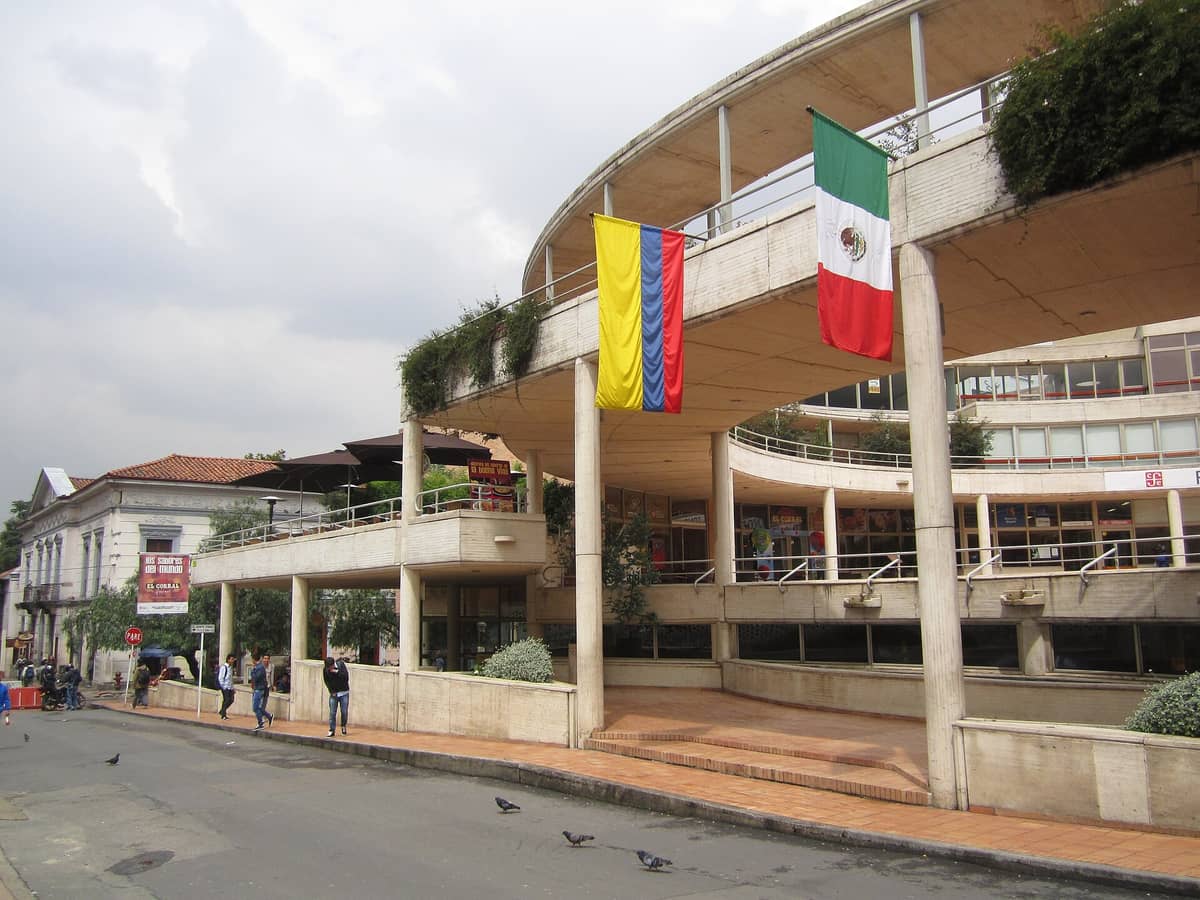
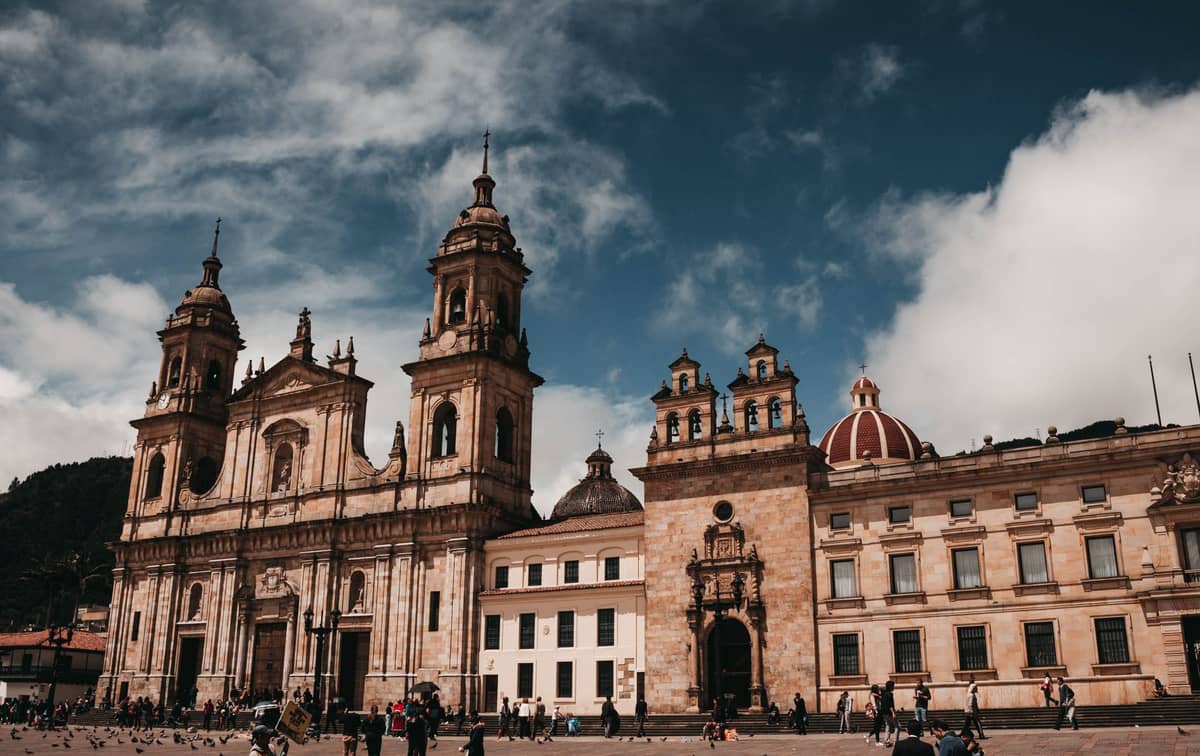
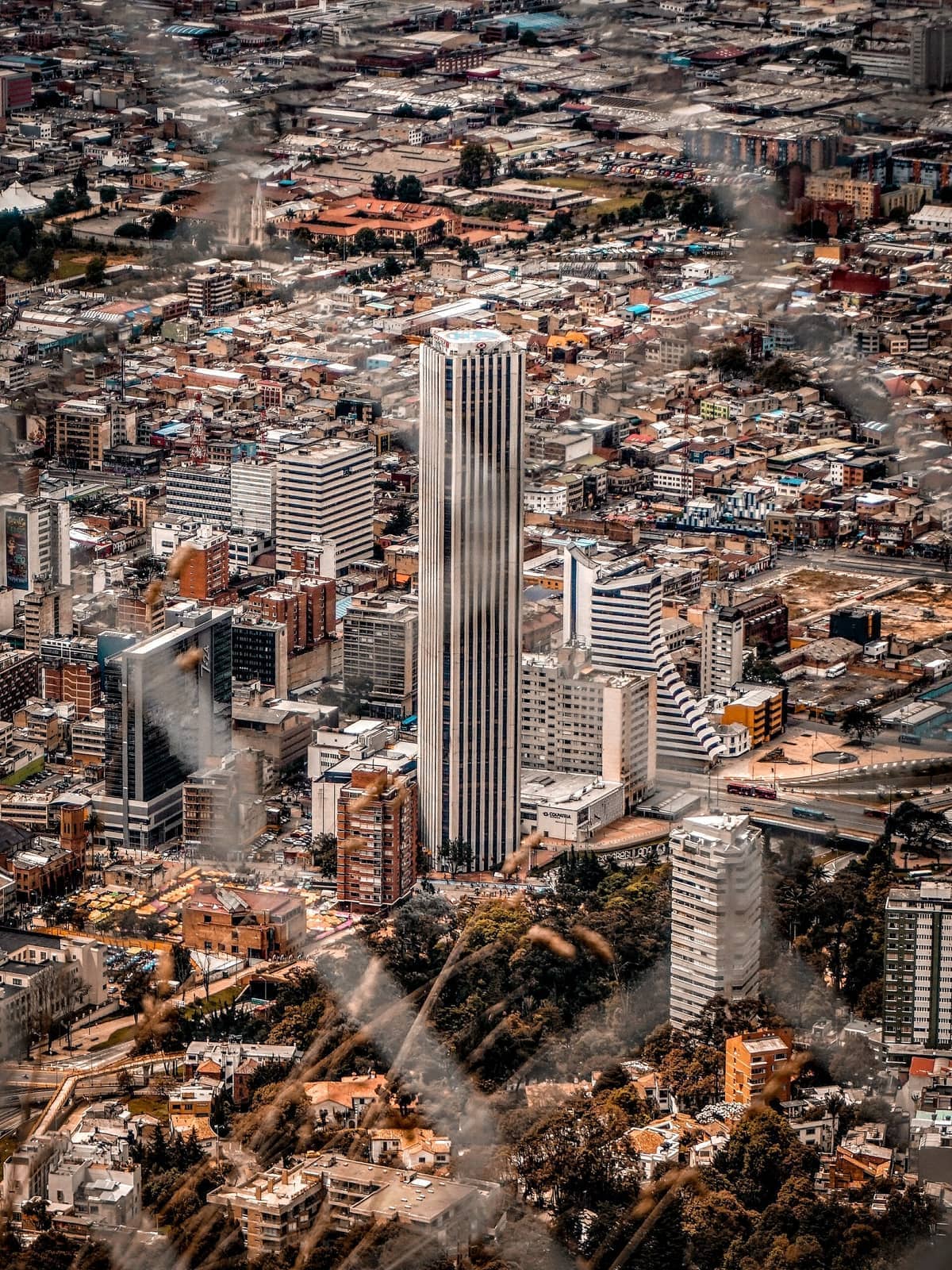
La Candelaria is Bogotá's historic district, built on colonial streets centered around Plaza de Bolívar and extending toward the eastern Andes foothills. It holds the greatest concentration of museums, government buildings, and pre-republican architecture in the city, making it the essential starting point for understanding Bogotá's history and identity.
La Candelaria is where Bogotá began. Founded in 1538, this colonial quarter still carries the weight of that history in its narrow cobblestone lanes, whitewashed facades, and the monumental Plaza de Bolívar at its core. It is the most visited neighborhood in the city for good reason, and also one that rewards travelers who look beyond the obvious landmarks.
Orientation
La Candelaria occupies a compact area in central Bogotá, roughly bounded by Avenida Jiménez de Quesada to the north, Calle 7 to the south, Carrera 3 to the east, and Carrera 9 and 10 to the west. The main north-south artery through the district is Carrera 7, known locally as La Séptima, which passes directly alongside Plaza de Bolívar and is pedestrianized in parts of this stretch. Avenida Jiménez runs east-west along the northern edge and serves as a primary transit corridor connecting La Candelaria to the rest of the city.
The neighborhood sits at roughly 2,640 meters above sea level, the same altitude as the rest of Bogotá, and the terrain is essentially flat within the barrio itself. To the east, however, the land rises sharply toward the Cerros Orientales, the green ridge that defines Bogotá's eastern limit. Walking up Calle 11 or Calle 12 eastward from the plaza, you can see the hills increasingly close in. At the neighborhood's western edge, the character shifts quickly into the commercial chaos of San Victorino market and the Centro Administrativo.
North of La Candelaria, Santa Fe and La Macarena sit between the historic center and Chapinero and is connected southward to districts like Santa Isabel and La Sabana. For visitors building a mental map: if you are standing in Plaza de Bolívar, the Presidential Palace (Casa de Nariño) is one block south, the National Capitol is directly to your south-east, and the Museo del Oro is about a seven-minute walk north along Carrera 7.
Character & Atmosphere
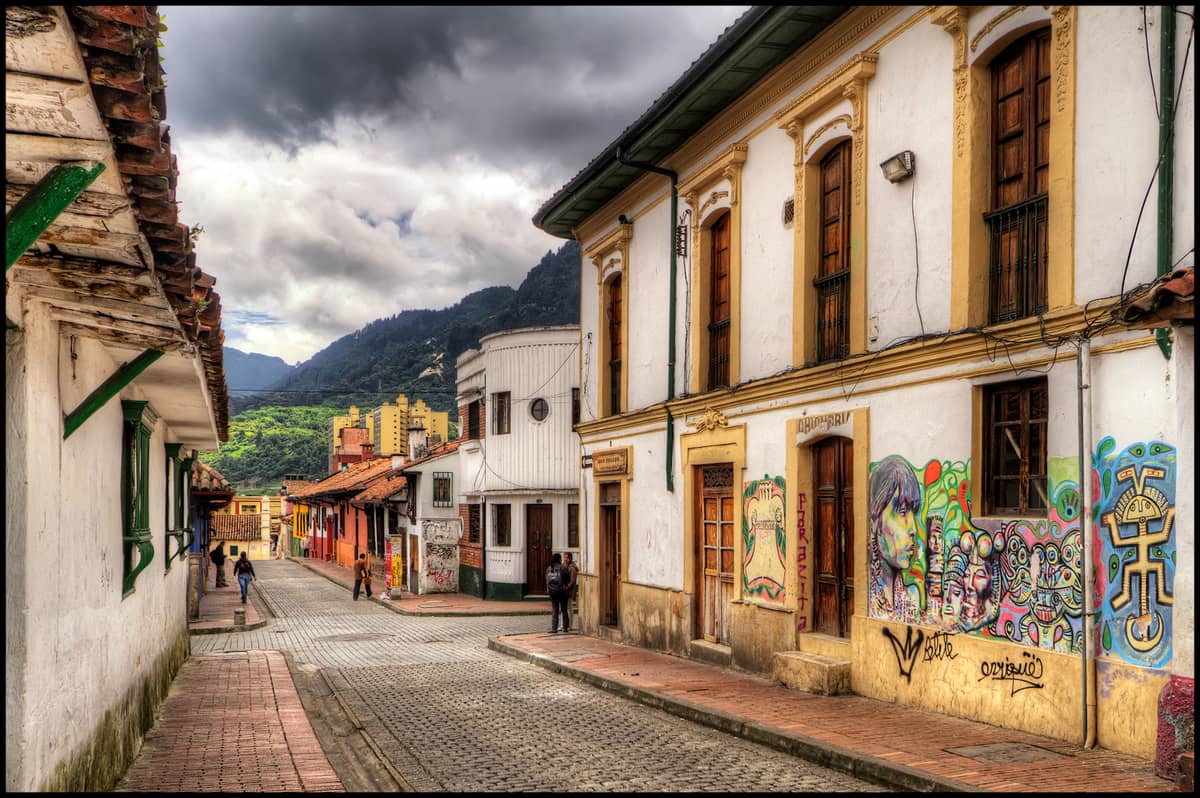
La Candelaria operates on a different tempo than the rest of Bogotá. Early mornings, before 8 AM, the streets are quiet in a way that lets you actually see the architecture: the terracotta roof tiles, the heavy wooden doors painted in colonial blue, green, and ochre, the wrought-iron balconies draped with occasional flower baskets. The air carries the altitude cold, and the eastern hills catch the first light in a way that makes the facade of the Primatial Cathedral glow amber. Street vendors begin setting up around 7 AM, selling arepas, tinto (black coffee served in small cups), and empanadas from carts along the main approaches to the plaza.
By mid-morning, the neighborhood fills considerably. School groups arrive at the museums, government workers cross the plaza, and tourist walking tours begin departing from points around Carrera 7. The streets narrow as you move east toward Calle del Embudo and Plazoleta del Chorro de Quevedo, which is considered by many historians to be the true founding site of Bogotá. This small square, where a colonial fountain still stands, is surrounded by narrow lanes covered in street murals and is popular with university students from the nearby Universidad de los Andes and Externado de Colombia campuses.
Afternoons bring the most tourist activity. The light falls at a low angle by around 3 PM, casting long shadows across the cobblestones and illuminating the detail in the carved stone doorways. Weekday afternoons can be surprisingly peaceful inside the museums, particularly in the Museo Botero and the Casa de la Moneda, where the colonial courtyards offer respite from the street noise outside. By 5 PM, office workers move through quickly, vendors pack up, and the character of the streets shifts perceptibly. La Candelaria thins out fast after dark.
⚠️ What to skip
La Candelaria changes significantly after dusk. The tourist and government foot traffic that keeps streets active during the day drops sharply by early evening. Quieter side streets see increased risk of opportunistic crime including phone snatching and muggings. Plan your museum visits and walking tours for morning or early afternoon, and use app-based transport (Uber, Cabify, or Didi) to leave the neighborhood after dark rather than walking to distant TransMilenio stops.
What to See & Do
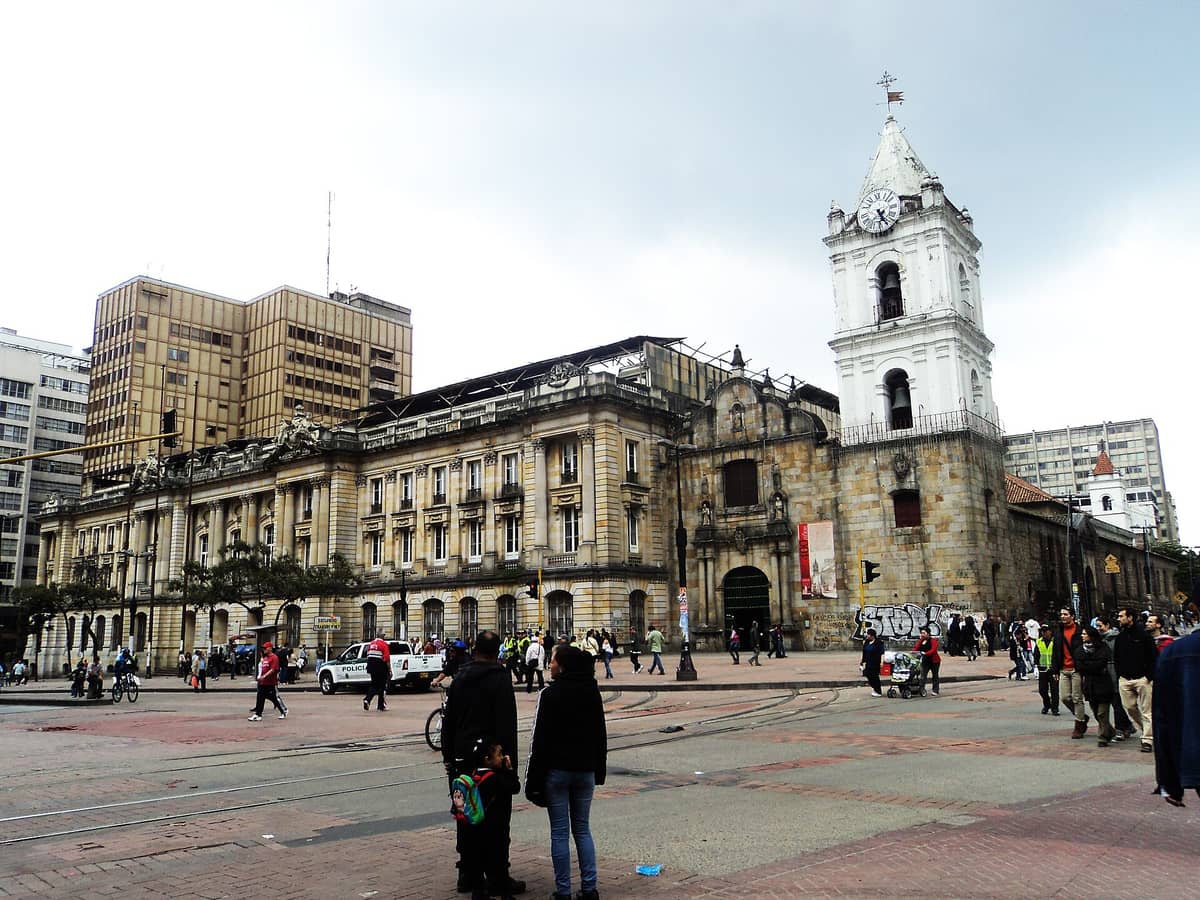
The geographic and symbolic center of everything in La Candelaria is Plaza de Bolívar, one of South America's most significant public squares. The scale is immediately impressive: the stone expanse is framed by four major buildings representing the country's religious, legislative, judicial, and administrative power, all constructed or substantially rebuilt across different eras. The current Primatial Cathedral was built between 1807 and 1823; the neoclassical National Capitol was completed in the 1920s; the Palace of Justice was rebuilt after the 1985 siege that destroyed its predecessor. The plaza itself is open all day and draws everyone from pigeons and pensioners to political protesters.
A short walk north along Carrera 7 brings you to the Museo del Oro, consistently ranked among the most important pre-Columbian gold collections in the world. The museum's top floor contains the famous Sala Muisca, where gold offerings are displayed in context with the cosmological beliefs of the Muisca people who originally inhabited the Bogotá savanna. Admission is inexpensive by any international standard, and the museum is free on Sundays. Plan at least two hours.
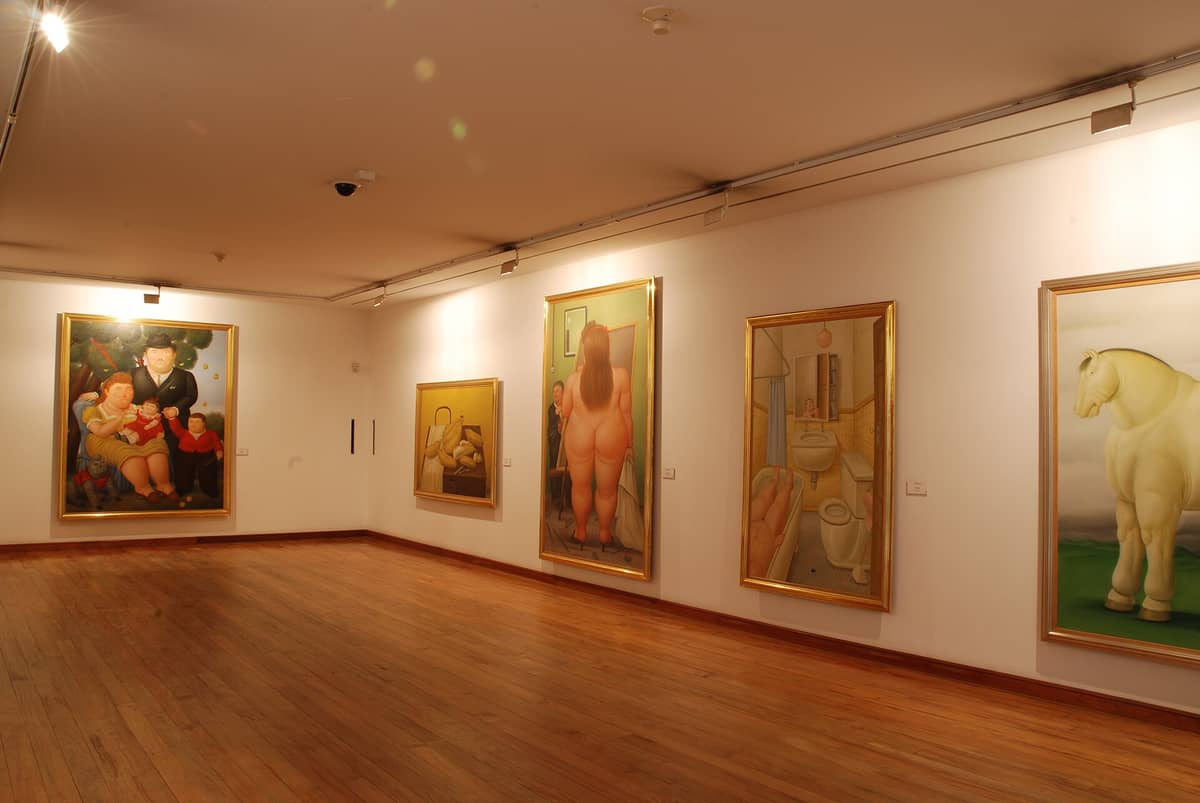
Equally worth your time is the Museo Botero, which houses Fernando Botero's personal donation of his own works alongside pieces from his private collection including Picasso, Chagall, and Dalí. Entry is free. The building itself, a converted colonial mansion on Calle 11 with a central courtyard, is characteristic of the neighborhood's architectural identity. Adjacent to the Museo Botero is the Casa de la Moneda, Bogotá's former mint, which now functions as a complementary museum covering Colombian currency and numismatic history.
Plaza de Bolívar: the founding square, surrounded by the Capitol, Cathedral, and Palace of Justice
Museo del Oro: world-class pre-Columbian gold collection, free on Sundays
Museo Botero and Casa de la Moneda: free entry, colonial building, major art collection
Plazoleta del Chorro de Quevedo: the traditional founding site, colonial fountain, street art, student scene
Calle del Embudo: one of the narrowest and most photogenic colonial lanes in the district
Museo de la Independencia (Casa del Florero): the building where the 1810 independence movement began
Museo Colonial: Spanish colonial religious art in a 17th-century convent building
Quinta de Bolívar: Simón Bolívar's restored country house, just uphill at the base of the Cerros Orientales
Just east of La Candelaria proper, at the point where the streets meet the slope of the eastern hills, is the Quinta de Bolívar, a beautifully restored colonial estate that served as Simón Bolívar's Bogotá residence. The gardens alone are worth the short uphill walk from Plazoleta del Chorro de Quevedo. The cable car and hiking trail up to Cerro de Monserrate departs from a station on the Circunvalar road just above the neighborhood, reachable on foot from La Candelaria in about 20 minutes.
💡 Local tip
Sunday is the best day to combine La Candelaria's museum circuit with Bogotá's Ciclovía. The Museo del Oro is free, many museums offer reduced or free admission, and Carrera 7 is closed to cars and taken over by cyclists and pedestrians all the way from the south of the city up through the historic center. The streets feel completely different: open, relaxed, and walkable in a way they rarely are during the week.
Eating & Drinking
La Candelaria's food scene is practical and affordable rather than gastronomic. The neighborhood feeds a daily population of students, government workers, and visitors, which means there are many no-frills lunch spots (called corrientazos or restaurantes de menú del día) serving a set meal, typically a soup course followed by a protein with rice, beans, and salad, for a price well under 20,000 COP. These are found along the streets branching off Carrera 7 and Carrera 8, particularly in the blocks between Calles 10 and 13.
Street food is present at most hours of the day. Empanadas, arepas de choclo, obleas (thin wafer discs with arequipe or fruit), and fresh juices are sold near the plaza and around the Eje Ambiental. The area around Plazoleta del Chorro de Quevedo tends to have small cafés and tiendas with outdoor seating that cater to the student crowd, making it a good spot for a tinto or a hot chocolate with cheese, the traditional Bogotá combination.
There are no high-end restaurant destinations in La Candelaria itself. Travelers looking for a more diverse or upscale dining experience typically head north to La Macarena, Chapinero, or Zona Rosa after an afternoon in the historic center. Within the neighborhood, the most reliable mid-range options are found near the museum strip on Calle 11 and around the Eje Ambiental, where spots catering to tourists tend to have English menus and consistent hours.
ℹ️ Good to know
Tap water in Bogotá is generally reported as safe to drink in most urban areas, and the city sits at 2,640 meters above sea level. Altitude affects hydration, so drinking enough water matters more than you might expect. Avoid buying bottled water from vendors near the plaza when a tap or filtered alternative is available inside museums or cafés.
Getting There & Around
The most practical way to reach La Candelaria from other parts of Bogotá is via TransMilenio, the city's bus rapid transit network. The Eje Ambiental (Avenida Jiménez) runs along the northern boundary of the neighborhood and is served by TransMilenio routes, with San Victorino and stations around Avenida Jiménez providing connections to the wider network. From the northern hotel districts around Zona Rosa or Usaquén, a TransMilenio journey to the historic center takes roughly 30 to 50 minutes depending on traffic. For a full overview of how to move around the city, the getting around Bogotá guide covers all options in detail.
Ride-hailing apps including Uber, Cabify, and Didi operate throughout Bogotá and are the recommended option for reaching La Candelaria from the airport or from northern neighborhoods, particularly at night. From El Dorado International Airport (BOG) in the western part of the city, the drive to La Candelaria takes approximately 30 to 50 minutes by car, depending heavily on traffic. Bogotá's rush hours, roughly 7-9 AM and 5-7 PM on weekdays, can significantly extend that estimate.
Within La Candelaria itself, everything is walkable. The district is compact, and the major museums, the plaza, Chorro de Quevedo, and the base of the Monserrate cable car are all within a 20-minute walk of each other. Carrera 7 is the main pedestrian axis through the center of the neighborhood. The streets become more challenging for walking as you move uphill toward the east, where the terrain rises toward the Cerros Orientales, but the gradient is gentle enough to be manageable for most visitors.
If you are visiting on a Sunday, take advantage of the Bogotá Ciclovía, which closes major roads including Carrera 7 to motor traffic from 7 AM to 2 PM. Walking or cycling through La Candelaria during Ciclovía hours is one of the best ways to experience the neighborhood without navigating around buses and taxis.
Where to Stay
La Candelaria has a range of hostels and budget hotels aimed at backpackers and independent travelers, concentrated around the streets near Plazoleta del Chorro de Quevedo and along Carrera 3 near the eastern edge of the district. These are some of the most affordable accommodation options in Bogotá and make sense for travelers whose primary goal is visiting the museums and historic sites on foot. For context on how La Candelaria compares to other neighborhoods for overnight stays, the where to stay in Bogotá guide lays out all the main options.
The main trade-off of staying in La Candelaria is this: proximity to the daytime attractions is excellent, but the neighborhood quiets down quickly after 6 PM and requires more care at night than Chapinero or Usaquén. Light sleepers should note that the streets near the plaza can be noisy on weekday mornings as the city wakes up. Travelers who prioritize restaurant and nightlife access over proximity to colonial sights will find more comfortable bases further north.
Visitors staying outside La Candelaria, particularly in Zona Rosa or Usaquén, can easily treat La Candelaria as a day-trip destination reached by TransMilenio or ride-hailing, which is how many first-time visitors structure their time in the city.
Planning Your Visit
La Candelaria fits naturally into any Bogotá itinerary. A focused half-day covers the plaza, one or two museums, and a walk to Chorro de Quevedo. A full day allows for the Museo del Oro, Museo Botero, a climb toward Quinta de Bolívar, and a cable car ride up Cerro de Monserrate before noon. The 3-day Bogotá itinerary places La Candelaria on day one for good reason: it provides historical context that makes the rest of the city more legible.
Dress in layers. Bogotá's subtropical highland climate keeps daytime temperatures in the high teens to low 20s Celsius year-round, but mornings and evenings are noticeably cooler, especially in La Candelaria where the eastern hills block afternoon sun earlier than in western parts of the city. For detailed seasonal planning, the Bogotá weather and climate guide covers the dry seasons (December to March, June to August) when conditions for walking tours are most reliable.
Safety in La Candelaria follows straightforward patterns. Daytime, particularly from 9 AM to 5 PM on weekdays and Sundays, is when the neighborhood is at its most active and least problematic for visitors. Stick to the main museum and plaza circuit during your first visit, use official museum entrances rather than side alleys, and keep your phone in your pocket rather than in your hand on quiet streets. For broader safety context across Bogotá, the Bogotá safety tips guide is worth reading before your trip.
TL;DR
La Candelaria is Bogotá's colonial heart and museum district, founded in 1538 and still centered on Plaza de Bolívar, surrounded by the Capitol, Cathedral, and Palace of Justice.
The Museo del Oro, Museo Botero, and a string of free or low-cost museums make this the most culturally rich neighborhood in the city for daytime exploration.
The neighborhood is compact and entirely walkable during the day, with good TransMilenio and ride-hailing connections from the rest of Bogotá.
Safety drops significantly after dark: plan to leave by early evening and use app-based transport rather than walking to transit stops at night.
Best suited for history-focused travelers, first-time visitors to Bogotá, museum-goers, and anyone who wants to understand the city's origins before exploring its contemporary neighborhoods to the north.
Three days is enough to get a real feel for Bogotá, D.C. — Colombia's high-altitude capital of roughly 8 million people. This itinerary covers the historic core, world-class museums, the city's best neighborhoods, and one excellent day trip, with honest logistics and timing built in.
Bogotá holds its own as a museum city. From world-class pre-Columbian collections to free art galleries and immersive history museums, these are the institutions that make the Colombian capital one of Latin America's most rewarding cultural destinations.
Bogotá's climate stays mild year-round thanks to its 2,640 m elevation, but the best time to visit depends on your priorities. This guide breaks down dry seasons, rainy periods, major festivals, crowd levels, and what no one tells you about Bogotá's weather.
Everything you need to navigate El Dorado International Airport (BOG) and reach central Bogotá efficiently. From TransMilenio routes and TuLlave cards to regulated taxi fares and private transfers, this guide covers every option with real prices and clear trade-offs.
At 2,640 metres above sea level, Bogotá is one of the highest capital cities in the world. This guide covers everything you need to know: altitude sickness symptoms, prevention strategies, UV risks, seasonal weather patterns, and practical tips for arriving healthy and staying comfortable.
Every Sunday and public holiday, Bogotá closes over 127 km of city streets to cars and opens them to cyclists, runners, skaters, and walkers. This is your complete guide to the Ciclovía: how it works, where to ride, what to expect, and how to make the most of it.
Bogotá, Colombia has quietly become one of Latin America's most practical bases for remote workers. This guide covers real monthly budgets, coworking space prices, the best neighborhoods to live and work from, and what no one tells you before you land at El Dorado.
Bogotá's food scene runs deeper than most visitors expect. This guide covers the city's signature dishes, where to find them by neighborhood, what to skip, and how to eat like someone who actually lives there.
December is one of the best months to visit Bogotá, D.C. The city enters its drier season, temperatures are mild, and the famous Ruta de la Navidad transforms entire districts into illuminated corridors. Here is everything you need to plan your visit.
Bogotá's nightlife scene runs deep and late, from craft beer bars in Chapinero to high-end mixology lounges in Zona T. This guide breaks down the best areas, what to spend, when to go, and what to watch out for.
Bogotá, Colombia gets a bad reputation that doesn't tell the full story. This guide breaks down the real risks by neighborhood, time of day, and situation — so you can travel smart, not scared.
Bogotá, D.C. offers one of South America's most varied shopping landscapes, from pre-dawn flower markets and weekend craft fairs to polished upscale malls. This guide covers where to shop, what to buy, what things cost, and how to avoid the common mistakes that waste both time and money.
Bogotá, D.C. has built one of Latin America's most serious street art scenes, with politically charged murals, internationally recognized artists, and organized tours running daily across multiple neighborhoods. This guide covers where to go, which tours are worth your money, and what to know before you walk out the door.
Bogotá, Colombia sits at 2,640 metres above sea level, which means the city defies every tropical climate stereotype. Temperatures hover in a narrow band year-round, but two distinct rainy seasons shape when and how you should visit. This guide breaks down the month-by-month reality, what to pack, and when crowds and prices peak.
Bogotá, D.C. is a surprisingly rewarding destination for families. From free city museums and mountaintop adventures to cycling days and colonial history, this guide covers the best kid-friendly activities in Bogotá, Colombia, with real prices, practical logistics, and notes on what works with children of different ages.
Bogotá, D.C. has become one of Latin America's most serious specialty coffee cities, with farm-to-cup roasters, barista workshops, and day trips to working coffee farms all within reach. This guide covers where to drink, what to order, what to avoid, and how to get the most out of Colombian coffee culture in the capital.
Bogotá, D.C. sits at 2,640 m above sea level in the heart of the Colombian Andes, making it an ideal base for exploring some of South America's most distinctive landscapes and colonial heritage. This guide covers the top day trips from Bogotá with practical transport details, realistic timings, and honest assessments of what each destination actually delivers.
Bogotá offers a surprising number of free experiences. From permanently free world-class museums to weekly car-free streets, colonial plazas, and sprawling urban parks, the city rewards travelers who know where to look. This guide covers the best no-cost activities, with clear notes on when free access applies.
Bogotá, D.C. has one of Latin America's most extensive urban transit networks, but navigating it takes some preparation. This guide covers TransMilenio, SITP buses, the TransMiCable, taxis, ride-hailing apps, and airport transfers — with current fares, practical tips, and clear notes on what works and what to avoid.
Bogotá, D.C. is one of South America's most underrated capitals. This guide covers the best things to do in Bogotá across culture, food, neighborhoods, and day trips, with current prices, opening hours, and practical notes on what to skip.
Choosing where to stay in Bogotá shapes your entire trip. This guide breaks down every major neighborhood by safety, price range, atmosphere, and proximity to key attractions, so you can book with confidence.