Cerro de Monserrate: Bogotá's Hilltop Sanctuary Above the Clouds
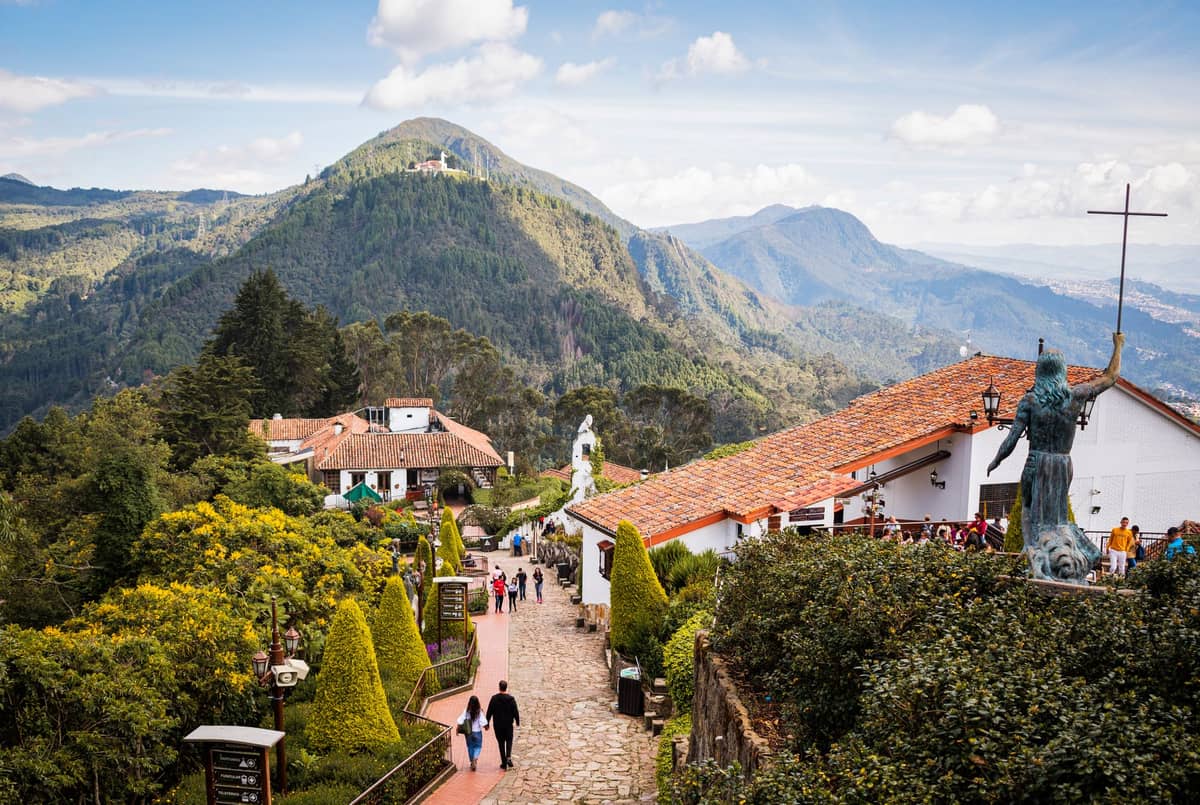
Cerro de Monserrate is Bogotá's most recognizable landmark, a hilltop sanctuary perched at 3,152 metres above sea level that offers sweeping views over one of South America's largest cities. Whether you ride the century-old funicular, glide up by cable car, or hike the steep pedestrian trail, the experience is one that shapes how you understand the city below.
Quick Facts
- Location
- San Diego sector, end of Carrera 1 Este with Calle 26, central-eastern Bogotá, D.C.
- Getting There
- TransMilenio to Universidades station, then a short walk east to the base station. Ride-hailing apps (Uber, Cabify, Didi) drop off at the base.
- Time Needed
- 2 to 4 hours including ascent, summit exploration, and descent
- Cost
- From approx. COP $35,000 (round-trip funicular/cable car, adults). Prices vary by time, user type, and route. Verify current rates at monserrate.co before visiting.
- Best for
- City views, religious pilgrimage, photography, first-time visitors to Bogotá
- Official website
- monserrate.co/en
What Cerro de Monserrate Actually Is
Cerro de Monserrate is a mountain peak forming part of the Cerros Orientales, the long ridge of Andean hills that frames Bogotá's eastern edge. At 3,152 metres above sea level, it rises roughly 500 metres above the city's already high plateau of 2,640 metres. The white church at its summit, the Basílica Santuario del Señor Caído de Monserrate, is visible from enormous distances across the urban grid below, functioning almost like a compass for orientation in a city that can otherwise feel disorienting in its sheer scale.
The sanctuary enshrines a venerated statue of the fallen Christ, the Señor Caído, and has been a site of Catholic pilgrimage since the 17th century. For many Bogotanos, visiting Monserrate carries genuine spiritual weight, not just sightseeing value. You will share the summit with local families on Sunday outings, devoted pilgrims who ascend the trail on their knees, and international tourists with camera bags. That mix is part of the experience.
ℹ️ Good to know
Opening hours (funicular/cable car service): Monday to Saturday 6:30 AM to 10:00 PM; Sundays 5:30 AM to 5:00 PM; public holidays 6:30 AM to 5:00 PM. The pedestrian trail is closed on Tuesdays for maintenance. Always confirm current hours at monserrate.co before visiting, as schedules shift for major religious events and maintenance periods.
How to Get Up: Funicular, Cable Car, or Trail
Three routes connect the San Diego base station to the summit. The funicular railway, inaugurated in 1929, follows a steep tracked incline through the hillside vegetation. The cable car (teleférico), added in 1955, offers an aerial perspective over the rooftops of La Candelaria as it rises. Both take only a few minutes and operate from the same base station at the end of Carrera 1 Este. Tickets for either are purchased at the base; adult round-trip fares were approximately COP $35,000 at the time of writing, with reduced rates for adults aged 62 and over. Check the official site for current pricing, as fares are adjusted periodically.
The pedestrian trail is the third option and a genuinely demanding physical undertaking. The ascent covers around 1,600 steps on an uneven stone path, climbing steeply through eucalyptus forest. The trail is open every day except Tuesday, with ascent generally permitted from 5:00 AM until 1:00 PM, and descent allowed until around 4:00 PM. At Bogotá's altitude, even fit visitors notice the thin air on this climb. The trail is free to use but is not suitable for anyone with limited mobility. It is also not recommended as a solo hike, particularly in the early morning hours or on quieter weekdays.
To reach the base station by public transit, take a TransMilenio bus to the Universidades station on Calle 26 and walk east toward the hills for roughly 10 to 15 minutes. Ride-hailing apps work well for door-to-base trips. If you are visiting other historic sites in La Candelaria the same day, the base station is easily walkable from there. See our guide to getting around Bogotá for transit details and practical tips on using TransMilenio.
Tickets & tours
Hand-picked options from our booking partner. Prices are indicative; availability and final rates are confirmed when you complete your booking.
Candelaria walking tour
From 35 €Instant confirmationFree cancellationCoffee farm guided tour
From 114 €Instant confirmationFree cancellationZipaquira Salt Cathedral guided tour
From 86 €Instant confirmationFree cancellationBogota full-day bike rental
From 19 €Instant confirmationFree cancellation
The Summit: What You Will Find at the Top
The arrival platform opens onto a broad terrace with an unobstructed view over Bogotá's full expanse. On clear days, the city stretches westward to the horizon with no obvious end, a grid of terracotta rooftops, concrete towers, and green parks that makes the scale of eight million people suddenly comprehensible in a single glance. The Eastern Hills ridge continues both north and south, and the Andes beyond are visible on particularly clear mornings.
The basilica itself is a modest white church with Baroque-influenced details, rebuilt over centuries after earthquake damage. The interior is dim and cool, with candles lit by pilgrims and the atmosphere of an active place of worship rather than a museum piece. Even visitors with no religious interest tend to find the interior quiet and grounding after the crowds outside.
Two restaurants operate at the summit: Casa Santa Clara and El Portal de Monserrate. Both serve Colombian food with predictably elevated prices for the location. The food is functional rather than exceptional, but sitting with a hot chocolate and ajiaco while looking out over the city is a specific kind of pleasure that justifies the cost. There is also a small commercial area with souvenir stalls and snack vendors.
Time of Day: How the Experience Changes by the Hour
Early morning is the most rewarding time to visit. Before 9:00 AM, crowds are thin, the light is directional and golden, and Bogotá below is still in a hazy morning calm with fewer visible smog layers. The city grid catches the light differently from the east at dawn, and photographers who make the effort to arrive for opening will find conditions that later hours simply do not offer.
Sunday mornings are an exception to the early-crowd logic. The funicular opens at 5:30 AM on Sundays and the trail fills quickly with Colombian pilgrims and weekend hikers. By 8:00 AM the summit terrace is already busy and the funicular queue can stretch significantly. Weekday mornings are considerably calmer.
Evening visits on weekdays, particularly Thursday through Saturday when the site stays open until 10:00 PM, offer a completely different experience. Bogotá at night from this height is a vast orange grid, with the Andes fading to black silhouettes and the city's lights stretching to the edge of visibility. Temperatures drop sharply after sunset, falling well below what feels comfortable in a light jacket, so layers are not optional.
⚠️ What to skip
Weather changes fast at 3,152 metres. Even when it is sunny at the base, cloud, rain, or cold wind can arrive at the summit within minutes. Bring a waterproof layer and an extra warm layer regardless of the weather when you leave your accommodation.
Historical and Cultural Context
The site has held religious significance since the colonial period, with a chapel documented on the summit from the 1600s. The current sanctuary structure has been rebuilt and restored multiple times following seismic damage, which is common across Bogotá's older buildings given the region's geological activity. The funicular, inaugurated in 1929, represented significant engineering ambition for its era, and the 1955 cable car added a second mechanical access route that remains in operation today.
Monserrate sits within the broader Cerros Orientales ecological reserve, a protected forest corridor that runs along the eastern edge of the city. These hills provide Bogotá with ecosystem services including water catchment and air filtration. The walk up the pedestrian trail passes through eucalyptus groves that replaced the original Andean cloud forest, a common pattern across the region. For broader context on the hills and their ecological role, see our guide to the Cerros Orientales.
Monserrate is culturally inseparable from La Candelaria, the historic neighbourhood at its foot. The colonial churches, government palaces, and museums of the old city exist in visual dialogue with the white sanctuary above. A visit to Monserrate pairs naturally with a half-day in La Candelaria. If you plan to do both, read our notes on La Candelaria to build the full day efficiently.
Practical Considerations: What to Know Before You Go
The altitude at the summit is significant. Bogotá already sits at 2,640 metres, and Monserrate adds another 500 metres to that. If you have arrived in Bogotá within the last 24 to 48 hours, altitude sickness symptoms including headache, nausea, and fatigue are a real possibility on the hike. Taking the funicular or cable car rather than the trail is sensible during acclimatisation. Drink water before and during the visit.
For more detail on managing altitude in Bogotá, see our dedicated Bogotá altitude guide.
Photography: the best composition points are on the terrace immediately north and south of the basilica, where there are no barriers between the lens and the city. A wide-angle lens handles the scale of Bogotá below, while a telephoto picks out specific neighborhoods and landmarks. Polarising filters are useful when haze is present, which is most afternoons.
Accessibility: the funicular and cable car make the summit and its terrace reachable without climbing the trail, but the summit area itself involves cobblestone paths and some uneven surfaces. Significant mobility limitations will restrict movement around the complex, though the main viewpoint and basilica entrance are reachable. The pedestrian trail is not accessible for wheelchairs or anyone with reduced lower-body mobility.
💡 Local tip
If you are visiting on a tight schedule, combine Monserrate with the Museo del Oro or Plaza de Bolívar in the same day. Both are within roughly a 15-minute walk of the Monserrate base station, making it an efficient half-day cultural circuit.
Who Should Skip Cerro de Monserrate
If views from high places leave you indifferent and religious heritage holds no appeal, the summit experience may not justify the time and cost, especially on a day when the clouds close in and visibility is reduced to near zero. Cloud cover at the summit is frequent and unpredictable, particularly during Bogotá's rainy seasons from April through May and September through November. On overcast days, you may arrive at the top to find the city entirely hidden beneath you.
Travellers who are very newly arrived from low-altitude cities and already experiencing symptoms of altitude sickness should rest a day before attempting any ascent, particularly the trail on foot. For those who want outdoor experiences with better weather windows and less crowding, day trips to parks and natural areas outside the city may be a better use of time. See our list of day trips from Bogotá for alternatives.
Insider Tips
- Check the webcam on the official site (monserrate.co) before you go. It shows live summit conditions and will save you a wasted trip if cloud is sitting on the peak.
- Weekday mornings between 7:00 AM and 9:00 AM offer the shortest funicular queues and the best light for photography. Arrive within the first hour of opening to walk the summit terrace almost alone.
- The cable car and funicular serve the same summit but depart from adjacent platforms. If the funicular queue is long, check the cable car line, which is sometimes shorter at peak times.
- Dress in more layers than you think you need. The temperature at 3,152 metres is noticeably colder than central Bogotá, and the terrace is exposed to wind. A light down jacket or fleece is not excessive even in summer.
- If you want to use the restaurants at the summit, visit on a weekday. Sunday lunch service can mean waiting for a table and slower kitchen times. Both restaurants accept reservations, which is worth arranging in advance for evening visits.
Who Is Cerro de Monserrate For?
- First-time visitors to Bogotá who want to understand the city's geography and scale in a single panoramic view
- Photography enthusiasts, particularly those shooting at dawn or on clear dry-season mornings
- Travellers interested in Colombian religious culture and pilgrimage traditions
- Families who want a memorable outing that combines transport (funicular or cable car) with outdoor space and food
- Anyone building a La Candelaria day who wants to add elevation and context to the historic centre visit
Nearby Attractions
Other things to see while in Cerros Orientales:
- Quinta de Bolívar
The Casa Museo Quinta de Bolívar is one of Bogotá's most historically significant sites, a preserved colonial estate where the liberator of South America once lived. Set against the Cerros Orientales hills near La Candelaria, it holds over 3,650 artifacts and offers some of the lowest admission prices of any major museum in the city.