Bogotá El Dorado Airport: Arrivals, Transfers & Getting to the City
Everything you need to navigate El Dorado International Airport (BOG) and reach central Bogotá efficiently. From TransMilenio routes and TuLlave cards to regulated taxi fares and private transfers, this guide covers every option with real prices and clear trade-offs.
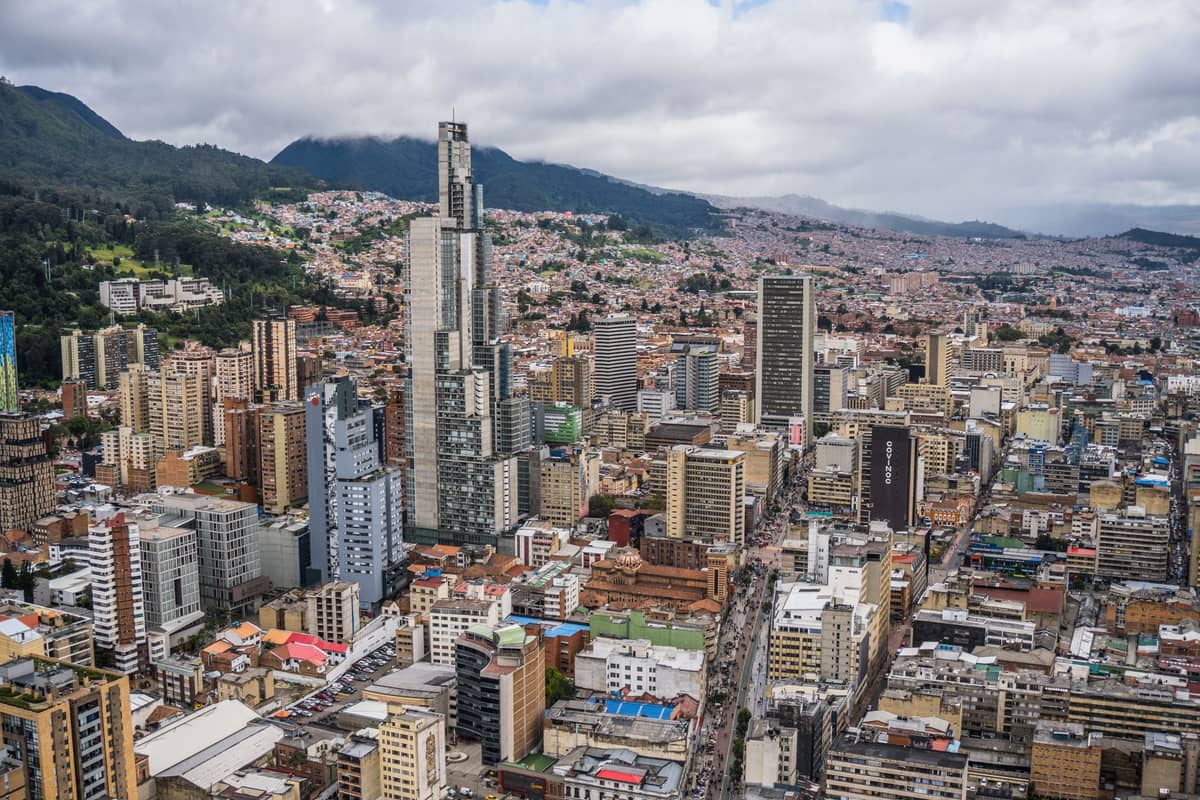
Plan and book this trip
Tools from our partner Travelpayouts help you compare flights and hotels. If you book through them, we may earn a commission at no extra cost to you.
Flights
Hotels map
TL;DR
- El Dorado International Airport (BOG) sits roughly 15 km from central Bogotá, with transfers taking 30–90 minutes depending on traffic.
- TransMilenio BRT is the cheapest option (COP 3,550 per trip) but requires a TuLlave card — buy one at Terminal 1, entrance 4, second floor before boarding. See our full guide on getting around Bogotá for the broader transit picture.
- Regulated airport taxis use metered fares plus an official surcharge of around COP 8,000 — expect COP 35,000–60,000 to central districts, more at night.
- Ride-hailing apps (Uber, Cabify, Didi) work in Bogotá but cannot legally pick up from the terminal curb — you will need to meet your driver at a designated zone.
- Late-night arrivals have limited public transport; a private transfer pre-booked online (from around USD 20–22) is the most practical option after 22:00.
El Dorado Airport at a Glance
El Dorado International Airport (IATA: BOG) is Colombia's largest and busiest airport, handling the vast majority of international arrivals into the country. It sits in the western part of Bogotá, D.C., at an elevation of approximately 2,548 metres above sea level — slightly lower than the city centre at 2,640 m, but still high enough that some travellers feel altitude effects immediately after landing. The airport has two main passenger terminals: Terminal 1 handles most international and domestic flights, while Terminal 2 (the former Puente Aéreo terminal) serves some domestic carriers. A free inter-terminal shuttle connects them.
The airport is located about 15 km from La Candelaria, Bogotá's historic centre, and slightly closer to the northern business districts like Zona Rosa and Usaquén. In light traffic — rare during peak hours — you can reach the centre in 30 minutes. During morning or evening rush hours (roughly 07:00–09:00 and 17:00–19:30), the same journey can stretch past 90 minutes. Plan accordingly.
ℹ️ Good to know
Bogotá operates on UTC-5 (America/Bogota timezone) year-round with no daylight saving time. The currency is the Colombian peso (COP). Colombia's country dialing code is +57, and the emergency number is 123.
TransMilenio: The Cheapest Way Into the City
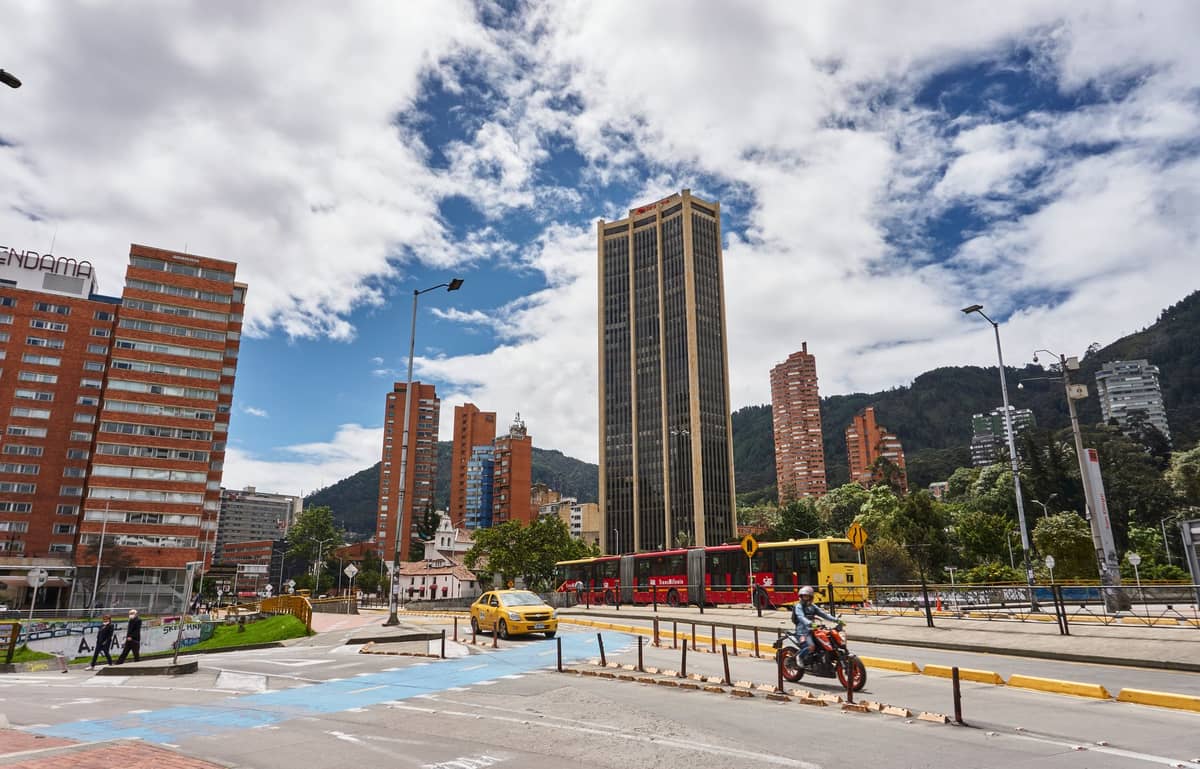
For budget travellers or anyone willing to navigate the city's bus rapid transit network, TransMilenio is the most affordable option by a wide margin. The city government highlights the K86/M86 El Dorado Airport to Hacienda Santa Bárbara corridor as the primary route connecting the airport to the city. On weekdays, services typically run from around 04:30 to 22:00, with slightly adjusted hours on Saturdays and reduced coverage on Sundays and public holidays.
The practical entry point is the Portal El Dorado TransMilenio station, reached via a free or very low-cost feeder shuttle from the airport terminals. From Portal El Dorado, you can connect to express trunk routes that run along Avenida El Dorado (Calle 26) into the city centre. One-way fares run approximately COP 3,550 per trip, though this is subject to periodic fare adjustments by the city authority — verify the current rate at the station before loading your card.
⚠️ What to skip
You cannot pay cash at TransMilenio turnstiles. You must have a TuLlave smart card, available at a personalization point at Terminal 1, entrance 4, second floor. Buy and load it before heading to the station. Attempting to board without one will mean turning back.
- TuLlave card purchase Available at Terminal 1, entrance 4, second floor. Load it with enough credit for your journey — typically COP 5,000–10,000 for a single trip with buffer.
- Feeder shuttle to Portal El Dorado A free or nominal-cost shuttle connects the terminal to the BRT station. Follow signs inside the airport for 'Transporte Público' or 'TransMilenio'.
- Journey time by BRT Expect 45–75 minutes to reach central destinations, including wait times and transfers. Faster than a taxi stuck in traffic, but involves standing and multiple stops.
- Late-night and Sunday service Public bus services do not run 24 hours. If you arrive after 22:00 on any day, or on Sundays during limited hours, you will need a taxi or private transfer.
Taxis: Regulated Fares and What to Actually Expect
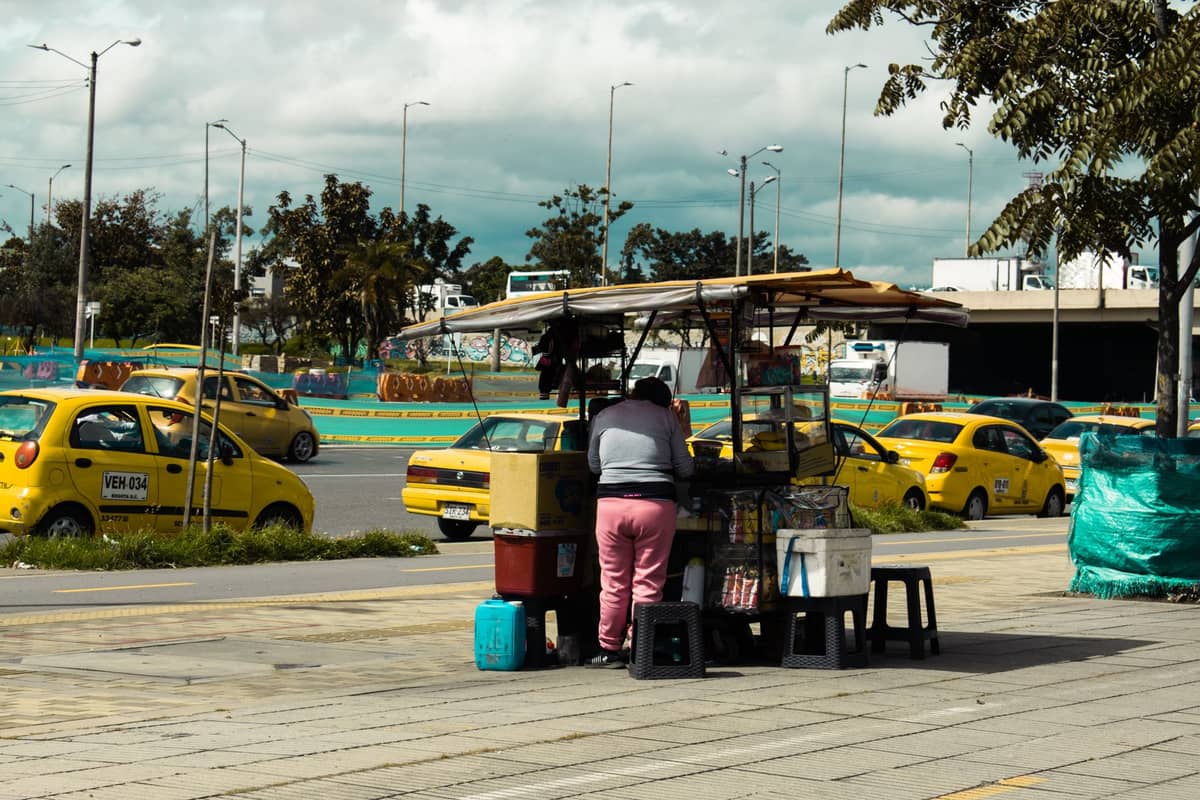
Official yellow taxis at El Dorado are regulated by the Secretaría de Movilidad de Bogotá. Contrary to what some travellers assume, airport taxis are not unregulated — they use metered fares with defined surcharges. The current airport surcharge (cargo por aeropuerto) sits at around COP 8,000, and there is an additional surcharge of approximately COP 3,800 for night travel, Sundays, and public holidays. These figures were updated in 2025 by the city mobility authority, but as with all fares, verify current rates before your trip.
In practice, the total metered fare from the airport to central areas like La Candelaria or Chapinero runs roughly COP 35,000–50,000 under normal daytime conditions. At night, during peak hours, or if your destination is in the far north of the city, expect COP 60,000–85,000. Always insist on the meter running from the start and confirm the airport surcharge is being applied correctly, not an inflated flat rate. If a driver refuses to use the meter, decline the ride and find another cab.
💡 Local tip
Use the official taxi queue inside the terminal rather than accepting offers from drivers who approach you in the arrivals hall. The official queue has controlled dispatch and legitimate vehicles. If you want to confirm a fare range before getting in, the Secretaría de Movilidad publishes official tariff tables on their website.
Ride-Hailing Apps: Uber, Cabify, and Didi
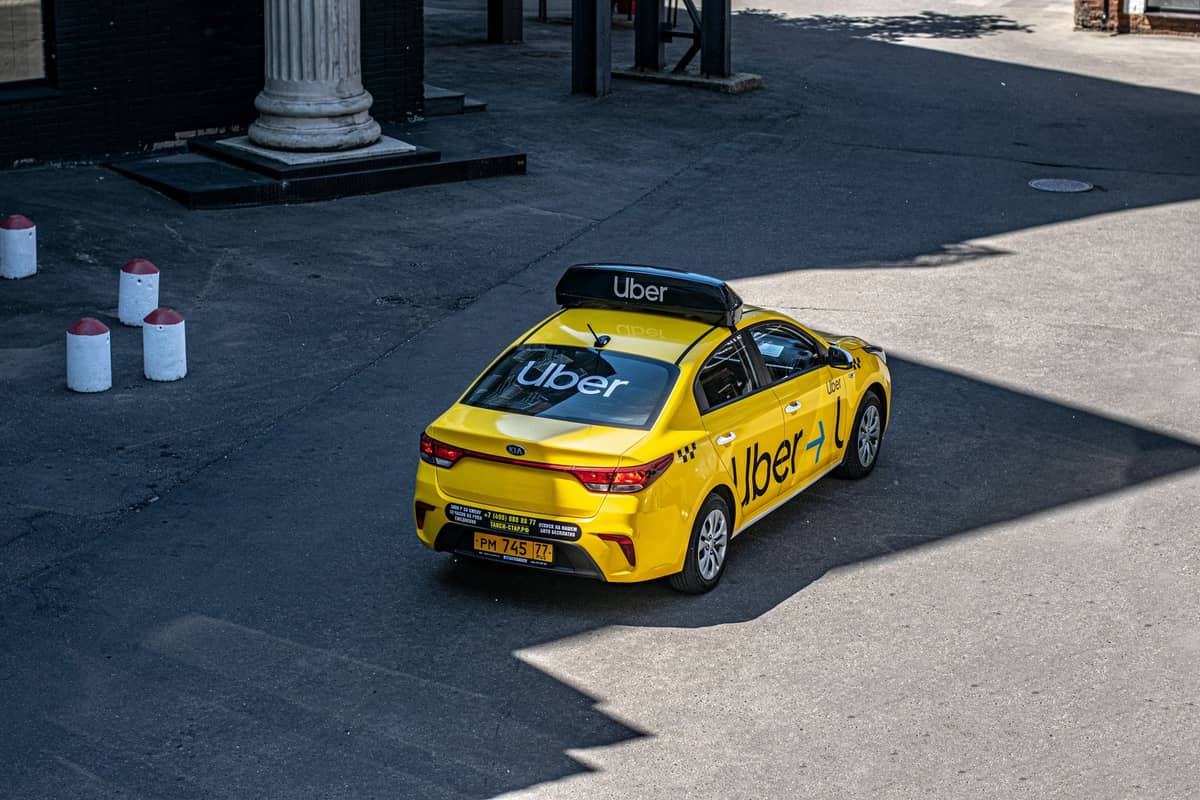
Uber, Cabify, and Didi all operate in Bogotá and are widely used by locals and visitors. The pricing is often comparable to or slightly lower than metered taxis for city trips, and the convenience of cashless payment and in-app tracking is significant. However, there is an important practical limitation at El Dorado: ride-hailing apps cannot legally pick up passengers from the terminal curbside in the same way traditional taxis can. You will typically need to walk to a designated meeting zone away from the main terminal exit and coordinate with your driver via the app.
This works smoothly once you know the layout, but can be confusing on a first visit, especially if your Spanish is limited or your phone SIM is not yet set up. If you plan to use Cabify or Didi from the airport, download the app and set up your account before landing. A local SIM card or an eSIM with a Colombian data plan will make the whole process much easier. Bogotá's major carriers sell SIMs in the arrivals area.
✨ Pro tip
Cabify tends to have the clearest pickup zone signage at El Dorado and is commonly used by business travellers. If it's your first time navigating the airport, Cabify or Didi can be smoother than Uber in terms of driver compliance with the designated pickup area.
Private Transfers: When They're Worth It
Pre-booked private transfers are the right choice in specific situations: late-night arrivals when public transport has stopped, groups with significant luggage, families travelling with children, or travellers who simply want a driver holding a sign at arrivals without any uncertainty. Platforms like Welcome Pickups and other local operators offer airport-to-city vehicles starting at around USD 20–22 per car for standard transfers, with larger vehicles available for groups.
The price premium over a taxi is modest, and the certainty of a fixed price and a waiting driver has real value, particularly on a first visit to Bogotá. If you're arriving late and heading straight to a neighbourhood like Chapinero or La Macarena, a private transfer eliminates the hassle of negotiating or waiting for a taxi queue at midnight. Book in advance through a reputable platform and confirm the driver's contact details before landing.
- Standard sedan for 1-3 passengers: from around USD 20-22 to central Bogotá neighbourhoods
- Larger vehicles for groups or heavy luggage: from around USD 28-40 depending on capacity
- Journey time: 30–90 minutes depending on traffic — no different from a taxi, but with price certainty
- Look for operators that offer flight tracking so the driver adjusts for delays automatically
- Confirm whether the quoted price includes tolls and the airport surcharge to avoid surprises on arrival
Practical Arrival Tips and Airport Logistics
Bogotá's altitude (2,640 m above sea level) is something to account for from the moment you land. If you've come from sea level, you may feel short of breath, fatigued, or mildly headache-prone within hours of arrival. Don't plan a full day of activity immediately after a long flight. Our guide to Bogotá's altitude covers acclimatisation in detail, including what to eat, how much to drink, and when to be concerned.
Inside the terminal, you'll find currency exchange booths and ATMs in the arrivals area. ATMs connected to major networks (Visa, Mastercard) are reliable for withdrawing Colombian pesos. Exchange rates at airport booths are typically less favourable than in-city rates, so withdraw only what you need for immediate transport and settle up at a city-centre bank or ATM later. Bogotá's climate means you should layer up for the journey into the city — daytime temperatures in the high teens to low 20s °C are the norm, with cooler conditions possible. Check the Bogotá weather guide if you're planning around the rainy seasons (April–May and September–November).
Colombia uses Type A and Type B plugs at 110V/60Hz — the same as North America. European travellers will need an adapter. Tap water in Bogotá is generally reported as safe to drink in most urban areas, which is useful to know as you settle into the city. Visa entry requirements vary significantly by nationality; check current Colombian immigration guidance well before travel, as rules change.
- SIM cards are available at carrier kiosks in the arrivals area — worth buying immediately for maps and ride-hailing apps
- Left-luggage storage is available in Terminal 1 if you need to drop bags before check-in
- The airport has two terminals (T1 and T2) connected by a free shuttle — confirm which terminal your airline uses before heading to the pickup zone
- English is spoken at major service desks and airline counters, but Spanish is standard everywhere else — having Google Translate ready helps
- Colombia's electricity is 110V/60Hz with Type A and B plugs — European visitors need an adapter
Once you're in the city, Bogotá rewards exploration. The historic core at Plaza de Bolívar is a logical first stop, and the Museo del Oro is among the best museums in Latin America. If you have limited time, our 3-day Bogotá itinerary helps prioritise what matters most.
FAQ
How far is El Dorado Airport from central Bogotá?
El Dorado International Airport (BOG) is approximately 15 km from central Bogotá (La Candelaria and nearby districts). The actual travel time varies significantly: in light traffic, expect 30 minutes; during morning or evening rush hours, the same journey can take 90 minutes or more.
How much does a taxi from Bogotá airport cost?
Regulated airport taxis charge metered fares plus an official airport surcharge of around COP 8,000 (as of 2026 figures from the Secretaría de Movilidad). Total fares to central Bogotá typically run COP 35,000–50,000 in normal daytime conditions, and COP 60,000–85,000 at night or in heavy traffic. Always insist the driver uses the meter.
Can I take a bus or TransMilenio from El Dorado Airport?
Yes. A free or low-cost feeder shuttle connects the terminals to Portal El Dorado, the nearest TransMilenio BRT station. From there, trunk routes run into the city. You need a TuLlave card (available at Terminal 1, entrance 4, second floor) — cash is not accepted at turnstiles. Services generally run from around 04:00 to 23:30 on weekdays, with reduced hours on Sundays and holidays.
Do Uber and Cabify work at El Dorado Airport?
Yes, Uber, Cabify, and Didi all operate in Bogotá, but they cannot legally pick up from the main terminal curbside. You will need to walk to a designated ride-hailing pickup zone and coordinate via the app. Set up your account and have a local data SIM before landing to make this seamless.
Is there a direct metro line from Bogotá airport to the city?
No. Bogotá does not yet have an operating metro system — the city's mass transit backbone is bus-based, centred on the TransMilenio BRT network. A metro project has been planned and is in development, but it is not currently operational. The fastest affordable public option from the airport remains the TransMilenio BRT via Portal El Dorado.